Burning when you urinate, repeated urgent bathroom trips, or blood in the urine while taking Ozempic or Mounjaro deserves assessment. A urinary tract infection, often shortened to UTI, is one possible explanation. The timing of a symptom after an injection does not, by itself, establish that the medicine caused an infection.
UTIs are not among the common adverse reactions listed in the current U.S. prescribing information for either medicine. That observation is useful, but it cannot rule out an uncommon event or explain an individual person’s symptoms. The more useful questions are what changed, whether infection symptoms are present, and whether diabetes, another medicine, or dehydration is also relevant. Ozempic injection prescribing information, Mounjaro prescribing information.
Which urinary symptoms need prompt attention?
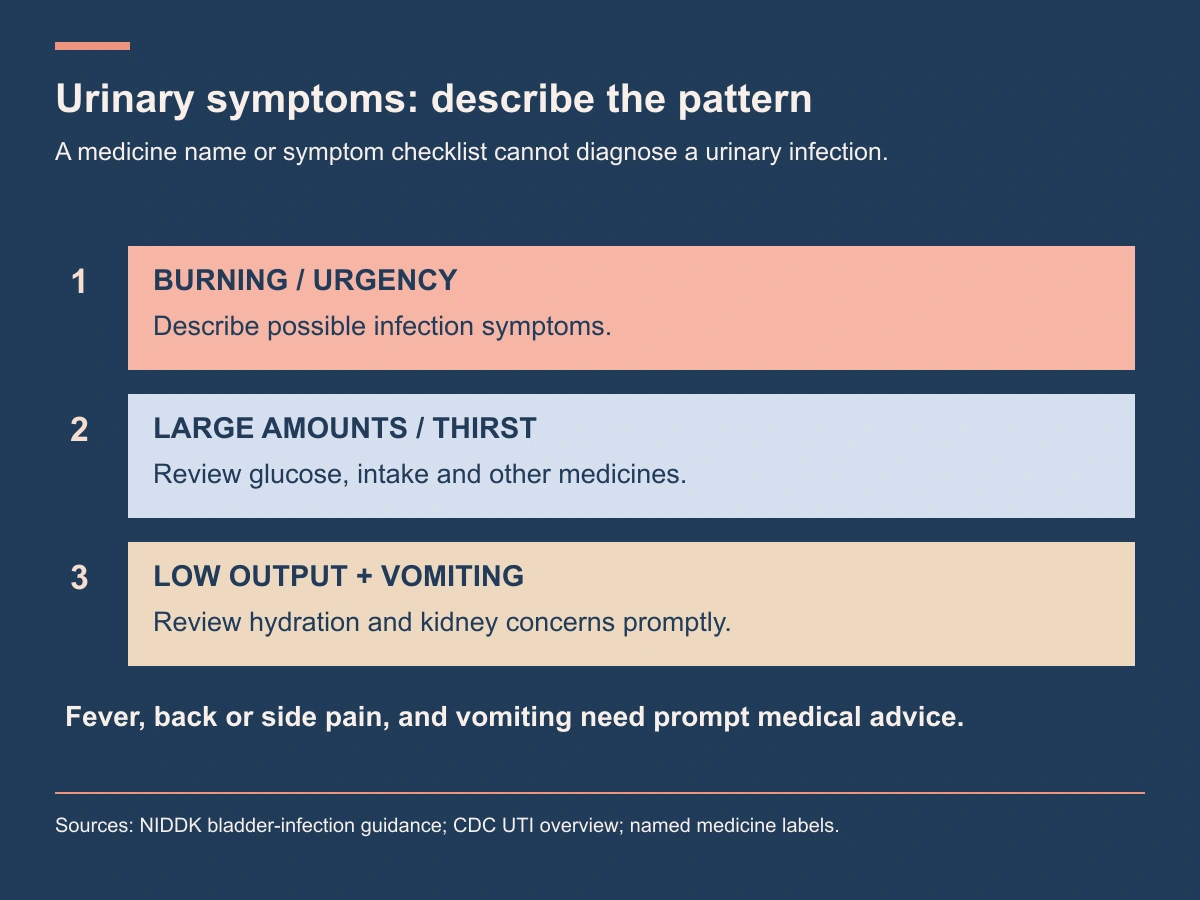
Contact a healthcare professional for burning, urgency, frequent trips with little urine, lower abdominal discomfort, or urine that is bloody, cloudy, or unusually strong smelling. NIDDK lists these as possible bladder-infection symptoms. They are a reason to describe the problem and obtain advice, rather than decide that a weekly medicine is simply making you urinate more. NIDDK bladder infection guidance.
Fever or chills, pain in the back or side, and nausea or vomiting can indicate that an infection involves the kidneys. Seek medical help promptly for these symptoms. If you are severely unwell, confused, fainting, having difficulty breathing, or unable to keep fluids down, seek urgent assessment. Do not wait for the next routine prescription appointment to see whether the pattern settles.
Tell the clinician if you are pregnant, have a catheter, have known kidney disease, or have had repeated infections. These details can change how the episode is evaluated. A short symptom checklist cannot establish that an infection is uncomplicated or that it can safely be managed without professional advice.
What do the Ozempic and Mounjaro labels actually say?
The most common Ozempic injection reactions include nausea, vomiting, diarrhea, abdominal pain, and constipation. Mounjaro’s common adult reactions also include decreased appetite and indigestion. Neither common-reaction list identifies UTIs as a routine expected effect. These are named product-label observations, rather than a claim about every GLP-1 medicine or every formulation. Ozempic label, Mounjaro label.
The common-reaction tables come from defined clinical trials. They are not a complete list of every symptom that can occur, and the labels caution against directly comparing adverse-event rates across different trials. It would be misleading to turn the absence of a UTI row into a zero-risk estimate or a promise that a prescription cannot be involved.
| Question | What the available information can establish | What it cannot establish |
|---|---|---|
| Is a UTI listed among common reactions? | It is not in the reviewed common-reaction lists for these named products. | That an uncommon urinary problem is impossible. |
| Did symptoms begin after a dose change? | The timing belongs in the clinical history. | That the medicine is the confirmed cause. |
| Is there burning or urgency? | These can occur with a bladder infection. | Which organism is present or which treatment is appropriate. |
| Is urine output very low during vomiting? | Volume depletion and kidney assessment may be relevant. | That the problem is necessarily a UTI. |
Why can diabetes matter even when the medicine is not the cause?
CDC identifies diabetes as a factor associated with greater UTI risk. Its clinical overview describes several possible contributors, including effects on immune defenses and glucose in the urine. This is background about diabetes and infection, not proof that Ozempic or Mounjaro increases the infection rate. CDC UTI clinical overview.
A person can therefore develop an infection during diabetes treatment for reasons that require a broader history. A clinician may ask about glucose patterns, prior infections, bladder emptying, other health conditions, and the medicines taken alongside the weekly injection. These details are more informative than assuming that one recently started prescription explains everything.
Ozempic and Mounjaro also should not be confused with SGLT2 inhibitors, a different group of diabetes medicines with a kidney glucose-excretion mechanism. A person may take more than one diabetes medicine, so bring the actual names. Our guide to Ozempic, Mounjaro, and increased urination explains why frequency, urine volume, and medication mechanisms need separate consideration.
Frequent urination is a description, not a diagnosis
“I am peeing more” can mean several different things. You may make many trips but pass a small amount each time. You may pass larger amounts while feeling unusually thirsty. Or you may feel an urge but have difficulty emptying the bladder. Those patterns should not all receive the same explanation.
Describe how often you are going, whether each trip produces a normal or small amount, and whether there is pain. Mention nighttime changes and whether the symptom disrupts sleep. If you are uncertain about the amount, describe what you notice rather than inventing a measurement.
Drinking more can also increase bathroom trips. However, an increase in fluid intake does not explain away burning, visible blood, fever, or persistent new urgency. The associated symptoms still deserve assessment. Conversely, a lack of frequent urination does not rule out a urinary problem.

How is a suspected bladder infection evaluated?
NIDDK describes diagnosis as a combination of medical history, examination, and, when appropriate, laboratory testing. A urinalysis can assess the urine, and a urine culture can help identify bacteria and guide treatment. Additional testing may be considered for particular circumstances, including repeated infections. NIDDK diagnosis guidance.
You do not need to choose the test yourself. Give the clinician a clear history and follow instructions for collecting a sample if one is requested. Mention any treatment already taken and whether the symptoms improved, returned, or changed. The result has to be interpreted alongside the clinical situation.
An online description, a urine photograph, or a change in smell alone cannot select an antibiotic. Do not use leftover antibiotics or a friend’s prescription. Ask how and when you will receive test results, whether the treatment plan might change after a culture, and which symptoms should trigger another call.
Vomiting, dehydration, and low urine output raise a different concern
Both product labels warn about acute kidney injury associated with volume depletion. Many reported episodes occurred with digestive reactions such as nausea, vomiting, or diarrhea that led to dehydration. The labels advise kidney-function monitoring when reactions could cause volume depletion, particularly during initiation or escalation. Ozempic kidney warning, Mounjaro kidney warning.
This is different from saying that the medicines routinely infect the kidneys. Very little urine while you cannot keep fluids down needs assessment of hydration and kidney function; burning and urgency raise other questions. Both kinds of problem can occur together, so one explanation should not automatically exclude the other.
Do not respond by forcing a fixed quantity of water or taking a water pill. People with heart or kidney conditions may have an individualized fluid plan. Tell the team what you have been able to drink, how long vomiting or diarrhea has lasted, and whether urine output changed. Our GLP-1 illness and symptom guide discusses sick-day planning and warning signs.
What about menopause and recurring urinary symptoms?
CDC’s UTI overview includes menopausal changes among the factors relevant to urinary infection risk. Changes in the local environment and bacterial flora can matter. That does not mean every urinary symptom during menopause is an infection, or that systemic hormone therapy is automatically the appropriate treatment. CDC risk-factor discussion.
If symptoms recur, describe whether episodes were confirmed by testing, whether they occur between infections, and whether vaginal dryness or other genitourinary symptoms are present. A clinician can consider the complete pattern and discuss suitable options. Avoid treating the words “recurrent UTI” as a diagnosis without the history that supports them.
Our guide to vaginal estrogen and systemic HRT explains why local and systemic treatment questions are different. A hormone decision should fit the person’s symptoms and medical history rather than be made solely because they also use a weight-management medicine.
What should you record before calling?
Prepare a short, practical account:
- When the urinary symptoms began and whether they are worsening.
- Burning, urgency, visible blood, fever, back or side pain, and vomiting.
- Bathroom frequency and whether urine amounts seem unusually small or large.
- The exact medicine, presentation, prescribed dose, last administration, and recent changes.
- Other prescriptions, nonprescription medicines, supplements, and any recent antibiotic use.
- Glucose readings when you already monitor them, and how much you can eat or drink.
This is a communication aid, not a requirement to delay care while gathering perfect data. If symptoms are urgent, seek help first. If you are too unwell to give the history, a family member or other support person can help communicate the medication details.

Should you stop Ozempic or Mounjaro during a UTI?
There is no single answer based only on the word UTI. The decision depends on the severity of illness, hydration, kidney function, diabetes control, other medicines, and the treatment plan. Contact the prescribing team for instructions, particularly if you are vomiting, eating very little, or approaching the next dose while still unwell.
Do not independently double a later dose, change the concentration, or create a restart schedule after a longer interruption. Our semaglutide missed-dose and restart guide explains why product and time-gap details matter. The Mounjaro dosage guide separates the weekly prescription from the amount contained in a device.
Frequently asked questions
Does Ozempic directly cause UTIs?
The common adverse-reaction list reviewed here does not identify UTIs as a routine expected reaction. That cannot prove or exclude the cause of a particular episode. A suspected infection should be evaluated using symptoms, medical history, and appropriate testing, while the medicine remains part of the history.
Can Mounjaro cause a UTI even if it is not a common listed effect?
A symptom can occur during treatment without appearing in a common-event table. The table is not an individual causality test. Tell the clinician about Mounjaro, its timing, other medicines, and the urinary symptoms. Do not use either an online anecdote or a missing table entry as a final diagnosis.
Will the infection disappear if I skip an injection?
Skipping a prescription does not establish that a bacterial infection has been treated. Seek advice about the urinary symptoms and obtain an individualized medicine plan if illness affects eating, drinking, or glucose control. Ask about follow-up if symptoms persist or return.
Is blood in urine the same as blood in stool?
No. The apparent source matters, and uncertainty should be explained to the clinician. Both deserve attention rather than a guess from color alone. Our separate guide to blood in stool during Ozempic treatment addresses digestive bleeding questions.
Can I ask about these risks before starting treatment?
Yes. Bring your infection history, other medicines, kidney conditions, and diabetes questions to the assessment. If you are exploring a CoreAge service, the semaglutide and tirzepatide pages provide starting points for treatment questions. Confirm the actual prescribed formulation and follow-up process; those service pages do not diagnose a UTI or establish eligibility for a particular branded product.
Educational information for adults; individual treatment decisions require a qualified clinician. Sources reviewed October 2, 2026. Original AI-generated article images depict fictional people and objects, not patient outcomes. Other editorial images are illustrative. Graphics summarize the cited sources.