
For many adults, grapes can be part of an evening snack. Eating them at night does not automatically cause weight gain, and it does not make them a special fat-burning food. The amount, the rest of the day, your appetite, and any medical needs are more useful questions than the clock alone.
Claims that grapes provide a proven sleep dose also need care. Researchers have identified melatonin in grape extracts, but finding a compound in a fruit is different from showing that a normal snack improves sleep in people.
Here is what a defined grape portion contains, what the original melatonin research actually measured, and how to decide whether an evening snack fits your routine.
What is in a serving of grapes?
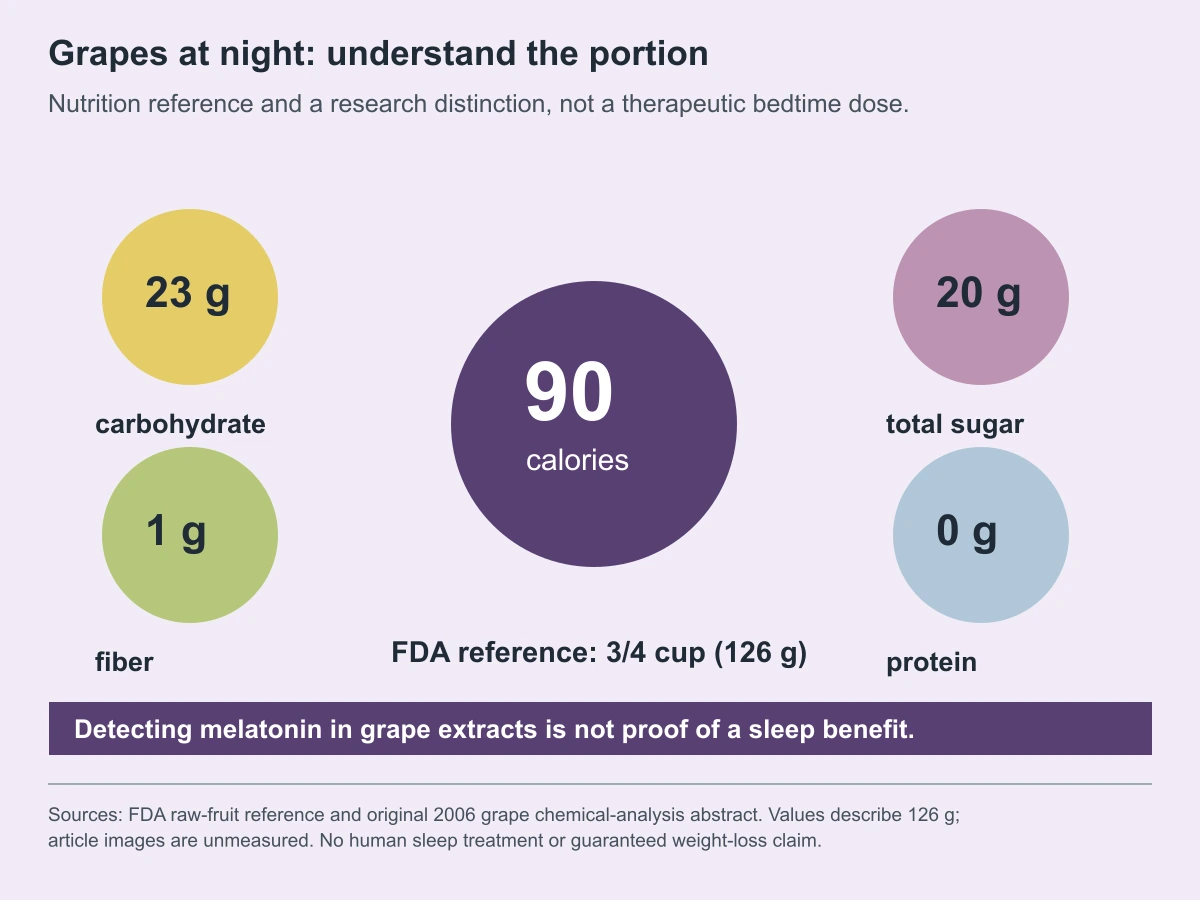
The FDA raw-fruit reference uses 3/4 cup of grapes, weighing 126 grams. It lists these amounts:
| Nutrient | Amount in the FDA reference portion |
|---|---|
| Calories | 90 |
| Total carbohydrate | 23 g |
| Total sugar | 20 g |
| Fiber | 1 g |
| Protein | 0 g |
Source: FDA raw-fruit nutrition reference. These are values for a defined reference, rather than a measurement of the grapes in an article image or a prescribed portion for everyone. Variety, ripeness, and the amount eaten can differ.
The protein line is worth noticing. Grapes are a fruit, not a protein food. If you want a more substantial snack, think about what you could pair with them rather than expecting one food to do every nutritional job.
The table uses gram amounts and calories; it does not transfer the older poster’s percentage Daily Values into current label guidance. For a general explanation of servings and nutrient amounts, see the FDA Nutrition Facts guide.
Does eating grapes at night cause weight gain?
The time alone cannot answer that question. An evening snack needs to be understood within the whole eating pattern. A portion that responds to hunger after a long day is different from adding food that you do not want or need because a video promises a sleep benefit.
Consider what happened earlier. Did you miss a meal, eat less because you were busy, or have difficulty eating? Is the evening snack something you enjoy, or has a rigid rule made you anxious about any food after a certain hour?
The goal is a routine that supports your needs and remains workable. A universal “no fruit after dinner” rule does not tell you whether your day contains enough food or whether a snack is helpful.
Our balanced-meal guide discusses meals across the day. Our hunger and food-noise article helps separate ordinary hunger, cravings, and persistent food thoughts without judging every evening snack as a failure.
Are grapes a weight-loss food?
They can fit a weight-management pattern, but they are not a treatment that independently creates fat loss. A fruit’s nutrient profile does not establish a special calorie-burning effect or tell you how your weight will respond.
A useful comparison asks what role the fruit plays. Grapes might be a convenient snack you enjoy or one part of a meal. If you are choosing them instead of another food, compare the actual portions and whether the choice remains satisfying.
Do not use “natural” as a substitute for the amount. Whole fruit can still contain carbohydrate and calories. That fact does not make it bad; it makes the full portion the right thing to understand.
Our fruit and weight-management article provides broader context. Our water weight versus fat-loss guide explains why tomorrow morning’s scale cannot establish what one snack did to body fat.
Do grapes contain melatonin?
An original 2006 paper reported melatonin in extracts from eight grape cultivars, using laboratory analytical methods. Amounts varied across cultivars. We reviewed the publisher-deposited original abstract in the paper’s DOI metadata because the journal web page was blocked. Original grape-melatonin paper
The important limit is the study type: chemical analysis of grape material, rather than a human sleep trial. It did not show that an ordinary grocery-store snack supplies a clinically effective sleep dose or improves insomnia.
A compound’s presence cannot bridge that gap by itself. You would need appropriate human research with a defined food amount, participant population, comparison, and sleep outcome to support a treatment claim.
This distinction also applies to other fruit compounds. An interesting laboratory finding is a reason for research, rather than an instruction to eat a large amount or expect a particular clinical effect.
Is food melatonin the same as a melatonin supplement?
No dose equivalence has been established by the grape study reviewed here. A fruit portion, a measured supplement, and your body’s melatonin production are different contexts.
NCCIH describes melatonin as a hormone involved in sleep timing and reviews supplement evidence, including uncertainties about benefits and safety in some situations. That resource is about supplements; its findings cannot be transferred directly to grapes. NCCIH melatonin information
Do not calculate a snack intended to reproduce a supplement dose from a single cultivar’s laboratory measurement. The sampled material, variable amounts, and lack of a matching human trial make that an unsupported treatment plan.
If sleep is persistently poor, seek an assessment rather than increasing grapes or adding supplements on your own. The problem may need a broader sleep discussion, not a stronger bedtime-food claim.
What can help a bedtime routine besides choosing a snack?
Sleep habits involve more than one food. A consistent routine, a suitable sleep environment, and attention to caffeine and other factors can be relevant. NHLBI notes that caffeine can interfere with sleep and its effects can last up to eight hours. NHLBI sleep-habit guidance
That does not make grapes an antidote to a caffeinated evening drink. If your bedtime routine includes tea, check the exact category and serving; decaf can retain caffeine. Our decaf tea article explains the distinction.
NHLBI’s guidance also allows for a light snack rather than treating every bite near bedtime as a sleep mistake. Suitability depends on the person and the circumstances. Avoid interpreting a general sleep tip as a mandatory grape portion.
Our sleep and weight-management article covers a broader approach. For hot flashes or other menopausal symptoms disrupting sleep, the HRT and sleep guide addresses a separate clinical discussion; a fruit snack does not replace it.
What if you have diabetes?
Use your own meal and carbohydrate plan. The FDA reference portion contains 23 g of total carbohydrate. Its 20 g of total sugar is part of that total, rather than a second amount to add on top.
Whole-fruit sugar is not automatically added sugar, but a “no added sugar” idea does not mean no carbohydrate or no possible glucose effect. If monitoring is part of your care, interpret readings with your team and the rest of the meal. NIDDK diabetes eating guidance
You do not need to decide that all grapes are forbidden or all fruit portions are interchangeable. A dietitian can help fit foods you enjoy into a practical plan for your situation.
If you are treating low glucose, follow the established treatment instructions rather than choosing a general snack based on a wellness article. A bedtime fruit discussion and a hypoglycemia plan are separate topics.
Can grapes at night worsen reflux?
A personal symptom pattern matters more than a universal fruit rule. If eating near bedtime worsens reflux, discuss meal timing and the specific foods and portions with your clinician.
NIDDK says that, for people with reflux at night or while lying down, eating meals at least three hours before bed may help. This is guidance in a reflux context, not a ban on grapes for every adult. NIDDK reflux nutrition guidance
Notice what else accompanies the snack and when you lie down. A large mixed snack and a smaller portion may feel different, yet persistent symptoms should not be explained away by guessing which ingredient was responsible.
For people taking tirzepatide, our nausea and reflux article covers medication-related questions. If eating has become difficult, report that rather than relying only on a new bedtime rule.
How can you make an evening snack more satisfying?
Start by deciding whether you want fruit alone or something more substantial. Grapes can accompany another food you enjoy and tolerate. For example, a milk product or a suitable nondairy option may add a different nutrient role; the best choice depends on allergies, preferences, and the rest of your intake.
The pairing changes the snack’s full nutrition. Do not retain the grape-only table as though it described the combined dish. Likewise, yogurt with added ingredients and a plain product should not inherit identical numbers.
If you use a protein drink for convenience, our Fairlife shake comparison explains why product lines differ. Our breakfast planning article offers additional food combinations that can be adapted when you need practical ideas.
No particular pairing is required to make grapes acceptable. The point is to choose a snack that fits the job you want it to do, rather than expecting fruit to provide protein or treat sleep symptoms.
What if you are taking semaglutide or tirzepatide?
An evening snack may fit your plan, but difficulty maintaining intake should be discussed with the prescribing team. Lower appetite and persistent nausea are different experiences; both can change how you approach food.
Use the semaglutide protein and muscle guide or tirzepatide protein guide for broader nutrition questions. Grapes alone are not a complete meal and should not become the entire intake plan because they feel easy to eat.
For treatment information, the CoreAge Rx semaglutide and tirzepatide pages can help organize questions about eligibility, the preparation, risks, and follow-up. A preference for evening fruit does not determine whether medication is appropriate.
Frequently asked questions
Are red grapes better than green grapes at bedtime?
The reviewed chemical study does not establish a human sleep ranking for retail grape colors. Choose fruit you enjoy rather than assigning a therapeutic dose to a color.
Should I eat grapes exactly one hour before sleep?
The reviewed evidence does not establish that schedule. Consider hunger, comfort, reflux if relevant, and the broader sleep routine.
Does freezing grapes change them into a weight-loss food?
Freezing changes texture and how you enjoy them; it does not establish a fat-loss treatment. Portion and the rest of the snack still matter.
Should I avoid grapes because they contain sugar?
The amount and your health needs matter. Read total carbohydrate when that is relevant to your plan. A single nutrient does not provide a universal verdict on a whole food.
What to remember
Grapes can be an ordinary evening food. Use a defined portion to understand nutrition, consider the complete snack, and follow personal diabetes or reflux guidance. Treat sleep-benefit claims as research questions unless matching human evidence exists. There is no need to make grapes either forbidden after dark or a bedtime treatment.
Educational information for adults; individual treatment decisions require a qualified clinician. Sources reviewed October 1, 2026. Original AI-generated article images depict fictional people and objects, not patient outcomes. Other editorial images are illustrative. Graphics summarize the cited sources.