
CoreAge Rx offers provider-guided compounded Sermorelin. The product is described in relation to growth hormone signaling, but choosing it requires more than understanding the mechanism. The individual concern, actual prescription, evidence, dispensing details, and follow-up plan all need to fit together.
This guide explains how to read the offering and prepare for a clinical discussion. Current availability and service details belong on the product page; individual administration and handling instructions belong on the dispensed prescription and pharmacy materials.
Identify the treatment and the clinical goal
Sermorelin acts through growth hormone-releasing hormone signaling at the pituitary. It stimulates release of growth hormone rather than supplying recombinant growth hormone directly. Downstream IGF-1 changes may form part of the biological response.
The main Sermorelin guide explains that pathway and its limits. A mechanism does not establish that a particular person will gain muscle, lose fat, sleep better, or experience a broad anti-aging effect.
Before discussing the product, describe the concern concretely. A functional problem, persistent symptom, or documented endocrine issue gives the clinician a clearer starting point than a general request to restore youthful hormone levels.
Understand the difference between a claim and an outcome
The CoreAge Rx product page discusses goals involving body composition, energy, recovery, and sleep. Those are topics for clinical discussion, not guaranteed results for every patient.
Ask which human findings support the specific outcome you care about. A hormone increase is different from stronger muscles; a change in a scan is different from improved mobility; a biological relationship with sleep is different from treatment of insomnia.
The body-composition article and sleep evidence review examine those distinctions. Keeping the outcome precise makes it easier to judge whether the available evidence applies to the decision.

Put the historical drug status in context
Sermorelin was previously marketed in GEREF products with diagnostic and pediatric indications. FDA later determined that those products had not been withdrawn from sale for reasons of safety or effectiveness.
The published FDA determination concerns those historical products and circumstances. It does not establish FDA approval of a current compounded adult anti-aging preparation or every claim made about the ingredient.
Ask the care team to describe the current product accurately. Historical approval and current compounded status can both be discussed without treating them as the same thing.
Know what compounded status means for this decision
The FDA compounding overview explains that compounded drugs are not FDA-approved finished products and do not undergo the same premarket review for safety, effectiveness, and quality.
For the patient, the practical questions include which pharmacy dispenses the medicine, what exact formulation is supplied, how the label is written, and how product questions will be handled. These details should be available as part of the care process.
An ingredient’s published research cannot verify every aspect of a particular vial. The clinical evidence and the preparation’s identity need to be considered together when deciding whether the treatment is appropriate.
Distinguish age-related changes from deficiency
Growth hormone patterns change with age, but that alone does not establish adult growth hormone deficiency. Fatigue, changing body composition, and reduced exercise capacity can have several explanations.
The Endocrine Society guideline describes an endocrine diagnosis that generally requires stimulation testing, with defined exceptions. A single IGF-1 result or a comparison with a young adult’s level is not a complete diagnostic process.
The testing guide explains what a laboratory result can contribute. If deficiency or pituitary disease is suspected, the clinician should determine the appropriate evaluation before a product preference drives the plan.
Review the relevant adult research
Research on GHRH approaches has shown hormone responses and some changes in body composition. The Endotext review also describes the gap between those measures and improvements in strength or aerobic fitness.
A six-month controlled cognitive study in 89 healthy older adults reported improvements on selected tests. It does not establish dementia prevention, universal cognitive benefit, or identical results from every current compounded product.
These findings support a nuanced conversation. They do not justify presenting Sermorelin as a comprehensive treatment for every aspect of aging or as a replacement for evaluating the person’s actual symptoms.

Prepare a complete clinical history
Bring current medicines and supplements, relevant diagnoses, allergies, prior hormone testing, and a timeline of the main concern. Include previous pituitary treatment, thyroid issues, metabolic conditions, cancer history, and pregnancy or breastfeeding when relevant.
Describe what has already been tried and what changed. If sleep is the problem, include the sleep pattern and daytime effects. If function is declining, give examples of activities that have become more difficult.
The clinician can decide which details affect suitability and which additional assessments are needed. A general online intake should lead to an individualized clinical review rather than a presumption that one treatment fits every symptom pattern.
Confirm the actual prescription and supplies
The dispensed instructions should clearly identify the amount, route, schedule, concentration, and appropriate device. Total drug in a vial is different from the amount per administration, and a syringe marking is not meaningful without the relevant preparation details.
If preparation is required, ask for product-specific written instructions and teaching. Do not copy a mixing recipe, dilution volume, or administration schedule from another person’s product or from a research paper.
The label and handling guide provides a check-back framework. Before first use, the patient should be able to explain the routine accurately while referring to the actual medicine and supplies.
Clarify storage and the usable period
Ask how the medicine should arrive, what storage conditions apply, and what to do if the shipment is delayed or the container appears damaged. Confirm the beyond-use date and any shorter limit after preparation or first puncture.
Do not assume that every Sermorelin preparation has the same concentration, cold-storage requirements, or usable period. A refill can require a new review if the pharmacy changes the formulation or supplies.
Plan travel and disposal in advance. The pharmacy should resolve preparation-specific handling questions rather than leaving the patient to infer stability from appearance or from instructions for a different product.
Establish a symptom and contact plan
Ask which symptoms should prompt contact, what requires urgent medical attention, and how the treatment routine should be handled while a concern is assessed. Know which team handles clinical symptoms and which handles product or device questions.
Historical drug information describes local reactions and other possible symptoms, but precise rates for current compounded adult use are not established by the sources reviewed here. The side-effects guide explains how to report timing, severity, and relevant context.
A clear contact plan is part of treatment quality. It should be practical enough to use when the patient is away from home or a question arises outside a scheduled review.
Agree on what monitoring is meant to accomplish
The provider may use symptoms, examination, and selected tests to assess response and risk. Ask what each test is intended to show and what result would change the plan.
IGF-1 should be interpreted with age, assay, and clinical context. A higher value does not automatically prove that the original goal has been achieved or justify a higher prescribed amount.
The results-timeline article connects monitoring with daily function and treatment burden. A follow-up should be able to conclude that benefit is meaningful, uncertain, insufficient, or outweighed by concerns.
Compare alternatives for the same concern
Sermorelin and recombinant growth hormone have different mechanisms and evidence. Tesamorelin and other growth hormone-related peptides also have their own product histories and limitations. They should not be treated as equivalent choices with interchangeable doses.
The HGH comparison and other-peptides comparison explain the distinctions. The relevant alternative may also be evaluation or treatment of a different cause of the symptom rather than another peptide.
Ask why the proposed plan fits the individual better than other reasonable options. The answer should connect the diagnosis or concern with relevant outcomes and an appropriate level of uncertainty.
Understand the ongoing commitment
Confirm the current price, what it includes, refill arrangements, provider access, supply costs, and any clinically indicated laboratory charges directly with the service. These details can change and should be clear before committing.
Consider the time and effort involved in administration, storage, teaching, and follow-up. A recurring prescription should remain connected to a recurring clinical decision about value.
Avoid assuming that an initial consultation guarantees a prescription or that a long course is necessary before the original goal can be reassessed. The care plan should explain how decisions will be made over time.
Bring a focused checklist to the visit
| Area | Question to resolve |
|---|---|
| Goal | What concern are we addressing, and what outcome matters? |
| Evidence | Which human findings apply to this use and preparation? |
| Product | What pharmacy, concentration, supplies, and directions will apply? |
| Follow-up | How will symptoms, tests, function, and continuation be reviewed? |
| Practical value | What costs and handling demands accompany the plan? |
The current CoreAge Rx Sermorelin page provides product and consultation information. An informed next step connects that offering to a clear clinical goal, accurate evidence, understandable instructions, and a review process that can guide the ongoing decision.
Explore Sermorelin
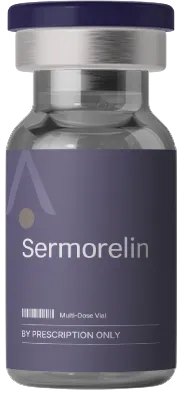
CoreAge Rx offers provider-guided compounded Sermorelin. It acts on the growth hormone signaling pathway. Individual suitability, prescription directions, and follow-up need to be established with the treating clinician; historical GEREF approval does not mean this compounded product is FDA-approved. Review the current Sermorelin page and bring a complete medication and supplement list to the provider discussion.
Related reading
- Sermorelin: How It Works, Evidence, and Treatment Questions
- Sermorelin and Sleep: What Hormone Research Can Tell Us
- Sermorelin vs. Other Growth Hormone Peptides: Why Names Matter
- Creatine after 50 and strength training
Educational information; your prescription and clinician’s instructions guide individual care. Product details and linked sources checked September 15, 2026. Studies of another preparation or delivery route do not establish identical results for a finished compounded product. Photographs are illustrative and do not show treatment outcomes.