
Prednisone can increase appetite and contribute to weight gain. It can also cause salt and water retention and raise blood glucose, so a higher number on the scale does not always represent the same process. These effects can be frustrating, particularly if you are already working on weight management or using a GLP-1 medicine.
The response should fit why prednisone was prescribed, the dose and duration, your symptoms, and your other medicines. Do not stop or change a prescribed steroid course to control hunger without speaking with the clinician who manages it.
Why can prednisone make you hungry?
Prednisone is a corticosteroid used for its anti-inflammatory and immune effects. Corticosteroids also affect metabolism. Current prednisone labeling lists increased appetite, weight gain, altered glucose tolerance, fluid retention, and mood changes among common adverse reactions associated with this drug class. Prednisone prescribing information
An increase in hunger can therefore be a medication effect. It is not evidence that you lack discipline, and it does not automatically mean your usual eating plan has failed.
People do not all experience the same changes. The reason for treatment, dose, treatment length, sleep, illness, and activity can influence what happens during a course. The prescribing information does not provide a dependable date when everyone becomes hungry or a fixed number of pounds everyone gains.
Prednisone is also different from testosterone used in TRT. Both belong to the broad steroid family, but their clinical purposes and effects differ. Our explanation of TRT and anabolic steroids helps separate these terms; testosterone treatment is not a remedy for prednisone-related hunger.
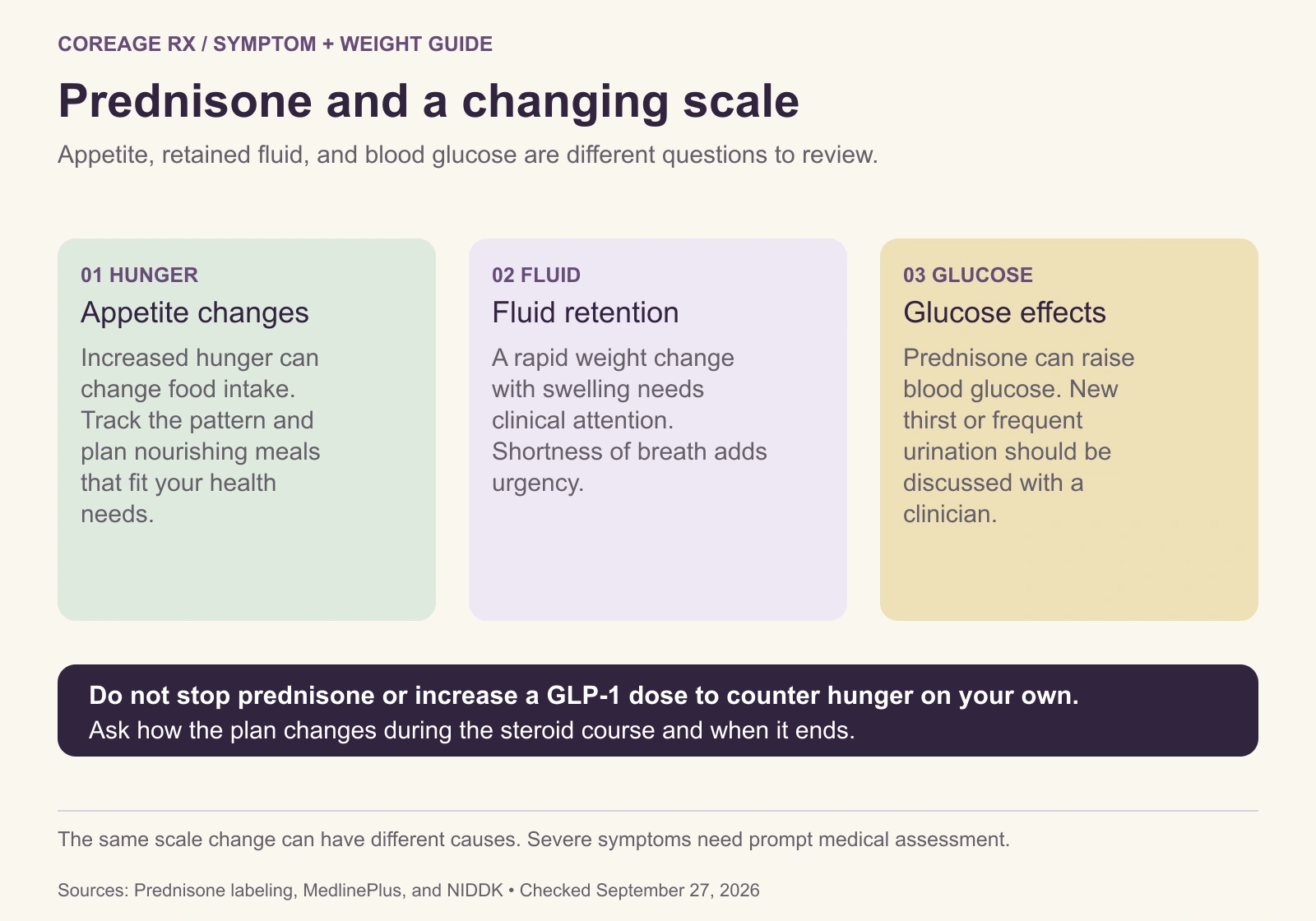
Is prednisone weight gain fat, fluid, or something else?
A scale cannot distinguish the cause by itself. Several processes may overlap:
| Change | What it can mean | Useful information to share |
|---|---|---|
| More hunger or larger portions | Food intake may have increased | When hunger changed and how meals have changed |
| Puffiness or swelling with a rapid weight change | Fluid retention may be contributing | Timing, swelling location, breathing symptoms, and blood pressure if monitored |
| Increased thirst and urination | Blood glucose may need assessment | Symptoms, diabetes history, and readings if you have a monitoring plan |
| Longer-term changes during repeated or prolonged treatment | Several medication and illness effects may be involved | Course history, strength, function, and the overall weight trend |
Prednisone labeling describes fluid retention, increased appetite, changes in fat distribution, and effects on glucose regulation. These are related treatment concerns, but they are not interchangeable explanations for every weight change. Prednisone prescribing information
Sudden weight gain, swelling, or shortness of breath deserves prompt medical advice. MedlinePlus lists sudden weight gain and swelling among potentially serious symptoms during prednisone treatment. Severe breathing difficulty requires emergency care. MedlinePlus prednisone information
For everyday scale fluctuations, our water-weight versus fat-loss guide provides context. It should not be used to dismiss a new symptom as “just water.”
How soon does hunger start, and when does it stop?
There is no universal timetable. Some people notice appetite changes during a short course, while others have more persistent concerns during repeated or longer treatment. The medicine’s purpose and schedule matter more than a generic online promise that appetite will normalize after a certain number of days.
Keep a brief record of when prednisone started, any prescribed changes, hunger, sleep, swelling, and weight trends. That can help distinguish a change linked to treatment from a pattern that was already present.
After the course ends or changes under medical supervision, reassess the trend with the prescriber. Persistent thirst, frequent urination, marked swelling, or unexplained weight changes warrant assessment rather than assuming that time alone will resolve them.
Practical ways to manage increased appetite
Keep meals predictable
Having a realistic meal routine can make strong hunger easier to respond to. Aim for meals that include a protein source, fiber-containing foods as tolerated, and enough overall food to support recovery. Examples include eggs with whole-grain toast and fruit, beans with rice and vegetables, or fish with potatoes and a cooked vegetable.
These are meal-planning options, not a special diet proven to cancel prednisone’s effects. A person with kidney disease, diabetes, swallowing difficulties, or a prescribed diet may need different choices.
If breakfast has become a difficult point in the day, our protein breakfast ideas can help you plan something more substantial than relying on willpower until lunch.
Plan for hunger instead of reacting to it
Consider preparing a satisfying snack for the time hunger tends to peak. A planned snack and a regular meal schedule may be easier to maintain than repeatedly skipping food and then becoming very hungry later.
Record whether eating more is driven by physical hunger, interrupted sleep, changed routines, or difficulty preparing meals while ill. This does not require counting every calorie. The aim is to identify a practical adjustment you can sustain during treatment.
Ask about salt and fluid recommendations
MedlinePlus notes that a clinician may recommend a diet lower in salt or adjustments involving potassium or calcium during prednisone treatment. Those instructions depend on your health and treatment plan. Do not start potassium supplements, diuretics, or aggressive fluid restriction on your own. MedlinePlus prednisone information
A rapid increase in weight with swelling belongs in a clinical review. Trying to “sweat out” fluid or use a detox tea can delay assessment and create additional problems.
Protect sleep and daily function
Prednisone may cause difficulty sleeping or mood changes. Tell your prescriber if either becomes disruptive. Do not change the timing of a delayed-release product or another prescribed schedule solely because a general internet article recommends morning dosing. Formulations and treatment goals differ. MedlinePlus prednisone information
Choose activity that fits the illness being treated and your clinician’s advice. The immediate goal may be maintaining routine and function during recovery, rather than pushing harder to offset every appetite change.

Can you take prednisone with semaglutide, Ozempic, or Wegovy?
This combination requires a medication review, but it is not automatically unsuitable for everyone. Prednisone can increase blood glucose. Its prescribing information notes that adjustments to diabetes medicines may be required when corticosteroids are used. Those adjustments belong to the treating clinician. Prednisone prescribing information
Ozempic and Wegovy contain semaglutide, but their approved uses, formulations, and instructions differ. A clinician should know the exact product, why you take it, and whether you also use insulin or another medicine that can cause hypoglycemia. Ozempic prescribing information Wegovy prescribing information
Useful questions include:
- Should glucose be monitored during this prednisone course, even if it was not monitored before?
- What readings or symptoms should prompt a call?
- Who will coordinate treatment if the steroid prescriber and GLP-1 prescriber are different?
- Does the plan need review again when prednisone is reduced or stopped?
- What should happen if nausea, vomiting, or illness makes eating and drinking difficult?
Our semaglutide questions guide can help organize the discussion. Never increase a GLP-1 dose simply to counter a few days of stronger hunger.
Does prednisone cancel out a GLP-1 medication?
“Cancel out” is too simple. Prednisone can affect appetite and glucose in ways that complicate treatment, while a GLP-1 medicine continues to have its own pharmacologic effects. A temporary appetite change or a single glucose reading does not establish that the GLP-1 has stopped working.
The important issue is whether the combined treatment plan still meets your clinical needs. A short steroid course for an acute problem may call for different monitoring from prolonged treatment for a chronic inflammatory condition.
Do not interpret stronger hunger as permission to inject early, combine products, or restart at a higher dose after a break. For people using compounded semaglutide, concentration and measurement also require attention; compounded medicines are not FDA approved. Our compounded GLP-1 guide explains that distinction. FDA compounding information
What if hunger comes with thirst and frequent urination?
Increased thirst and urination can be symptoms of high blood glucose. Because prednisone can affect glucose regulation, report these symptoms, especially if they are new, pronounced, or accompanied by fatigue or blurred vision. A clinician can decide what testing or monitoring is needed. NIDDK diabetes symptoms
If you already have diabetes, follow your sick-day and glucose-monitoring plan. Seek urgent care for severe illness, confusion, repeated vomiting, or other emergency symptoms rather than waiting for the next routine appointment.
For another common source of confusion, see Ozempic, Wegovy, and urination questions. Frequent urination should not automatically be credited to medication-driven weight loss.

Why you should not stop prednisone suddenly
How many days can you take prednisone safely?
There is no universal safe number of days for every prednisone prescription. The indication, dose, response, other conditions, and planned course matter. MedlinePlus says to use the prescribed schedule and duration and to discuss changes with the clinician; suddenly stopping can cause problems because the body may not have enough natural steroids. Do not extend a short course, reuse leftovers, or choose a taper from a generic chart. Ask the prescriber to make the duration, any reduction plan, follow-up, and symptoms requiring contact explicit. MedlinePlus prednisone drug information.
Depending on the dose and duration, prednisone can suppress the body’s own adrenal hormone production. Stopping abruptly can cause problems, and the underlying illness may also worsen. MedlinePlus advises patients not to stop prednisone without discussing it with their doctor; the clinician may reduce the dose gradually. MedlinePlus prednisone information
This does not mean every short course requires the same taper. It means the prescribed plan should be followed and clarified when uncertain. An online schedule cannot account for prior steroid exposure, the condition being treated, or your current symptoms.
What to discuss if weight concerns continue
Bring the medication list, course dates, a simple weight trend, and any changes in hunger, swelling, sleep, glucose, or physical function. Ask whether the current treatment remains necessary, what monitoring fits the duration, and whether nutritional support would help.
If considering CoreAge Rx’s semaglutide service, disclose prednisone use and the condition behind it during the evaluation. Weight-management treatment should be considered on its own clinical merits. It is not an automatic add-on to every steroid prescription or a guarantee against medication-related weight changes.
Review other medication-related weight questions individually
- Bupropion and weight loss — Read the study design, product differences, and prescribing questions; prednisone’s effects do not predict bupropion’s effects.
- Dupixent and weight changes — Understand the limits of observational reports and review changes with the prescribing team; the evidence and treatment decisions differ from corticosteroid care.
Educational information for adults; individual treatment decisions require a qualified clinician. Sources checked September 27, 2026. Original AI-generated article illustrations depict fictional people and objects, not patient outcomes. Other editorial images are illustrative. Graphics summarize the cited sources.