Mounjaro’s common side effects include nausea, diarrhea, reduced appetite, vomiting, constipation, indigestion, and abdominal pain. For people using it to manage type 2 diabetes, the safety conversation also needs to cover blood sugar, other diabetes medicines, eye health, and the ability to maintain food and fluid intake.
Mounjaro contains tirzepatide, which activates both GIP and GLP-1 receptors. The current U.S. label includes glucose control in adults and children age 10 and older with type 2 diabetes, and reduction of major cardiovascular events in adults with type 2 diabetes at high risk for those events. This article focuses on adults; pediatric care and dosing require a separate plan. Source: Mounjaro prescribing information, revised August 2026.
Common Mounjaro side effects in adult trials
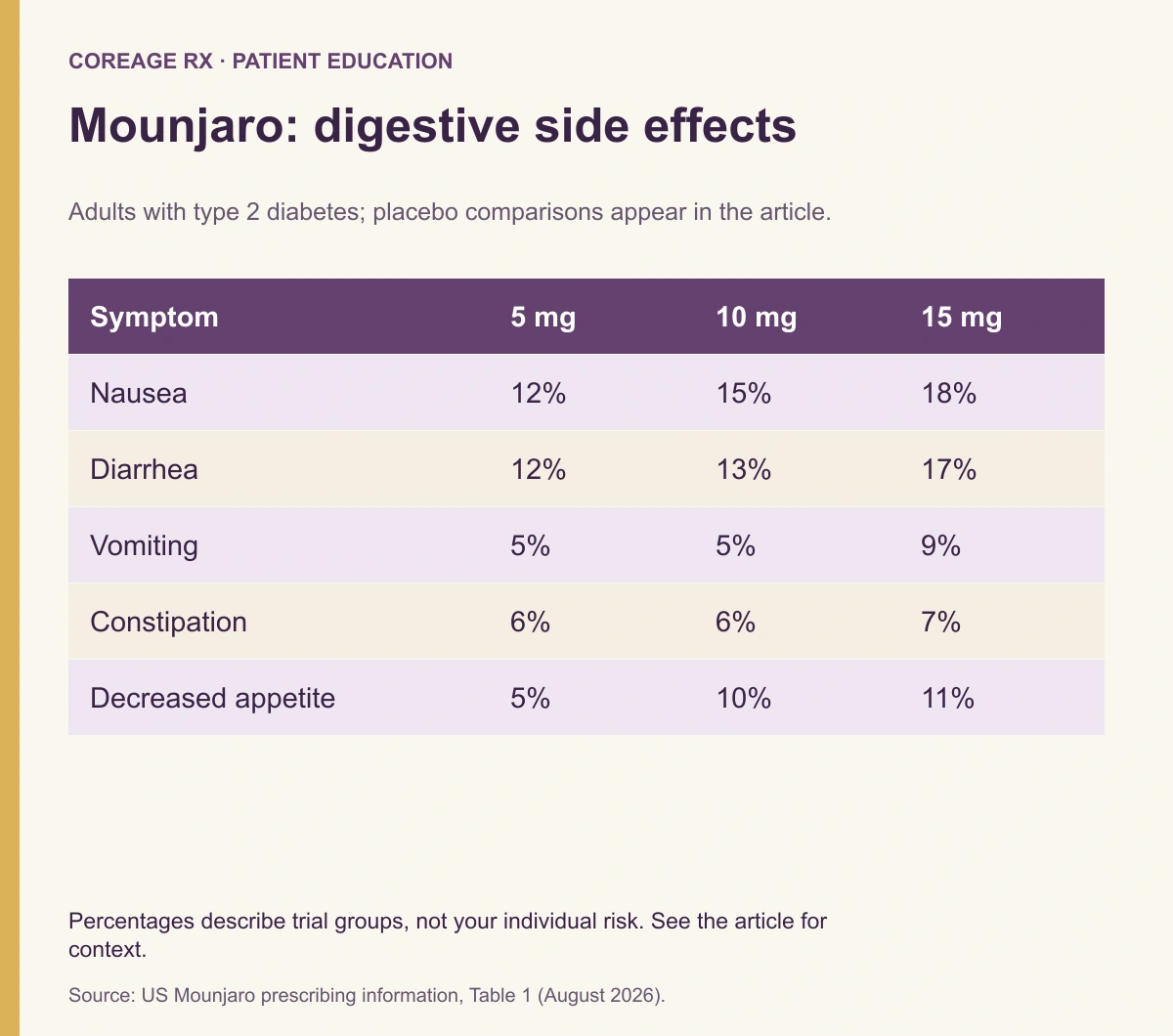
The table below comes from two placebo-controlled trials in adults with type 2 diabetes. It reports the percentage of participants who experienced at least one occurrence of the reaction.
| Reaction | Placebo, 235 participants | 5 mg, 237 participants | 10 mg, 240 participants | 15 mg, 241 participants |
|---|---|---|---|---|
| Nausea | 4% | 12% | 15% | 18% |
| Diarrhea | 9% | 12% | 13% | 17% |
| Reduced appetite | 1% | 5% | 10% | 11% |
| Vomiting | 2% | 5% | 5% | 9% |
| Constipation | 1% | 6% | 6% | 7% |
| Indigestion | 3% | 8% | 8% | 5% |
| Abdominal pain | 4% | 6% | 5% | 5% |
These numbers are useful context, not a prediction for an individual. They should not be compared directly with Zepbound’s weight-management trial percentages to declare that one brand has fewer side effects. Study populations, goals, and designs differ. The label also describes other studies with different observed frequencies. Source: Mounjaro label, section 6.1.
Why digestive symptoms happen
Mounjaro delays gastric emptying and affects appetite and glucose regulation. People can feel full after a smaller meal than before treatment. Larger meals, high-fat foods, and changes in eating routines may make symptoms more noticeable.
In the pooled adult trials, most nausea, vomiting, and diarrhea reports occurred during dose escalation and decreased over time. Gradual introduction is one reason a prescription has a stepwise schedule. It is not an invitation to increase faster when you feel well or to tolerate significant symptoms without reporting them.
The Mounjaro dosage chart explains labeled dosing in more detail. If you are new to the ingredient, our tirzepatide questions guide provides broader treatment context.
Nausea and low appetite: keeping nutrition in the plan
Smaller meals, a slower eating pace, and stopping before uncomfortable fullness can help with mild symptoms. Very large or fatty meals can be difficult to tolerate. A prolonged pattern of not eating is not a successful treatment outcome, even if appetite reduction was expected.
Tell the team if nausea repeatedly prevents meals, you are losing strength, or your food choices have narrowed to only a few items. A dietitian can help match food volume, texture, protein, and energy to your needs. The joint advisory on nutrition during GLP-1 therapy emphasizes nutritional assessment and support alongside medication.
Our guide to what to eat on Mounjaro offers practical starting ideas. The tirzepatide protein and muscle article explains why preserving function deserves attention during weight change.
Diarrhea, constipation, and sulfur burps
Diarrhea deserves attention when it is persistent, substantial, or affects hydration. A record of its timing, other symptoms, and changes in food or medicine can help the clinician identify contributors. Do not automatically attribute blood in stool, fever, or severe abdominal pain to an expected medication effect. Our focused article explains why Mounjaro may cause diarrhea.
Constipation needs a different review. Ask about fluid intake, gradual dietary fiber, activity, and medicines that may contribute. Adding multiple fiber, probiotic, and magnesium products at once makes it harder to identify what helps and what worsens symptoms. Severe abdominal swelling, vomiting, or inability to pass gas requires urgent assessment.
Burping, including an unpleasant sulfur-like smell, can be distressing. The label reports eructation, or belching, and reflux. An odor alone cannot diagnose a complication or determine the correct treatment. Read sulfur burps on Mounjaro for a more focused discussion, especially if burping occurs with pain, vomiting, or persistent diarrhea.

Our guide to Mounjaro questions without diabetes keeps Mounjaro diabetes-trial rates separate from Zepbound weight-study findings and explains that not having diabetes does not remove product risks.
Low blood sugar: a key diabetes-specific concern
Mounjaro can increase hypoglycemia risk when used with insulin or an insulin secretagogue such as a sulfonylurea. A change in appetite or meal size can affect how the entire diabetes regimen fits together. Your clinician may adjust another medicine and specify monitoring; do not make those changes independently.
Before starting or increasing treatment, ask:
- Which symptoms should prompt a glucose check?
- What glucose range or pattern should trigger a call?
- How should I treat a low according to my personal plan?
- Do I need a rescue medicine, and does someone close to me know how to use it?
- What should happen to the rest of my diabetes medicines when I cannot eat normally?
Confusion, seizures, or loss of consciousness can indicate severe hypoglycemia and require emergency assistance. A person who cannot swallow safely should not be given food or drink by mouth. Follow the established emergency plan and contact emergency services. Our Mounjaro low-blood-sugar article provides related education.
Serious abdominal symptoms and dehydration
Mild digestive discomfort and severe persistent pain are different situations. Pancreatitis has been observed with tirzepatide and GLP-1 medicines. Severe abdominal pain that does not go away, sometimes radiating to the back and occurring with or without vomiting, needs urgent medical assessment. Do not take another dose until the care team advises you.
Gallbladder disease is another labeled concern. Upper abdominal pain with fever, yellowing of the skin or eyes, or pale stools warrants prompt evaluation. These symptoms should not be managed by repeatedly changing meal size alone.
Vomiting and diarrhea can cause fluid loss and acute kidney injury. Seek prompt care if you cannot keep fluids down, urinate much less than usual, feel markedly dizzy, or are becoming weak or confused. This risk can exist without prior kidney disease. Source: Mounjaro label, warnings and precautions.
Allergic reactions, skin sensitivity, and injection sites
Stop Mounjaro and seek emergency help for signs of a severe allergic reaction, including trouble breathing, swelling of the lips, tongue, or throat, or fainting. A localized injection-site reaction is a different issue, but it should be reported if it spreads, becomes severe, or does not improve.
Rotate sites as instructed and review technique with the pharmacist. The product has different presentations, so use training for the pen or vial actually dispensed. Never share a KwikPen, even after changing its needle.
If skin feels unusually painful or sensitive, describe the location, timing, rash or lack of rash, and other symptoms. The current label reports dysesthesia in the cardiovascular outcomes trial, but a new sensory symptom can have other causes. Our Mounjaro skin-sensitivity guide explains how to make that discussion more useful.
Eye health and changes in glucose control
People with a history of diabetic retinopathy should be monitored for progression. Changes in glucose control can affect an existing eye condition, and the label includes specific warnings about retinopathy complications.
Keep recommended eye examinations and tell the diabetes team about prior retinopathy, eye procedures, or new symptoms. Sudden loss of vision, a dark curtain, or another abrupt major change needs urgent eye assessment. Do not wait for a routine medication follow-up or assume the symptom will disappear after the next dose.
Eye safety is one reason a medication review includes more than weight or appetite. Relevant health history changes what monitoring is appropriate.

Thyroid history, pregnancy, birth control, and surgery
Thyroid warning: Tirzepatide caused thyroid C-cell tumors in rats, and its relevance to humans is unknown. Mounjaro is contraindicated with a personal or family history of medullary thyroid carcinoma or MEN2. Report a neck lump, persistent hoarseness, or trouble swallowing, and discuss the exact family history. See Mounjaro and thyroid cancer.
Pregnancy: Contact the clinician promptly if pregnant or planning pregnancy. Diabetes treatment needs a coordinated plan; do not leave high glucose untreated while changing medicines.
Oral contraception: Switch to a nonoral method or add a barrier method for four weeks after starting and for four weeks after each dose increase, according to the label. Our tirzepatide and birth-control guide covers this precaution.
Procedures: Tell the anesthesia team about Mounjaro, its timing, and any digestive symptoms before surgery or deep sedation. The team should provide individualized instructions because delayed gastric emptying can affect aspiration risk.
Frequently asked questions
Are Mounjaro and Zepbound side effects the same?
Both contain tirzepatide and share important warnings. Their approved indications and trial populations differ, so the reported percentages are not interchangeable. Use the label for the product you receive. Our Zepbound side-effects guide discusses the weight-management data separately.
Does less appetite mean I should skip meals?
No. The goal is a workable nutrition plan. Regularly missing meals can make adequate nutrient intake and diabetes management harder. Ask for support when appetite reduction interferes with eating.
Should I stop because of mild nausea?
Discuss symptoms with the prescriber, particularly before an increase. Severity, duration, hydration, glucose, and other medicines affect the decision. Emergency symptoms require urgent care rather than waiting for routine advice.
Is a compounded product the same alternative?
A compounded tirzepatide preparation is not FDA-approved Mounjaro, and its safety, effectiveness, and quality have not undergone the same FDA review. FDA’s guidance describes added concerns with dosing errors, quality, and product labeling.
If access, cost, or tolerance is the reason you are reconsidering treatment, our Mounjaro alternatives guide helps organize the discussion. You can also review CoreAge Rx’s tirzepatide information and ask the team to identify the exact preparation and follow-up plan.
Educational information for adults; individual treatment decisions require a qualified clinician. Sources checked September 26, 2026. Original AI-generated article illustrations depict fictional people and objects, not patient outcomes. Other editorial images are illustrative. Graphics summarize the cited sources.