
Bupropion can be associated with weight loss in some people, but the effect is variable and is not the same as an approved weight-management indication for bupropion alone. Wellbutrin XL is an antidepressant. Contrave combines bupropion with naltrexone and has a separate weight-management indication, formulation, and safety profile.
If your weight or appetite changes while taking bupropion, review the trend with the prescribing clinician. The useful question is whether the medicine is meeting its intended goals and whether the change is healthy, tolerable, and adequately explained. A lower number on the scale is not automatically a reason to increase the dose or continue a troublesome side effect.
What is bupropion prescribed for?
Bupropion products have different formulations and approved uses. The current Wellbutrin XL label identifies major depressive disorder and prevention of seasonal affective disorder. Other bupropion products and brands can have different instructions and uses.
That distinction matters because immediate-release, sustained-release, and extended-release products are not simply interchangeable dosing schedules. Use the formulation on your prescription and follow its instructions. A study involving sustained-release bupropion cannot be converted into a personal extended-release weight-loss schedule.
The reason for treatment also matters. If the medicine is prescribed for depression, mood, functioning, sleep, and safety remain central outcomes. Weight change may be part of follow-up, but it should not become the only measure of whether treatment is helping.
Does the label show weight loss?
Yes, weight changes are described in the clinical-trial information. For example, the Wellbutrin XL label reports that 23% of participants receiving extended-release bupropion in seasonal affective disorder trials lost at least 5 pounds, compared with 11% receiving placebo. These trials lasted up to six months.
The same label reports weight gain of more than 5 pounds in 11% of the bupropion group and 21% of the placebo group. The study population, treatment purpose, and amount of change matter. These results do not mean every person loses weight, that the effect starts immediately, or that bupropion should be prescribed solely to reproduce that result.
Source: Wellbutrin XL clinical-trial weight-change tables. A trial percentage describes a group under specific conditions; it is not your personal chance of a particular outcome without considering your circumstances.
What did the dedicated weight-loss trial find?
A 2002 bupropion SR trial enrolled 327 adults with obesity. Participants received placebo or one of two sustained-release bupropion study regimens and counseling about an energy-restricted diet, meal replacements, and exercise. The placebo-controlled phase lasted 24 weeks.
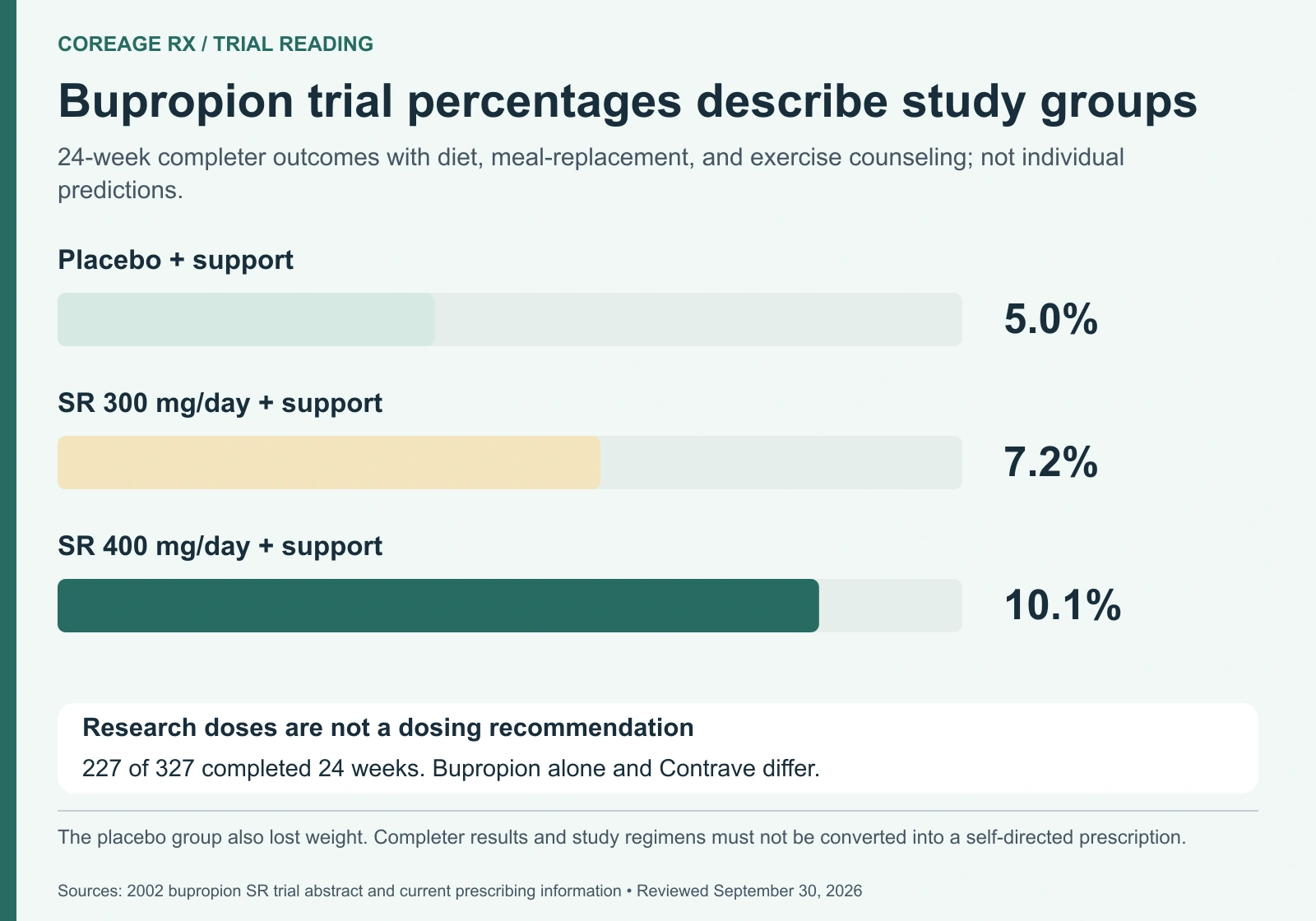
Among participants who completed 24 weeks, the reported mean losses of starting weight were:
| Study assignment | Mean weight loss among 24-week completers |
|---|---|
| Placebo plus the study’s diet and activity support | 5.0% |
| Bupropion SR 300 mg/day plus that support | 7.2% |
| Bupropion SR 400 mg/day plus that support | 10.1% |
These are research regimens, not a recommendation to start or increase a prescription. The net differences from the placebo group’s mean were 2.2 and 5.1 percentage points. The largest percentage should not be described as the medicine’s isolated effect, because the comparison group also lost weight with the study support.
Only 227 of the 327 enrolled participants completed 24 weeks. Completer results can differ from results accounting for everyone assigned treatment, so they should not be presented as a guaranteed expectation for a new patient.
During the extension, placebo participants were reassigned to bupropion. At 48 weeks, 192 participants completed the study; reported maintained mean losses among the bupropion completers were 7.5% and 8.6%. The extension did not preserve an unchanged placebo comparison through 48 weeks. That limitation matters when interpreting the longer-term numbers.
Is Wellbutrin the same as Contrave?
No. Contrave contains both naltrexone and bupropion in a specific extended-release product. Its current indication is long-term weight reduction and maintenance in eligible adults, alongside a reduced-calorie diet and increased physical activity. It is not approved to treat major depressive disorder. Source: current Contrave professional information.
The combination has additional considerations, including opioid-related risks from naltrexone and blood-pressure concerns. Adding separate naltrexone to an existing antidepressant prescription is not a self-directed substitute for clinical assessment or the approved product’s instructions.
Contrave also contains bupropion. Its professional information contraindicates use with other bupropion-containing products. A person taking Wellbutrin, another bupropion product, or a combination medicine needs a complete medication review before considering another treatment that contains the same ingredient.
Our GLP-1 overview provides context for those medicines, which work differently. It should not be used to treat bupropion, Contrave, semaglutide, and tirzepatide as interchangeable options.

Why might appetite or weight change?
Bupropion affects neurotransmitter pathways, including norepinephrine and dopamine. That pharmacology provides context for its effects, but does not establish one simple explanation for every person’s weight trend. The Wellbutrin prescribing information describes its mechanism and clinical effects.
Changes in appetite, nausea, dry mouth, sleep, mood, daily routine, and other medicines can occur together. Improvement in depression may also change eating and activity patterns. The scale alone cannot identify which factor is responsible or distinguish an intended benefit from inadequate intake.
Notice what the change feels like. Are you eating enough and functioning better, or skipping meals because you feel unwell? Are food preferences changing, or has another medicine or health issue changed at the same time? Those details make the follow-up more useful than labeling all weight loss “good.”
Our food-noise and cravings guide explains related experiences. A change in food thoughts is one observation, not proof that a particular prescription is the right weight-management treatment.
How quickly should weight loss happen?
There is no universal timeline or required number of pounds per week. The trial results above were measured over months in defined populations. They do not establish what should happen after the first tablet or the first dose adjustment.
If weight is unchanged, the medicine may still be helping its intended psychiatric indication. If weight is falling rapidly or without adequate eating, the change deserves assessment. Neither experience should automatically lead to a larger dose.
Agree with the clinician on follow-up measures and timing. Those may include symptoms, mood, blood pressure, nutritional intake, and a weight trend when relevant. The goal is to understand the whole response rather than chase a research average.
Which safety issues matter before considering bupropion?
The Wellbutrin XL label includes a boxed warning about suicidal thoughts and behaviors and recommends monitoring for clinical worsening or concerning behavior changes. New suicidal thoughts, severe mood changes, mania-like symptoms, seizures, or a serious allergic reaction need prompt medical attention.
Important contraindications include seizure disorder, a current or previous diagnosis of anorexia nervosa or bulimia, certain abrupt alcohol or sedative withdrawal situations, and specific monoamine oxidase inhibitor interactions. Other medicines or conditions can increase seizure risk. Blood pressure and additional interactions also require review. Source: current Wellbutrin XL safety information.
This is not a complete safety screen. Tell the clinician about prescriptions, nonprescription medicines, supplements, alcohol use, medical history, pregnancy plans, and any previous eating disorder. A social-media recommendation about weight loss cannot replace that assessment.
For Contrave, chronic opioid treatment and acute opioid withdrawal are additional major concerns. Uncontrolled hypertension and duplicate bupropion use are also contraindications in its professional information. Source: Contrave safety information.
Can bupropion be combined with a GLP-1 medicine?
Our guide to naltrexone and Mounjaro questions separates oral naltrexone from Contrave, reviews product-specific precautions, and explains the retraction of a frequently cited combination cohort.
Some people have clinical reasons to use medicines for both mental health and metabolic conditions, but whether a combination is appropriate requires an individualized review. There is no universal rule that the combination is safe or that it produces a predictable extra amount of weight loss.
Discuss the exact products, all active ingredients, appetite and digestive symptoms, blood pressure, mood history, and the ability to eat adequately. If treatment is being added by another clinic, make sure each prescribing team knows the full medication list.
CoreAge Rx’s semaglutide and tirzepatide service pages describe its programs. Confirm the pharmacy product and follow-up plan; those services should not be assumed to include management of an existing antidepressant prescription.

What should you do if weight loss is unwanted?
Contact the prescribing clinician, particularly if appetite is poor, intake is inadequate, or the trend is persistent. Bring the start date, dose-change dates, symptom pattern, and other recent changes. A brief record can help without requiring constant weighing or calorie tracking.
Do not alter or discontinue the prescription solely to manipulate weight without advice. The team can assess whether the medicine, another condition, or the broader treatment plan needs adjustment. If symptoms are urgent, seek timely care rather than waiting for a routine refill appointment.
Our balanced-meal guide offers flexible food ideas, but persistent medication-related difficulty eating requires clinical review. Food tips should support assessment, not delay it.
Frequently asked questions
Can bupropion cause weight gain?
Yes, some participants gained weight in the trials described by the label. An individual trend can also reflect other changes. The medicine does not guarantee weight loss.
Is a higher dose better for weight loss?
A higher research dose is not a reason to increase your prescription. Formulation, indication, seizure risk, tolerability, and the clinician’s plan govern dosing.
Will weight loss continue indefinitely?
The evidence does not support that expectation. Review the trend and intended treatment goals over time. Increasing the dose to keep the scale falling is not a suitable self-directed strategy.
What is the best question for my appointment?
Ask whether the weight change is consistent with healthy intake and the purpose of treatment, and which observations or symptoms should trigger earlier follow-up.
Clarify bupropion’s role in mental-health care
- Is bupropion a mood stabilizer? — Distinguish an antidepressant from bipolar-treatment roles, screening and urgent mood symptoms.
Educational information for adults; individual treatment decisions require a qualified clinician. Sources reviewed September 30, 2026. Original AI-generated article images depict fictional people and objects, not patient outcomes. Other editorial images are illustrative. Graphics summarize the cited sources.