
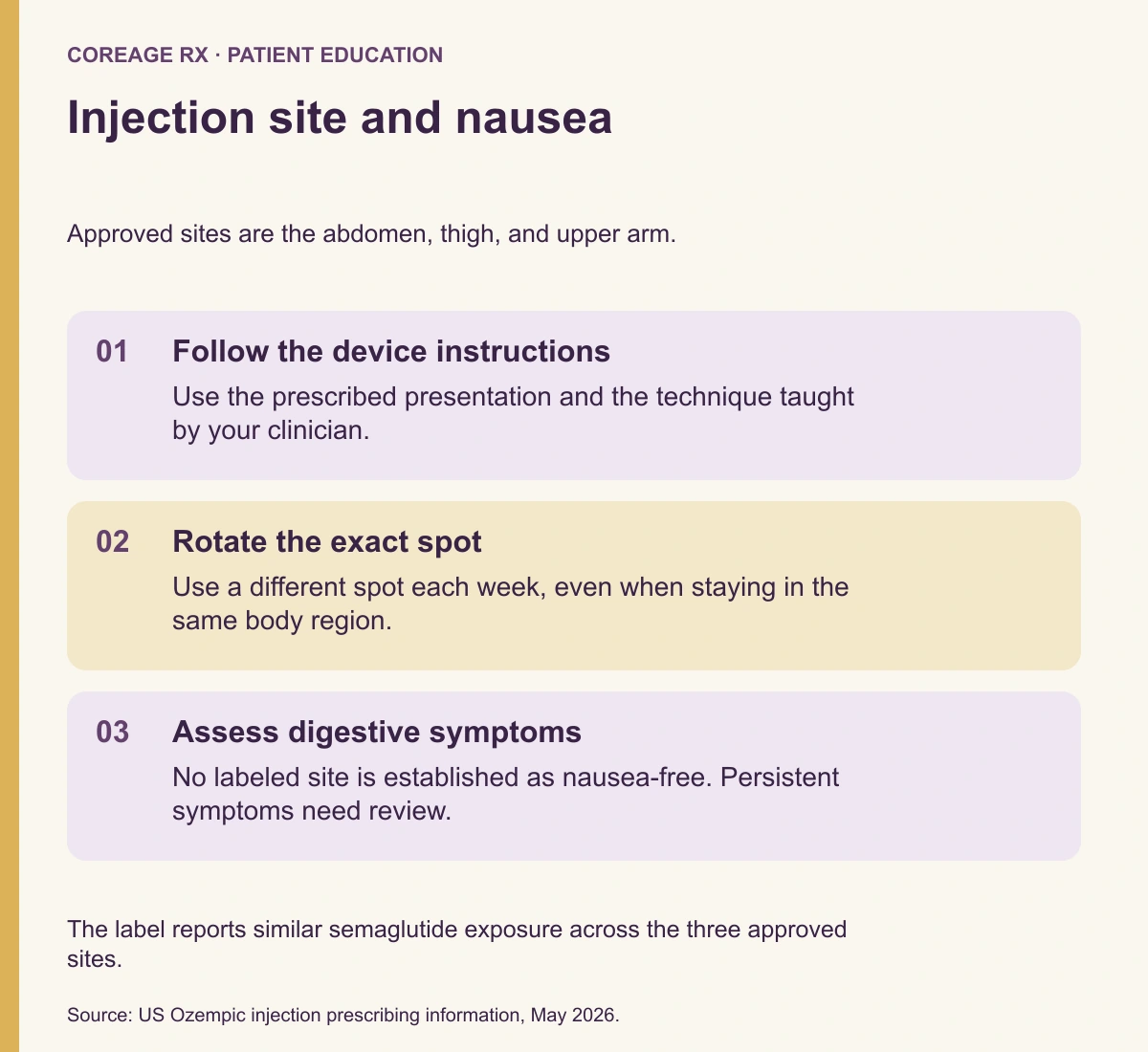
Ozempic injection is given under the skin of the abdomen, thigh, or upper arm, according to the U.S. prescribing information. Rotate the exact injection spot each week and follow the instructions for the device you were prescribed.
There is no injection site established in the label as a way to avoid nausea. The label reports similar semaglutide exposure across the three approved regions. If nausea is persistent, severe, or making it difficult to eat or drink, changing the injection location is not a substitute for reviewing symptoms with the prescribing team.
This guide explains approved sites, rotation, device questions, and how to separate a local injection problem from a digestive side effect. It uses the U.S. Ozempic injection label, revised May 2026 and checked September 26, 2026.
Where can Ozempic be injected?
The approved regions are the abdomen, thigh, and upper arm. Ozempic is administered subcutaneously, meaning into the tissue under the skin. The appropriate technique comes from the Instructions for Use for the exact prescribed presentation and training from a clinician or pharmacist.
| Approved body region | Practical question to review |
|---|---|
| Abdomen | Which area should I use with this device, and how should I rotate spots? |
| Thigh | Can I comfortably see and reach the appropriate site? |
| Upper arm | Do I need another person to administer the injection correctly? |
The label identifies body regions; it does not mean every point within a region is equally suitable for a particular person’s injection. Use the accompanying instructions and ask the team to demonstrate if you are uncertain. Do not invent a new site or route based on a video or a friend’s routine.
Does injecting in the thigh cause less nausea?
Some people describe different experiences after changing locations. An individual report can be worth discussing, but it does not establish that a particular site reliably prevents nausea for other people.
The Ozempic label states that similar semaglutide exposure is achieved after subcutaneous injection in the abdomen, thigh, or upper arm. That finding does not compare every person’s symptoms, and it should not be turned into a promise that one location eliminates digestive effects.
Nausea needs context: when it started, whether the prescribed dose recently changed, how severe it is, what else you take, and whether you can maintain food and fluids. Our semaglutide side-effects guide explains why the exact product and treatment stage matter.
Why an abdominal injection is not an injection into the stomach
The word “stomach” is sometimes used casually to describe the belly area. With a correctly administered subcutaneous abdominal injection, the medicine goes into tissue beneath the skin. It is not injected into the stomach organ or digestive contents.
Ozempic works after semaglutide is absorbed into the body. Its digestive effects are not evidence that the needle reached the digestive tract. The GLP-1 explainer describes how these medicines affect relevant appetite and digestive pathways.
If you are worried about needle placement, ask for technique training before your next injection. The right response to uncertainty is a device-specific demonstration, not pressing harder, changing the needle, or trying an unfamiliar route yourself.
How injection-site rotation works
The label instructs patients to use a different injection spot each week when injecting within the same body region. Rotation can therefore mean using another appropriate spot within an approved region; it does not necessarily mean switching from abdomen to thigh to arm on a rigid schedule.
A simple record of the date and general location can help you remember what you used. Keep any record practical and consistent with the training you received. It is a memory aid, not a reason to inject into a spot that your device instructions or clinician advise against.
If the area you planned to use is sore, visibly irritated, or otherwise concerning, ask your clinician or pharmacist which alternative is appropriate. Persistent or worsening skin changes deserve assessment rather than repeated injections into the same troublesome location.
The device matters as much as the body region
Do not assume every Ozempic presentation is operated the same way. The current U.S. label includes different presentations with their own Instructions for Use. A multidose pen, for example, has a dose selector and needle-handling steps that should not be transferred automatically to another device.
Before using a newly supplied product, confirm the brand, presentation, prescribed strength, and instructions. Ask for retraining if the presentation changes or if the package does not match what you expected. Our Ozempic pen guide explains common label and packaging questions.
For Ozempic multidose pens, the Instructions for Use warn against sharing a pen even after changing the needle and against counting clicks to set a dose. Use a new needle as directed. Do not extract leftover medicine or estimate a dose from the amount you can see through a window.

Injection discomfort and nausea are different problems
Our guide to Ozempic injection bubbles and lumps explains what to record about a local change, how device uncertainty differs from a skin symptom, and when to contact the treating team.
Pain, redness, itching, or swelling around the skin site is a local concern. Nausea, vomiting, constipation, or abdominal discomfort is a digestive concern. Both deserve attention, but the questions used to assess them are not identical.
For a skin reaction, describe its appearance, size, timing, and whether it is spreading or worsening. For nausea, explain whether it happens around meals, whether vomiting occurs, how long symptoms last, and whether drinking and eating remain manageable. Include any recent medication or dose changes.
Do not assume every symptom after an injection is caused by the injection location. Fever, worsening redness, severe pain, or feeling unwell may require a clinician to consider other explanations. A photo shared through the clinic’s appropriate secure channel may help the team understand a skin concern if they request one.
What to discuss when nausea keeps returning
Contact the prescribing team if nausea interferes with meals, fluids, daily functioning, or the ability to follow the treatment plan. Bring the actual product and prescription details, including the date of the last dose and any recent clinician-directed change.
Useful questions include:
- Could the current dose or timing of an increase be contributing?
- Do any other medicines or health conditions change the assessment?
- Is my food and fluid intake adequate?
- Do I need an examination, testing, or a change to the prescribed plan?
- Which symptoms should prompt urgent care?
Nutritional support should focus on maintaining adequate nourishment and tolerability. The joint GLP-1 nutrition advisory emphasizes nutrition assessment and support during treatment. If appetite is very low, our semaglutide protein and muscle guide explains why intake and physical function still matter.
Symptoms that should not wait for a site experiment
The Ozempic label includes serious warnings involving pancreatitis, severe gastrointestinal reactions, dehydration-related kidney injury, and allergic reactions. Severe or persistent abdominal pain, especially with vomiting or pain extending to the back, needs prompt medical evaluation.
Repeated vomiting, inability to keep fluids down, or symptoms of substantial dehydration also warrant prompt contact with a health professional. Trouble breathing, swelling of the face or throat, collapse, or other signs of a severe allergic reaction require emergency help.
These are not situations to troubleshoot by trying the other thigh or waiting through repeated doses. Tell the treating team which product you use and when it was last administered. Follow urgent medical advice rather than an online suggestion to continue until symptoms pass.
What if I also inject insulin?
The Ozempic label says to administer Ozempic and insulin as separate injections and never mix them. It permits using the same body region but says the injections should not be adjacent to each other. Ask the clinician to explain how to organize both medicines with your own devices and prescribed schedule.
Insulin and some other diabetes medicines can also increase the risk of low blood sugar when used with Ozempic. The prescribing team may need to review the overall diabetes regimen. Do not adjust insulin or Ozempic on your own because you changed an injection site.
Keep the products and devices clearly identified. Confusing two injectable medicines can create a much more important problem than deciding which approved body region feels most convenient.
Timing and dose questions belong in the treatment review
The label allows Ozempic injection once weekly, on the same day each week, at any time of day and with or without meals. It does not establish nighttime dosing or fasting before injection as a reliable nausea-prevention method.
If you miss a dose, think a dose was incomplete, or cannot tell whether the device delivered it, use the matching instructions and contact the pharmacist or prescriber. Do not immediately repeat an uncertain dose. Our Ozempic dosage chart covers the labeled schedule and missed-dose guidance.
The name of the ingredient is not enough to transfer these instructions to another preparation. A compounded semaglutide vial can have different concentration and measurement instructions, and it is not an FDA-approved Ozempic presentation. FDA’s guidance on unapproved GLP-1 drugs describes dosing-error concerns.

Frequently asked questions
Does the Ozempic shot hurt?
Brief needle discomfort can occur, and experience varies. The injection label reports injection-site reactions in trials, but that measure is not a count of every needle sensation and cannot promise a painless injection. Get training for the actual pen or syringe, use the approved site and supplied directions, and ask the pharmacist or clinician about persistent pain, spreading redness, swelling or an unexpected reaction. Do not change the dose, improvise a needle or experiment with an unapproved site to manage pain. Ozempic injection prescribing information.
Can I use the abdomen every week?
The label permits the abdomen as an injection region and instructs you to change the exact spot each week within a region. Follow the instructions and training for your presentation. Ask about any area that is sore or concerning.
Do I need to increase the dose when I change sites?
Do not change the prescribed dose because you moved among approved injection regions. The label reports similar exposure across those regions. Dose decisions belong with the prescribing clinician.
Is the upper arm a good choice if I inject myself?
The practical issue is whether the medicine can be administered correctly with your presentation. Some instructions require another person’s help for the upper arm. Review the supplied Instructions for Use and ask for training instead of guessing about reach or angle.
Will a different site make the medicine work faster?
The approved-site information does not establish a best location for faster results. Consistent prescribed use, tolerability, and clinical follow-up are more useful topics to review than trying to accelerate treatment through site selection.
What should I ask a semaglutide service before treatment?
Ask which exact product or preparation is offered, how the pharmacy labels it, who provides technique training, and how side effects are reviewed. If considering CoreAge Rx’s semaglutide service, confirm those details rather than assuming every semaglutide preparation uses Ozempic instructions.
Choose an approved site and get help with symptoms
Use the abdomen, thigh, or upper arm according to the prescribed device instructions, rotate the exact spot, and keep technique questions open with the clinical team. A location that is easy to use correctly can support the routine. Persistent nausea needs its own assessment rather than a promise of a nausea-free injection site.
Educational information for adults; individual treatment decisions require a qualified clinician. Sources checked September 26, 2026. Original AI-generated article illustrations depict fictional people and objects, not patient outcomes. Other editorial images are illustrative. Graphics summarize the cited sources.