
Wellbutrin can be associated with weight loss, but it is not an FDA-approved weight-management medicine. It contains bupropion, an antidepressant. Whether it is appropriate should depend on the condition being treated, its potential benefits, medical history, and safety—not a promise about the number on the scale.
The evidence is easy to misread because studies involve different bupropion formulations, patient populations, and outcomes. Some report the proportion of people losing a few pounds; an older obesity trial reports average percentage changes among people who completed treatment. Those are not interchangeable predictions for someone starting Wellbutrin XL.
What is Wellbutrin prescribed for?
The current Wellbutrin XL label describes treatment of major depressive disorder and prevention of seasonal major depressive episodes in people with seasonal affective disorder. Weight management is not one of its approved indications.
Bupropion is also found in other products, with different formulations or combinations and different approved uses. The ingredient name alone does not identify the complete prescription. Check whether the medicine is immediate release, sustained release, extended release, or a combination product before applying information from a study.
If weight change is an important concern when choosing an antidepressant, tell the prescriber. That is a reasonable part of the discussion, alongside previous treatment response, sleep, anxiety, blood pressure, seizure risk, interactions, and the symptoms the medicine is meant to treat.
What did the Wellbutrin XL trials show about weight?
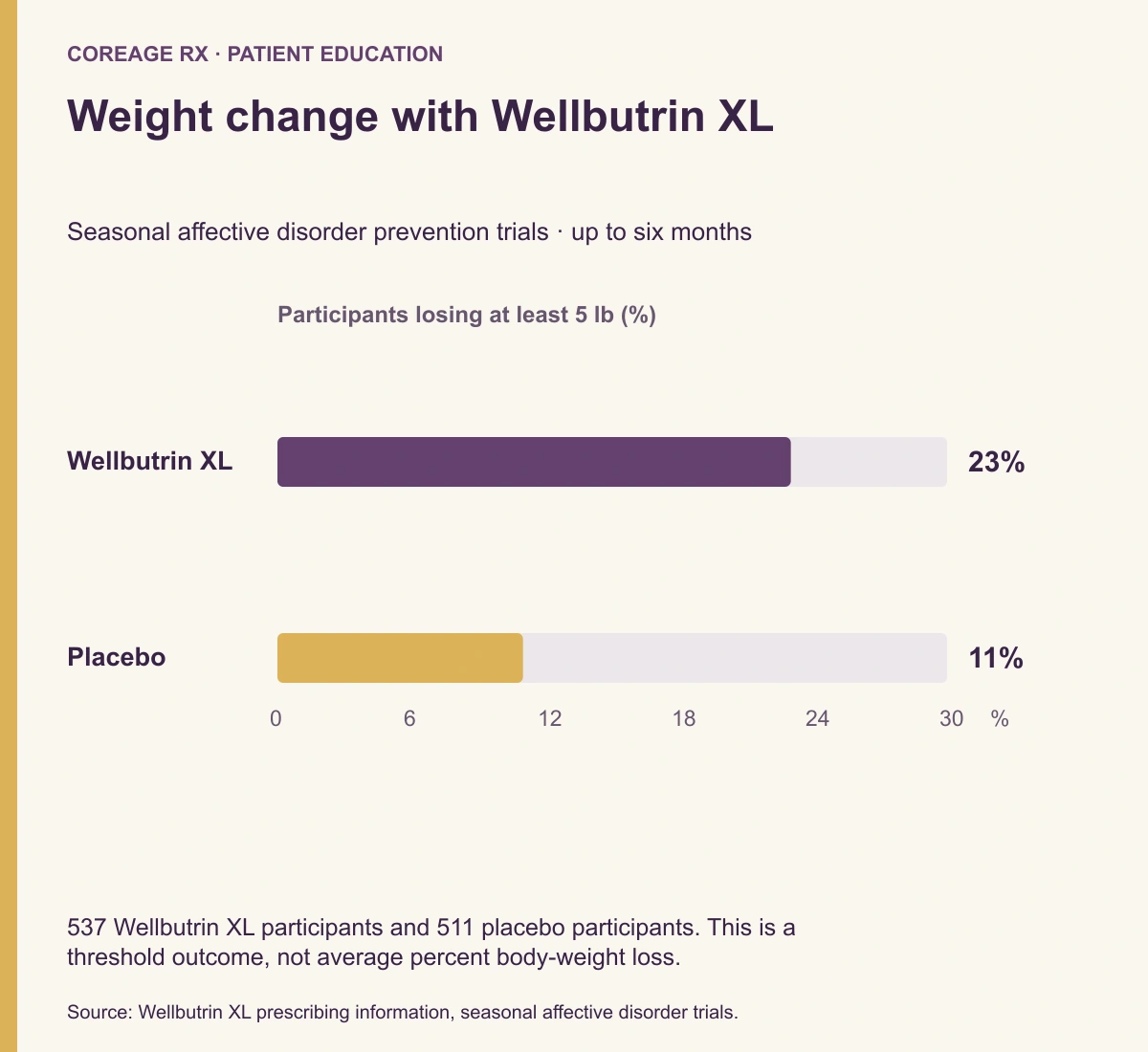
The label reports three seasonal-affective-disorder trials of extended-release bupropion involving 537 treated participants and 511 receiving placebo. Over trials lasting up to six months, 23% of the bupropion group lost at least five pounds, compared with 11% of the placebo group.
The same table reports weight gain greater than five pounds in 11% of the bupropion group and 21% of the placebo group. These figures describe the proportion of participants crossing a weight-change threshold. They do not mean that the average patient lost 23% of their body weight or that everyone lost five pounds. Source: Wellbutrin XL prescribing information, weight-change data.
| Finding from the seasonal-affective-disorder trials | Bupropion extended release | Placebo |
|---|---|---|
| Lost at least five pounds | 23% | 11% |
| Gained more than five pounds | 11% | 21% |
Someone starting treatment for a different diagnosis, taking another formulation, or using other medicines may have a different experience. The results should support a conversation about possibilities, not a personal forecast.
Why do some websites mention 7% to 10% weight loss?
Those numbers can come from a different study. A 2002 randomized trial of bupropion sustained release enrolled 327 adults with obesity. Participants received placebo, 300 mg daily, or 400 mg daily, together with counseling on an energy-restricted diet, meal replacements, and exercise.
Among the 227 participants who completed 24 weeks, average weight reductions were 5.0% with placebo, 7.2% with 300 mg, and 10.1% with 400 mg. Those are completer results: roughly a third of the original participants did not complete that point in the study. They also reflect a structured lifestyle program and a sustained-release formulation.
The later extension does not provide the same original placebo comparison because placebo participants were switched to bupropion after 24 weeks. This study cannot justify telling a person prescribed Wellbutrin XL for depression that they should expect 10% weight loss. The study doses are research details, not a weight-loss dosing recommendation.
Is there an approved Wellbutrin dose for weight loss?
No. Wellbutrin is not approved for that indication, so there is no FDA-approved Wellbutrin weight-loss schedule to follow. A clinician may sometimes consider off-label treatment, but that decision requires a specific assessment and explanation of the evidence and risks.
Increasing bupropion to chase appetite changes is particularly concerning because seizure risk is dose-related. Different formulations also have different administration rules. Do not combine products, take extra tablets, or copy another person’s regimen.
If a treatment has not produced the desired mood or weight response, bring that information to the prescriber. The appropriate next step may be to reassess the diagnosis, treatment goals, other medicines, or a separate weight-management plan.
How is Contrave different?
Contrave contains naltrexone and bupropion in a specific extended-release combination. Its current label includes long-term weight management in specified adults, together with a reduced-calorie diet and increased physical activity. It is not simply another brand name for Wellbutrin, and it is not approved to treat depression. Source: Contrave prescribing information.
The combination has its own risks and restrictions. Its label contraindicates use with other bupropion-containing products, including Wellbutrin. Chronic opioid use or acute opioid withdrawal and uncontrolled hypertension are among the other important contraindications.
Do not add Contrave to Wellbutrin or try to build the combination yourself from separate prescriptions. If a change is being considered, the clinician needs to review the complete medication list and plan it deliberately.

When both prescriptions are involved, our guide to Ozempic and Wellbutrin medication review covers exact formulations, oral absorption limits, intake, blood pressure, sleep and mood follow-up.
Does Wellbutrin work like Ozempic or another GLP-1 medicine?
No. Bupropion is not a GLP-1 receptor agonist. The fact that two medicines can be associated with weight change does not mean they share a mechanism, indications, dosing, or safety profile.
Likewise, not every product discussed online for weight loss is approved for weight management. Our Ozempic alternatives guide separates diabetes treatment, weight-management treatment, and other clinical goals. The metformin weight-loss guide provides another example of why an observed weight effect and an approved obesity indication are different questions.
A clinician should identify appropriate options before trial percentages or prices are compared. Combining medicines because each has a weight-related headline is not an evidence-based personal plan.
Which medical history is especially important?
Wellbutrin XL is contraindicated in people with a seizure disorder or a current or prior diagnosis of bulimia or anorexia nervosa. The label also identifies risks involving abrupt withdrawal from alcohol, benzodiazepines, barbiturates, or antiepileptic medicines. Certain monoamine oxidase inhibitor interactions require specific separation periods.
Tell the prescriber about blood pressure, head injuries, bipolar disorder or possible manic episodes, pregnancy or breastfeeding, and every prescription, nonprescription medicine, and supplement. Some other medicines can lower the seizure threshold or otherwise interact with bupropion. Source: Wellbutrin XL label.
This information should be shared even if the appointment was booked primarily to discuss weight. A previous eating-disorder diagnosis or medication withdrawal is not a detail to omit to qualify for an advertised treatment.
Mood, sleep, and blood pressure need follow-up
The label warns about suicidal thoughts and behavior in children, adolescents, and young adults taking antidepressants and advises monitoring for clinical worsening and unusual behavioral changes. New suicidal thoughts, severe agitation, or concerning changes in mood require prompt professional help. If there is immediate danger, seek emergency assistance.
Bupropion can also raise blood pressure, and the label recommends assessment before treatment and periodic monitoring. A clinician should review possible mania or hypomania and other important neuropsychiatric symptoms.
Insomnia, nausea, dry mouth, dizziness, and other effects can affect daily life. Report them rather than viewing discomfort or reduced food intake as proof that treatment is working. The desired outcome should include improved functioning and tolerability, not just a lower weight.
What if you lose more weight than expected?
Tell the prescriber about the amount, timing, appetite changes, food intake, and any other symptoms. The medication may be relevant, but an unexplained change should not automatically be assigned to one cause.
Discuss whether you can maintain regular meals, hydration, strength, and ordinary activities. A change accompanied by persistent nausea, weakness, or difficulty eating needs a different response from an expected, manageable change in appetite. Do not continue increasing a dose because unintended loss appears impressive on a graph.
If mood or eating patterns are part of the concern, our stress and emotional-eating guide offers a way to describe those patterns without blame. It does not replace mental-health assessment or justify treating every eating difficulty with an antidepressant.

How to evaluate progress without chasing a number
Before treatment, agree on the main goals and follow-up schedule. For someone receiving an antidepressant, mood symptoms, daily functioning, sleep, and safety belong at the center of the review. Weight can be tracked when appropriate without becoming the only measure of success.
Bring a brief record of medication use, important side effects, appetite or sleep changes, and any new medicines. Consistent information helps the clinician distinguish a treatment pattern from a single unusual week. Our sleep and weight-management guide discusses another part of that wider picture.
If separate weight-management treatment is appropriate, ask about approved options and the exact products being considered. The semaglutide questions guide and tirzepatide questions guide can help prepare that conversation. Do not independently add either medicine to an existing psychiatric regimen.
Frequently asked questions
Will everyone lose weight on Wellbutrin?
No. Trial findings include people who lost weight, gained weight, or did not cross the reported weight-change thresholds. A group result does not predict an individual’s response.
Can I choose it mainly because another antidepressant affected my weight?
Raise the concern with the prescriber. Weight is one factor, but the suitability of a switch also depends on the diagnosis, previous response, safety, interactions, and a planned transition. Do not stop or replace treatment yourself.
Can I take Contrave and Wellbutrin together?
Contrave’s label contraindicates use with other bupropion-containing products. Ask the prescriber to review the complete regimen rather than combining them for a stronger weight effect.
What should a useful consultation resolve?
It should clarify the condition being treated, the expected benefits, important risks, follow-up, and what will trigger a change in the plan. Weight-loss claims should remain secondary to choosing an appropriate, tolerable treatment for the person’s actual health needs.
Educational information for adults; individual treatment decisions require a qualified clinician. Sources checked September 27, 2026. Original AI-generated article illustrations depict fictional people and objects, not patient outcomes. Other editorial images are illustrative. Graphics summarize the cited sources.