
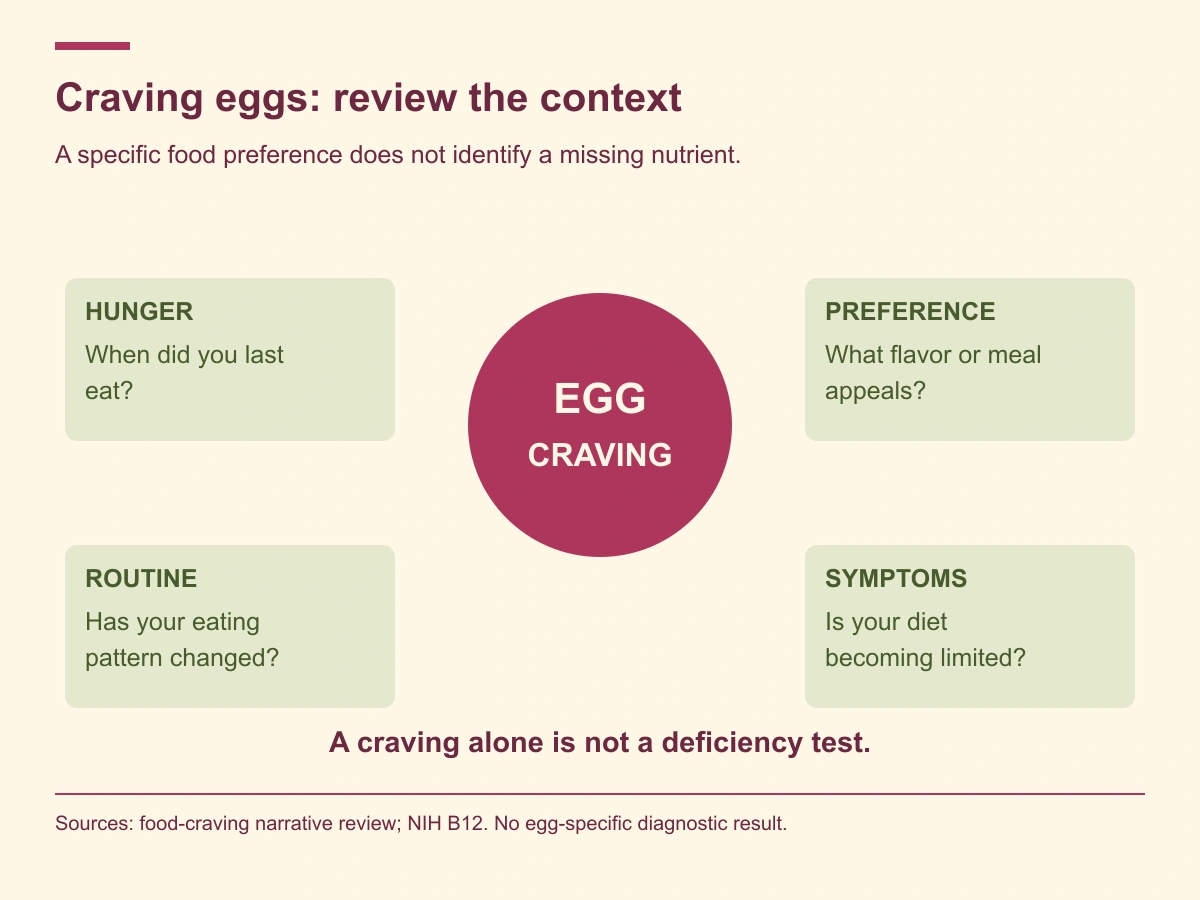
Craving eggs does not, by itself, mean you have a protein deficiency, low vitamin B12, or a particular hormone change. It may reflect hunger, enjoyment, a familiar meal, or a preference for a food that feels manageable right now. The useful question is how the craving fits into your eating pattern and any other symptoms.
You can enjoy eggs without turning the craving into a diagnosis. If your appetite has changed, especially while taking a GLP-1 medicine, look at how much and how often you are eating, what other foods still appeal to you, and whether nausea or taste changes are narrowing your choices.
What is a craving, and how is it different from hunger?
Hunger is a broader drive to eat. A craving is usually more specific: you want scrambled eggs, an egg sandwich, or a certain texture rather than just any food. The two can overlap. You might be hungry after a long gap between meals and prefer the food you associate with a satisfying breakfast.
A 2020 review of food-craving research discusses learned cues and food restriction, and finds limited support for a simple nutrient-deficiency explanation of most cravings. It is a narrative review, not an egg-specific diagnostic study. Short experiments that restrict a particular food also differ from longer dietary changes in other populations. Food-craving research review
That distinction matters because “my body wants eggs” can sound like a precise biological instruction. A preference is real, but it does not identify which nutrient, if any, is missing. Our food noise, hunger, and cravings guide helps separate recurring food thoughts from ordinary hunger and food enjoyment.
Why might eggs sound especially appealing?
Think about context before looking for a medical explanation. Eggs might be easy to prepare, familiar from childhood, available in the refrigerator, or part of a meal you recently saw. You might want a warm savory food after several sweet breakfasts. A predictable food can also feel easier to choose when meal planning is tiring.
These are possibilities to explore, not proven causes of your craving. Notice whether it appears at the same time of day, after skipped meals, or when you have been avoiding foods you enjoy. A brief record can show a pattern without requiring you to count every bite.
For example, someone who wants eggs every afternoon after a light breakfast and no lunch may need a more workable meal routine. Someone who wants them after seeing a cooking video may simply want that meal. Neither example establishes a deficiency.
Does craving eggs mean you need more protein?
Eggs can be part of a protein-containing meal. That fact does not make egg cravings a protein test. A more useful review includes what you eat over the day, whether you are regularly missing meals, and whether your food choices have become unusually limited.
You also do not have to answer the craving with eggs alone. Yogurt, beans, lentils, tofu, fish, poultry, or other foods may fit your preferences and dietary needs. The practical aim is enough variety and a sustainable pattern, not proving that one food is essential.
Our hard-boiled eggs and weight-management guide covers portions and meal questions. For a wider selection, see protein breakfast ideas and what to eat on GLP-1 medicines. If you have kidney disease or a prescribed eating plan, ask your clinician or dietitian how protein choices fit that plan rather than adopting a universal gram target.
Could it mean low vitamin B12, iron, or another nutrient?
Eggs contain vitamin B12, but they are one of several food sources. NIH lists animal foods and fortified products among the sources of B12. It does not identify an egg craving as a diagnostic sign. NIH vitamin B12 fact sheet
A nutrient concern requires more information: your usual diet, absorption issues, relevant medicines, symptoms, and sometimes laboratory testing. Eating more of a food because it contains a nutrient does not show that you were deficient or that a deficiency has been corrected.
Do not start high-dose iron or a stack of supplements on the strength of a craving. Iron can cause harm in excess and can interact with medicines. NIH iron fact sheet If you are worried about fatigue, weakness, or an increasingly restrictive diet, ask which evaluation is appropriate for you.
The same caution applies to supplement marketing. A claim that a craving reveals a missing “organ nutrient” needs evidence. Our beef organ supplement guide explains how ingredient claims differ from demonstrated weight-loss benefits.

A simple review of your eating pattern
Use the craving as a prompt to check your routine, without judging the food or assuming the craving is a problem.
| Question | A practical next step |
|---|---|
| Have I gone a long time without eating? | Plan an accessible meal or snack rather than waiting for perfect food choices |
| Are eggs one of several foods I enjoy? | Include them in a varied meal if they suit you |
| Are eggs almost the only food I can tolerate? | Discuss the narrowing diet and associated symptoms with your care team |
| Did the craving begin after a medication change? | Record the timing, appetite, nausea, and taste changes for review |
| Am I worried about a deficiency? | Ask about diet assessment and appropriate testing rather than guessing from cravings |
You do not need a complicated tracking app. A few notes about meals, symptoms, and timing can be enough for an initial conversation. If tracking food increases distress, tell your clinician so you can choose another approach.
What if you are taking semaglutide or tirzepatide?
During treatment, the important issue may be overall intake rather than the identity of the craving. If smaller portions, nausea, or a changed sense of taste leave you eating very little, explain that to the prescriber. A food you still enjoy can be useful, but it should not hide an ongoing difficulty eating or drinking.
The Ozempic label includes gastrointestinal side effects and warnings about volume depletion associated with gastrointestinal symptoms. That supports reviewing persistent vomiting or diarrhea; it does not establish a drug-specific mechanism for craving eggs. Ozempic prescribing information
Try to describe what changed: “Eggs appeal to me, but most other meals make me nauseated” is more useful than “the medicine made me crave protein.” The first description gives the care team something to assess. The second assumes an explanation that has not been demonstrated.
Read our semaglutide nausea and vomiting guide if symptoms are affecting meals. A metallic or unusual taste is a separate question covered in semaglutide and taste changes. The CoreAge Rx semaglutide page provides treatment information for a clinical discussion, not a recommendation to start medication because of cravings.
Can eggs fit a weight-management meal?
Yes, eggs can fit a meal, but they do not make the entire meal automatically right for your needs. Preparation, side dishes, portions, and your overall eating pattern matter. Think beyond a single ingredient: what else would make the meal satisfying and practical?
An egg meal might include vegetables, fruit, bread, or another food you enjoy. These are meal-building examples, not measured menus or a calorie prescription. You can vary the meal according to allergies, preferences, budget, and any prescribed restrictions.
Avoid turning a craving into an eggs-only diet. A narrow plan can be difficult to maintain and leaves less room for other foods. Our sustainable weight-loss habits guide focuses on routines you can repeat rather than assigning special fat-burning properties to a breakfast food.

Egg safety still matters
FDA advises keeping eggs refrigerated and cooking ordinary shell eggs until both whites and yolks are firm. For recipes served with raw or undercooked eggs, it recommends pasteurized eggs or egg products. Pregnant people, older adults, and people with weakened immune systems are among those at higher risk from foodborne illness. FDA egg-safety guidance
An appealing food photo is not proof of a safe cooking temperature. The article’s illustrative cover is not a cooking demonstration. Follow food-safety guidance for the actual eggs and recipe you prepare.
If you are craving a raw egg drink or another undercooked preparation, choose a food-safe alternative rather than assuming the craving makes raw eggs beneficial. Food preference does not remove infection risk.
Questions people ask about craving eggs
Is craving eggs a pregnancy sign?
A craving cannot confirm or rule out pregnancy. If pregnancy is possible, use appropriate testing and contact your clinician about symptoms or medication questions. Do not use a specific food preference as a substitute for that process.
Is it bad to want eggs every day?
Frequency alone does not explain whether your diet meets your needs. Consider the full meal pattern, variety, health conditions, and any advice you have already received. An enjoyable repeated breakfast is different from being unable to eat anything else.
Should I resist the craving to improve weight loss?
You do not need to label eggs as a forbidden food. Ask whether the meal fits your needs and whether rigid avoidance is making eating harder. Weight-management decisions should reflect your overall routine rather than a moral judgment about a craving.
Why do I crave eggs but not meat?
Preferences can be specific to flavor, texture, preparation, and familiarity. The difference does not identify a deficiency or prove that one food contains a nutrient your body has selected. Review other symptoms if the change is sudden or persistent.
When should I ask for help?
Ask when the craving accompanies unexplained symptoms, a shrinking list of tolerable foods, persistent gastrointestinal problems, or anxiety about eating. The most useful outcome is a workable eating plan and appropriate assessment, not a label for the craving itself.
Educational information for adults; individual treatment decisions require a qualified clinician. Sources reviewed October 3, 2026. Original AI-generated article images depict fictional people and objects, not patient outcomes. Other editorial images are illustrative. Graphics summarize the cited sources.