
A sustainable weight-management routine should work on ordinary busy days, not only during a week when everything goes to plan. It should provide enough nourishment, allow recovery, fit your budget, and leave room for a social life. The starting point is usually a small set of repeatable actions rather than a complete overhaul.
This guide is for adults deciding where to begin. Weight loss is not the right goal for everyone, so consider your health, symptoms, and history before choosing a target. You can still improve meals, movement, sleep, and daily function while deciding whether a weight-focused plan is appropriate.
Choose a problem you can describe clearly
Start with something you notice in daily life: lunch is unreliable, afternoons feel rushed, you rarely get a chance to walk, or bedtime keeps moving later. A specific problem is easier to work on than “I need to be healthier.” It also helps you judge whether a change is useful.
Write down the situation and the outcome you want. For example: “On workdays I eat very little until dinner; I want a dependable lunch that leaves me comfortable.” That statement points toward food access and meal planning. It does not automatically require an app, a supplement, or a new diet. The weight-loss basics guide can help if you are still sorting out the bigger picture.
Start with one or two actions
Changing every meal, beginning daily workouts, and imposing a strict bedtime at once can make it difficult to identify what works. Choose a small number of actions that address your main barrier. You can add more once the first steps feel workable.
CDC recommends specific, achievable goals and regular review. A goal such as “pack lunch for Tuesday and Thursday” tells you when and what to do. “Be disciplined” does not. Make the action small enough that it fits your real schedule. If you consistently cannot complete it, adjust the size or timing before concluding that you lack motivation.

Plan around an existing part of the day
An action is easier to remember when it has a clear place. You might prepare tomorrow’s lunch while putting dinner leftovers away, take a brief walk after a regular meeting, or refill a water bottle before leaving home. These are practical reminders rather than rules about the perfect time to eat or exercise.
Choose an anchor that actually happens in your life. A fixed lunch hour may not work during shift work, while “before leaving for my shift” might. Keep the plan visible if that helps. The purpose is to reduce repeated decision-making, not to make the routine so rigid that one schedule change disrupts the whole day.
Make meals dependable before making them complicated
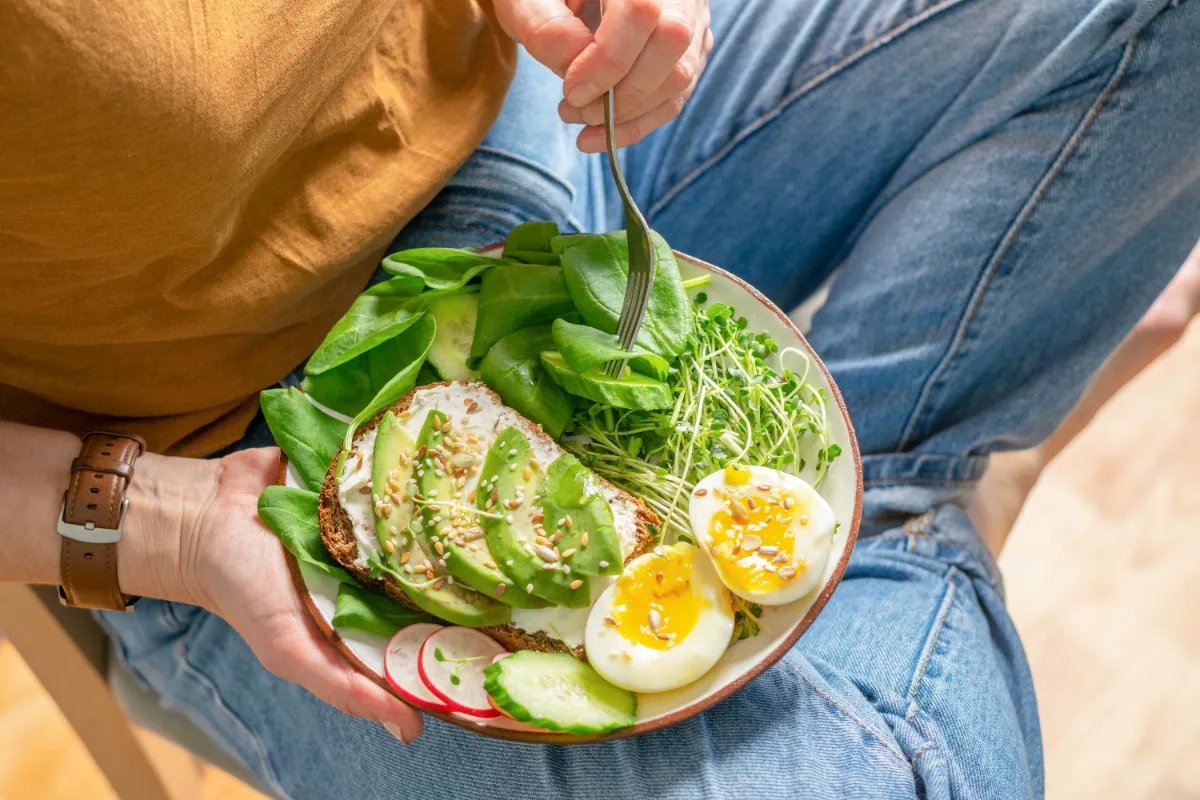
A few familiar meals can provide a useful foundation. Consider an accessible protein food, produce, and a grain or other starch, with flavors you enjoy. Examples could include eggs with toast and fruit, a lentil-and-rice bowl, or a sandwich with a vegetable side.
NIDDK describes a healthy eating pattern as varied and sustainable. You can adapt that idea to culture, preference, allergies, and budget. Our balanced-meal guide offers combinations without requiring exact calorie targets. If your routine leaves you constantly hungry, review whether it provides enough food before trying to make it more restrictive. Adequacy is part of sustainability.
Keep a backup for the predictable disruption
Ask what usually derails the plan. It may be a late meeting, a delayed grocery trip, a tired evening, or an unexpectedly long commute. Prepare for the disruption you actually encounter, rather than trying to anticipate every possible event.
A backup meal might use canned beans, frozen vegetables, and a microwaveable grain. A backup activity might be a short indoor walk when weather changes. A backup is successful when it meets a useful need with less effort. It does not have to look like your ideal version. Our meal-prep guide explains how to build flexible options while keeping storage and food safety in mind.
Begin movement at your current level
CDC recommends aerobic activity plus muscle strengthening for adults, and also emphasizes that some activity is better than none. You can work toward the broader recommendations through manageable sessions. You do not need to earn the right to start by being fit already.
Choose something accessible and reasonably comfortable. A short walk, seated movement, a water-based activity, or an adapted strength routine may fit different people. Our walking and beginner strength guides offer starting questions. If symptoms, pain, balance, or a medical condition affect exercise, ask for appropriate guidance. The aim is repeatable movement that supports function, not a punishing session that makes the next one unlikely.
Protect recovery and sleep
A routine that continually borrows time from sleep may be hard to sustain. Review whether the schedule allows enough rest and whether sleep is disrupted by symptoms or responsibilities. Sometimes the practical change is reducing an evening task or sharing it with someone else.
Sleep should not become another number you have to optimize perfectly. Notice whether you feel rested and whether daytime sleepiness interferes with life. Persistent problems deserve assessment. The sleep guide explains what routine changes can and cannot do. Adequate recovery also supports a more comfortable relationship with activity; you do not have to fill every available hour with exercise to make progress.
Use tracking only when it answers a useful question
A simple checklist can show whether you completed an action. A short meal-time note can reveal a missed lunch. A weight trend may be useful in some care plans. Choose the smallest amount of information that helps you decide what to do next.
Avoid tracking everything simply because a device allows it. If numbers increase anxiety or restrictive behavior, use another approach with your care team. You can track confidence, comfort, walking duration, or whether a meal was available. The realistic-goals article gives examples. Data should support a decision, not become a second job or a daily judgment of your worth.
Review the environment, not just your intentions
Food access, cost, safe places to move, kitchen equipment, and work breaks can all shape what is realistic. If the plan assumes resources you do not have, changing the plan is sensible. It is not a failure to use frozen food, a community resource, or a shorter activity session.
NIDDK’s habit-change guidance includes practical barriers and ways to plan around them. Ask which change would reduce effort most: keeping ingredients together, choosing a closer walking route, asking for a predictable break, or sharing preparation. A well-designed routine makes the desired action easier to do repeatedly, even when enthusiasm is lower than it was on the first day.
Plan how to resume after a missed day
A missed action is information about the plan. It does not require waiting until Monday or starting a more demanding version tomorrow. Decide in advance what resuming looks like. Usually it can be the next ordinary meal, the next scheduled walk, or a smaller version of the same habit.
For example, if you miss a 20-minute walk, you do not have to double the next session. You can return to the planned routine and examine why the miss happened. If the same barrier appears repeatedly, solve that barrier. The goal is a routine that can restart easily, because ordinary life will include interruptions, illness, travel, and changing responsibilities.
Ask for specific support
Support can mean someone sharing a walk, taking over a chore, preparing a meal with you, or helping you find professional care. Explain what would help and what would not. Body comments and food policing are not necessary forms of encouragement.
If you need a broader plan, a registered dietitian or clinician can help with nutrition, medical conditions, medicines, and realistic goals. Our first-visit guide explains how to prepare. Seeking help does not mean your habits are meaningless. It means you are using another resource to address a problem that may have several contributing factors.

Keep health outcomes in view
If weight loss is appropriate, a weight trend can be part of follow-up. Also consider the reason you began: more comfortable movement, a health marker, less chaotic eating, or improved energy. Those outcomes help you evaluate whether the routine is serving its purpose.
A change on the scale should not automatically outweigh persistent weakness, distress, or inadequate intake. Likewise, a stable weight does not erase improvements in strength or activity. Discuss unexpected symptoms or unintended weight changes with a clinician. Sustainable habits should support your health over time, and that requires looking at benefits, burdens, and whether the plan remains appropriate as circumstances change.
A first-week example
Choose a dependable lunch for two workdays and a short walk on two days that already have a suitable opening. Prepare the ingredients or identify where the meal will come from. Decide on an indoor or shorter movement option if the original plan becomes impractical.
At the end of the week, ask what happened without grading yourself. Was the lunch filling enough? Was the walking time realistic? Did another barrier matter more? Keep one useful element and change one that did not fit. This is an example of a planning process, not a guaranteed weight-loss program. Repeating that process can help you build a routine that belongs to your life.
Explore the complete series
- How to Build Balanced Meals for Weight Management
- Protein at Breakfast: Simple Meal Ideas and Common Questions
- Meal Prep for a Busy Schedule: Simple Steps for Consistent Eating
- Walking for Weight Management: Getting Started and Building Consistency
- Strength Training for Beginners: Building Function During Weight Loss
- Water and Weight Management: Hydration, Hunger, and Sugary Drinks
- How to Set Realistic Weight-Loss Goals and Track Useful Progress
- Can You Boost Your Metabolism? What Helps and What Gets Overstated
- When to Seek Help With Weight Management: What a First Visit Can Cover
- Weight Loss Basics: Understanding Appetite, Habits, and Health
- Why Am I Always Hungry?
Educational information for adults. Individual goals and health concerns can be discussed with a qualified clinician or registered dietitian. Sources checked September 16, 2026. Photographs are illustrative and do not show weight-loss outcomes.