MUD/WTR is a branded drink blend, not an established weight-loss treatment. For the Original product reviewed here, the manufacturer lists cacao, a mushroom blend, spices, black tea powder, and salt. It also lists about 35 mg of caffeine per serving. Side-effect questions therefore need to consider the exact blend, portion, additions, other caffeine, medicines, and individual health history. Current Original product information.
The sources reviewed for this article do not establish a reliable side-effect percentage or a predictable weight-loss result for the finished drink. A testimonial, an ingredient study, and a trial of the actual product are different types of evidence. If a drink causes symptoms, there is no need to keep taking it to complete a supposed detox or adjustment period.
Which MUD/WTR product are you using?
Start with the full product name and current package. This article’s numerical example concerns Original, not every blend sold by the company. Products described as rest blends, turmeric blends, or hot chocolate may have different ingredients and caffeine information.
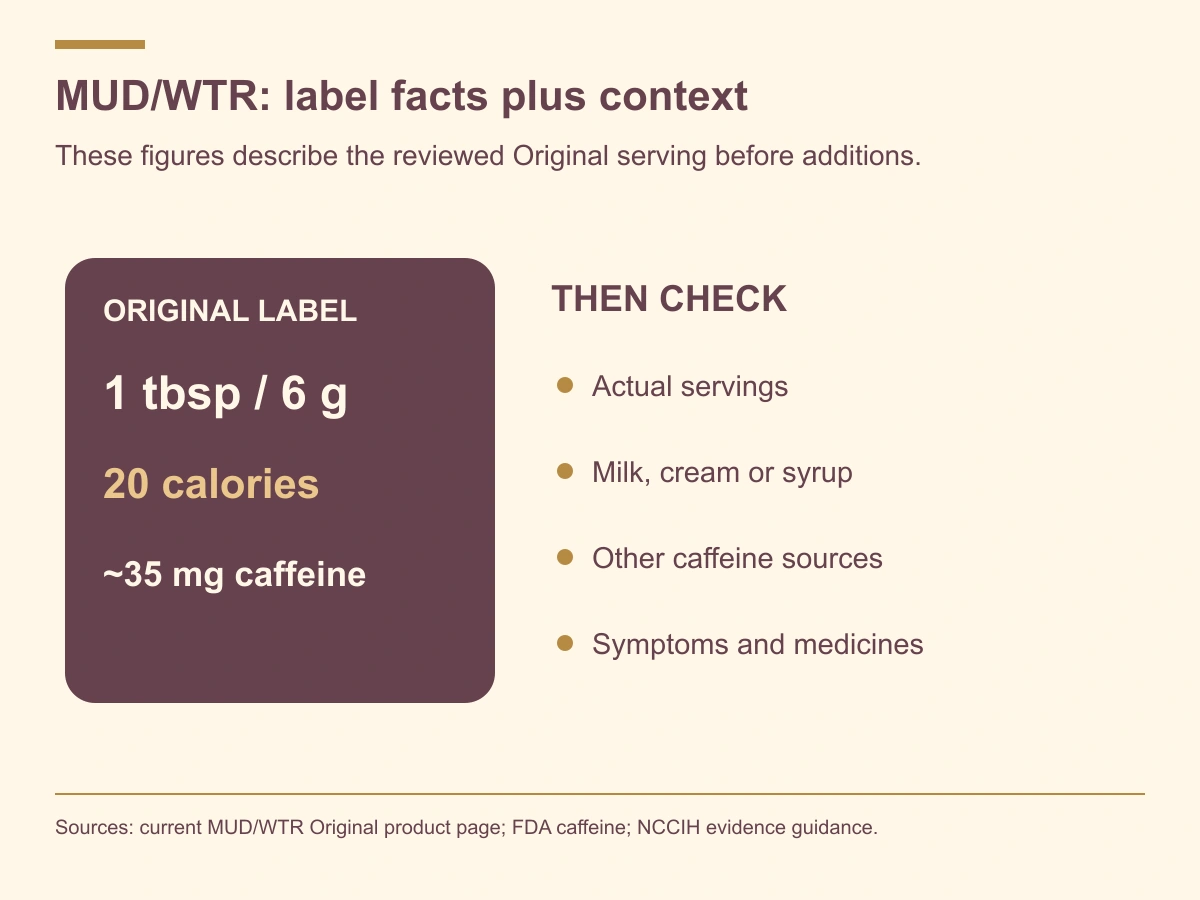
The manufacturer’s current Original listing gives a serving as one tablespoon, or 6 g, with 20 calories, 4 g carbohydrate, 1 g fiber, zero grams of total sugars, and less than 1 g protein. It lists 2,240 mg of mushrooms and approximately 35 mg caffeine. These are label facts for the stated portion, not clinical benefit measurements. Original nutrition information.
Your prepared drink may differ if you use a heaped scoop, more than one serving, milk, creamer, honey, syrup, or another addition. Record the preparation you actually consume when comparing it with coffee or discussing symptoms.
What is in the Original blend?
The ingredient listing includes chaga, reishi, lion’s mane, and cordyceps mushrooms and mycelium cultured on oats and/or sorghum. It also includes cacao, spices such as cinnamon, turmeric, ginger, cardamom, black pepper, nutmeg, and cloves, plus black tea powder and Himalayan pink salt. Manufacturer ingredient list.
That list helps identify the product, but it does not establish that each ingredient produces a meaningful benefit at the amount consumed. Nor does the total mushroom weight tell you that the finished mixture has the same composition as a mushroom extract used in a separate study.
NCCIH explains that products purchased by consumers can differ in important ways from products studied in research. That is a useful principle when evaluating ingredient-based claims, even though a drink with a Nutrition Facts panel should not automatically be classified as a dietary supplement. NCCIH evidence and product discussion.
What side effects should you pay attention to?
There is no verified universal list of “normal MUD/WTR side effects” in the sources reviewed here. Describe the symptom rather than assuming the cause. Notice whether it began after starting the drink, after increasing the portion, or after adding another ingredient.
Caffeine is one relevant contributor. FDA lists possible effects of excess caffeine including a racing heart, palpitations, sleep disruption, anxiety, jitters, upset stomach, nausea, and headache. Sensitivity varies, and the total from all sources matters. FDA caffeine guidance.
A person can also have a reaction to a food ingredient or develop an unrelated illness around the same time. Persistent vomiting, severe abdominal pain, a spreading rash, or other significant symptoms need medical assessment. Trouble breathing, rapid facial or throat swelling, or collapse requires emergency help.
| What changed? | What to record | Why it helps |
|---|---|---|
| Started a new blend | Full product name and ingredient label | Different blends are not interchangeable |
| Increased the amount | Scoops, servings, and preparation | Exposure may differ from the listed serving |
| Replaced regular coffee | Previous and current caffeine routine | A caffeine reduction can produce its own symptoms |
| Added milk, creamer, or sweetener | Exact additions and quantities | The final drink contains more than the powder |
| Started a medicine or supplement | Name, amount, and start date | Several changes may need review together |
Could a headache be caffeine withdrawal?
It is possible when someone sharply reduces a familiar caffeine intake. FDA advises reducing caffeine gradually because withdrawal can be unpleasant. A headache after switching drinks does not automatically prove that the new mushroom blend is harmful or that it is removing toxins. FDA caffeine and withdrawal guidance.
Compare the previous routine with the current one. Coffee strength and serving size vary, and Original still contains caffeine. Adding it to the usual coffee is a different change from replacing coffee with it.
If symptoms are persistent, severe, unusual for you, or accompanied by other concerning changes, seek assessment. Do not use a plausible explanation such as withdrawal to dismiss a problem that needs medical attention.
Is 35 mg of caffeine always easy to tolerate?
No amount is a universal guarantee of comfort. FDA notes that sensitivity depends on individual factors, medicines, and certain health conditions. A person who is sensitive may notice effects at an amount another person tolerates. Multiple servings and other drinks contribute to the total. FDA caffeine guidance.
For most adults, FDA cites 400 mg per day as an amount not generally associated with negative effects. It is not a target, and it is not a personal clearance for someone with symptoms. Pregnancy, breastfeeding, and some medical situations require specific advice.
Our decaf tea and caffeine guide explains why a lower-caffeine choice may still contain caffeine. The sleep and weight-management guide can help you consider timing and sleep quality alongside the beverage’s nutrition.

Does MUD/WTR help with weight loss?
A beverage substitution can change calorie intake, but that is different from demonstrating a weight-loss effect of the blend itself. Replacing a high-calorie coffee preparation with a lower-calorie drink could reduce calories from that occasion. Adding a new drink while keeping the previous routine would have a different effect.
Plain coffee, sweetened coffee, and coffee with substantial cream or syrup are different comparisons. Likewise, Original mixed with water differs from a large latte made with the powder. Compare complete prepared drinks, including the serving size and additions, rather than comparing brand names.
NIDDK emphasizes an eating pattern that can be maintained over time along with appropriate activity. The drink may fit someone’s preferences, but it does not establish a personal energy deficit or replace a broader plan. NIDDK weight-management guidance.
Do ingredient studies prove the finished blend works?
A study can test a particular mushroom extract, amount, population, and outcome. That does not automatically establish the effect of a multi-ingredient beverage using a different preparation. A result about exercise performance, attention, or a laboratory marker would also be a different outcome from lasting weight reduction.
Ask what was actually studied: Was it the finished drink? Were people randomly assigned to a comparison? How many participated, for how long, and what changed? Were adverse effects measured systematically? Those questions are more informative than a reference list containing unrelated ingredient studies.
NCCIH highlights the uneven evidence base for many marketed ingredients and the importance of product differences. The sensible conclusion here is that the reviewed sources do not establish a weight-loss prescription for MUD/WTR. They also do not justify treating a brand’s wellness language as proof of a clinical effect. NCCIH evidence guidance.
What if it causes diarrhea, nausea, or an upset stomach?
Stop using a nonessential drink that appears to trigger symptoms and discuss persistent or significant problems with a healthcare professional. Keep the package and note the amount, timing, additions, and other changes. An ingredient list is more useful than saying only “mushroom coffee.”
Do not assume that diarrhea proves improved gut health or that nausea is a detoxification response. Those interpretations can encourage someone to continue a product despite symptoms. The available sources do not establish a required adjustment period that makes ongoing illness desirable.
If you are taking a GLP-1 medicine, report digestive symptoms to the prescribing team. The semaglutide nausea guide and tirzepatide nausea and reflux guide explain what details help and when symptoms need faster assessment. Several possible contributors can coexist.
Can you combine it with medicines or supplements?
Ask a pharmacist or clinician to review the exact blend when you take regular medicines, have relevant medical conditions, are pregnant or breastfeeding, or are preparing for a procedure. A multi-ingredient product cannot be cleared by checking caffeine alone.
NCCIH notes that some supplements can interact with medicines and that many have limited testing in pregnancy and breastfeeding. This general caution does not prove that every ingredient in this drink interacts with every medicine. It explains why a product-specific review is preferable to a blanket claim of safety. NCCIH safety considerations.
Our supplements during GLP-1 treatment guide helps organize that review. Include other mushroom powders, herbal products, energy products, and occasional over-the-counter medicines so overlapping ingredients can be identified.

Is it a meal replacement?
The reviewed Original serving provides less than one gram of protein and 20 calories before additions. It is a beverage ingredient, not a complete meal on its own. If a reduced appetite or busy schedule leads you to replace breakfast with a drink, consider how the day will meet food and nutrient needs.
The protein breakfast guide and balanced-meal guide offer practical planning questions. Enjoying a warm drink can be part of breakfast without asking it to do the job of the whole meal.
If recurring weight concerns lead you to consider medical care, the GLP-1 medication-choice guide and CoreAge Rx’s semaglutide page explain related evaluation questions and offered compounded care. That is a separate decision from choosing a coffee alternative. Compounded medicines are not FDA approved. FDA compounding explanation.
Frequently asked questions
Is MUD/WTR caffeine-free?
The Original product reviewed here is not: the manufacturer lists about 35 mg per serving. Check the actual blend because the company’s products differ.
Does feeling more alert mean it is increasing fat loss?
No. Alertness and body-fat change are different outcomes. Caffeine or a changed morning routine may affect how you feel without establishing a weight-loss effect.
Are mushrooms and “natural” ingredients automatically safe?
No label term guarantees suitability for every person. Review allergies, medicines, the actual preparation, and symptoms. Avoid assuming that a history of food use establishes every extract or mixture’s safety.
How much should I use for weight loss?
The reviewed evidence does not establish a weight-loss dose. Follow the actual food label if you choose to use the drink, consider the whole preparation, and seek professional advice for persistent symptoms or medical weight concerns.
Educational information for adults; individual treatment decisions require a qualified clinician. Sources reviewed October 5, 2026. Original AI-generated article images depict fictional people and objects, not patient outcomes. Other editorial images are illustrative. Graphics summarize the cited sources.