
Beef organ supplements should not be assumed to produce weight loss because organ meats contain nutrients. A capsule made from dried liver or a blend of organs is different from a meal, and an ingredient claim is different from a clinical weight-loss result. The product’s measured contents, evidence, and safety questions matter more than the number of organs on the label.
Before choosing a “best” supplement, ask what it is supposed to do and what evidence supports that exact product. Fatigue, appetite changes, or a suspected deficiency deserve appropriate assessment rather than an automatic recommendation for organ capsules.
What are beef organ supplements?
These products commonly advertise dried or desiccated animal organs, sometimes individually and sometimes as blends. The actual formulation varies. “Beef organs” is a description of ingredients, not a standardized nutrient dose or a single studied treatment.
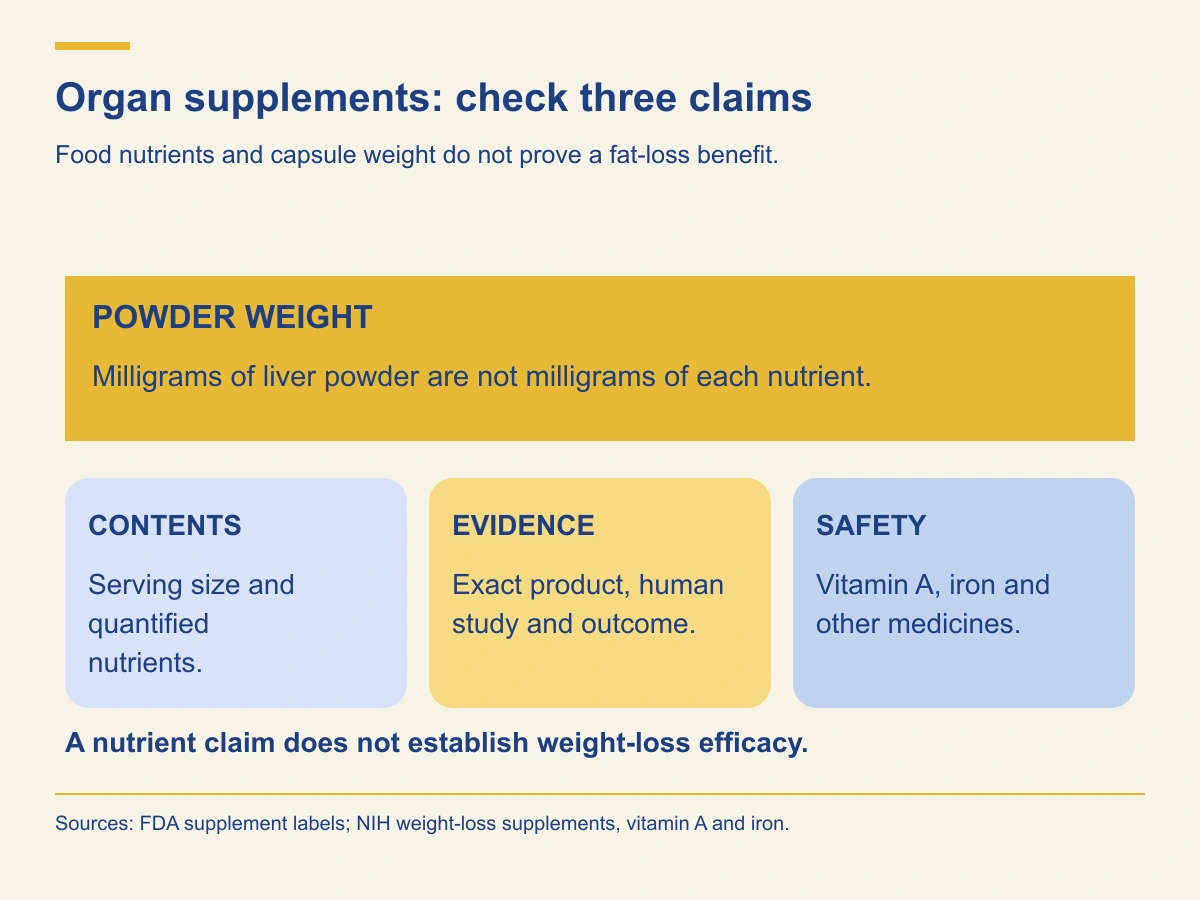
A bottle might list an amount of liver powder without specifying the amount of every nutrient it contains. Another may include multiple organs or added ingredients. Read the current label rather than inferring the contents from the front-of-bottle description.
The distinction between food and a supplement is important. A meal includes portions, preparation, and accompanying foods. A capsule’s powder weight is not the same as the grams of protein, iron, or vitamin A that it delivers. You cannot treat those numbers as interchangeable.
Do beef organ supplements help with weight loss?
The primary sources reviewed for this article do not establish that beef organ capsules are a proven weight-loss treatment. That is a limit of the evidence reviewed, not a claim that no related research could exist anywhere.
NIH’s weight-loss supplement fact sheet explains why evaluating these products is difficult: studies may be small, short, or use different combinations of ingredients. Evidence about a nutrient or another formulation does not automatically demonstrate long-term weight loss from the bottle you are considering. NIH: weight-loss supplements
Look for human research on the actual product, with a comparison group, meaningful duration, and clearly reported outcomes. A testimonial, before-and-after image, or description of a biological pathway cannot answer those questions. A person may have changed food intake, exercise, medicines, and other habits at the same time.
For related marketing claims, see our Primal Queen evidence review and GLP-1 support supplement guide. They explain why product identity and the type of evidence matter.
Nutrient support is a different claim from fat loss
Some organ foods provide important nutrients. NIH lists beef liver among sources of vitamin A and vitamin B12, and discusses animal foods as iron sources. Those facts describe foods and nutrients; they do not establish that a dried-organ supplement burns fat. NIH vitamin A, NIH vitamin B12, NIH iron
If you have a documented deficiency, correcting it is a medical and nutrition question with its own goal. That outcome is different from proving weight loss in people who do not have that deficiency. More of a nutrient does not automatically produce more benefit.
Also be cautious about claims that consuming an animal organ specifically improves the matching human organ. The name of the ingredient is not evidence of a targeted effect on your liver, thyroid, ovaries, or testosterone. Such claims need their own clinical support.
How to read the label without confusing the numbers
Begin with the serving size. The amount per serving may refer to several capsules, not one. Then distinguish the weight of the organ powder from any quantified nutrients and from the total number of capsules in the bottle.
| Label item | What it can tell you | What it does not establish |
|---|---|---|
| Capsules per serving | How the manufacturer defines a serving | Your personal need for that serving |
| Milligrams of organ powder | The listed ingredient mass | The same number of milligrams of iron or protein |
| Quantified vitamin or mineral | A declared nutrient amount | That you have a deficiency or need more |
| Blend name | Which mixture is advertised | Proven benefit from each ingredient or the combination |
| Quality or sourcing statement | A claim to investigate | Clinical weight-loss efficacy |
FDA explains required dietary-supplement label information and notes that supplement serving sizes are not standardized through a premarket approval process. A serving chosen by the manufacturer is not an individualized clinical recommendation. FDA dietary-supplement questions
If a nutrient amount is important to your decision but is not available, ask the manufacturer or pharmacist what verified information exists. “Naturally occurring” does not make an unknown amount known.

Why vitamin A deserves attention
Liver is a source of preformed vitamin A. Excess preformed vitamin A can be harmful, and NIH describes particular concern during pregnancy because high intake can cause birth defects. NIH vitamin A
Review the total picture: organ supplements, multivitamins, other vitamin A products, and foods. The fact that each product has a suggested serving does not show that their combined intake is appropriate for you.
If you are pregnant, planning pregnancy, or could become pregnant, discuss liver-based supplements with your clinician before using them. Do not assume a product marketed to women, “ancestral nutrition,” or hormone support has been shown appropriate for pregnancy.
This is not a reason to diagnose excess vitamin A from a nonspecific symptom. It is a reason to check the actual contents and avoid stacking products without a purpose.
What about iron and medication interactions?
Iron is necessary, but supplemental iron is not appropriate for everyone. NIH explains that excessive intake can cause harm and that people with hemochromatosis need particular caution. It also describes interactions involving some medicines, including levothyroxine and certain antibiotics. NIH iron
An organ powder label may not give you enough information to estimate its iron contribution. Do not infer a safe or therapeutic iron dose solely from how many milligrams of liver powder are listed.
Bring the actual bottle or a clear label photo to your pharmacist. Include other supplements and prescription medicines. If you take thyroid replacement, the medication review needs the exact product and schedule; a general assurance that a supplement is “food based” does not settle the interaction question.
Our fiber supplement and medication-timing guide illustrates the wider principle: timing decisions should reflect the specific ingredient and medicine, not a universal rule for all supplements.
Are supplements FDA approved like prescription medicines?
FDA does not approve dietary supplements before marketing in the same way it approves drugs. Its consumer guidance explains the manufacturer’s responsibilities and FDA’s oversight role. Facility registration, a disclaimer, or a manufacturing claim should not be read as approval of the product’s weight-loss benefit. FDA dietary-supplement questions
Quality information is still worth investigating, but keep the questions separate. Testing for identity or contaminants does not establish that the product reduces weight. A clinical trial does not automatically describe the quality of every later bottle.
Ask what was tested, by whom, and whether the documentation applies to the product or batch you are considering. Avoid choosing on the strength of a vague seal whose meaning is not explained.

What if you are eating less on a GLP-1 medicine?
If treatment has reduced your appetite, review whether your meals still meet your needs. An organ capsule does not replace an eating plan or explain persistent fatigue. Tell the care team if nausea, vomiting, or food aversion has substantially limited your intake.
Our GLP-1 meal guide and semaglutide, protein, and muscle guide offer questions about meals and function. The goal is to address the actual difficulty rather than layering supplements onto a diet that has become too limited.
The CoreAge Rx GLP-1 Support page is another product-information resource to review by its ingredients and claims. Its presence alongside prescription treatment does not establish that a supplement is necessary or that it will increase medication-driven weight loss.
Common questions about beef organ supplements
Which brand is best for losing weight?
The sources reviewed here do not support a ranked list of brands for weight loss. Start with evidence, quantified ingredients, safety, and your actual need. A popular product is not automatically the most effective or appropriate one.
Will they improve energy or testosterone?
Those are separate claims requiring their own evidence and assessment. Fatigue and suspected low testosterone have multiple possible explanations. Our low-testosterone symptoms and testing guide explains why symptoms alone do not confirm a hormone diagnosis.
Are organ capsules better than eating organ meat?
They are different products with different portion and preparation questions. Neither should be treated as a guaranteed weight-loss intervention. A dietitian can help you decide whether either fits your preferences and medical needs.
Can I combine them with a multivitamin?
Review the combined nutrient amounts and other ingredients first. Overlap may matter, particularly for preformed vitamin A and iron. Unknown nutrient amounts are a reason to seek more information, not assume the combination is safe.
What should I do before buying?
Write down the intended benefit, check the full label, and ask what research supports that exact benefit. If the real concern is fatigue, poor intake, or a suspected deficiency, arrange the appropriate assessment. For ongoing weight goals, our weight-loss basics guide offers a broader starting point than selecting a supplement from a marketing claim.
Educational information for adults; individual treatment decisions require a qualified clinician. Sources reviewed October 3, 2026. Original AI-generated article images depict fictional people and objects, not patient outcomes. Other editorial images are illustrative. Graphics summarize the cited sources.