Ozempic is not a male-specific medicine. Its approved uses depend on the person’s diagnosis and health circumstances, not simply on being a man. Men may also have questions about weight, side effects, testosterone, fertility, or treatment alongside TRT, but those questions need separate evidence and assessment.
Start with why the medicine is being considered. Ozempic’s labeling covers specific uses in adults with type 2 diabetes. A wish to lose weight, build muscle, or improve sexual function does not by itself establish that Ozempic is the appropriate product.
What is Ozempic approved to treat?
The current label includes improving glucose control in adults with type 2 diabetes as an adjunct to diet and exercise. It also includes reducing major cardiovascular events in adults with type 2 diabetes and established cardiovascular disease, and certain kidney and cardiovascular outcomes in adults with type 2 diabetes and chronic kidney disease. Ozempic prescribing information
These are condition-specific indications. The product is not labeled as a treatment for low testosterone or as a general “men’s optimization” drug. Ask which indication applies to you and what outcomes your clinician will monitor.
Semaglutide is also the ingredient in other products with different approved uses and instructions. The current Wegovy label includes weight-management indications, with distinctions between injection and tablet presentations. Wegovy prescribing information Our semaglutide questions guide helps organize those product differences.
Were men included in Ozempic studies?
Yes. The label’s pooled placebo-controlled adult trial description includes men, who made up 55% of the 521 participants treated with Ozempic in that pool. That describes the study population; it is not a male-only effectiveness or safety result. Ozempic prescribing information
You should not infer that all men respond similarly or that a pooled result predicts your weight change. Trial eligibility, background medicines, baseline health, and treatment goals all affect how evidence applies.
Before-and-after stories from another man may feel relevant, but they do not substitute for the clinical comparison. A story rarely tells you everything about changes in diet, activity, illness, or other treatment. Our realistic weight-goal guide explains how to choose measures that are useful for your own progress.
Which side effects should men know about?
The common-adverse-reaction table in the Ozempic label includes nausea, vomiting, diarrhea, abdominal pain, and constipation. These are not presented as male-specific rates. The label also contains important warnings, including increased hypoglycemia risk with insulin or sulfonylureas and kidney concerns when gastrointestinal symptoms cause volume depletion. Ozempic prescribing information
Give your clinician the full medication list, including diabetes medicines and blood-pressure treatments. If you have persistent vomiting, significant abdominal pain, dizziness, or trouble drinking, describe the symptom promptly rather than assuming it is a routine adjustment.
Our Ozempic side-effect guide covers the broader safety review. Semaglutide nausea and vomiting explains which details help the care team assess symptoms and their effect on intake.
Does Ozempic raise testosterone?
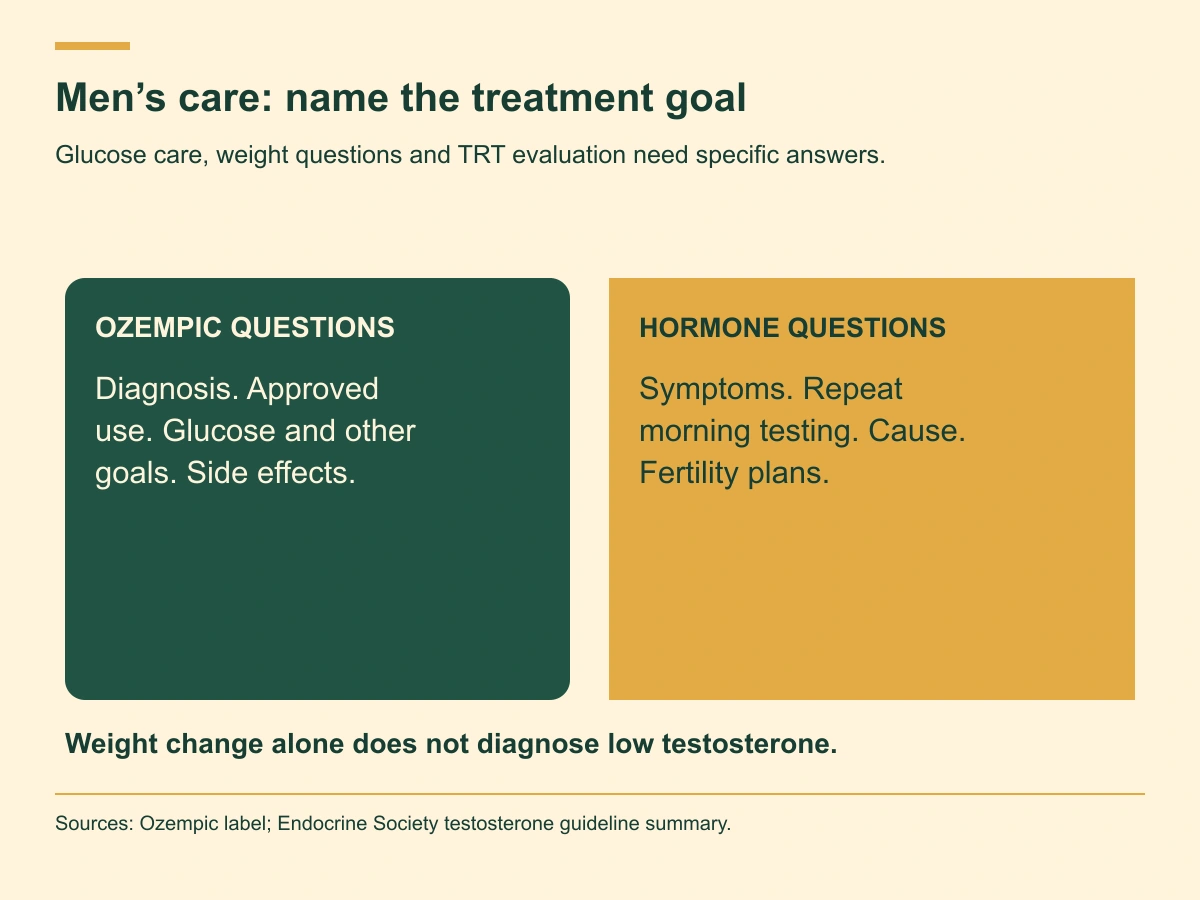
The Ozempic label does not establish it as a treatment for testosterone deficiency. Changes in weight, energy, or sexual symptoms should not be treated as proof that your testosterone rose. If a hormone question is the reason you are seeking treatment, ask for an evaluation of that question directly.
The Endocrine Society recommends diagnosing hypogonadism in men who have compatible symptoms and consistently low testosterone concentrations, with confirmation through repeat morning fasting measurement. Its guideline summary also calls for evaluating the cause. Endocrine Society testosterone guideline resources
That is a different process from measuring treatment success by appetite suppression or the scale. Our low-testosterone symptoms and testing guide and TRT evaluation guide explain the diagnostic conversation. A weight-management appointment can identify the need for a separate hormone assessment without making the two treatments interchangeable.

Can Ozempic replace TRT?
No evidence reviewed here supports treating Ozempic as a replacement for prescribed testosterone therapy. The treatments address different clinical questions. Whether TRT is appropriate depends on diagnosis, benefits, risks, monitoring, and individual circumstances.
Likewise, the Endocrine Society recommends against using testosterone therapy simply to improve glucose control in men with type 2 diabetes and low testosterone. That helps keep the goals distinct: glucose treatment and hormone treatment each need their own rationale. Endocrine Society testosterone guideline resources
Do not stop testosterone because you start Ozempic, or start testosterone because you feel tired during weight loss, without a care-team review. Our testosterone replacement therapy guide covers that separate decision. The CoreAge Rx injectable TRT page is a relevant resource for a clinician discussion, not a claim that Ozempic users need TRT.
What about fertility and trying to conceive?
Bring fertility plans into the conversation early, especially if you use or are considering testosterone. The Endocrine Society guideline recommends against starting testosterone therapy in men planning fertility in the near term. Endocrine Society testosterone guideline resources
That testosterone caution does not establish a male fertility rule for Ozempic. Do not transfer a pregnancy instruction for someone who may become pregnant into an automatic washout instruction for a male partner. A preconception medication review should address the actual person, medicines, and fertility question.
Our TRT and fertility guide explains why the testosterone question deserves attention. If you have concerns about sperm, conception, or sexual symptoms, tell the clinician what outcome you are concerned about rather than assuming semaglutide improves or harms it.
Keeping weight, muscle, and function in perspective
For many men, the goal is broader than a lower number on the scale. Being able to climb stairs, participate in activities, or maintain a workable eating routine can also matter. Agree on which outcomes are relevant to your medical condition and daily life.
If reduced appetite makes it difficult to eat, do not treat every missed meal as a sign of successful treatment. Review food intake and symptoms with your clinician or dietitian. The semaglutide protein and muscle guide covers practical questions about nutrition and function without promising that a supplement prevents every body-composition change.
An exercise plan should fit your capacity and health circumstances. If limited mobility makes a generic workout unrealistic, our Ozempic and adapted activity guide provides a more relevant set of questions. There is no need to use testosterone as a shortcut around an appropriate assessment of fatigue or declining function.

A useful first-appointment checklist
Make the goals specific enough to review later. “I want to be healthier” can become a discussion of the glucose measure your clinician follows, the activities you want to do more comfortably, or a symptom you want evaluated. These goals do not all improve on the same schedule or for the same reason.
If you already have hormone results, bring the reports with their collection dates and times rather than only recalling a number. If you have been self-treating with supplements or obtaining testosterone elsewhere, include that information. The clinician needs an accurate starting point to interpret symptoms and tests.
Agree on who will answer questions between appointments. A plan should identify where to report side effects, who reviews laboratory results, and how the diabetes and hormone clinicians communicate when both are involved.
| Topic | What to bring or ask |
|---|---|
| Reason for treatment | Which diagnosis and approved indication apply? |
| Current regimen | All prescriptions, supplements, and any TRT product |
| Health history | Diabetes, kidney, cardiovascular, gastrointestinal, and other relevant conditions |
| Goals | Glucose measures, weight goals, symptoms, and daily function |
| Hormone concerns | Specific symptoms and any previous testosterone results |
| Fertility plans | Whether conception is a current or near-term goal |
| Follow-up | How side effects, intake, laboratory results, and progress will be reviewed |
The checklist helps prevent a single visit from becoming a vague discussion of “men’s health.” It also makes it easier to identify which clinician should manage each issue and how information will be shared.
Ask what would trigger an earlier review. A follow-up appointment on the calendar does not mean you should wait through persistent vomiting or a concerning new symptom.
Common questions about Ozempic for men
Do men need a different dose from women?
Do not choose a dose based only on sex. Follow the prescribed product-specific plan and ask the clinician how response, tolerability, and the treatment goal affect it. A dose used by a friend is not a substitute for that plan.
Will it help with libido or erectile symptoms?
The label does not establish Ozempic as a treatment for those symptoms. They deserve assessment in their own right. Describe the change, timing, medicines, and relevant health conditions rather than assuming weight loss will answer the question.
Can men take Ozempic and blood-pressure medicines together?
The full regimen needs review. Symptoms, fluid intake, kidney health, and home readings can matter. Our Ozempic and blood-pressure guide explains monitoring questions without offering blanket interaction clearance.
What if my energy drops after starting treatment?
Record the timing and impact on daily activities, along with nausea, intake, sleep, and other medicines. Fatigue is not enough to diagnose low testosterone. Ask which evaluation is appropriate rather than adding a hormone or energy supplement automatically.
Where should I begin?
Begin with a clinician who can review the diagnosis and treatment goals. The CoreAge Rx semaglutide page provides treatment information to discuss. Bring separate questions about testosterone, fertility, and sexual symptoms so they receive a specific evaluation rather than being folded into a weight-loss promise.
Educational information for adults; individual treatment decisions require a qualified clinician. Sources reviewed October 3, 2026. Original AI-generated article images depict fictional people and objects, not patient outcomes. Other editorial images are illustrative. Graphics summarize the cited sources.