
Decaf tea usually still contains a small amount of caffeine. Decaffeinated means caffeine has been reduced; it does not guarantee that none remains. A caffeine-free herbal infusion is a different kind of product, although the ingredients of any blend still matter.
For example, Bigelow’s manufacturer guide lists approximately 1–8 mg of caffeine per 8-ounce cup of decaf tea. That is a named manufacturer’s range, not an exact value for every brand or brewing method. Bigelow caffeine guide
If you are choosing tea for sleep, caffeine sensitivity, or weight management, here is what the label can tell you—and what a cup of tea cannot establish.
Decaf, regular tea, and herbal tea: what is the difference?
Regular black or green tea can contain caffeine. Decaffeinated tea is made from tea that has undergone a caffeine-reduction process. Herbal infusions use other plants; a pure chamomile product, for example, is a different product from decaffeinated black tea.
These names answer different questions. “Green” describes a type of tea. “Decaf” describes a caffeine-reduction category. “Herbal” describes a blend category that still needs an ingredient check. Color, packaging, or a calming product name cannot give you a reliable caffeine amount.
A blend marketed with herbs could also contain tea or added caffeine. Read the ingredients and any caffeine statement rather than assuming that every item in the herbal-tea aisle is caffeine-free.
For a specific herbal example, Bigelow’s Cozy Chamomile product page describes its chamomile infusion. It is an example to identify, rather than evidence that a particular herb treats insomnia or causes weight loss.
How much caffeine does decaf tea have?
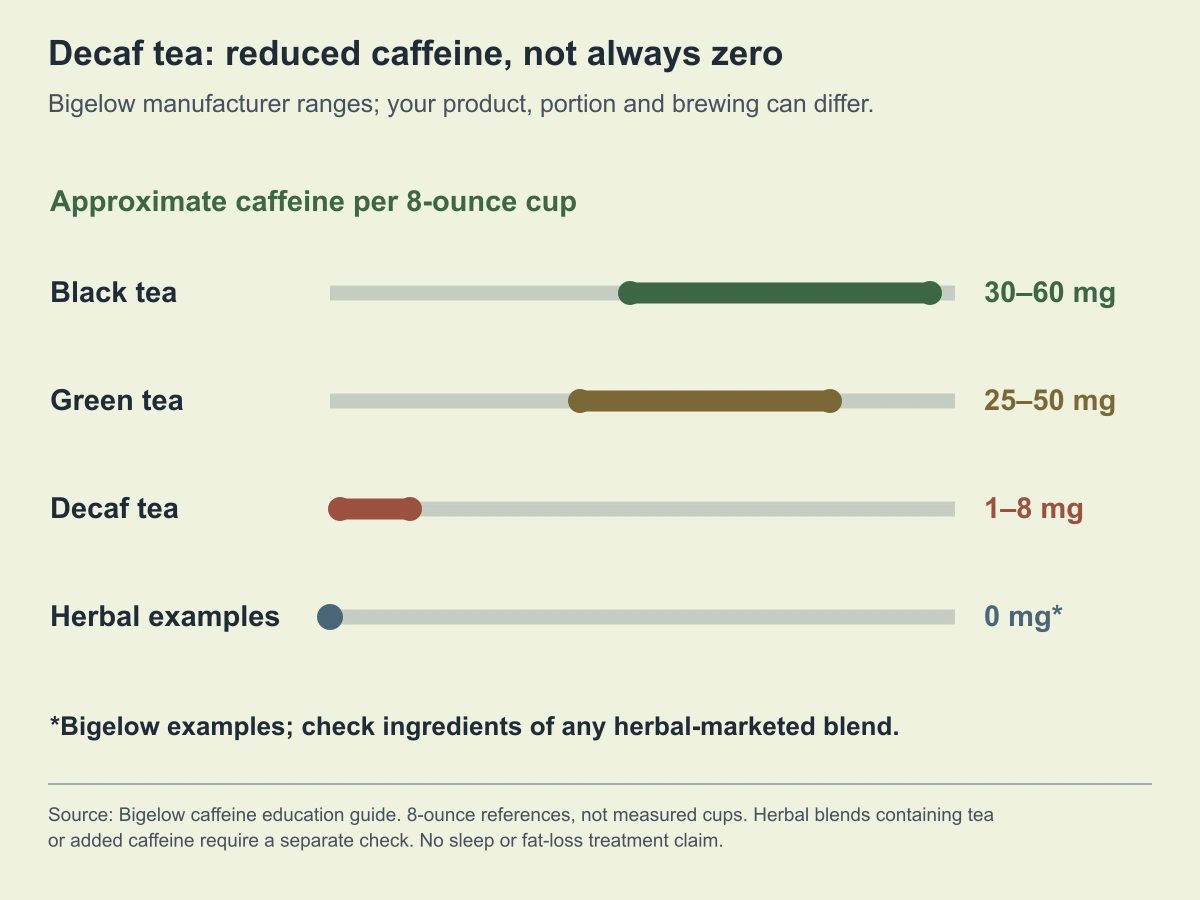
Bigelow gives these approximate ranges for an 8-ounce cup:
| Named manufacturer category | Approximate caffeine per 8 oz | What the number means |
|---|---|---|
| Black tea | 30–60 mg | A range, rather than one fixed amount |
| Green tea | 25–50 mg | Green tea is not automatically decaf |
| Decaf tea | 1–8 mg | Reduced caffeine; some can remain |
| Its caffeine-free herbal examples | 0 mg in the guide | Check the exact blend and ingredients |
These manufacturer examples are useful for showing the size of the difference. They do not measure your cup. Brand, blend, preparation, and serving size can differ from the reference.
Your mug may also hold more than 8 ounces. A large cup or several cups can make a small per-cup amount more relevant. If you are tracking caffeine for a medical reason, ask how precise the estimate needs to be and which products fit the plan.
Avoid combining a figure from one source with a serving from another. “A cup” is not always a standardized measurement in a casual recipe or product description.
Can decaf tea keep you awake?
It depends on your sensitivity, the amount, the timing, and other sources of caffeine. A small amount that one person barely notices may matter more to someone else. Lower caffeine is useful information, but it is not a promise of uninterrupted sleep.
NHLBI notes that caffeine can interfere with sleep and its effects can last up to eight hours. That does not mean every person or every decaf cup produces the same eight-hour effect. NHLBI healthy sleep habits
Look at the whole day if sleep has changed. Coffee, energy drinks, some teas, and other products may be relevant; switching only the bedtime cup may leave another source unchanged. Bedtime, waking time, stress, and your sleeping environment are also worth considering.
If tea is part of a relaxing routine, choose a product you enjoy and tolerate. Treat the routine as a comfort, rather than proof that the drink is a sleep medicine. Our sleep and weight-management guide places sleep within a broader health plan.
Is 400 mg a daily caffeine target?
No. The FDA says that for most adults, 400 mg per day is an amount not generally associated with negative effects. It also explains that sensitivity and circumstances differ. That figure is not a goal to reach or a personal guarantee of safety. FDA caffeine information
Pregnancy, medicines, health conditions, and individual responses can change the discussion. Children and teenagers should not inherit an adult reference as their allowance. Ask a qualified clinician about a limit when one is relevant to your circumstances.
If caffeine produces symptoms that concern you, the answer is not to keep adding it until a general number is reached. Describe the product, portion, timing, and symptoms to your care team. A precise-looking total from labels cannot diagnose why you felt unwell.
Is decaf tea good for weight loss?
Decaf tea can be a drink you enjoy within an eating pattern. It is not a proven stand-alone treatment for fat loss simply because it is tea or has little reported energy when served plain.
One practical comparison is what it replaces. If you regularly drink a sweetened beverage and prefer unsweetened tea, the choice changes the drink and its ingredients. That does not establish a special fat-burning effect of decaffeination.
Another comparison is what gets added. Honey, sugar, syrups, milk, or cream change the drink. A small cup of plain tea and a large sweetened tea latte should not inherit the same nutrition description. Use the amount and ingredients of the drink you actually make.
Our balanced-meal guide is a better starting point for the day as a whole. Our Bai drink article offers another example of checking the exact beverage formula instead of relying on healthy-sounding names.

Do tea antioxidants prove a metabolism benefit?
No. The presence of a plant compound does not establish that drinking a particular product produces a meaningful clinical outcome. A claim needs research that matches the product, the amount, and the outcome being advertised.
This is particularly important when a page shifts from describing tea chemistry to promising fat burning, detoxification, or appetite control. Those are different claims. A nutrient or ingredient explanation cannot fill the gap by itself.
Decaf tea also does not need an impressive medical claim to be worthwhile. Enjoyment, convenience, and a routine you can sustain are valid reasons to choose a drink. You can value those features without expecting the cup to change your body weight.
Does decaf tea count as fluid?
A prepared cup contributes fluid, but an article cannot set your personal daily fluid requirement. Health conditions, symptoms, activity, and existing restrictions matter. A large fixed water target copied from a wellness post may not suit you.
If you have kidney disease or a prescribed fluid restriction, use the plan from your care team. Ask whether tea and other drinks should be counted in the same way within that plan. NIDDK kidney nutrition guidance
Drinking extra tea is not a reliable way to fix persistent vomiting, dizziness, or very little urine. People taking a GLP-1 medicine should report difficulty maintaining intake. Our semaglutide side-effect guide explains why the exact medication and symptom pattern matter.
What about reflux or getting up at night?
The caffeine amount is only one part of a bedtime drink decision. The blend, additions, portion, and your own symptoms may also matter. A low-caffeine drink is not automatically comfortable for every stomach or every evening routine.
NIDDK lists caffeine and mint among potential reflux triggers for some people. For reflux at night or while lying down, meal timing can also matter. A peppermint herbal infusion and a decaf black tea are different products, so do not assume their effects will match. NIDDK reflux guidance
If bathroom trips are disrupting sleep, note how much and when you drink as well as any thirst, burning, pain, or new medication. Repeated urinary changes should not be dismissed as simply “too much tea.” Our urination and GLP-1 article explains useful distinctions to bring to a clinician.
A simple way to compare your choices
Pick one question first: are you reducing caffeine, changing added sugar, finding a drink you tolerate, or trying to improve a bedtime routine? The most suitable product can differ depending on the question.
Then identify the product and portion. Read the caffeine description and ingredients, including any sweetener or milk you add. If there is no exact caffeine amount, recognize the estimate instead of filling in a number from another brand.
Finally, look at the actual outcome you care about. Are you sleeping more comfortably? Is the drink enjoyable without additions you do not want? Does it agree with your stomach? Those observations are more useful than deciding that all decaf tea is either beneficial or harmful.
Keep a comparison simple enough to repeat. A complicated routine of multiple wellness drinks can obscure which change helped and make ordinary food choices feel unnecessarily demanding.

Frequently asked questions
Is decaf tea completely caffeine-free?
Usually no. Decaffeinated tea can retain a small amount. Choose and verify an actual caffeine-free product if that distinction is important for you.
Is green tea the same as herbal tea?
No. The manufacturer’s example lists caffeine in regular green tea. Check whether a green tea is specifically decaffeinated; do not infer that from its color or flavor.
Is decaf tea better than coffee?
“Better” depends on the product, amount, additions, taste, and your circumstances. Comparing caffeine or calories is more useful than assigning one drink a universal health ranking.
Can tea replace a weight-loss medicine?
No evidence presented here establishes that decaf tea does the job of a prescription treatment. If you want to understand medical options, start with the semaglutide questions guide or tirzepatide questions guide.
Where can I learn about medical weight management?
The CoreAge Rx semaglutide and tirzepatide pages are starting points for product questions. Ask about eligibility, the actual preparation, risks, follow-up, and costs. Choosing decaf tea does not establish a need for either treatment.
What to remember
Decaf means reduced caffeine. Herbal blends need an ingredient check. Serving size and additions change the comparison, and neither category makes a drink a fat-loss or insomnia treatment.
Choose tea for a clear, practical reason that fits your routine. Seek help for persistent sleep, digestive, or urinary symptoms instead of expecting a different tea to solve an unexplained health change.
Educational information for adults; individual treatment decisions require a qualified clinician. Sources reviewed October 1, 2026. Original AI-generated article images depict fictional people and objects, not patient outcomes. Other editorial images are illustrative. Graphics summarize the cited sources.