
Omeprazole treats acid-related conditions; it is not a weight-loss medicine. Weight gain is reported in the reviewed delayed-release capsule label’s postmarketing section, but those reports cannot establish how often it occurs or whether omeprazole caused it. Unexplained weight loss also deserves attention because it can be a warning sign in someone treating reflux symptoms.
If your weight changes while taking omeprazole, review the reason for treatment, prescription or over-the-counter instructions, appetite, meals, symptoms and other medicines. Neither “it definitely causes weight gain” nor “weight changes are impossible” captures the evidence accurately.
What omeprazole is used for
Omeprazole is a proton pump inhibitor, often shortened to PPI. It reduces stomach acid. Prescription uses include reflux-related conditions, ulcers and specific treatment combinations for Helicobacter pylori infection. The exact indication determines the schedule and duration. MedlinePlus omeprazole information.
Over-the-counter omeprazole is intended for frequent heartburn in adults, not immediate relief of every episode and not weight management. MedlinePlus describes an OTC 14-day course and says not to continue beyond 14 days or repeat more often than every four months without medical advice. That instruction should not be used to stop a longer prescription course that was chosen for another condition.
Bring the actual package to a review. “A reflux pill” could describe several drugs, strengths and formulations. A combination product or a prescription taken with antibiotics needs a different discussion from a standard OTC course.
Our calorie-intake guide addresses individualized weight planning. It does not turn omeprazole into a tool for creating a calorie deficit or justify using it without an acid-related indication.
What the label says about weight gain
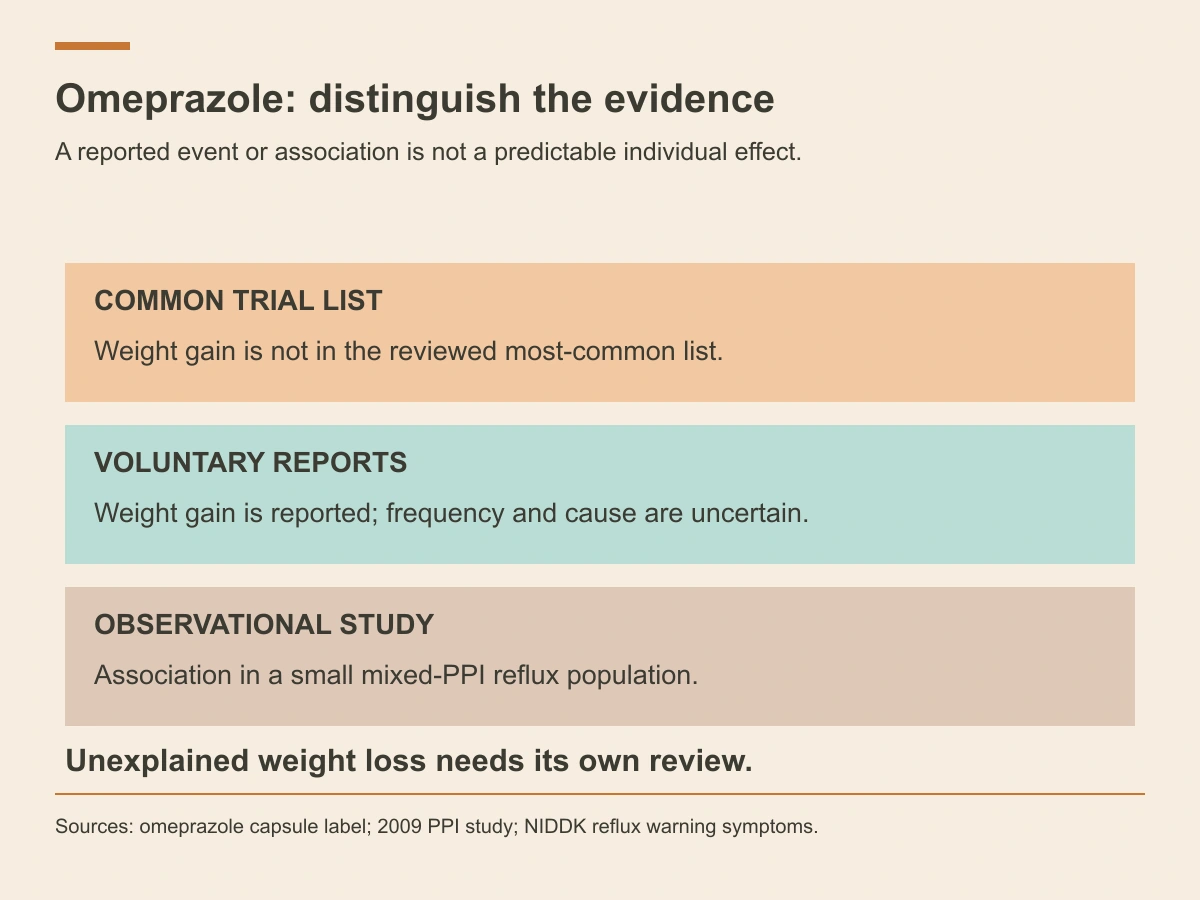
The reviewed omeprazole delayed-release capsule label lists headache, abdominal pain, nausea, diarrhea, vomiting and flatulence among its most common trial reactions. Weight gain is not in that particular most-common list. It appears in the postmarketing metabolic and nutritional reports. Omeprazole capsule prescribing information.
Postmarketing reports come from use after approval and can help identify concerns worth studying. The label cautions that voluntary reports from an uncertain population size do not allow reliable frequency estimates or establish a causal relationship in every case. A reported event is not the same thing as a predictable effect for all users.
That distinction also matters when reading percentages online. A percentage from a small study of people taking several different PPIs is not automatically the rate of omeprazole-induced weight gain. The study design, participants, exposure and comparison group need to be understood before using the number.
What an older study can and cannot tell us
A 2009 observational study compared 52 patients with GERD taking long-term PPIs with 58 age- and sex-matched healthy controls. Patients used omeprazole, rabeprazole or lansoprazole. The treated group’s average weight increased during follow-up, while the control group did not show the same change. Original PPI and body-weight study.
The reflux group began at an average of 56.4 kg and ended at 58.6 kg. These are group averages across the study, not an expected individual gain from omeprazole. The participants were older on average, and the study was not a randomized comparison of omeprazole against placebo in otherwise identical patients.
The authors proposed that relief of reflux symptoms could allow greater food intake. That is a possible explanation, not proof that the medicine directly creates fat or that everyone should stop treatment. Differences in disease, eating habits and other circumstances limit how confidently the study can assign cause.
Appetite and meal changes may be part of the story
If eating previously triggered discomfort, you may have changed portion size, meal timing or food choices. When symptoms improve, that routine may change again. Describing the before-and-after eating pattern helps the clinician assess a weight trend without assuming a direct drug effect.
Ask yourself whether you are now eating larger meals, adding snacks, returning to foods you had avoided, or drinking more calorie-containing beverages. Alternatively, are nausea, diarrhea, pain or swallowing problems making it difficult to eat? These are observations to discuss, not grounds for diagnosing the cause yourself.
Reflux commonly involves heartburn or regurgitation, but it can also involve nausea, chest symptoms and swallowing difficulties. Persistent symptoms need assessment rather than repeated self-treatment. NIDDK GERD symptoms.
For meal planning, our breakfast calories and protein guide and lunch calorie guide explain how a meal fits the overall day. They avoid assigning the same portion or calorie target to every adult.

Weight loss should not automatically be celebrated
Unexplained weight loss is a warning to discuss with a clinician, particularly when accompanied by loss of appetite, difficulty or pain with swallowing, persistent vomiting, or evidence of digestive bleeding. NIDDK lists these among symptoms that can suggest complications or another serious problem in someone with reflux symptoms. When reflux symptoms need review.
MedlinePlus likewise advises discussing unexplained weight loss and other alarm symptoms before using nonprescription omeprazole. Do not treat falling weight as proof that the drug is “working for weight loss.” Its treatment goal is related to the underlying acid problem.
Vomiting blood, black or bloody stools, significant chest pain, difficulty breathing or feeling acutely unwell may require urgent or emergency assessment. Do not assume chest pain is simply heartburn because you already take a PPI.
If reduced intake is ongoing, the care team may need to evaluate hydration, nutrition and the reason eating is difficult. Adding a supplement without addressing persistent symptoms can leave the underlying problem unresolved.
| Pattern | Information that helps a review | What not to assume |
|---|---|---|
| Gradual gain after reflux improves | Meal and beverage changes, activity and treatment timeline | That the medicine directly caused every pound |
| Weight loss without trying | Appetite, swallowing, vomiting, bowel symptoms and duration | That omeprazole is a useful weight-loss treatment |
| Short-term fluctuations | Measurement conditions, fluid intake and illness | That one reading proves a lasting change |
| Persistent digestive symptoms | Actual prescription, course and accompanying medicines | That extending an OTC course solves the cause |
These categories help organize the appointment. They cannot determine which diagnosis or treatment applies.
Prescription duration and OTC duration are different
A 14-day OTC course is not a universal limit for every prescription. Some conditions require a different duration or follow-up plan. Conversely, a history of needing prescription treatment does not mean an adult should repeatedly extend OTC use without review. Omeprazole schedules and precautions.
Ask why the medicine is prescribed, how benefit will be assessed, when treatment should be reviewed, and whether the current dose remains appropriate. If a clinician recommends a change, obtain clear instructions rather than abruptly stopping or substituting another acid medicine yourself.
The discussion should also cover what happens if symptoms return. A planned review is more useful than cycling between stopping for fear of weight gain and restarting whenever discomfort recurs.
Keep the focus on the condition being treated. A medicine that is still needed should not be judged solely by a scale reading; equally, symptoms and unexplained changes should not be ignored just because a prescription has been in place for years.

Review other medicines and nutrition questions
If your medicine list includes semaglutide, our guide to omeprazole and Ozempic questions distinguishes injectable and oral products, the limits of a healthy-volunteer study, and reflux questions to discuss with the care team.
Tell the pharmacist about all prescriptions, OTC products and supplements. Omeprazole can have medicine interactions, and a new weight trend may coincide with other treatment changes. Include the dates rather than assuming the most recently noticed drug must be responsible.
If you also take a GLP-1 medicine, report its exact brand or compounded preparation. Appetite, nausea and weight changes deserve a coordinated assessment. A general omeprazole article does not establish that a particular combination is appropriate or provide a timing rule for it.
Our guide to choosing a GLP-1 medicine and compounded GLP-1 medicine guide explain separate formulation and treatment questions. CoreAge Rx describes its semaglutide service and tirzepatide service for people exploring care. Neither is a treatment recommendation for unexplained weight change during reflux care. Compounded drugs are not FDA-approved; a patient’s individual medical need should guide any consideration. FDA compounding guidance.
Keep a useful weight and symptom record
Use comparable measurement conditions if you are tracking weight, and look at the trend rather than one unusually high or low reading. Note appetite, meals, reflux symptoms, vomiting, bowel changes, activity and prescription changes. If weighing is distressing or conflicts with eating-disorder care, discuss a suitable monitoring approach instead of intensifying tracking.
Bring the record to a clinician or registered dietitian. A plan should support adequate nutrition and the treatment of reflux, rather than requiring an extreme diet to compensate for a suspected medicine effect.
Frequently asked questions
Does omeprazole cause weight gain?
Weight gain appears in the reviewed label’s postmarketing reports, and an older observational study found an association between long-term PPI use and gain in a reflux population. Neither establishes a predictable causal effect or rate for every omeprazole user.
Can omeprazole make you lose weight?
It is not a weight-loss treatment. If weight falls without intention, particularly with appetite loss or digestive warning signs, seek review instead of treating it as an expected benefit.
Will stopping omeprazole reverse weight gain?
That cannot be promised. The cause of the change and the reason for acid treatment need assessment. Discuss any stop or reduction plan with the prescriber rather than using withdrawal as a diagnostic experiment.
Is 14 days the maximum safe prescription course?
No. The OTC instructions and a clinician-directed prescription course are different. Ask about the actual indication and planned duration. Do not extend OTC treatment or stop a prescription solely by applying the other product’s schedule.
Does improved appetite mean something is wrong?
Not automatically. Eating may change when discomfort improves. Discuss whether intake, weight and symptoms fit your overall health goals, and whether the trend suggests a need for reassessment.
What should I ask at my appointment?
Ask what the PPI is treating, whether the current course is still appropriate, whether alarm symptoms need investigation, and whether other medicines or nutrition changes help explain the trend. Obtain a clear plan for follow-up and for symptoms that require earlier contact.
Educational information for adults; individual treatment decisions require a qualified clinician. Sources reviewed October 2, 2026. Original AI-generated article images depict fictional people and objects, not patient outcomes. Other editorial images are illustrative. Graphics summarize the cited sources.