Chow mein can fit a balanced eating plan, but “healthy” depends on the recipe, portion and rest of the meal. Noodles, vegetables, protein foods, oil and sauce can vary widely. There is no single calorie count for every homemade bowl or restaurant order, and no reason to judge the dish only by whether it contains noodles.
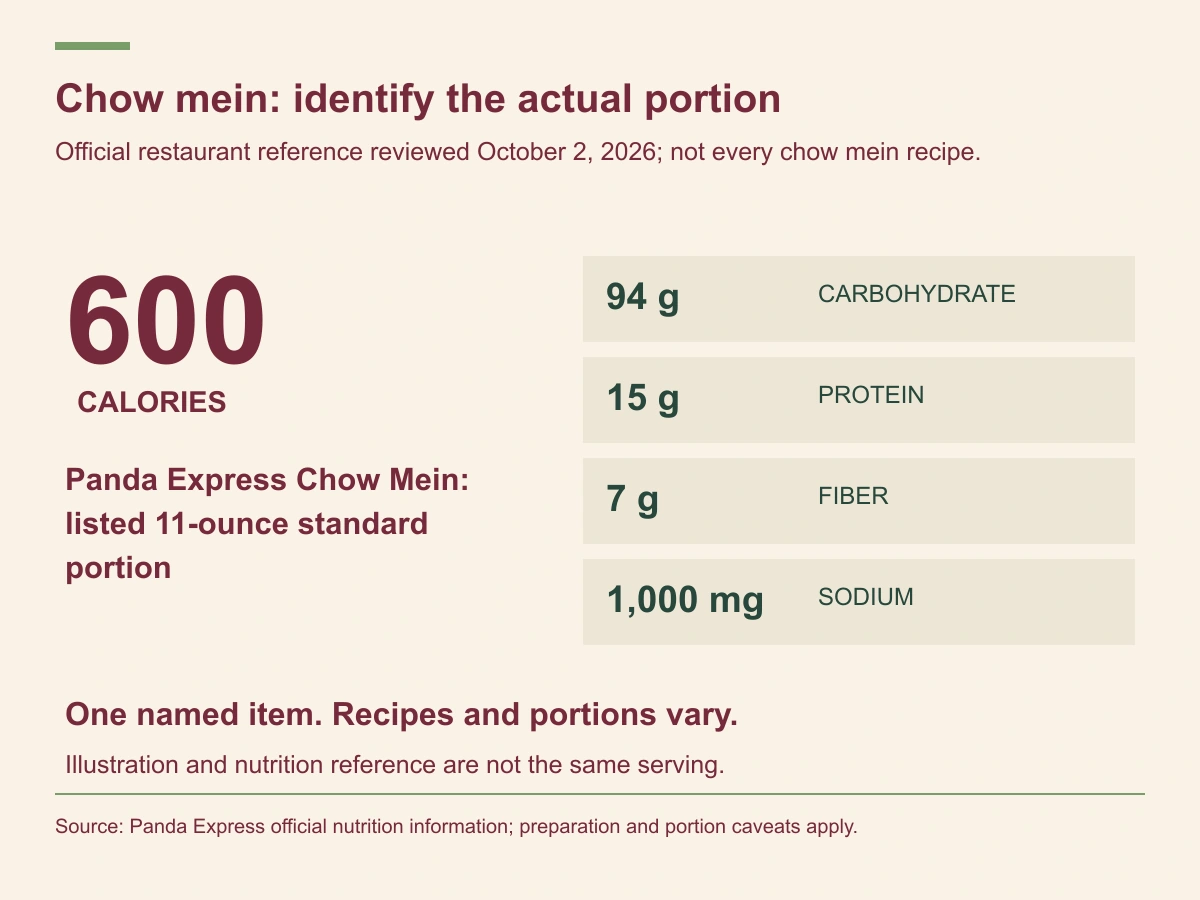
For a concrete example, Panda Express currently lists its standard 11-ounce Chow Mein portion at 600 calories, with 94 grams of carbohydrate, 15 grams of protein, 7 grams of fiber and 1,000 milligrams of sodium. Those numbers describe that named restaurant item, not all chow mein. Check the current source and your actual order before using them.
Start with the dish you actually eat
“Chow mein” can describe different styles of noodles and preparation. A home recipe with a measured amount of oil, vegetables and tofu may differ substantially from a restaurant side. Adding chicken, seafood, extra sauce or another entrée changes the overall meal again.
Ask whether the available nutrition information refers to a side, a complete bowl, a packaged product or one portion of a multi-serving recipe. A menu photograph cannot reliably show a weighed serving or establish a calorie count. The cover image for this article is an illustrative noodle bowl, not a photograph of Panda Express’s listed portion.
If you cook at home, use the actual ingredient amounts and the number of portions the recipe makes. Count additions such as cooking oil and sauce rather than assuming that a vegetable-heavy appearance makes them negligible. If you order out, the restaurant’s current nutrition information is more useful than an unrelated recipe calculator.
Our lunch calorie guide explains how one meal fits individual daily needs. Its purpose is to support planning, not to impose a fixed lunch allowance on everyone.
A current restaurant example, with its limits
The official Panda Express nutrition page identifies a standard 11-ounce Chow Mein portion and the values below. The company notes that nutrition is based on standardized recipes and that preparation, portioning and locations can vary. Panda Express nutrition and allergen information.
| Nutrient | Listed standard 11-ounce Chow Mein portion |
|---|---|
| Calories | 600 |
| Total carbohydrate | 94 g |
| Protein | 15 g |
| Dietary fiber | 7 g |
| Total fat | 23 g |
| Saturated fat | 4 g |
| Sodium | 1,000 mg |
This is a dated example, not a promise about every scoop. An older screenshot or search result may show a different number. Use the restaurant’s current item description and clarify whether the order matches it.
A meal that includes this side and a separate entrée has the nutrients from both. Drinks, sauces and other sides also count. Keeping those components visible is more useful than deciding that a single dish is inherently good or bad for weight loss.
Portion arithmetic is useful, but it is not a prescription
If someone ate exactly half of the listed standard portion, simple arithmetic would give approximately 300 calories, 47 grams of carbohydrate and 500 milligrams of sodium from that chow mein. That is an estimate based on half of the published portion, not a separately tested restaurant serving or a recommended amount for every person.
The FDA explains that serving size on a Nutrition Facts label reflects a reference amount and is not a recommendation of how much to eat. Calories and nutrients must be interpreted alongside the amount consumed. FDA serving-size guidance.
A smaller portion is not automatically a complete meal. If you reduce noodles, consider whether you still have adequate protein and other foods, rather than simply eating less of everything.
Can chow mein fit a weight-loss plan?
Yes, it can be part of a plan that fits your overall intake, health needs and preferences. No food has to produce weight loss by itself. The useful question is how the portion and other meal components fit a repeatable daily pattern.
Calorie needs differ with body size, age, activity and other circumstances. NIDDK’s Body Weight Planner is designed for personalized adult calorie and activity planning, with exclusions for younger people and pregnant or breastfeeding women. It does not make one restaurant calorie count a universal target. About the Body Weight Planner.
For some people, ordering a moderate noodle portion with vegetables and a protein food makes the meal easier to balance. For others, a full portion may fit their day. A registered dietitian can help when appetite, diabetes, digestive symptoms or a history of restrictive eating makes planning more complicated.
Our calorie-intake guide addresses estimates and their limits. If exercise tracking is part of your routine, the net-calorie guide explains why subtracting a watch number from a meal does not prove a particular deficit.
Build the meal around more than noodles
A noodle dish may provide some protein, but the actual amount depends on the ingredients and serving. Look at the total meal rather than assuming that a few visible vegetables or pieces of chicken supply everything you need.
Practical options include adding a protein food you enjoy, increasing vegetables in a home recipe, and choosing sauce amounts intentionally. Tofu, chicken, fish or other protein choices can fit different preferences, but their preparation changes the meal. A battered, fried or sauce-heavy entrée is a different addition from simply counting its name as “protein.”
NIDDK describes a plate method in which nonstarchy vegetables, carbohydrate foods and protein foods have distinct places. It also emphasizes working with the care team to choose a meal plan. A mixed noodle dish does not have to look like a divided plate for those categories to be considered. NIDDK meal planning.
Our what to eat on GLP-1 medicines guide offers practical meal questions, while the protein-shake meal guide explains why a protein product alone does not automatically create a balanced meal.
Sodium and sauce deserve attention
The named Panda Express example contains 1,000 milligrams of sodium in the listed portion. Your personal sodium advice may depend on blood pressure, kidney disease or another condition. The number should be assessed in the context of the whole day and any clinician-directed limit.
Do not describe a noodle dish as low sodium merely because it contains vegetables or has no obvious salt on top. Sauces and seasoning can contribute substantially. At home, compare ingredient labels; at a restaurant, ask about the actual preparation and whether sauce adjustments are possible.
What if you have diabetes?
Chow mein contains carbohydrate, and the amount matters for a diabetes meal plan. The restaurant example provides 94 grams in its listed standard portion, but homemade and other restaurant versions can differ. NIDDK explains that carbohydrate foods can raise blood glucose and that carbohydrate counting or the plate method may help with planning. Diabetes and meal planning.
This does not mean everyone with diabetes must avoid noodles. It means the portion, other foods, medicines and glucose response should be considered together. If you use insulin, follow the care team’s actual carbohydrate and dosing instructions rather than deriving a new insulin dose from this article.
Also avoid skipping the next meal to “make up” for a restaurant order without considering your treatment. NIDDK notes that skipping or delaying meals can contribute to low glucose with insulin or certain diabetes medicines. A sustainable plan should fit both the food you enjoy and the medicines you use.
Eating chow mein while using semaglutide or tirzepatide
Medication treatment can change appetite and meal tolerance. A large, oily or heavily seasoned meal may be uncomfortable for some people, but there is no universal chow mein ban. Notice the actual portion and whether symptoms follow a particular preparation.
Eating slowly, choosing a portion you can comfortably manage and stopping when uncomfortably full can make the meal easier to assess. Do not force yourself to finish a restaurant container simply because it is sold as one order. Equally, persistent inability to eat normally needs review rather than being treated as a successful appetite effect.
For ongoing nausea or reflux, our tirzepatide digestive-symptom guide explains when to contact the team. Our semaglutide, protein and muscle guide covers nutrition and function beyond scale changes.
CoreAge Rx describes its semaglutide service and tirzepatide service for adults exploring clinician-led care. A restaurant meal does not determine eligibility, and neither medicine is a way to cancel out food. Compounded medicines are not FDA-approved and should be considered only when a medical need cannot be met by an approved drug. FDA compounding guidance.

Allergens and dietary preferences need separate checks
The current Panda Express Chow Mein allergen information identifies wheat, soy and sesame. The company also warns that ingredients and preparation share kitchen spaces, equipment and utensils, so an item should not be assumed free from cross-contact. Official allergen information.
For another recipe, check noodles, sauce, broth and added protein separately. A vegetable dish is not automatically gluten-free, suitable for every allergy, or prepared without animal-derived ingredients. Ask the restaurant about the actual item and tell staff about a diagnosed allergy rather than relying on the name alone.
Frequently asked questions
Is chow mein healthy or unhealthy?
It is more useful to assess the recipe, portion and whole meal. Consider carbohydrate, protein, vegetables, oil, sodium and any personal medical needs. A dish can fit a balanced plan without being ideal in unlimited amounts.
How many calories are in chow mein?
There is no universal number. The current named Panda Express standard 11-ounce portion is listed at 600 calories. Use the actual recipe or restaurant information for another version.
Is chow mein better than fried rice for weight loss?
Compare the current portions and nutrients for the actual items. A small calorie difference does not answer every question about protein, fiber, sodium or what you eat with the side. Neither name guarantees a lower-calorie meal.
Can I eat chow mein on Ozempic or Zepbound?
There is no automatic ban based on the dish name. Portion, tolerance, nutrition and your medical history matter. Persistent vomiting, significant pain or difficulty eating warrants clinical advice rather than another food-rule list.
Does adding vegetables make it low calorie?
Not necessarily. Vegetables can add variety and nutrients, but noodles, oil, sauce and serving size still affect the total. Use actual amounts rather than judging by the photograph.
What is one useful change to try?
First identify your usual order and portion. Then consider whether adjusting noodles, adding a protein food, including more vegetables or choosing sauces deliberately makes the meal more satisfying and easier to repeat. The best change is one that fits your needs and preferences.
Educational information for adults; individual treatment decisions require a qualified clinician. Sources reviewed October 2, 2026. Original AI-generated article images depict fictional people and objects, not patient outcomes. Other editorial images are illustrative. Graphics summarize the cited sources.