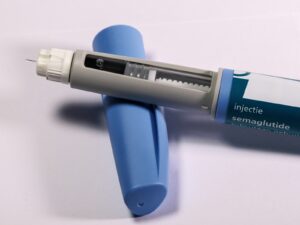
Heartburn can occur during Wegovy treatment, and gastroesophageal reflux disease is listed among reported adverse reactions in the current prescribing information. That does not establish that Wegovy caused every episode of chest discomfort or that symptoms should simply be endured. The symptom pattern, exact product, dose history, meals, and other medicines deserve review.
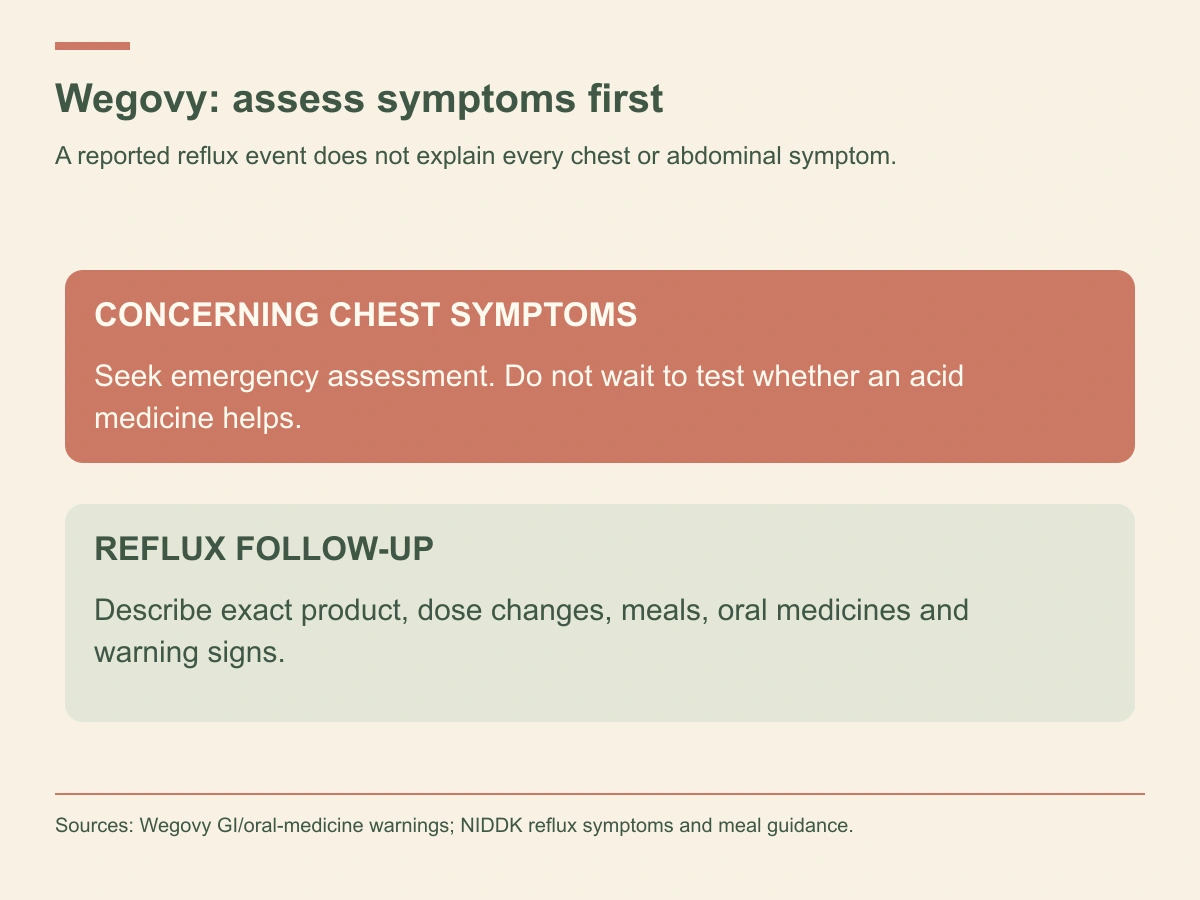
This guide explains common reflux questions and how to prepare for follow-up. New or severe chest symptoms take priority over attributing them to reflux. Seek emergency assessment for possible heart-attack symptoms rather than waiting for an antacid or a medication appointment.
What do people mean by heartburn or reflux?
Heartburn is a burning feeling behind the breastbone that may rise toward the throat. Regurgitation means stomach contents come back toward the throat or mouth. GERD can also involve nausea, swallowing problems, cough, hoarseness, or chest pain. NIDDK symptom guidance.
Describe the actual experience. Burning after a meal, sour taste when lying down, painful swallowing, repeated vomiting, and severe abdominal pain are different descriptions. They should not all be grouped under “Wegovy stomach problems.”
Note whether the symptoms predated treatment. If reflux was already present, explain what changed: frequency, severity, timing, nighttime interruptions, or response to an existing plan. A symptom beginning after a dose increase is useful information, but timing alone does not prove the cause.
What does the Wegovy label say?
The current label includes gastroesophageal reflux disease, indigestion, burping, nausea, vomiting, and other gastrointestinal effects among adverse reactions. It also warns about severe gastrointestinal reactions, dehydration-related kidney injury, pancreatitis, and other conditions. Wegovy is not recommended in severe gastroparesis. Wegovy prescribing information.
These categories should remain separate. A listed reflux event does not make severe or persistent abdominal pain an expected harmless symptom. A person with vomiting and poor fluid intake may need assessment even if reflux is also present.
The current Wegovy label covers tablets and injection products. Tell the clinician which presentation and strength you use. This article does not apply a trial rate from one dose or population to every formulation. The Wegovy dosage guide and oral-versus-injection article explain related product distinctions.
Does delayed gastric emptying (the movement of food from the stomach into the intestine) explain everything?
Wegovy delays gastric emptying. Its label discusses the potential to affect oral medicines and recommends monitoring their effects, with additional attention to medicines needing close clinical or laboratory monitoring. Wegovy label, section 7.2.
That does not let a reader diagnose the cause of every digestive symptom. Reflux can have several contributing factors, and other medicines or medical conditions may be relevant. The NIDDK causes discussion explains that context.
If another oral medicine seems to work differently or you cannot keep tablets down, report the pattern. Do not take extra medicine to compensate for a presumed delay or invent a longer spacing rule as a cure for reflux. The exact prescription and symptom history are needed to review the question.
What meal habits are worth discussing?
For nighttime or lying-down reflux, NIDDK notes that finishing meals at least three hours before lying down may help. Some people notice triggers such as high-fat foods, coffee, alcohol, chocolate, mint, spicy foods, or acidic foods. Triggers differ, so review the foods associated with your symptoms. NIDDK eating guidance.
Think about one manageable change: a meal earlier in the evening, a different portion, or reviewing a particular drink. Keep enough food and fluid in the day. Removing every possible trigger at once can make it difficult to tell what helped and leave few foods you can manage.
Our balanced-meal guide offers flexible components, and baked-potato meal questions illustrate how toppings and the complete plate matter. Those guides do not prescribe a reflux diet. If eating is persistently difficult, ask for individualized nutrition and clinical support.
Should I take an antacid, an H2 blocker or omeprazole?
Ask a pharmacist or clinician which option fits the symptoms, treatment history, and full medicine list. These medication categories have different directions and considerations. An OTC label is not an instruction to treat every new symptom without assessment.
Tell the pharmacist about Wegovy’s exact product, any dose change, other prescriptions, supplements, and products already tried. If you use doxycycline or another oral medicine with administration interactions, that history matters. The doxycycline and semaglutide article explains why an antacid question can need a separate review.
Our omeprazole and Ozempic discussion addresses a related semaglutide question, including the limits of an oral pharmacokinetic study. It does not establish a universal PPI schedule for Wegovy. Persistent recurrence or continued need for symptom medicines deserves follow-up rather than repeatedly extending self-treatment.

How should symptoms affect a planned increase?
Tell the prescriber before a planned increase if symptoms persist, interfere with meals or fluids, or disrupt ordinary life. The actual dose, presentation, dates, and treatment indication matter. A calendar reminder alone cannot decide whether the next step is appropriate.
Do not independently shorten the interval, take extra medicine, split a preset dose, or switch products to control symptoms. Ask the team for a revised plan when needed. The Wegovy dose guide explains why a generic chart is separate from an individual decision.
Explain missed doses and interruptions too. A nominal month of treatment may include gaps, and restarting after a gap is its own question. Our semaglutide missed-dose and restart article provides context without replacing product-specific instructions.
What if weight loss is expected to improve GERD?
NIDDK notes that a clinician may suggest weight loss for some people with overweight or obesity to reduce GERD symptoms. NIDDK reflux guidance. That care consideration does not guarantee that a particular medicine will make every symptom improve or prevent treatment-related digestive difficulties.
Discuss both the treatment goal and your experience. A medicine can be useful for an appropriate indication while still causing symptoms that need attention. You do not need to minimize discomfort to demonstrate commitment to the plan.
Do not pursue rapid loss by eating too little to avoid reflux. Unexplained or unwanted loss, persistent vomiting, and inadequate intake need review. The calorie-intake guide explains why nutritional adequacy belongs in weight-management discussions.
A short reflux record for follow-up
| What to note | Useful details |
|---|---|
| Product and changes | Injection or tablet, exact strength, last dose and recent increases |
| Symptom description | Burning, regurgitation, nausea, painful swallowing or another experience |
| Timing | Meals, lying down, nighttime symptoms and treatment changes |
| Intake | Food and fluids you can manage, vomiting and missed oral medicines |
| Other products | Prescriptions, supplements and symptom medicines already used |
Keep the record brief. It can clarify a routine appointment, but do not delay urgent assessment to collect more entries. Ask which changes require a same-day call and who to contact outside normal office hours.
When do symptoms need urgent or emergency care?
Possible heart-attack symptoms, including new chest pressure with breathlessness, faintness, sweating, or discomfort spreading to an arm, jaw, back, or shoulder, require emergency help. Do not assume chest discomfort is reflux because it occurred after a meal or during Wegovy treatment. Our chest-pain and palpitations guide addresses that priority.
Contact a clinician promptly for painful or difficult swallowing, persistent vomiting, blood or coffee-ground-like material in vomit, black tarry stools, or unexplained weight loss. NIDDK warning symptoms. Seek urgent assessment for severe or persistent abdominal pain, especially if it spreads to the back, or vomiting that prevents fluids. Wegovy warnings.
Do not keep escalating treatment or add unreviewed symptom medicines while becoming more unwell. Identify your medicines for the assessment when possible, but getting care comes first.

Frequently asked questions
Does Wegovy always cause heartburn?
No. Reported adverse reactions do not predict an identical experience for everyone. Review symptoms rather than treating their presence or absence as a measurement of weight-treatment effectiveness.
Can I use Wegovy if I already have GERD?
That requires an individual review of the condition, product, indication, other medicines, and symptom severity. A general article cannot provide clearance. Explain the current reflux plan and any swallowing, vomiting, or intake difficulties.
Will moving the injection to bedtime solve reflux?
This article establishes no universal injection-time workaround. Ask about the actual prescription and symptom pattern. NIDDK’s meal-to-lying-down advice is a meal-habit discussion, not evidence that changing injection time prevents every episode.
Should I stop because of one episode?
Symptoms and severity determine the urgency of assessment. Seek emergency care for concerning chest symptoms and contact the treating team for persistent digestive problems or dose questions. Do not use an internet rule to decide every episode is harmless or make repeated unsupervised changes.
Related care information
Read semaglutide nausea and vomiting, Wegovy dosing, and balanced meals. The CoreAge Rx semaglutide page describes a care service; the actual product and prescription require individual assessment.
Educational information for adults; individual treatment decisions require a qualified clinician. Sources reviewed October 3, 2026. Original AI-generated article images depict fictional people and objects, not patient outcomes. Other editorial images are illustrative. Graphics summarize the cited sources.