
Doxycycline and semaglutide require a review of the exact antibiotic formulation, the semaglutide product, and the symptoms you are experiencing. A pharmacist or prescriber should reconcile the directions. The important questions include how to take the antibiotic, whether nausea or reflux affects meals, and what to do if vomiting prevents oral medicines.
Do not assume that a general interaction checker answers every administration question. Doxycycline has its own fluid, food, and mineral-interaction instructions. Semaglutide can affect digestion. This guide separates those issues so you can explain the problem clearly and avoid making an unprescribed change to either treatment.
Identify both products before changing the schedule
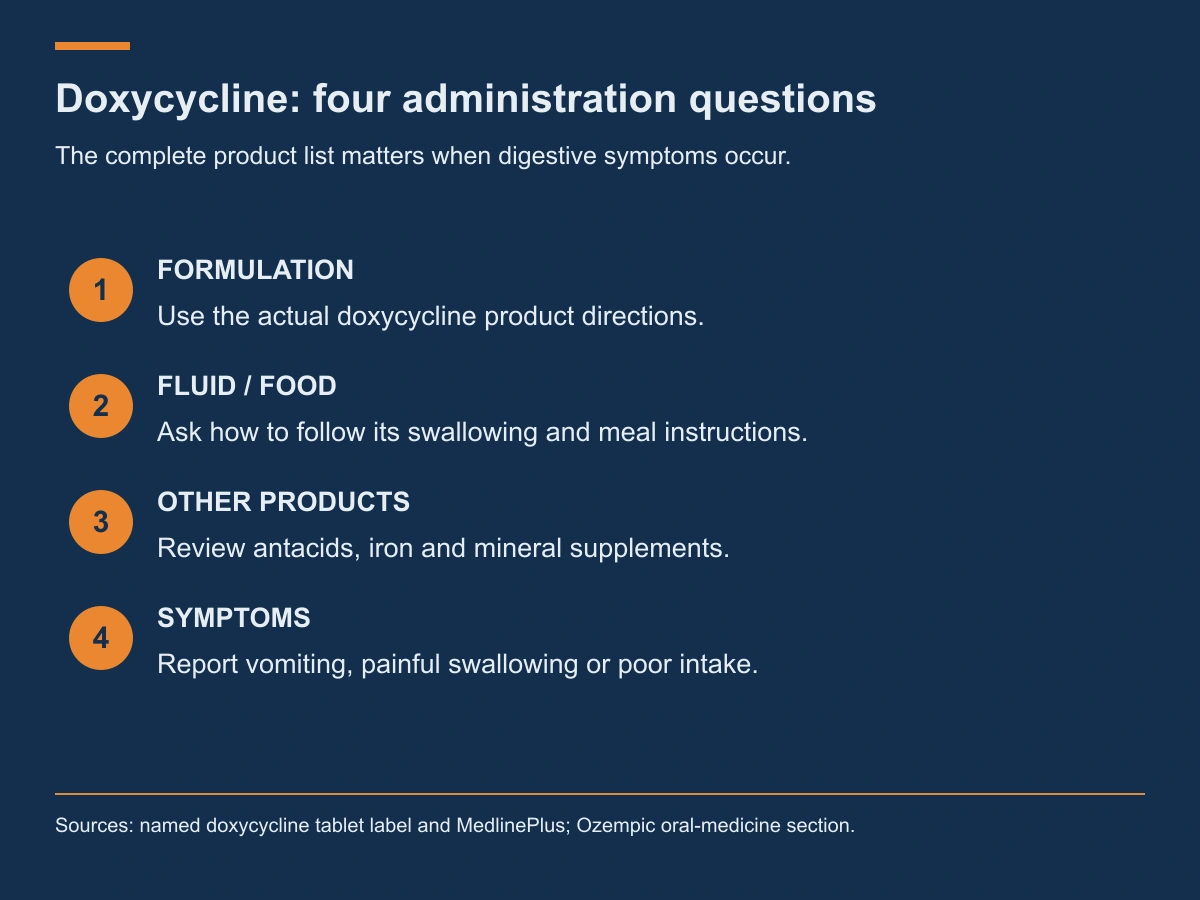
Write down the doxycycline brand or generic name, strength, formulation, prescribed frequency, reason for treatment, and course length. Tablets, capsules, delayed-release products, and other formulations may have different directions. The reviewed DailyMed label is for a named doxycycline hyclate tablet product; it is not a label for every doxycycline preparation.
For semaglutide, note the brand and route. Weekly Ozempic injection, Wegovy presentations, semaglutide tablets, and compounded products should not be silently treated as the same prescription. Our oral semaglutide versus injections guide explains that distinction.
Include antacids, iron, calcium, vitamins, laxatives, and other occasional products. Someone may not think to mention a chewable antacid or multivitamin during an antibiotic discussion, but those details can be relevant. Bring the list to the pharmacist before creating a schedule that seems convenient but conflicts with the product directions.
Does semaglutide affect doxycycline absorption?
The Ozempic injection label says delayed gastric emptying (the movement of food from the stomach into the intestine) can potentially affect absorption of oral medicines. It reports no clinically relevant effect on the oral medicines evaluated in its clinical pharmacology trials, while continuing to advise caution. That does not establish that every doxycycline formulation was studied or give a personal guarantee of antibiotic effectiveness. Ozempic injection label, section 7.2.
If the infection is not improving as expected, contact the treating clinician rather than increasing the antibiotic or repeating doses on your own. Explain adherence, vomiting, food or supplement timing, and symptom changes. Lack of improvement can have several explanations; it is not proof that semaglutide prevented absorption.
Likewise, nausea after an antibiotic dose is not an absorption measurement. A useful review separates whether the medicine was taken correctly, whether it was retained, whether the condition is responding, and whether side effects need attention. Each question can lead to a different next step.
Why water and swallowing instructions matter
The reviewed doxycycline hyclate tablet label directs using adequate fluid to reduce esophageal irritation and ulceration. MedlinePlus advises a full glass of water with each dose. The label also reports esophagitis and esophageal ulceration with tetracycline tablets or capsules, often when taken immediately before bed. Doxycycline tablet label, doxycycline drug information.
Follow the specific product directions and ask the pharmacist how to fit them into your day. Explain if nausea makes a full drink difficult, swallowing hurts, or your routine means taking tablets just before lying down. Do not solve that difficulty by dry-swallowing the medicine or altering a delayed-release product without guidance.
Painful swallowing or new chest discomfort should not simply be labeled “Ozempic reflux.” The antibiotic history is relevant too. Serious chest symptoms require urgent assessment; our chest-pain and palpitations guide explains why a presumed medication cause does not replace evaluation.
Can doxycycline be taken with food or milk?
The reviewed hyclate tablet label allows food or milk if gastric irritation occurs. MedlinePlus also discusses this possibility and advises asking the clinician or pharmacist about the best administration method. These statements should not become a universal rule for every delayed-release, low-dose, or branded doxycycline product. Named tablet label, MedlinePlus.
Read the dispensing instructions for the medicine you actually received. If the package says something different from what you remember hearing, ask for clarification. “All dairy is forbidden with every doxycycline dose” and “all food instructions are identical” are both overly broad conclusions.
Distinguish a food question from a supplement or antacid question. The amount, formulation, and product matter. A pharmacist can review the exact items rather than relying on a generic internet timetable. Do not omit meals repeatedly to meet a schedule you invented yourself.
Antacids and mineral supplements need a separate check
The doxycycline label states that absorption can be impaired by antacids containing aluminum, calcium, or magnesium, bismuth subsalicylate, and iron preparations. Doxycycline label, section 7.3. This matters if you start treating digestive symptoms with a new nonprescription product during the antibiotic course.
MedlinePlus provides interval advice for some of these products, but an individual plan should use the exact formulation and pharmacist’s directions. Do not assume one identical gap covers all antacids, vitamins, foods, and prescription medicines. Tell the pharmacist what you take and when, including the active ingredients on the package.
If you need relief for nausea or reflux, ask which option fits the full regimen. An acid-reducing medicine and a mineral-containing antacid are different products. Our omeprazole and Ozempic discussion addresses a related question without establishing an antibiotic schedule.

Questions to take to the pharmacist
| Question | What to show | What the answer should clarify |
|---|---|---|
| Which formulation is this? | Antibiotic label and package | The directions for that actual product |
| What if it upsets my stomach? | Symptoms and food instructions | Whether and how food fits this prescription |
| Which products affect absorption? | Antacids, vitamins and minerals | Product-specific spacing or alternatives |
| What if I vomit a dose? | Medicine, approximate timing and repetition | Whether another dose is appropriate |
| What if meals or fluids are difficult? | Actual intake and semaglutide changes | Whether clinical assessment is needed |
Ask for written instructions if the plan is complicated. Clarify forgotten doses separately from vomited doses; they are not always the same problem. If you are uncertain about a dose, do not guess an extra amount while waiting for a routine appointment.
What if both treatments make eating uncomfortable?
Describe what you can manage rather than automatically removing more foods. The balanced-meal guide gives examples that can be adapted for appetite and preferences. Our semaglutide nausea and vomiting guide explains when a meal problem becomes a reason for medical review.
The clinician needs to know if you are repeatedly missing meals, drinking very little, or becoming weak. A brief period of discomfort and a continuing inability to eat are different situations. Do not interpret poor intake as evidence that the weight treatment is especially effective.
If reflux occurs when lying down, NIDDK discusses finishing meals at least three hours beforehand and reviewing personal food triggers. NIDDK reflux meal guidance. That advice does not replace doxycycline administration instructions. A workable routine must account for both, especially if work hours or bedtime vary.
What should I do after vomiting?
Contact the pharmacist or treating team for product-specific instructions. Tell them which medicine you took, when vomiting occurred, whether it happened repeatedly, and whether fluids remain down. This article does not recommend automatically repeating the antibiotic or a semaglutide tablet.
Do not double the next dose because you are unsure how much was absorbed. Repeated vomiting can affect hydration and other oral medicines as well as the antibiotic. The care team may need to assess the cause, the treatment response, and the plan for subsequent doses.
Seek prompt care for severe or persistent abdominal pain, inability to keep fluids down, marked weakness, or concerning dehydration. Urgent evaluation is also appropriate for serious allergic symptoms or significant painful swallowing. Do not wait to decide which prescription is responsible before getting help.
Does taking an antibiotic mean I should skip semaglutide?
Not every antibiotic course requires the same semaglutide decision. Ask the prescriber about the actual infection, symptoms, intake, and product. Illness with poor intake or repeated vomiting needs a different discussion from a course you tolerate normally.
If a dose is delayed or treatment interrupted, use product-specific advice. The semaglutide missed-dose and restart guide explains why a long gap is not simply handled by taking extra medicine. Do not change two prescriptions at once to test an internet theory about interactions.

Frequently asked questions
Will separating doxycycline from the injection day solve nausea?
There is no universal injection-day spacing workaround established here. Tell the clinician about the symptom pattern and follow the prescription. Changing antibiotic frequency or compressing doses can undermine the intended course.
Should I take probiotics with the antibiotic?
That is a separate product-and-evidence question. Our probiotics after antibiotics guide discusses what to review. A probiotic does not replace correct antibiotic administration, hydration, or assessment of persistent symptoms.
Does this article apply to tirzepatide too?
It does not establish a tirzepatide combination plan. Tirzepatide has its own label and oral-medication considerations. Review the exact prescription with the clinician; the tirzepatide questions guide can help organize the broader discussion.
Related care information
Read the semaglutide questions guide for treatment and follow-up basics. The CoreAge Rx semaglutide page describes care options; your individual review should address the antibiotic and the complete medicine list before any prescription change.
Educational information for adults; individual treatment decisions require a qualified clinician. Sources reviewed October 3, 2026. Original AI-generated article images depict fictional people and objects, not patient outcomes. Other editorial images are illustrative. Graphics summarize the cited sources.