
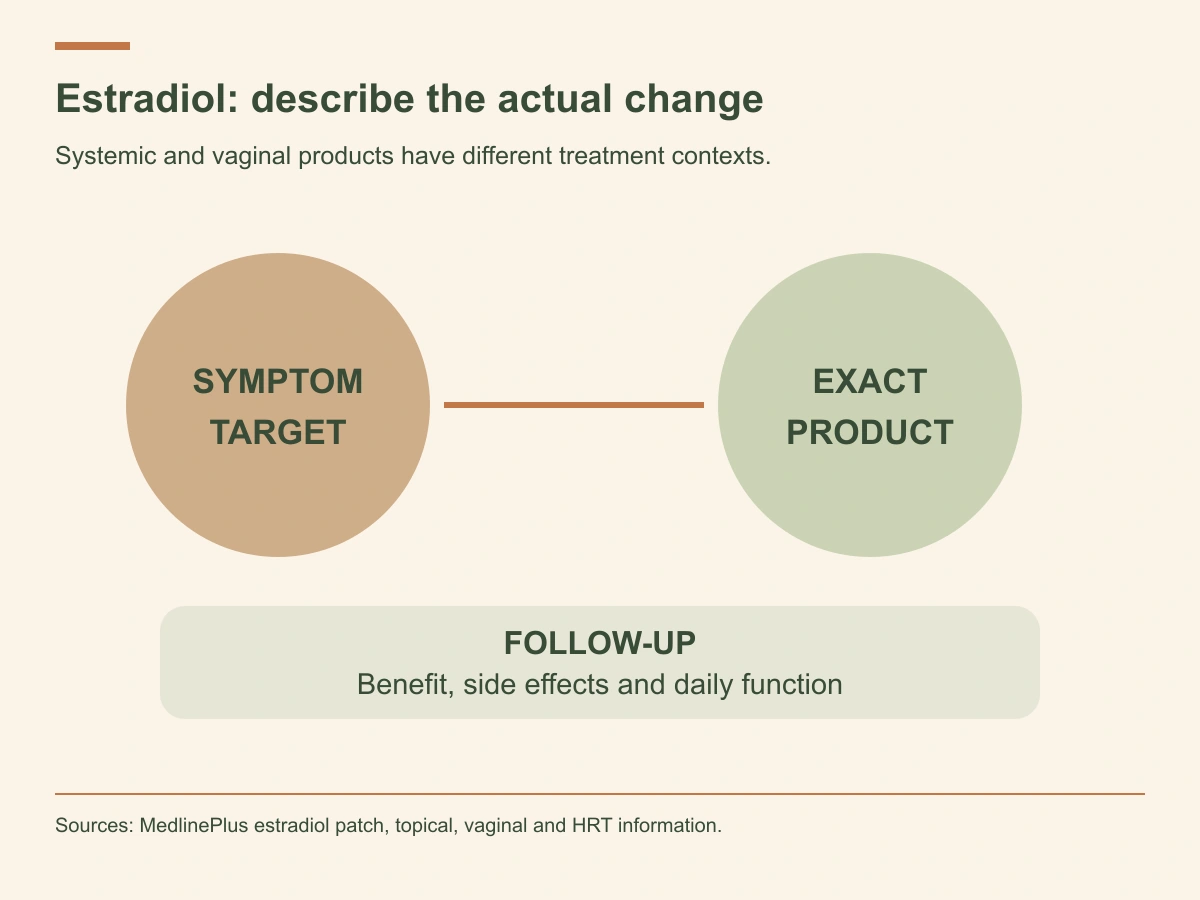
Estradiol does not produce one universal feeling. A person using it for menopause symptoms may notice changes in hot flashes or vaginal discomfort, experience side effects, or find that some symptoms need a different explanation. What matters is the treatment goal, the exact product and route, and how daily life changes over follow-up.
This guide focuses on estradiol for menopause care. It is not a guide to every use of estrogen. It explains how to describe benefit and discomfort without assuming that treatment should make you feel instantly younger, energized, or emotionally different.
Start with the symptom you want to improve
“I want to feel better” is understandable, but a more specific description helps with treatment decisions. Examples include hot flashes that interrupt meetings, nighttime symptoms that disturb sleep, vaginal dryness, or discomfort with sex. The clinician can connect those concerns to an appropriate assessment and product.
Estradiol is an estrogen. MedlinePlus describes transdermal estradiol products used for certain menopause symptoms and, for some products, other specific indications. Those uses are product-dependent. Estradiol patch information. Our first HRT consultation guide helps you prepare a symptom history and discuss options.
If fatigue, poor concentration, low mood, or reduced sexual desire is the main concern, describe it directly. Do not assume every such symptom is caused by low estrogen or will respond to estradiol. The useful question is what assessment is needed and what change would count as improvement, rather than whether you match someone else’s account of treatment.
Why route changes the conversation
Estradiol can be prescribed in different forms. A patch or skin gel can provide systemic treatment, with effects throughout the body rather than only at the application site. Vaginal products have their own indications; the category includes products with different intended effects, so the route alone does not fully identify the treatment. Topical estradiol information, vaginal estrogen information.
For someone whose only bothersome symptoms are vaginal, the patch information notes that a product applied to the vagina may be more appropriate. That is a discussion point, not an instruction to switch products yourself. The vaginal estrogen versus systemic HRT guide explains how the treatment target and formulation fit together.
Bring the product name and directions to the appointment. A skin cream, vaginal cream, patch, tablet, and compounded preparation should not be assumed to have identical dosing or effects. If you are unsure what was dispensed, ask the pharmacist to identify it before changing how you use it.
What might improvement look like?
Consider the original problem and its effect on daily life. If hot flashes were the target, a useful record might describe their frequency, intensity, or interruptions. If vaginal discomfort was the target, describe the activities that are painful and whether they become more comfortable. You do not need to turn each day into a detailed scoring exercise.
Improvement may be meaningful without creating a dramatic change in overall mood or personality. Likewise, feeling different is not automatically evidence that the intended symptom improved. Ask the clinician which changes to watch for and when to review the result. This article does not promise a fixed number of days until benefit.
Keep the rest of the context visible. Sleep, work demands, another prescription, illness, and stress can change during the same period. A symptom diary can help explain the pattern, but it is not proof that estradiol caused every improvement or new problem.
Side effects can affect how you feel
MedlinePlus lists possible patch effects including headache, breast tenderness, nausea, skin irritation, and mood changes. Topical gel or spray information also describes local irritation and other possible symptoms. These lists are not predictions that everyone will experience them. Patch information, topical information.
Report symptoms that persist, become troublesome, or interfere with everyday activities. Explain when they began, their severity, and whether another product changed. Do not increase treatment because a side effect seems like evidence that the hormone is “working,” or assume that discomfort must be endured until an arbitrary deadline.
The application site matters for a patch or skin product. Follow that product’s directions and explain irritation, adhesion difficulties, or missed applications. Use the prescribed amount; more applied product is not a dependable way to obtain faster relief. The pharmacist can clarify directions when the package and the written plan seem confusing.
What if my mood changes?
Mood changes deserve their own description. Tell the clinician whether you mean irritability, anxiety, sadness, emotional swings, or a change in motivation. Note any relationship to sleep, bleeding, or other medicines. Those details are more useful than the broad statement that hormones make you feel “off.”
Estradiol should not be presented as a guaranteed antidepressant or a substitute for mental-health assessment. If low mood persists, ask which other explanations and treatments should be considered. If you have thoughts of self-harm or feel unsafe, seek immediate help rather than waiting for a scheduled hormone follow-up.
A person may appreciate symptom relief and still need support with another concern. You do not need to choose between describing a benefit and reporting a problem. Both can be true and both can help the clinician decide whether the current approach fits.

Why uterus history matters
Systemic estrogen treatment and the presence of a uterus raise an important endometrial-protection question. MedlinePlus explains that progestin is added to estrogen in HRT to reduce uterine-cancer risk in women who still have a uterus. Estrogen and progestin information.
Tell the clinician whether you have had a hysterectomy and what other hormone medicine you use. Do not infer that a route advertised as “natural” removes the need for review. Do not apply one blanket progestogen rule to every low-dose local vaginal product; the exact prescription and history determine that discussion.
If your regimen includes progesterone or another progestogen, record it separately when discussing how you feel. Multiple products can change the experience of treatment. Our vaginal-versus-systemic guide provides context, while your prescriber should explain the protection plan for your own regimen.
A follow-up record that is easy to use
| What to note | Example description | What to ask |
|---|---|---|
| Treatment target | Hot flashes interrupt sleep several nights a week | What change are we aiming for? |
| Exact product | Name, route, amount and schedule | Am I using this formulation correctly? |
| Function | Sleep, comfort, work or intimacy | Is the benefit meaningful in daily life? |
| New symptoms | Headache, breast discomfort, skin reaction or bleeding | Does this need assessment or a treatment review? |
| Other changes | New medicines, illness or a different routine | Could another factor explain the pattern? |
These are examples, not clinical thresholds. Choose a few details that matter to you. If you forget an application, note the product and follow the specific missed-dose instructions; do not invent an extra amount to restore a number in the diary.
What about weight, energy and “feeling younger”?
Those phrases often combine several different goals. A change in weight is not a measurement of whether estradiol is treating hot flashes or vaginal symptoms. The patch information lists weight changes among possible effects, but that does not establish a predictable fat-loss result. Patch drug information.
For weight concerns, discuss the trend, eating, activity, other medicines, and the broader health picture. Our balanced-meal guide offers practical meal planning without turning HRT into a diet treatment. If low appetite or fatigue prevents regular meals, describe that problem rather than using further restriction to chase a scale change.
Ask what “more energy” would mean in concrete terms: fewer sleep interruptions, easier ordinary activity, or less daytime fatigue. A clearer goal makes it easier to decide whether the care plan helped and whether another evaluation is needed.
Which symptoms need prompt attention?
Unexpected or unusual vaginal bleeding needs contact with the clinician. Skin irritation may be a routine product question, but new bleeding, a breast change, or a significant persistent symptom should not be dismissed as proof that your body is adjusting. The estradiol information emphasizes reporting unusual bleeding and reviewing risks and benefits regularly. Topical information.
Seek emergency assessment for sudden chest pain or breathlessness, stroke-like symptoms such as one-sided weakness or trouble speaking, or a serious allergic reaction. The reviewed estrogen information includes important clotting and other risks; it does not allow an internet article to determine your personal risk or classify a new severe symptom as harmless. Estradiol information.

Frequently asked questions
Should estradiol make me feel something immediately?
There is no universal immediate sensation that confirms the correct treatment. Follow the prescribed directions and agree on a review plan for the symptoms being treated. Do not add doses because you do not notice a dramatic change right away.
If I feel well, can I cancel follow-up?
Keep the planned review. Benefit, adverse effects, health history, screening needs, and ongoing treatment goals still matter. Feeling better is valuable information to share, not a replacement for reviewing the regimen.
Can I compare my patch dose with a friend’s cream?
Amounts across routes and formulations are not a simple comparison. Ask about your own product and treatment target. A friend’s experience can help you think of questions, but it does not establish an equivalent dose or predict how you will feel.
Related reading and care information
Read questions before starting HRT, vaginal versus systemic estrogen, HRT and weight questions, and HRT testing and follow-up. The semaglutide and hot-flashes discussion addresses another medicine you may use. The CoreAge Rx estrogen care page describes the service; an individual assessment determines whether a prescription and specific route are appropriate.
Educational information for adults; individual treatment decisions require a qualified clinician. Sources reviewed October 3, 2026. Original AI-generated article images depict fictional people and objects, not patient outcomes. Other editorial images are illustrative. Graphics summarize the cited sources.