Hot flashes are not listed among the common adverse reactions in the reviewed Ozempic adult trial table. That does not prove that every episode of warmth or sweating is unrelated to treatment. Sweating can also occur with low blood sugar, menopause, fever, and other conditions. The practical next step is to describe the episode and review your full medicine list, rather than assuming a single cause from its timing.
Does Ozempic cause hot flashes?
The May 2026 Ozempic prescribing information lists common reactions such as nausea, vomiting, diarrhea, abdominal pain, and constipation in the relevant adult trial table. Hot flashes do not appear in that table. Its scope is important: a list of common trial reactions is not a complete explanation for every symptom a person might experience. Ozempic prescribing information.
A symptom beginning after treatment starts is worth reporting. It is also not, by itself, proof that the medicine caused it. Tell the clinician when the episodes began, whether there was a dose change, and what else changed around the same time.
Avoid either extreme: ignoring a new symptom because it is absent from the common table, or treating every warm feeling as a confirmed drug reaction. A useful evaluation considers the pattern and the rest of your health history.
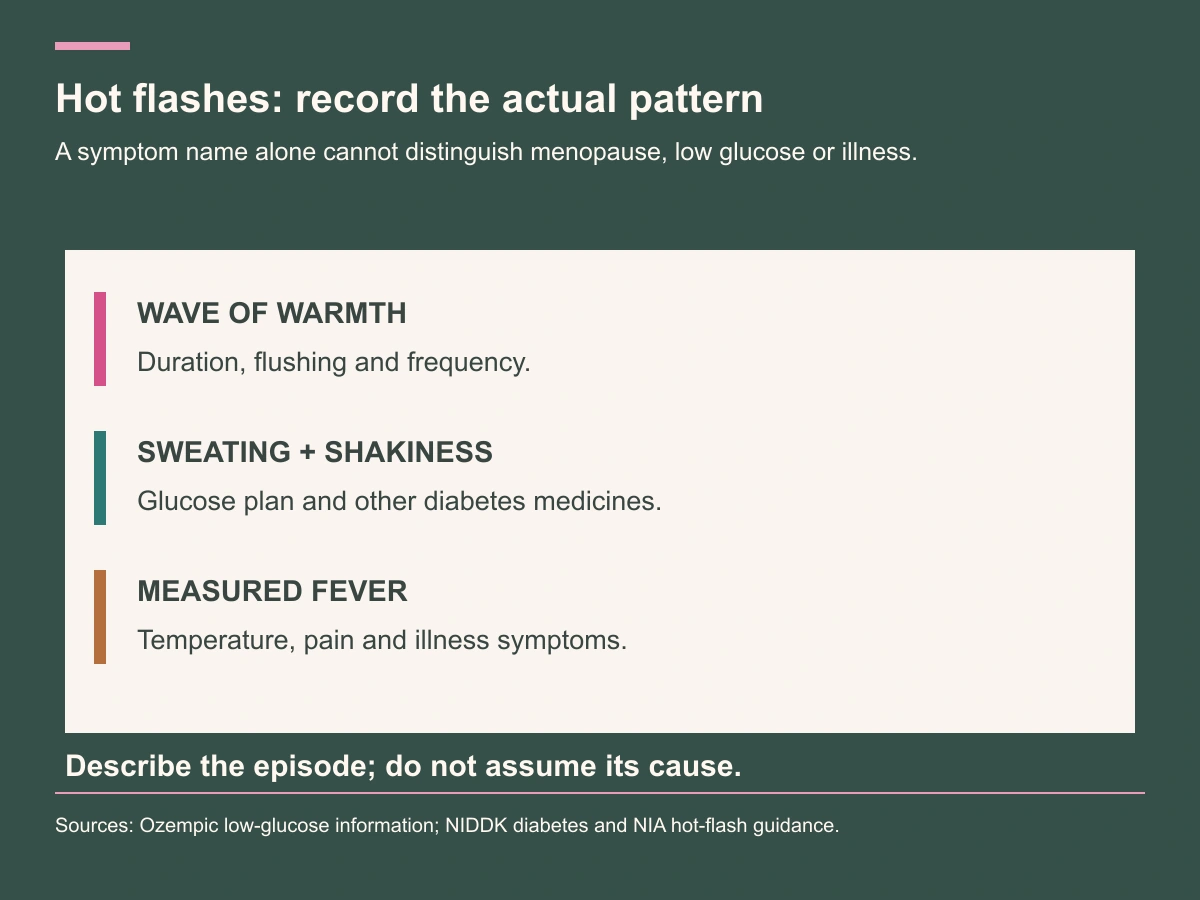
Warmth, sweating, and fever are different observations
A hot flash often describes a brief episode of warmth, sometimes with flushing or sweating. Night sweats describe sweating during sleep. Fever involves an elevated measured temperature. People may use these phrases interchangeably, but they can point toward different questions.
Write down what you actually notice: warmth in the face or chest, soaked clothing, shaking, hunger, a fast heartbeat, or a measured temperature. Note whether the episode happens after a meal, after exercise, overnight, or at another time. These details help the clinician decide what needs assessment.
| Observation | Useful information to record | Why it needs context |
|---|---|---|
| Brief wave of warmth | Duration, flushing, sweating, and frequency. | A symptom description alone does not identify a cause. |
| Sweating with shakiness or confusion | Glucose reading if available and the prescribed response plan. | Low glucose can need immediate action. |
| Measured fever | Temperature, illness symptoms, pain, and duration. | Fever should not simply be relabeled a hot flash. |
| Repeated night sweats | Sleep disruption, severity, other symptoms, and medicine changes. | Persistent episodes deserve review. |
This table organizes a history. It is not a diagnostic test and should not delay care when symptoms are severe.
Low blood sugar is an important separate question
Ozempic’s patient information includes sweating among possible low-blood-sugar symptoms. Other examples include shakiness, hunger, dizziness, a fast heartbeat, and confusion. The label explains that risk can be higher with another medicine that causes low glucose, such as insulin or a sulfonylurea.
If you have an established diabetes plan, follow its instructions for checking and treating suspected low glucose. Do not assume that sweating is menopausal or harmless when it occurs with concerning symptoms. Severe confusion, collapse, or inability to safely swallow requires urgent help.
The appropriate glucose-monitoring and treatment instructions should come from your care team. This article does not replace them with a personal carbohydrate dose or a medicine adjustment. Tell your clinician about repeated episodes so the overall treatment can be reviewed.
Meals, movement, and alcohol can change the context
NIDDK notes that insulin and some other diabetes medicines can increase low-glucose risk during activity or when meals are skipped or delayed. It also advises discussing alcohol because it can lower glucose with certain diabetes medicines. NIDDK diabetes lifestyle guidance.
That makes your routine relevant to a sweating episode. Tell the clinician about a missed meal, a longer walk, a new exercise routine, or alcohol use. If appetite is lower during treatment, mention how much you are actually eating rather than simply saying the medicine is suppressing hunger.
Our walking after meals article explains why short-term glucose effects and diabetes precautions belong in the same discussion. Our Ozempic and alcohol guide addresses the separate alcohol question. Neither supports changing insulin or skipping food without a plan.
Could menopause be involved?
Hot flashes and night sweats can occur during the menopausal transition. They may affect sleep and daily comfort. The National Institute on Aging describes practical comfort measures such as using a fan, wearing layers, and noticing personal triggers. NIA hot-flash overview.
Menopause is a possible context, not a diagnosis made from one symptom. Tell your clinician about menstrual changes, sleep disruption, and the timing of episodes, along with your medicines. More than one issue can be present at the same time.
If you are exploring that possibility, our menopause hormone-therapy guide and perimenopause symptom article explain questions for an assessment. New symptoms should not automatically lead to starting hormone treatment.

Does HRT help if I also take Ozempic?
Hormone therapy requires its own evaluation of symptoms, health history, risks, preferences, and treatment options. The fact that you use Ozempic does not settle whether HRT fits you. Likewise, a hot flash does not establish that changing the weight-management prescription is the right solution.
Our HRT, hot flashes, and sleep article describes the symptom conversation. The HRT risks and benefits guide and starting HRT questions help prepare for a clinician visit.
Share all prescriptions with both clinicians if different people manage diabetes and menopausal care. Keep the teams informed about new symptoms and changes. These educational pages do not establish that a particular hormone product is available through CoreAge or appropriate for you.
What if the episodes happen only at night?
Record whether you wake warm, have soaked bedding, feel shaky, or notice another symptom. Include dinner timing, activity, alcohol, and diabetes medicine use. If you use a glucose monitor, ask the care team how to interpret nighttime patterns and what readings require action.
Sleep disruption matters even when episodes are not an emergency. Repeatedly waking uncomfortable can affect your ability to follow routines during the day. Bring that impact to the appointment rather than focusing only on whether the symptom appears in a side-effect list.
Do not assume that every night sweat is menopause. Persistent or unexplained episodes, especially with other new symptoms, warrant medical review. A symptom diary can support that review but cannot replace it.
What if you also have stomach symptoms?
Nausea, vomiting, and diarrhea may reduce food and fluid intake. Ozempic’s patient information warns about dehydration-related kidney problems and asks patients to report symptoms that do not go away. Sweating during a week of poor intake needs that broader history.
Tell the clinician how often you are vomiting, whether you can drink, and whether you have dizziness or urine changes. Severe or persistent abdominal pain needs assessment; it should not be dismissed as a normal companion to sweating.
Our semaglutide side-effect guide and Wegovy gastric-emptying article distinguish symptoms from assumptions about a medicine mechanism. The named products have their own labels and instructions, even when an active ingredient is shared.
Build a useful symptom diary
For each episode, record the date, time, duration, symptoms, and any glucose or temperature measurement you actually made. Note the medicine name, last dose, recent dose changes, meals, activity, and alcohol. Do not fill missing measurements with guesses.
Then add the impact: did you need to stop working, change clothes, wake from sleep, or seek help? A short accurate record is more useful than a long list of speculative causes. Bring it with the full medicine and supplement list.
Ask the clinician what to track next and when to follow up. You may not need to monitor every detail indefinitely. The purpose is to answer a specific clinical question and develop a workable response plan.
When to seek urgent help
Severe confusion, fainting, breathing trouble, significant weakness, or symptoms of a serious allergic reaction require urgent assessment. Follow your diabetes emergency plan for suspected severe low glucose. Do not wait for a routine appointment if symptoms are dangerous or rapidly worsening.
Measured fever with significant pain or feeling very unwell also deserves prompt advice. The word “hot flash” should not prevent you from reporting the actual symptoms. Tell the care team what happened rather than relying on the label you initially gave the episode.
For less urgent but repeated episodes, arrange a review. Ask whether other medicines, nutrition, glucose patterns, or menopausal symptoms need assessment. The appropriate next step depends on the findings.

Comparing semaglutide services
If you are considering treatment, the CoreAge semaglutide service page describes its intake pathway. It does not promise branded Ozempic or establish a cause for symptoms in an existing prescription. Prescription decisions need an individualized review.
If you are considering a different medicine because of tolerability, our semaglutide and tirzepatide switching guide explains why to obtain a written prescription plan. Do not use a symptom article to choose an equivalent dose or combine products.
Frequently asked questions
Are hot flashes a common Ozempic side effect?
They are not listed in the reviewed common adult trial table. That is a limited statement about that table, not proof that a new symptom is unrelated to the medicine. Report repeated or concerning episodes.
Can sweating mean low blood sugar?
Yes, sweating is one symptom in Ozempic’s low-glucose patient information. The context matters, especially with insulin or a sulfonylurea. Follow your prescribed checking and treatment plan and seek urgent help for severe symptoms.
Should I stop Ozempic because I feel hot?
Contact the prescriber to discuss the pattern and obtain instructions. A warm feeling alone does not identify its cause or establish the right medicine change. Serious symptoms require prompt care rather than waiting to experiment with doses.
Does a hot flash mean I need HRT?
No. Hormone treatment requires an assessment of symptoms and health history. Menopause may be one explanation, but the symptom alone is not enough to choose treatment.
Can I switch to tirzepatide to avoid sweating?
There is no guarantee that switching resolves an unexplained symptom. First discuss the cause and overall treatment plan. Any switch should specify the actual product, dose, timing, and follow-up without overlapping therapies.
Educational information for adults; individual treatment decisions require a qualified clinician. Sources reviewed October 2, 2026. Original AI-generated article images depict fictional people and objects, not patient outcomes. Other editorial images are illustrative. Graphics summarize the cited sources.