Some adults with type 1 diabetes and obesity may be considered for GLP-1-based obesity treatment under specialist supervision. Ozempic and Mounjaro are not FDA-approved to treat type 1 diabetes glucose control, and these medicines do not replace insulin. Current guidance and newer trials support a more careful conversation than a universal yes or no: the treatment purpose, product, monitoring, and individual risks all matter.
The most important distinction is between treating type 1 diabetes itself and treating obesity in someone who also has type 1 diabetes. Another distinction is between a supervised research result and a prescription plan that is safe for a particular person.
Why the product and treatment purpose matter
Ozempic contains semaglutide. Mounjaro contains tirzepatide, which acts at both GIP and GLP-1 receptors. Wegovy also contains semaglutide, and Zepbound also contains tirzepatide, but the brands have different approved indications, presentations, and instructions.
The current Ozempic injection label describes uses in adults with type 2 diabetes, including specified cardiovascular and kidney risk reduction indications. The Mounjaro label revised in August 2026 includes glycemic control in people with type 2 diabetes aged ten and older, and reduction of major cardiovascular events in adults with type 2 diabetes at high risk. Neither label establishes an approved type 1 diabetes glucose-control indication.
The Wegovy label and Zepbound label address weight management and other specific indications. A clinician evaluating obesity in an adult with type 1 diabetes must consider the actual obesity product and the person’s health. Sharing an ingredient does not make Ozempic, Wegovy, Mounjaro, and Zepbound interchangeable prescriptions.
| Question | Why it changes the discussion |
|---|---|
| Is the goal type 1 diabetes glucose management? | Ozempic and Mounjaro do not have that FDA-approved indication |
| Is the goal obesity treatment? | Current guidance allows consideration in selected adults with type 1 diabetes and obesity |
| Which exact product is proposed? | Approved indications, presentation, dose instructions, and evidence must match |
| Who will manage insulin and monitoring? | An adjunctive medicine can change eating patterns and insulin needs |
Our Ozempic qualification guide explains why a diagnosis and clinical assessment matter. It is not a route to reclassify type 1 diabetes as type 2 diabetes for coverage.
What the 2026 ADA guidance says
Recommendation 8.29 in the American Diabetes Association’s 2026 obesity and weight-management standards supports applying obesity strategies, including GLP-1-based therapy, to adults with type 1 diabetes who have obesity, using shared decision-making. The recommendation describes BMI thresholds of at least 30, or at least 27.5 in Asian American individuals.
That guidance does not turn these medicines into replacements for insulin or establish a single dosing plan for all people with type 1 diabetes. The accompanying discussion emphasizes hypoglycemia risk, changing insulin requirements, adequate carbohydrate intake, ketone monitoring, and sick-day planning. It also cautions against simply transferring dose-escalation protocols from type 2 diabetes to type 1 diabetes.
The guidance identifies gastroparesis, hypoglycemia unawareness, and a recent episode of diabetic ketoacidosis or euglycemic ketoacidosis as reasons that generally argue against initiating this treatment. Automated insulin-delivery settings require reassessment when treatment changes food intake or insulin requirements.
The practical implication is a coordinated plan with the diabetes team. A general weight-loss consultation cannot answer all the insulin, pump, ketone, and emergency questions that may be involved.
What semaglutide trials have actually studied
New trials offer useful evidence, but the study conditions are essential to interpreting the result. They enrolled selected people and included monitoring; they did not ask participants to stop insulin.
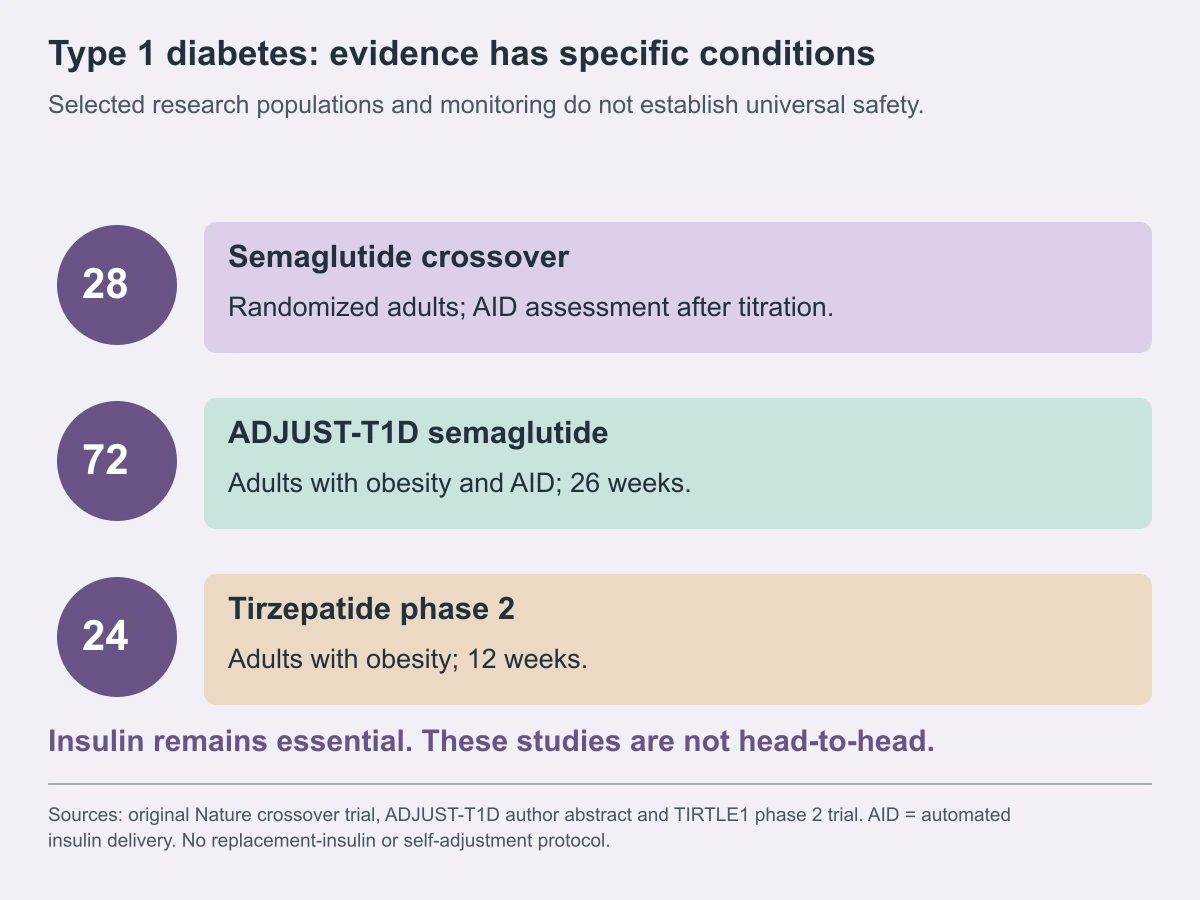
In a randomized crossover semaglutide trial, 28 adults with type 1 diabetes were randomized and 24 completed the trial. Each treatment period included titration followed by an assessment using automated insulin delivery. Semaglutide improved time in the glucose target range by an average of 4.8 percentage points compared with placebo during the assessment period.
The study also reported two episodes of euglycemic ketosis without acidosis during semaglutide treatment. No diabetic ketoacidosis was reported. Those findings are a reason to retain ketone and sick-day precautions, even when glucose is not markedly high; they do not establish that ketosis is an acceptable treatment effect.
The separate ADJUST-T1D trial author abstract describes 72 adults with type 1 diabetes, obesity, and automated insulin delivery, followed for 26 weeks. A combined outcome involving glucose time in range, low-glucose exposure, and at least 5% weight reduction occurred in 36% of the semaglutide group and none of the placebo group. There were two severe hypoglycemia events in each group, with no diabetic ketoacidosis reported.
We reviewed the original ADJUST-T1D abstract; the full journal paper was not accessed. Its findings describe that population and follow-up period. They do not give a universal response rate, a first-week weight target, or permission to copy the study’s insulin adjustments.
What tirzepatide evidence adds
A phase 2 randomized tirzepatide trial enrolled 24 adults with type 1 diabetes and obesity; 22 completed twelve weeks. The adjusted between-group weight difference favored tirzepatide by 8.7 kilograms. The trial also found changes in glucose measures and insulin requirements.
This was a small, short study with selected participants, exclusions, and clinician-directed insulin management. It excluded people with several important higher-risk conditions, including recent diabetic ketoacidosis or severe hypoglycemia. Close contacts during initiation and escalation were part of the research setting.
It cannot tell us that tirzepatide is safe for every person with type 1 diabetes, or that it works better than semaglutide in a direct comparison. The semaglutide and tirzepatide trials used different designs, populations, and follow-up periods. Comparing their headline weight changes as if they came from one head-to-head trial would be misleading.
| Original study | Population and design | Main interpretation limit |
|---|---|---|
| Semaglutide crossover trial | 28 randomized adults; automated insulin-delivery assessment after titration | Small trial; ketosis events matter |
| ADJUST-T1D | 72 adults with obesity and automated insulin delivery; 26 weeks | Results apply to the studied conditions; severe hypoglycemia occurred in both groups |
| Tirzepatide phase 2 trial | 24 adults with obesity; twelve weeks | Short, selected study; not a comparison with semaglutide |
Why insulin remains essential
Type 1 diabetes involves little or no insulin production. NIDDK’s type 1 diabetes guidance explains that insulin is needed to stay alive. Appetite suppression, weight reduction, or a lower glucose reading does not remove that need.
Eating less can change mealtime insulin needs. Weight changes, delayed digestion, and other treatment effects may also change the relationship between insulin and food. Too much insulin can cause hypoglycemia; too little can allow ketosis or diabetic ketoacidosis. Those competing risks are why an online percentage reduction is not a safe substitute for diabetes-team instructions.
If you use a pump or automated system, ask who will review its settings and alerts. Technology helps with monitoring, but it does not eliminate the risk from a delivery interruption, prolonged insulin suspension, illness, or a mismatch between insulin and absorbed food.
A plan should include how to reach the team when appetite changes quickly and what to do if you cannot eat. Do not stop basal insulin or improvise pump changes because a weight-loss medicine has reduced hunger.
Hypoglycemia, ketosis, and nausea can overlap
Nausea may be a medication-related gastrointestinal symptom, but it can also occur with ketosis or diabetic ketoacidosis. In type 1 diabetes, a new episode needs interpretation alongside glucose readings, ketone instructions, insulin delivery, illness, food intake, and hydration.
NIDDK lists abdominal pain, nausea or vomiting, trouble breathing, fruity-smelling breath, marked fatigue, and dehydration or fainting among diabetic ketoacidosis symptoms. DKA is a medical emergency. Follow your established emergency plan and seek urgent care for suspected DKA; do not wait for an OTC nausea treatment to work.
Euglycemic ketosis means ketones can be present without the very high glucose level some people expect. The crossover study’s events and ADA discussion support asking your diabetes team when to test ketones and how to interpret them. This article does not set individual testing thresholds or an insulin correction formula.
Our Dramamine and GLP-1 nausea guide explains why motion-sickness labels cannot establish an appropriate treatment for every queasy stomach. In type 1 diabetes, identifying the cause comes before masking symptoms.
Questions to resolve before starting
Bring the proposed product and treatment purpose to your endocrinologist or diabetes team. A useful discussion covers:
- The expected benefit: Is obesity treatment appropriate, and which goals will be followed?
- The risk review: What does your history of hypoglycemia, ketosis, gastroparesis, eye disease, or other illness change?
- Insulin responsibility: Who will adjust insulin and any automated-delivery settings?
- Monitoring: What glucose, ketone, intake, and symptom information should you record?
- Sick days: What is the plan for vomiting, dehydration, illness, or a pump problem?
- Follow-up: How soon will the team review initiation and any proposed increase?
- Stopping or access interruptions: How will insulin needs be reassessed if treatment ends or a refill is delayed?
Nutrition deserves its own place in the plan. The balanced meal guide and protein and muscle guide for tirzepatide discuss nourishment and function beyond the scale. A diabetes dietitian can adapt that general information to carbohydrate counting and your insulin regimen.
Coverage is a separate question
Clinical consideration does not guarantee insurance coverage. A diabetes-brand policy may require documented type 2 diabetes, while an obesity-brand policy may depend on a weight-management benefit and product-specific criteria. A plan can also exclude a benefit even when a clinician thinks a treatment is reasonable.
Review our GLP-1 insurance guide, Aetna Ozempic and Wegovy guide, and UnitedHealthcare coverage guide for the questions to ask. Describe the diagnosis and treatment purpose accurately. A prescription or prior-authorization submission cannot guarantee an approved pharmacy claim.
CoreAge Rx’s tirzepatide information describes a separate clinical-assessment option. It does not establish a type 1 diabetes service, an FDA-approved type 1 indication, or suitability for your insulin regimen. Coordinate this decision with the team managing your diabetes.
Frequently asked questions
Can a person with type 1 diabetes take Ozempic?
A specialist may consider adjunctive treatment in selected circumstances, but Ozempic is not approved for type 1 diabetes glucose control. Current obesity guidance is another part of the discussion. The diagnosis, exact product, monitoring, and insulin plan must be considered together.
Can Mounjaro replace insulin?
No. Tirzepatide does not replace the insulin required for type 1 diabetes. A change in insulin requirements during supervised treatment is different from removing insulin.
Does using an insulin pump make treatment automatically safe?
No. Trials involving automated insulin delivery still used selection, monitoring, and care-team adjustments. Settings, delivery problems, low-glucose risk, and ketosis precautions remain relevant.
Should I reduce insulin when my appetite drops?
Contact your diabetes team and follow the individualized plan they provide. There is no universally safe percentage reduction in this article. Reduced intake can increase low-glucose risk, while insufficient insulin can increase ketone risk.
Is the newest tirzepatide trial proof it is better than semaglutide?
No. It was not a head-to-head comparison. Different trial sizes, durations, and designs prevent a reliable brand ranking from their headline results.
What if I need to stop the medicine?
Ask the diabetes team to review glucose, food intake, and insulin requirements during the transition. The ADA discussion notes that insulin needs may increase variably after GLP-1-based treatment ends. Do not assume that the most recent insulin settings remain appropriate indefinitely.
Educational information for adults; individual treatment decisions require a qualified clinician. Sources reviewed October 1, 2026. Original AI-generated article images depict fictional people and objects, not patient outcomes. Other editorial images are illustrative. Graphics summarize the cited sources.