Carrots can fit a weight-management eating pattern, including an evening snack. They do not have a special nighttime fat-burning effect. The useful questions are the actual portion, how they are prepared, what you eat with them, and whether the overall meal is satisfying and appropriate for your needs. A raw-carrot nutrition reference can help, but it does not describe every cooked dish, juice, or snack package.
Are carrots good for weight loss?
Carrots are one food option within a larger pattern. A modest raw portion has a relatively small calorie value in the FDA reference below, but no single food guarantees weight loss. Adding carrots to an unchanged routine and replacing another food with carrots are different decisions.
Consider what you want the food to do. Crunchy carrot sticks may be an appealing snack, cooked carrots may suit a meal, and a mixed dish may help you eat more vegetables. None requires describing carrots as “free food” or avoiding every carbohydrate.
Our balanced-meal guide explains how to plan a meal beyond one ingredient. If you need an individual calorie target, discuss your health and goals rather than deriving it from a vegetable’s label.
What does the raw-carrot nutrition reference say?
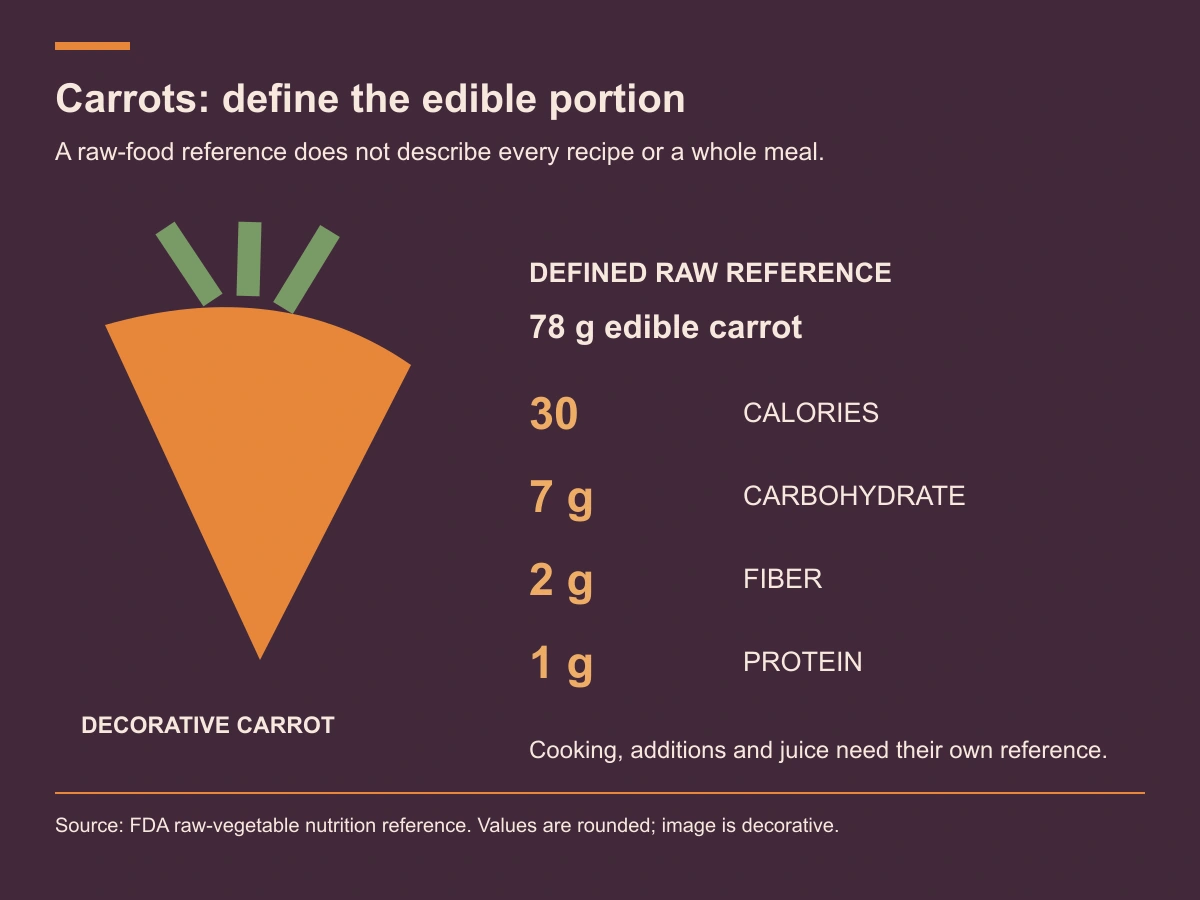
FDA’s raw-vegetable reference defines a carrot portion weighing 78 grams, with a specified example size. It lists 30 calories, 7 grams of carbohydrate, 2 grams of fiber, 5 grams of total sugars, and 1 gram of protein. These are rounded reference values for that defined portion. FDA raw-vegetable nutrition information.
| Nutrient | Defined 78 g raw-carrot reference |
|---|---|
| Calories | 30 |
| Total carbohydrate | 7 g |
| Fiber | 2 g |
| Total sugars | 5 g |
| Protein | 1 g |
| Total fat | 0 g |
The table is not a personal serving prescription. A very large carrot, a bowl of baby carrots, or a cooked recipe can have a different edible amount. It also does not mean the decorative food shown in an image weighs 78 grams. Use the actual package or measured recipe when precision matters.
Are carrots low in calories?
The defined raw reference has 30 calories, which can be useful when comparing foods. Keep the comparison tied to a portion. “Low calorie” does not mean unlimited quantities have no energy, and it does not make a carrot-only meal nutritionally complete.
If you are tracking intake, use a consistent reference that matches the food and amount. Do not switch between a whole carrot, a cup, and a handful as if they were equal. At the same time, you do not need perfect weighing to make a reasonable vegetable choice in an ordinary meal.
Our calorie-intake guide discusses personal targets, while lunch calorie planning shows why an adequate meal needs more context than a single low-calorie ingredient.
Can you eat carrots at night?
There is no special nighttime weight-loss effect established by the nutrition panel. Carrots eaten in the evening are still carrots. The practical issue is whether you are hungry, what the snack includes, and how it fits your overall eating pattern and comfort.
If you are routinely hungry late at night, look at the day’s meals rather than assuming a snack is a failure. An undersized lunch, a long gap before dinner, or a difficult schedule may need attention. Choose a snack that fits your needs instead of forcing hunger to meet a rigid food rule.
If eating close to bedtime repeatedly causes discomfort, discuss that symptom pattern. A change in timing may be useful, but it is different from a claim that nighttime carbohydrates inherently prevent weight loss.
Do carrots contain too much sugar?
The raw reference includes naturally occurring total sugars, but the carbohydrate number does not make carrots inappropriate for everyone. What matters for a diabetes eating plan includes portion, the rest of the meal, medicines, and your care team’s advice.
NIDDK’s plate-method discussion includes carrots among nonstarchy vegetables. It also explains that carbohydrate planning should fit the individual, including whether insulin is used. NIDDK meal planning with diabetes.
Do not eliminate carrots solely because a label lists sugar. If you count carbohydrates, use the actual food and amount within the plan you have been given. If you need treatment for low glucose, follow your prescribed instructions rather than assuming a raw carrot is the right substitute.

Raw, cooked, roasted, and juiced are different preparations
Plain cooked carrots and carrots prepared with oil, butter, honey, or a sauce are different recipes. The final dish includes those ingredients and its actual yield. A raw reference cannot provide an exact calorie total for an unspecified roasted-carrot recipe.
Juice is also a different product. Read its own label and serving size rather than copying the raw carrot’s fiber value. A beverage may be easy to consume in a different amount than a solid snack. That is a reason to compare the actual products rather than labeling all carrot forms the same.
If you prefer cooked carrots because of texture or tolerance, that preference can guide meal planning. There is no need to force a raw snack just because the nutrition example is raw. Match the reference to what you eat.
What makes a carrot snack more satisfying?
Think about the role of the snack. If you want a small crunchy side, carrots alone may suit it. If you need something to bridge a long gap between meals, consider what else will make it adequate and enjoyable.
Examples include carrots with a hummus portion you enjoy, carrots alongside an egg, or carrots as part of a bean-based meal. These are food ideas, not calorie-counted prescriptions. The amount and other ingredients determine the finished snack or meal.
Our protein breakfast ideas and protein-shake meal ideas offer other planning examples. A carrot’s small protein value in the reference should not be treated as the whole protein component of a day.
Fiber matters, but one food is not the whole plan
The defined raw portion provides 2 grams of fiber in the FDA reference. That is a contribution, not proof that carrots alone meet your daily needs. A varied pattern can include different vegetables, fruit, beans, and other foods suited to your health.
If a sudden change in fiber intake causes discomfort, discuss how to make the transition more manageable. NIDDK notes that some people experience more gas with excessive fiber and recommends individualized review rather than a universal elimination list. NIDDK gas and diet guidance.
Our food fiber versus supplements guide and starting a fiber supplement article distinguish food choices from adding a product. A fiber supplement is not automatically needed because one vegetable serving is small.
Carrots during semaglutide or tirzepatide treatment
If treatment reduces appetite, focus on meals you can tolerate and eat adequately. Some people prefer a cooked texture to a large raw snack when they feel full. Your response is more useful than a generic rule declaring raw vegetables either mandatory or forbidden.
Repeated vomiting, persistent pain, or substantial difficulty eating warrants clinical advice. Do not solve a treatment-related problem by narrowing your diet to a few low-calorie vegetables. Your care team can review symptoms and whether the prescription plan needs attention.
The semaglutide protein and muscle guide and tirzepatide protein and muscle guide explain why adequate nutrition remains important. Our Wegovy gastric-emptying article separates fullness symptoms from a self-diagnosis of slow digestion.
Build a meal rather than chasing a “fat-burning” ingredient
One practical approach is to choose the rest of the meal first, then decide how carrots fit. They might be a roasted side, a crunchy addition, or part of a soup. Consider the meal’s protein, other ingredients, taste, and the amount you need to feel comfortably satisfied.
If your schedule is the main obstacle, prepare components you actually enjoy. Washing or portioning a snack can make it more convenient, but a perfectly organized container is not necessary for a useful habit. Our meal-prep guide focuses on workable routines.
You can also pair a meal with comfortable activity without treating movement as a way to cancel the food. The walking after meals article explains why studies of glucose responses do not establish a special carrot-and-walk weight-loss formula.

Where greens products and prescription care fit
A greens powder is a different product from a raw vegetable. Green Scene has its own ingredient description and should not be counted as an equivalent carrot serving. CoreAge product information. The greens powders and fiber article discusses why food and supplement labels need separate interpretation.
If you are considering prescription support, CoreAge semaglutide and CoreAge tirzepatide describe their intake pathways. A food preference does not establish prescription eligibility, and medication does not make adequate meals optional.
Frequently asked questions
How many carrots should I eat to lose weight?
There is no universal carrot count that causes weight loss. Carrot sizes differ, and the rest of your intake matters. Use the defined reference for nutrition context and choose a portion within an appropriate overall plan.
Are baby carrots different for calorie counting?
Use the edible amount and the current package information. A handful does not have a universal weight, and the FDA’s 78 g reference is not a fixed count of baby carrots.
Can I eat carrots every evening?
That can be a preference to consider within a varied routine. There is no special nighttime fat-loss benefit established here. Make sure the snack and the rest of the day provide adequate food for your needs.
Is carrot juice the same as raw carrots?
No. Use the juice’s own serving and nutrition label. Do not assign it the raw vegetable’s fiber or portion values without checking the actual product.
Are carrots enough for dinner?
The defined reference is not a complete meal. Consider other foods and your nutrition needs. If appetite makes adequate meals difficult, seek advice rather than choosing an increasingly restrictive dinner.
Should I avoid carrots if I have diabetes?
Ask how they fit your individualized meal plan. NIDDK includes carrots among nonstarchy vegetables in its plate-method discussion. The listed sugars do not create a universal ban.
Educational information for adults; individual treatment decisions require a qualified clinician. Sources reviewed October 2, 2026. Original AI-generated article images depict fictional people and objects, not patient outcomes. Other editorial images are illustrative. Graphics summarize the cited sources.