
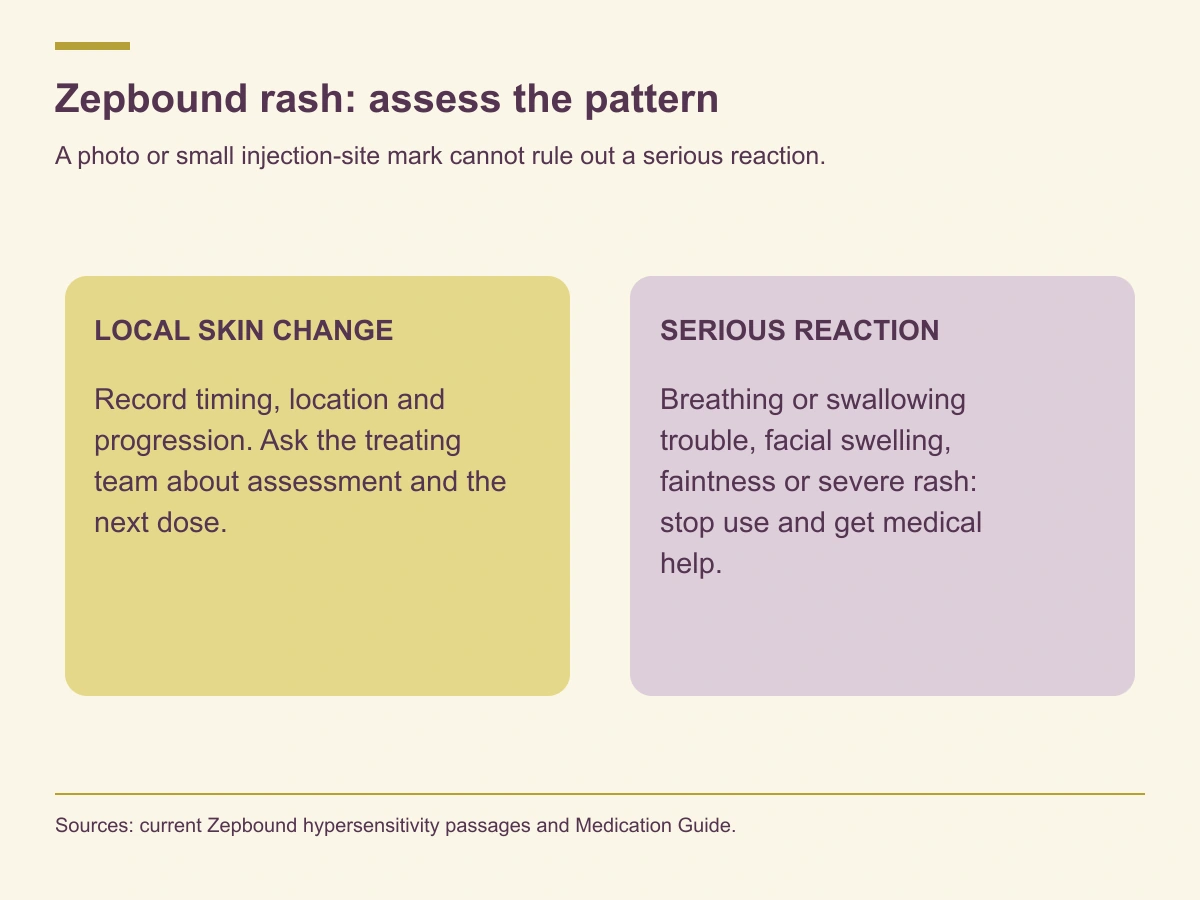
A rash or skin change while using Zepbound should be assessed by its location, timing, progression and any other symptoms. An injection-site mark is not automatically a serious allergy, but a small mark or a photograph cannot rule one out. New, spreading, persistent or concerning symptoms deserve care-team advice.
Zepbound’s Medication Guide directs stopping use and getting medical help right away for symptoms of a serious allergic reaction. Breathing or swallowing difficulty, facial or throat swelling, faintness, a very rapid heartbeat, or severe rash or itching are examples. Call 911 or your local emergency number for emergency symptoms. Zepbound Medication Guide.
What counts as an injection-site reaction?
The current Zepbound label groups several related events under injection-site reactions, including bruising, redness, itching, pain and rash at the site. In pooled adult weight-reduction trials, the category occurred in 6%, 8% and 8% of the 5-, 10- and 15-milligram groups respectively, compared with 2% on placebo. Zepbound trial table and footnote.
Those are trial-group results for a defined category, not the chance that your particular spot is harmless or a forecast of how long it will last. The category contains more than one kind of skin change, and trial averages cannot diagnose a person.
Describe what you see and feel. Is the change at the injection location, elsewhere, or both? Is it becoming larger or more uncomfortable? Did it appear immediately or later? Is this the first episode or has it happened more than once?
Local skin changes and serious allergy are different questions
For the Mounjaro product context, our guide to Mounjaro skin sensitivity and dysesthesia distinguishes altered sensations, local reactions and serious-allergy signs without using another brand’s trial data to diagnose your symptoms.
The label has a separate warning for serious hypersensitivity reactions, including anaphylaxis and angioedema. Those are medical terms for potentially serious allergic reactions, including swelling. The Medication Guide provides symptoms and instructions for getting help. Zepbound hypersensitivity warning, patient instructions.
Do not use a localized-looking mark as a reason to disregard breathing trouble, facial swelling, faintness or another severe symptom. Conversely, a general article cannot determine that every small mark is an allergy requiring the same clinical response.
The safe distinction begins with symptom assessment. If emergency features are present, get emergency help. For a new local change without those features, contact the treating team for advice about assessment, monitoring and the next scheduled dose. Do not wait for a general article or online comment to confirm a diagnosis.
| Pattern to report | Useful details | Appropriate next question |
|---|---|---|
| Change at the injection site | Location, appearance, pain or itch, timing and progression | Does this need examination, and what should I do before the next dose? |
| Rash away from the injection site | Areas involved and whether it is spreading | How promptly should the care team assess it? |
| Rash with other symptoms | Breathing, swallowing, swelling, faintness or other severe changes | Is emergency help needed now? |
| Repeated episodes | Which product, dose dates, sites and recent changes | What should be reviewed before treatment continues? |
The table is a way to describe a problem, not a rule that clears a particular rash. You do not need to collect every detail before seeking urgent help.
What should I tell the prescriber?
Provide the exact Zepbound presentation, prescribed dose, injection date and site. Explain whether the product or device changed recently, whether you received training and whether this is the first skin change.
Include other medicines, skin products and relevant exposures that changed around the same time. Their timing may help the clinician assess the situation, but it does not establish which ingredient caused the problem. Avoid labeling yourself allergic to a product solely from an internet description.
Mention your history of reactions, especially any previously diagnosed serious reaction to tirzepatide or another relevant treatment. The current label contraindicates Zepbound in people with a previous serious hypersensitivity reaction to tirzepatide or its ingredients. Zepbound warning and contraindication context.
If a different clinician or pharmacy manages another prescription, tell the Zepbound team about it. A complete list is more useful than asking whether the injection can cause a rash in isolation.
Can a photo identify the rash?
A clear photo may help communicate the location and visible change to the treating team. It cannot show every important feature, explain the cause or reliably establish that treatment can continue safely. Symptoms such as pain, swelling, fever or breathing difficulty require their own description.
Follow the team’s secure method for sending a photo. Include when it was taken and what changed since the injection. Avoid adding filters or relying on a comparison photo from a stranger whose diagnosis and treatment history are unknown.
If the appearance changes, tell the clinician rather than assuming the original photo remains representative. Do not delay emergency care to take or upload a picture. An ordinary-looking photo cannot cancel a serious symptom.
Check training for the exact device
The current label includes different Zepbound presentations and directs training appropriate to the one prescribed. A change in presentation should prompt new training and review of the corresponding Instructions for Use. Zepbound administration section.
Our Zepbound injection-sites guide explains the general abdomen, thigh and arm context, while the GLP-1 injection-sites article addresses broader device questions. Use the actual product instructions rather than applying a video for another pen or vial.
The label and Medication Guide direct rotating injection sites with each dose. Zepbound site guidance. Rotation is part of correct administration; it does not guarantee that a reaction will disappear or establish that a new rash is harmless.
If you have a current skin change, ask the care team which site and next-dose instructions apply. Do not inject again into a concerning area to see whether it happens twice, or change to an unfamiliar presentation on your own.

Does a rash mean the dose did not work?
A skin mark cannot establish how much medicine was delivered, whether the medicine is working or whether the device functioned correctly. Those questions require the actual device, administration history and clinical context.
Do not repeat an injection because a mark seems unusual or because you are uncertain about delivery. Contact the pharmacist or prescriber and explain what happened. The Zepbound dosage guide discusses product and timing questions without treating a symptom as permission for another dose.
Similarly, a larger reaction should not be treated as evidence of a stronger therapeutic effect. The intended response is assessed through the care plan, not through redness, itching or discomfort at an injection site.
Should I use a cream or antihistamine?
Ask a clinician or pharmacist to assess the symptom and your medicine list before choosing treatment. This article does not establish a universal topical product, antihistamine dose or home-treatment schedule for Zepbound-associated skin changes.
A product that relieves an itch does not identify the cause or rule out a serious reaction. Do not use symptom relief as a reason to ignore spreading changes or systemic symptoms. If serious-allergy features occur, follow the Medication Guide’s stop-use and immediate-help instructions rather than trying repeated self-treatment.
Explain any skin treatment you have already applied, including its name and when you used it. That helps the team understand the current appearance and decide what information or examination is needed.
What about the next scheduled dose?
For a possible serious allergic reaction, the label and Medication Guide direct discontinuation and prompt medical help. For other new or recurrent skin changes, obtain instructions from the treating team before improvising the next step. Zepbound hypersensitivity information.
Ask a clear question: “Given this symptom and its timing, what should I do before my next planned injection?” Make sure you know who will respond and what to do if symptoms worsen while you are waiting.
Do not replace a clinical decision with a universal waiting period copied from another person’s experience. There is no personal clearance test here based on a mark fading, an itch improving or a particular number of hours passing.
Keep other Zepbound symptoms in the picture
Report other changes even if the skin is the reason you called. The Medication Guide also describes potentially serious digestive symptoms and dehydration concerns. A team assessing a reaction should know if you have ongoing vomiting, difficulty keeping fluids down or severe abdominal symptoms. Zepbound patient information.
Our Zepbound side-effects guide covers the broader picture. The water and drinks guide and balanced-meals article can help organize ordinary intake questions after urgent issues are assessed; they cannot treat an allergy or diagnose a rash.
If you feel dizzy alongside a rash, consider the entire symptom pattern rather than treating it as a separate minor complaint. The dizziness guide explains why faintness, chest symptoms and neurological changes need appropriate assessment even when a treatment seems like a possible explanation.

Branded and compounded products should remain distinct
If the pharmacy label does not say Zepbound, identify the exact product before using this information. A tirzepatide ingredient name does not establish the same presentation, ingredients, concentration or instructions.
Our compounded tirzepatide side-effects guide addresses product and dosing questions separately. Do not use this article to convert syringe units, recreate a branded pen dose or assume that one product’s trial percentages describe another formulation.
The CoreAge Rx tirzepatide page explains the adult service. Consultation determines eligibility and the exact prescription. It does not establish that a particular brand is supplied or that a person with an active rash can continue treatment without assessment.
Frequently asked questions
Is every injection-site rash an allergy?
A general article cannot make that diagnosis. The label groups several local events under injection-site reactions and separately warns about serious hypersensitivity. Describe the pattern and other symptoms to the care team. Breathing difficulty, facial swelling, faintness or severe rash should not be dismissed because the problem started near an injection.
Can I keep using Zepbound if the mark is small?
Size alone does not establish clearance. Contact the treating team about a new, recurrent or concerning change and ask about the next scheduled dose. Follow the Medication Guide’s immediate-help instructions for serious-allergy symptoms. Do not rely on a stranger’s similar-looking photo to decide your treatment.
Does changing injection sites guarantee prevention?
No guarantee is established here. Rotation belongs to proper administration, but it does not explain the cause of a current rash or promise that it will not recur. Review the actual product, training and symptom history with the care team.
Can I compare my reaction with trial percentages?
The trial figures provide population context for a defined group of events. They do not diagnose your symptom, indicate its severity or tell you how long it will last. Your own pattern, medical history and accompanying symptoms are the relevant information for assessment.
Educational information for adults; individual treatment decisions require a qualified clinician. Sources reviewed October 3, 2026. Original AI-generated article images depict fictional people and objects, not patient outcomes. Other editorial images are illustrative. Graphics summarize the cited sources.