
Insomnia is not named in the current Zepbound label’s common adult adverse-reaction table. That does not prove that every sleep problem during treatment is unrelated. The useful next step is to examine the timing, sleep pattern, digestive symptoms, other medicines, caffeine and any glucose-related symptoms.
Zepbound treatment for obstructive sleep apnea is also a different question from insomnia. Difficulty falling asleep, repeated waking and breathing interruptions during sleep can overlap, but they do not have the same cause or treatment plan. A medication review should identify which problem you are actually experiencing.
What does the Zepbound label say about insomnia?
The reviewed common adult reaction table lists nausea, diarrhea, vomiting, constipation, abdominal pain, indigestion and other defined reactions from clinical trials. Insomnia is not named in that specific table. A common-reaction table is limited by its trial population and reporting threshold; it does not establish that a symptom cannot occur. Zepbound prescribing information.
That means neither an online personal story nor a missing table entry settles causation. New insomnia after treatment starts deserves attention, especially if it persists, impairs daytime function or accompanies other concerning changes. The clinician may need to consider the medicine, the condition being treated and factors outside the prescription.
Our what is Zepbound guide gives general treatment context. Here, the priority is to describe the sleep problem clearly enough to guide a useful review.
Identify the sleep pattern
Are you unable to fall asleep, waking repeatedly, waking earlier than intended or sleeping at irregular times? Do you feel sleepy during the day, unusually alert at night, or physically uncomfortable in bed? Those details are more useful than the single word “insomnia.”
Include how long the pattern has lasted and how often it happens. A difficult night after a schedule disruption differs from persistent sleep difficulty over many weeks. Do not wait indefinitely for a recurring problem to disappear simply because an injection was recently started.
Digestive symptoms can be part of the sleep review
Nausea, reflux, fullness or abdominal discomfort may make sleep harder for some people. The symptom itself should be assessed rather than assuming the medicine directly stimulates the brain or changes a particular sleep hormone. The common Zepbound label findings include digestive reactions, but they do not establish one mechanism for everyone’s insomnia. Zepbound adverse reactions.
Record whether waking follows a late meal, reflux symptoms, vomiting or discomfort. The distinction between being awake with nausea and being awake without physical symptoms can help the team choose next steps.
Our tirzepatide nausea and reflux guide discusses symptom assessment and practical meal questions. Persistent vomiting, inability to maintain intake or significant pain needs clinical attention, not just a new bedtime routine.
Severe or persistent abdominal pain that may spread to the back is a separate warning pattern under the Zepbound label. Our Zepbound and back-pain guide explains why that symptom should not be normalized as a routine sleep disturbance.
Glucose symptoms require a separate plan
Zepbound lowers blood glucose and can cause hypoglycemia. Risk is greater when tirzepatide is used with insulin or an insulin secretagogue such as a sulfonylurea. The label also notes hypoglycemia in adults without type 2 diabetes. Zepbound hypoglycemia warning.
Waking sweaty, shaky, weak, hungry or confused deserves attention under your existing glucose-care plan. Symptoms alone do not establish a low reading or prove that every nighttime waking is hypoglycemia. If you have a prescribed monitoring plan, follow it and report the actual readings and symptoms.
Ask the diabetes care team what to do for a low reading, when to contact it and when emergency help is required. Do not change insulin, deliberately skip meals or create a new bedtime-snack rule from an article without considering the prescription.
NIDDK explains that meal timing and the medicines being taken affect diabetes meal planning. Its guidance specifically notes that skipping or delaying meals may contribute to low glucose with some treatments. NIDDK diabetes lifestyle guidance.
Look at sleep factors beyond the injection
NHLBI identifies stress, changing schedules, shift work, noise, light, temperature, long daytime naps and substances such as caffeine, nicotine and alcohol as relevant insomnia factors. A treatment start may coincide with a change in one or several of these. NHLBI insomnia causes.
For example, someone eating less may rely on more coffee to get through the day. Someone starting an exercise plan may also change work or meal timing. Neither example proves the cause of insomnia, but both belong in the history.
Review cold medicines, stimulants, antidepressants, steroids, sleep aids and supplements with the pharmacist. A medication list that includes only Zepbound may miss a more relevant change. Our Ozempic and ADHD medicine guide illustrates why stimulant and GLP-1 reviews need the full list, although it is not a Zepbound-specific clearance decision.
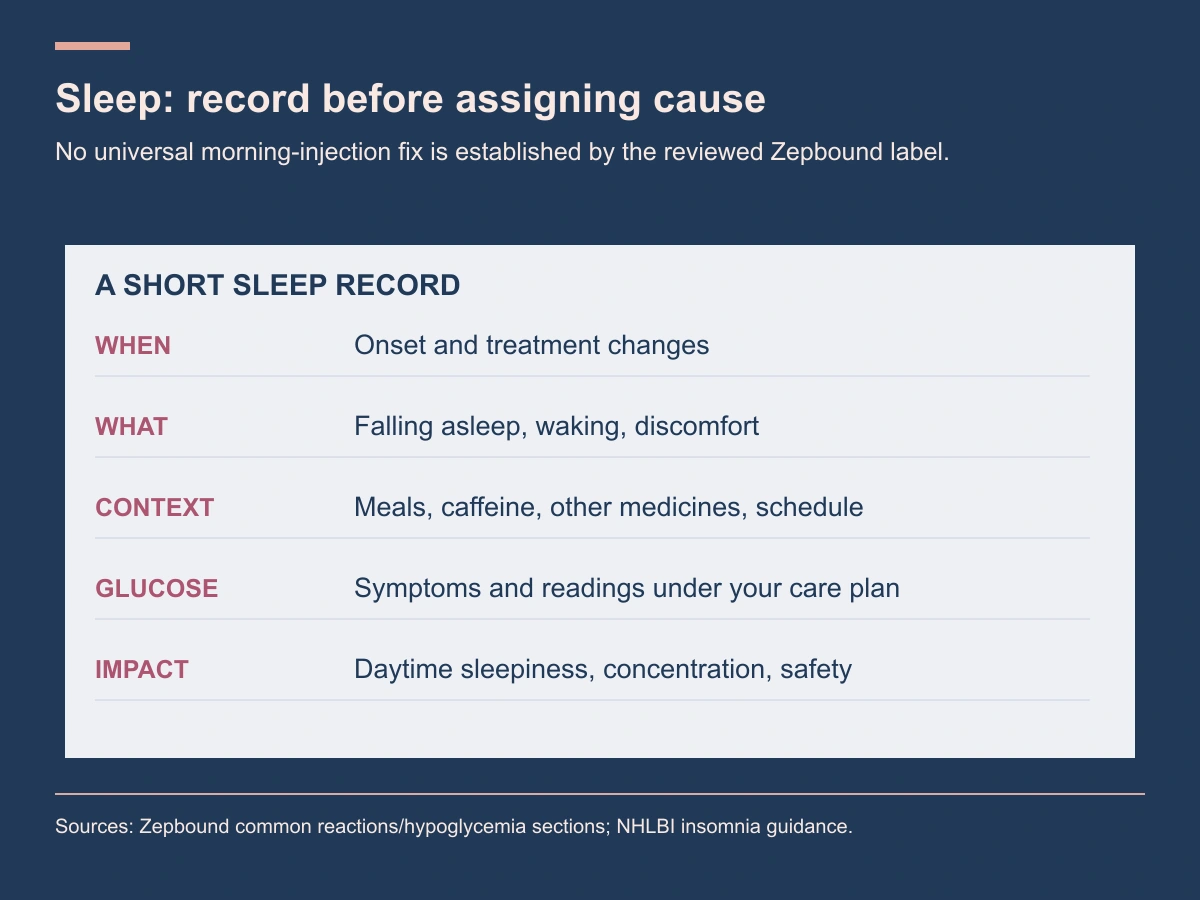
| Sleep-review question | What to record |
|---|---|
| When did the problem begin? | Start date, dose-change dates and previous sleep pattern |
| What interrupts sleep? | Nausea, reflux, pain, bathroom trips, worry or no clear trigger |
| What else changed? | Medicines, caffeine, alcohol, meals, work schedule and activity |
| Is glucose relevant? | Symptoms and readings collected under the existing care plan |
| How does it affect the day? | Sleepiness, concentration, work, driving and ordinary tasks |
This is a review checklist, not a validated diagnostic score or a way to calculate the probability of a Zepbound reaction.

Does changing injection time fix the problem?
The reviewed label does not establish a universal morning-injection solution for insomnia. A weekly medicine’s effects do not necessarily disappear because the injection is moved a few hours. Do not confuse an anecdotal preference with a proven sleep intervention.
Ask whether a timing change is appropriate for your actual prescription, symptoms and schedule. If changing the injection day is discussed, follow the medicine’s administration rules and the prescriber’s directions. Our tirzepatide missed-dose and restart guide distinguishes a planned day change from a missed dose or a longer interruption.
Do not inject an extra dose, reduce the amount by guesswork or use another product’s instructions to experiment with sleep. A symptom plan should make clear what happens before the next dose and who will review the result.
Insomnia and obstructive sleep apnea are different
Zepbound has a labeled use for moderate to severe obstructive sleep apnea in adults with obesity. That indication does not mean it treats every form of insomnia or replaces an individual sleep-apnea care plan. Zepbound indication and safety information.
Tell the clinician about loud snoring, witnessed pauses in breathing, gasping or significant daytime sleepiness as well as trouble falling asleep. Those observations can lead to a different assessment than sleep difficulty associated with stress or medication discomfort.
If you already use a breathing device or another prescribed apnea treatment, do not stop it because a weight-related medicine has been added. Ask how response will be measured and whether any change should follow a sleep specialist’s reassessment.
The same person can have more than one sleep problem. Improvement in weight or apnea-related measures does not automatically explain persistent difficulty initiating sleep.
Useful sleep habits and when to seek treatment
NHLBI recommends a regular sleep-wake schedule, a cool and quiet sleep environment, and avoiding caffeine, nicotine and alcohol close to bedtime. It also discusses regular meals, managing stress and reviewing medicines that disrupt sleep. These are general measures, not a guarantee that a prescription-related symptom will resolve. NHLBI insomnia treatment.
If insomnia continues, ask about cognitive behavioral therapy for insomnia, or CBT-I. NHLBI describes it as the usual first treatment option for long-term insomnia. It includes structured approaches beyond a generic list of sleep tips and can be delivered in different settings.
Avoid automatically adding an OTC antihistamine or melatonin supplement. NHLBI notes that these products have limitations and may not be suitable for everyone. The choice should account for the actual sleep problem, other medicines and health conditions.
If daytime sleepiness makes driving unsafe, avoid driving and obtain advice promptly. Marked mood changes, confusion, severe physical symptoms or thoughts of self-harm also require appropriate urgent help rather than waiting for a routine sleep appointment.

Coordinate the treatment plan
Ask the prescribing team whether symptoms suggest a need for further assessment, what to do about the next dose and when to follow up. If another clinician manages sleep, diabetes or mental-health care, ensure the prescriptions and concerns are shared.
Our guide to choosing GLP-1 treatment can help with longer-term questions after the sleep issue is assessed. CoreAge Rx describes its tirzepatide service and semaglutide service; these commercial pathways do not establish that a different medicine will solve insomnia. Compounded medicines are not FDA-approved and should be used only when a patient’s medical need cannot be met by an approved drug. FDA compounding guidance.
Frequently asked questions
Does Zepbound cause insomnia?
Insomnia is not named in the reviewed common adult reaction table. That does not rule out a treatment-related concern. Assess the actual timing, symptoms and other sleep factors with the clinician.
Will taking the injection in the morning help?
There is no universal morning-timing solution established in the reviewed label. Ask about your prescription rather than treating an anecdote as a required change.
Can nausea wake me up?
Digestive discomfort may be part of the sleep history. Record the symptom and its timing, and seek review for persistent or significant symptoms. Do not assume that all waking is caused by nausea.
Is insomnia the same as sleep apnea?
No. They describe different problems and can coexist. Zepbound’s sleep-apnea indication does not mean it is an insomnia medicine.
Should I take melatonin?
Discuss the actual sleep problem, medicines and health history first. A supplement is not automatically effective or appropriate, and NHLBI describes limits to evidence for melatonin in insomnia.
Should I stop Zepbound to test the cause?
Obtain a clinician-directed plan. A pause, restart or switch requires consideration of symptoms, the treatment indication and the actual product. Do not create a dosing experiment on your own.
Educational information for adults; individual treatment decisions require a qualified clinician. Sources reviewed October 2, 2026. Original AI-generated article images depict fictional people and objects, not patient outcomes. Other editorial images are illustrative. Graphics summarize the cited sources.