
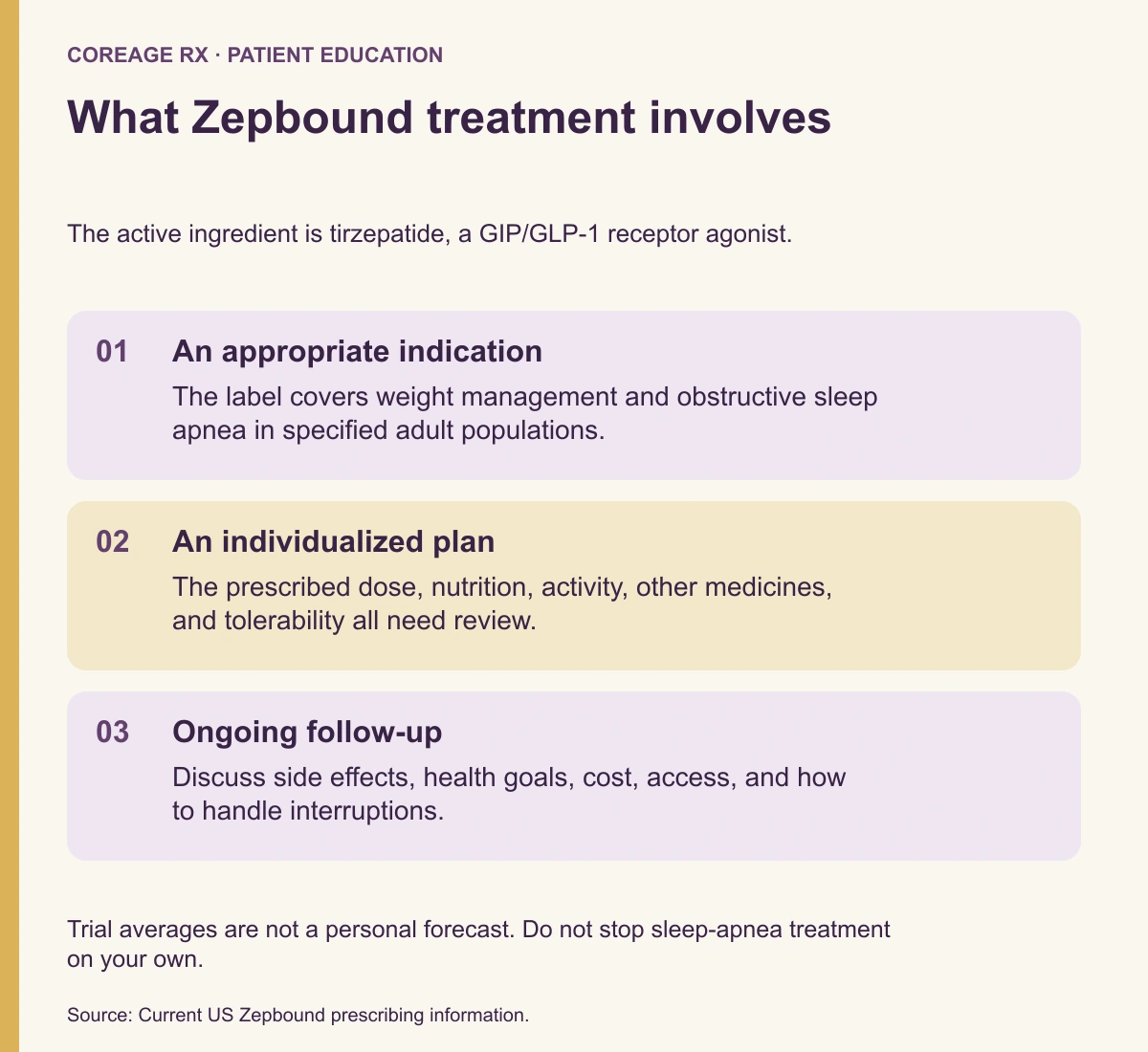
Zepbound is a prescription medicine containing tirzepatide. Its current U.S. label includes long-term weight management in eligible adults and treatment of moderate to severe obstructive sleep apnea in adults with obesity. It is given by injection once a week and is used alongside an appropriate eating and activity plan.
The brand name matters. Mounjaro also contains tirzepatide, but it has a different approved-use label. A compounded tirzepatide preparation is another category again. This guide explains what Zepbound does, who the evidence concerns, and the practical questions to discuss before treatment.
How does Zepbound work?
Tirzepatide activates receptors for two hormones involved in metabolic signaling: glucose-dependent insulinotropic polypeptide, or GIP, and glucagon-like peptide-1, or GLP-1. Its actions include effects on appetite and food intake, glucose regulation, and stomach emptying. The prescribing information explains the mechanism and the clinical evidence for the approved product.
This does not mean it should make eating impossible or that nausea is a sign of better treatment. The aim is a useful health benefit that can be maintained while meeting nutrition needs and managing adverse effects.
Our GLP-1 introduction explains the broader medicine category, and the tirzepatide questions guide connects the mechanism with everyday treatment questions.
What is Zepbound approved to treat?
The current U.S. label describes two main uses, in combination with a reduced-calorie diet and increased physical activity:
- Reducing excess body weight and maintaining weight reduction in adults with obesity, or adults with overweight and at least one weight-related health condition.
- Treating moderate to severe obstructive sleep apnea in adults with obesity.
These are defined clinical uses. A desire to lose a few pounds, an online symptom quiz, or loud snoring alone does not establish eligibility. The clinician needs to assess the diagnosis, other conditions, current medicines, contraindications, and expected benefit.
This article addresses adults. Do not apply an adult schedule or indication to a child based only on the shared ingredient name.
For the chronology behind these indications, see our tirzepatide research and approval timeline. It separates early clinical studies, the original Mounjaro and Zepbound approvals, and later changes to specific product labels.
What does the sleep-apnea indication mean?
Obstructive sleep apnea, or OSA, involves repeated breathing interruptions caused by upper-airway obstruction during sleep. Zepbound’s approved use concerns adults who have obesity and moderate to severe OSA. The diagnosis and severity need proper assessment.
Starting Zepbound is not permission to stop positive-airway-pressure treatment or another sleep-apnea therapy on your own. Ask the sleep clinician how existing treatment should continue and how improvement will be assessed. A change in weight or daytime sleepiness does not by itself establish that nighttime breathing interruptions have resolved.
Tell the prescribing team about diagnosed OSA, current treatment, and persistent sleep symptoms. Weight management and sleep-apnea follow-up should be coordinated rather than handled as unrelated subscriptions or appointments.
How much weight did people lose in the trials?
One pivotal study described in the Zepbound label enrolled 2,539 adults with obesity, or overweight with a weight-related condition, without type 2 diabetes. At 72 weeks, the label reports average weight reductions of 15.0%, 19.5%, and 20.9% with the studied 5, 10, and 15 mg regimens, compared with 3.1% with placebo. Both treatment and placebo groups received lifestyle support.
Those are group averages from a defined trial, not promised results. They do not describe the first month, the effect of a starting dose alone, or the expected outcome for every person with diabetes. The label reports separate results for a trial involving type 2 diabetes.
Before-and-after photographs cannot substitute for that context. They usually do not show the person’s complete treatment, starting health profile, duration, adherence, or other changes. Discuss a realistic plan rather than trying to reproduce an individual photograph.
How quickly should you expect a change?
Some people notice appetite changes early, but the absence of a dramatic first-week effect does not by itself establish treatment failure. The starting schedule is designed partly around tolerability, and the major trials evaluated outcomes over many months.
Early follow-up should include whether doses are being administered correctly, whether symptoms are manageable, and whether meals and fluids remain adequate. Weight is one measure, but daily function, relevant health conditions, and the ability to continue treatment also matter.
Our first month on tirzepatide guide explains what to track. Do not take an extra dose or shorten the weekly interval because another person’s results appeared faster.
How is Zepbound taken?
Zepbound is injected under the skin once weekly. The current label starts treatment at 2.5 mg weekly for four weeks, then increases to 5 mg. Further increases, when prescribed, occur in 2.5 mg steps after at least four weeks at the current dose.
The 2.5 mg dose is for initiation and is not an approved maintenance dose. Maintenance choices depend on the indication, response, and tolerability; the maximum is 15 mg weekly. Our Zepbound dosage chart explains the approved schedules and missed-dose questions in more detail.
Do not treat the schedule as a requirement to reach the highest dose regardless of symptoms. Contact the prescriber before a planned increase when adverse effects are significant or eating and drinking are becoming difficult.

Why does the pen or vial presentation matter?
The current label includes single-dose and multi-dose presentations, including a four-dose KwikPen. The instructions, supplies, dose volume, and discard rules depend on the actual presentation. A tutorial for one pen is not automatically suitable for another pen or vial.
Confirm the medication name, prescribed milligrams, presentation, and supplies when filling the prescription. Ask the pharmacist to demonstrate the technique and what indicates a completed dose. Request new training if the presentation changes at a refill.
Never share a multi-dose pen between patients, even after changing the needle. Do not extract leftover medicine or assume a remaining amount supplies an extra dose. Follow the Instructions for Use included with the specific package.
What side effects are common?
The label lists gastrointestinal effects such as nausea, diarrhea, vomiting, constipation, abdominal pain, and indigestion among common reactions. Injection-site reactions and other effects can also occur. Symptoms may be particularly relevant during dose escalation.
Mild symptoms still deserve discussion if they repeatedly interfere with meals, work, or sleep. Smaller comfortable portions and attention to food and fluid tolerance can be useful, but persistent vomiting or substantial dietary restriction should not become the normal routine.
Our Zepbound side-effects guide explains the labeled findings and warning signs, while tirzepatide nausea and reflux addresses practical digestive questions. A medicine’s effectiveness does not depend on feeling unwell.
Our guide to Zepbound and back pain distinguishes localized soreness from persistent abdominal-to-back pain, urinary symptoms and neurologic emergencies.
Which symptoms need prompt help?
Severe persistent abdominal pain, sometimes extending to the back and with or without vomiting, requires urgent assessment for possible pancreatitis. Stop the medicine and seek medical advice if pancreatitis is suspected. Upper abdominal pain with fever or jaundice can raise gallbladder concerns.
Repeated vomiting, inability to retain fluids, fainting, or markedly reduced urination can indicate dehydration or another serious problem. Trouble breathing, swelling of the face or throat, or collapse requires emergency help. Do not wait for a routine online follow-up to address these symptoms.
The clinician also needs to review other medicines. Insulin and sulfonylureas can increase hypoglycemia risk when used with tirzepatide, so the diabetes team may need to adjust treatment and provide a monitoring plan.
What should be discussed before starting?
The boxed warning concerns thyroid C-cell tumors seen in rats; the relevance to humans is unknown. Zepbound is contraindicated with a personal or family history of medullary thyroid carcinoma or multiple endocrine neoplasia syndrome type 2, and with certain serious hypersensitivity histories.
Tell the clinician about severe stomach-emptying problems, pancreatitis or gallbladder history, diabetes-related eye disease, pregnancy plans, and all medications and supplements. The label does not recommend use in severe gastroparesis. Pregnancy requires prompt review; weight-loss treatment is not appropriate during pregnancy.
Tirzepatide can affect oral hormonal contraceptive effectiveness. The label advises switching to a nonoral method or adding a barrier method for four weeks after starting and for four weeks after each dose increase. Discuss the exact contraceptive plan with a clinician or pharmacist.
Also tell a procedural team before anesthesia or deep sedation, because delayed gastric emptying can affect aspiration risk. Do not create your own universal stopping rule from an online post.
Is Zepbound the same as Mounjaro or compounded tirzepatide?
| Name | Important distinction |
|---|---|
| Zepbound | Approved tirzepatide product with weight-management and OSA indications for defined adult populations |
| Mounjaro | Approved tirzepatide product with its own diabetes-related label and eligible populations |
| Compounded tirzepatide | Unapproved preparation that has not undergone FDA premarket review for safety, effectiveness, and quality |
Sharing an ingredient does not mean every use, device, preparation, or outcome claim transfers. FDA’s guidance explains concerns with unapproved GLP-1 medicines. Do not combine Zepbound with another tirzepatide product or a GLP-1 receptor agonist; the label does not recommend that use.
For CoreAge Rx tirzepatide information, ask which exact preparation is offered and why it fits the medical need. Branded trial percentages do not establish equivalent outcomes for a compounded preparation.

How should cost and long-term access be planned?
Compare the actual presentation, prescribed dose, quantity, pharmacy, and payment route. Starting-dose offers and maintenance costs can differ. Insurance eligibility, manufacturer programs, and cash prices also have different requirements.
Our Zepbound cost guide explains those distinctions and the current terms checked for this article series. Ask what happens after an introductory offer and whether consultations, supplies, laboratory work, or other services are separate.
Discuss maintenance and possible interruptions early. If cost or side effects threaten continuation, the prescriber can help plan the next step. Repeatedly stopping and restarting without guidance can create additional tolerability and dosing questions.
What should a useful first appointment answer?
Leave knowing the diagnosis and treatment goal, the exact product and starting plan, what symptoms require help, and when follow-up will occur. Clarify nutrition support, other medication changes, contraception when relevant, and the full expected cost.
If comparing Zepbound with semaglutide, our tirzepatide-versus-semaglutide results guide explains the direct trial and its boundaries. The better choice for an individual depends on more than the largest average weight-loss percentage: medical fit, tolerability, practical routine, and reliable access all matter.
Educational information for adults; individual treatment decisions require a qualified clinician. Sources checked September 26, 2026. Original AI-generated article illustrations depict fictional people and objects, not patient outcomes. Other editorial images are illustrative. Graphics summarize the cited sources.