
A headache after starting Zepbound can be uncomfortable and worrying. The timing is worth reporting, but it does not establish the cause. Headache is not included in the current label’s list of the most common adverse reactions, and that absence does not mean a new headache should be ignored. Zepbound prescribing information
Useful questions include whether eating, drinking, glucose, other medicines, sleep, or a pre-existing headache pattern has changed. A clinician may also need to assess a cause unrelated to Zepbound.
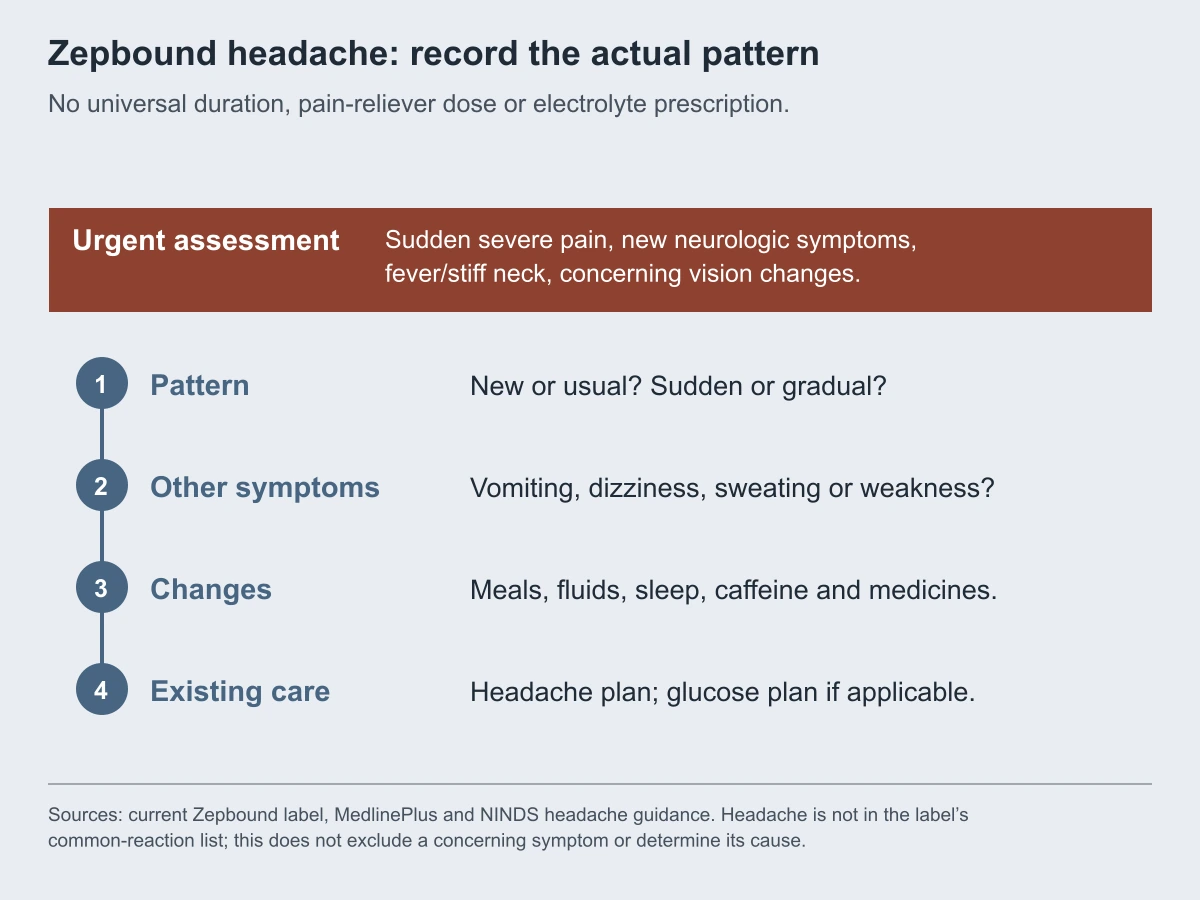
Start with warning symptoms, then consider what to record and which relief questions to discuss. There is no single duration, electrolyte product, or pain-reliever dose that is appropriate for every Zepbound headache.
Headache warning signs that need urgent care
Seek emergency care for a sudden explosive or unusually severe headache, a headache with new trouble speaking, weakness, confusion, or other neurologic symptoms, or a concerning headache after a head injury. Fever with a stiff neck and severe eye pain or vision changes are other reasons for urgent assessment. MedlinePlus headache guidance
Do not wait to see whether hydration, food, or the next injection fixes these symptoms. Tell the team about Zepbound, but allow them to evaluate the full situation rather than assuming it is an ordinary medication effect.
Prompt assessment is also important if you are unable to keep fluids down, feel faint, or pass very little urine during ongoing vomiting or diarrhea. Zepbound’s label warns about kidney injury associated with volume depletion.
These examples do not cover every serious headache. A new, worsening, or substantially different pattern deserves clinical attention even if it does not neatly match a checklist.
Is headache a common Zepbound side effect?
The current prescribing information’s common adverse-reaction list emphasizes digestive symptoms and several other reactions; headache is not on that list. This article does not invent a headache rate by borrowing one from another medicine or formulation.
That is a limited observation about the label, not a conclusion about your headache. An event can be worth reporting even if it is not one of the common reactions in a study table. A symptom beginning after a dose also does not automatically prove that the drug directly caused it.
Our Zepbound side-effect guide explains the broader safety context. If you use compounded tirzepatide, identify that preparation separately rather than treating it as a Zepbound-branded device. See our compounded tirzepatide side-effect article.
Could food or fluid changes be involved?
Lower appetite, nausea, vomiting, or diarrhea can change the day’s intake. Those changes are worth reporting alongside a headache, particularly if you are finding it hard to eat or drink adequately.
The prescribing information warns about fluid loss and kidney injury, and it reports hypotension in some circumstances. The clinician may consider these issues with your symptoms and medicines. That does not mean every headache is dehydration or low blood pressure.
Describe the actual pattern: skipped meals, unusual fullness, repeated vomiting, persistent diarrhea, or difficulty drinking. A vague “I am eating healthier” description may hide a much larger reduction in intake than intended.
Our tirzepatide nausea and reflux article and Zepbound diarrhea guide discuss those related symptoms. A treatment plan should remain tolerable enough to support daily needs, rather than pursue a faster scale change through illness.
Can low blood sugar cause a headache?
Low glucose can include headache, sweating, shakiness, hunger, dizziness, or confusion. Zepbound’s label warns that hypoglycemia risk can increase with insulin or medicines that stimulate insulin release. The full medication list matters. NIDDK low-glucose guidance
If you have an established glucose-monitoring and low-glucose plan, follow it when appropriate. Report the reading and timing with the symptoms. Do not automatically treat every headache as low glucose or independently change diabetes medicines.
Severe confusion, seizure, loss of consciousness, or inability to respond normally requires emergency help. If someone cannot safely swallow, do not give food or drink by mouth; use the prescribed emergency plan while obtaining help.
These distinctions are especially useful when headache and sweating occur together. Our Ozempic sweating article discusses a related symptom framework, while its product-specific details remain about Ozempic.
What if you already have migraine or another headache condition?
Compare the new episode with your usual pattern. Is the location, severity, onset, duration, or associated symptom different? Has the frequency changed? Does your existing treatment plan still help?
NINDS distinguishes primary headache conditions from secondary headaches related to another cause. It also describes individualized treatments and notes that regular overuse of headache medicines can worsen attacks or cause new symptoms. NINDS headache information
Tell the clinician about existing headache diagnoses and every medicine used for them. Include nonprescription products and how often you take them. A new medication can coincide with a familiar condition without explaining every change in that condition.
Do not dismiss a new warning pattern because you have had migraines before. Conversely, do not abandon an established headache plan based only on an internet claim about GLP-1 medicines; review the change with the team that knows your history.

Do headaches mean the dose is too high?
A symptom cannot determine the correct dose by itself. The prescriber may consider the pattern, timing, tolerability, other medicines, and the reason for treatment before deciding what to do.
Report whether the headache appeared around initiation or escalation, but avoid turning that observation into an automatic rule. A different cause may require attention, and tolerability concerns may involve more than the headache alone.
Do not split a dose, improvise a smaller injection, or change a device’s instructions to test a theory. Our Zepbound dose-splitting article explains why the product and device matter. Our missed-dose and restart guide addresses a separate scheduling question.
If you need instructions about the next dose because symptoms are concerning, contact the prescribing team. Urgent symptoms should receive urgent assessment rather than wait for a routine medication message.
Can you take an over-the-counter pain reliever?
Ask a pharmacist or clinician which option, if any, fits your situation. Kidney or liver disease, bleeding risk, other medicines, pregnancy, allergies, and the headache pattern can change the decision.
A generic instruction to take ibuprofen, acetaminophen, or another product does not account for all of those circumstances. Read the actual label and avoid unintentionally combining products that contain the same ingredient.
If you need pain medicine frequently, tell the clinician rather than extending the same routine indefinitely. NINDS notes that medication overuse can become part of a headache problem. A useful relief plan should address the pattern, not simply supply a repeating dose instruction.
This article does not give an individualized analgesic schedule. The appropriate choice may involve an existing headache plan or evaluation rather than a new nonprescription product.
Do you need electrolytes or a fixed water target?
Not every headache calls for an electrolyte drink. A product’s marketing language does not establish that a deficiency caused your symptoms or that extra sodium is appropriate.
If vomiting or diarrhea is continuing, ask how to manage fluid losses and when you should be seen. People with kidney disease, heart disease, or an existing fluid restriction need advice that accounts for it. A large universal water target can be an unsuitable shortcut.
NIDDK explains that kidney nutrition can involve individualized fluid and nutrient needs. NIDDK kidney nutrition guidance Bring the exact beverage or supplement label if you are considering it as part of symptom management.
Also note caffeine changes. If your drinks changed substantially when appetite or your routine changed, include that detail. The decaf tea article shows why a drink’s caffeine category and serving need verification; it is not a headache diagnosis.
What should a headache record include?
When you are otherwise well and symptoms are mild, a brief record can help:
| Detail | Example of useful information |
|---|---|
| Onset and pattern | Sudden or gradual; new or similar to previous headaches |
| Impact | Interfered with work, sleep, eating, or ordinary activity |
| Other symptoms | Vomiting, fever, vision changes, sweating, dizziness, or weakness |
| Medication timing | Exact product, recent starts or changes, other medicines |
| Intake and routine | Meals, drinks, sleep, activity, and caffeine changes |
| Existing care plan | Glucose readings if applicable and headache medicines used |
You do not need to wait for several episodes before reporting a concern. A record helps communicate; it does not certify that a symptom is safe to manage at home.
How long does a Zepbound headache last?
There is no verified universal duration to give every reader. Headaches can have different causes, and the drug’s half-life does not tell you how long a symptom will last.
Contact the care team for a persistent, recurring, worsening, or different headache, especially if it disrupts daily activity. Seek urgent care for warning symptoms rather than waiting for a predicted number of days.
Our Zepbound half-life article explains the difference between declining drug concentration and symptom duration. A pharmacokinetic estimate cannot replace an assessment of a new headache.

Frequently asked questions
Should I stop Zepbound because of a headache?
Get instructions from the prescribing team about the actual situation. Do not use a website to make a dose decision; seek urgent assessment first if warning signs are present.
Does moving the injection site prevent headaches?
The Zepbound injection-site guide describes approved regions and device questions. It does not establish site changes as headache treatment.
Can Mounjaro or tirzepatide cause a headache?
A headache during treatment can have several explanations, and the shared ingredient does not establish a universal incidence for every product. The current Mounjaro patient information includes headache among possible low-blood-sugar symptoms, with particular concern when combined with insulin or an insulin secretagogue. Consider other symptoms, intake, glucose readings when relevant, caffeine, sleep and the existing headache history with the care team. A sudden severe headache, neurological symptoms, or another urgent warning sign needs prompt assessment rather than automatic treatment as dehydration or an expected tirzepatide effect. Authentic Mounjaro® (tirzepatide) Shipped to You | LillyDirect®. Mounjaro U.S. prescribing information.
Is this different from Mounjaro?
Both brands contain tirzepatide, but labeled uses, devices, and treatment context matter. The Zepbound versus Mounjaro guide explains the comparison without assuming every symptom has the same cause.
What should I ask about follow-up before treatment?
When reviewing CoreAge Rx tirzepatide care or semaglutide care, ask how new symptoms are assessed, how medication questions are handled, and when in-person care is recommended. Switching products is a clinical discussion, not a guaranteed headache solution.
A practical next step
Check warning symptoms first. Then describe the headache, other symptoms, intake changes, medicines, and any existing glucose or headache plan. The aim is to identify what needs attention and obtain a suitable plan, rather than assume every episode is dehydration or treat it with the same product.
Educational information for adults; individual treatment decisions require a qualified clinician. Sources reviewed October 1, 2026. Original AI-generated article images depict fictional people and objects, not patient outcomes. Other editorial images are illustrative. Graphics summarize the cited sources.