
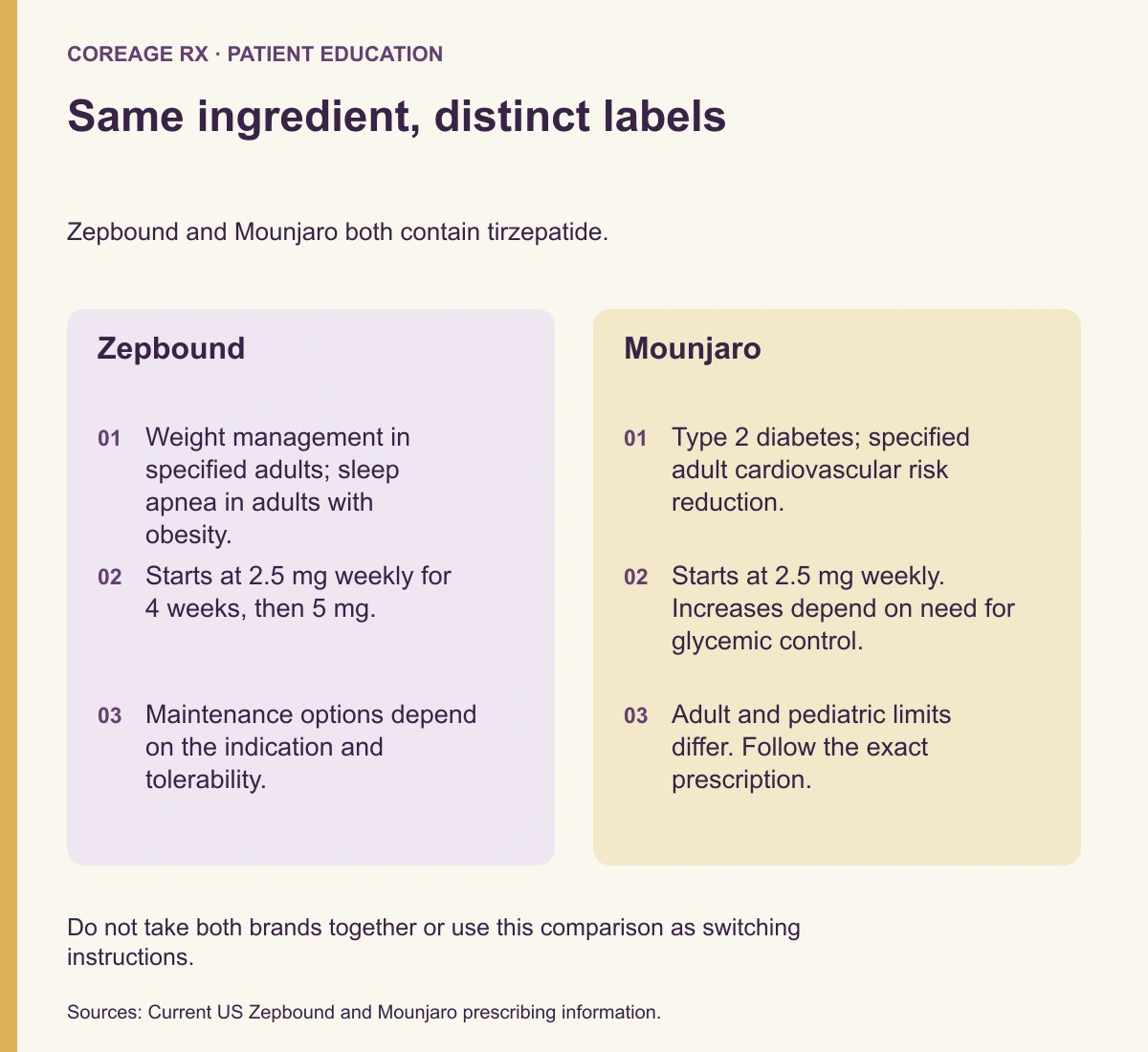
Zepbound and Mounjaro contain the same active ingredient, tirzepatide. Their U.S. labels, approved uses, and treatment decisions differ. Zepbound is used for specified adult weight-management and obstructive-sleep-apnea indications; Mounjaro is used for type 2 diabetes and specified cardiovascular risk reduction. Choosing between them starts with the condition being treated, the current label, and the patient’s clinical circumstances.
The shared ingredient does not mean the packages can be exchanged without a new prescription and instructions. It also does not support claims that one brand is automatically stronger or safer. Here is how to compare the two without mixing evidence from different patient populations or turning a comparison into a do-it-yourself switch.
The main differences at a glance
| Question | Zepbound | Mounjaro |
|---|---|---|
| Active ingredient | Tirzepatide | Tirzepatide |
| Main approved uses | Long-term weight management in specified adults; moderate to severe obstructive sleep apnea in adults with obesity | Type 2 diabetes in adults and children ages 10 and older; reduction of major cardiovascular events in adults with type 2 diabetes at high risk |
| Route and frequency | Injection under the skin, once weekly | Injection under the skin, once weekly |
| Starting dose | 2.5 mg weekly for four weeks, then 5 mg | 2.5 mg weekly; increases depend on need for additional glycemic control after at least four weeks at the current dose |
| Adult maximum dose | 15 mg weekly | 15 mg weekly |
| What determines the next step | Indication, response, tolerance, and labeled maintenance options | Glycemic needs, tolerance, other treatment goals, and the prescribed plan |
This table reflects the current Zepbound prescribing information and Mounjaro prescribing information, including Mounjaro’s August 2026 labeling. It is an explanation of the labels, not a schedule for changing your medicine.
What does the shared ingredient do?
Tirzepatide activates receptors for two hormone signals: GIP and GLP-1. Its effects include helping regulate blood glucose and reducing food intake through effects on appetite. Both brands use tirzepatide; neither is a different ingredient simply because the package name changes.
That makes the first comparison different from comparing tirzepatide with semaglutide. Semaglutide is a GLP-1 receptor agonist with its own products, dose schedules, and evidence. Our tirzepatide versus semaglutide results guide addresses that ingredient-level comparison.
Even when the ingredient and milligram dose are the same, a treatment decision still needs the exact presentation and indication. The pharmacy must dispense the prescribed product, and the patient needs instructions for the device actually supplied.
Approved indications shape the decision
Zepbound’s weight-management indication covers adults with obesity or adults with overweight and at least one weight-related condition, together with a reduced-calorie diet and increased physical activity. Its sleep-apnea indication covers moderate to severe obstructive sleep apnea in adults with obesity.
Mounjaro’s diabetes indication covers adults and pediatric patients ages 10 and older with type 2 diabetes as an adjunct to diet and exercise. Its current cardiovascular indication concerns adults with type 2 diabetes at high risk for major adverse cardiovascular events. Those details matter because older comparison articles may omit newer labeling.
A clinician may sometimes consider an off-label prescription, but that does not create a new approved indication or guarantee coverage. A person seeking weight treatment without diabetes should not assume that a Mounjaro prescription will be covered because Zepbound contains the same ingredient.
For a broader introduction to the weight-management brand, read What is Zepbound?. For sleep-related treatment questions, see tirzepatide and sleep apnea. Do not stop an existing sleep-apnea treatment based on weight change alone.
The dose plans are similar in some ways and different in others
Both medicines use a low starting dose and gradual increases to reduce gastrointestinal adverse effects. The current wording is not identical, however.
Zepbound starts at 2.5 mg weekly for four weeks, followed by 5 mg weekly. Its 2.5 mg dose is for initiation, not maintenance. The labeled weight-management maintenance doses are 5, 10, or 15 mg weekly; the sleep-apnea maintenance doses are 10 or 15 mg weekly. Later increases occur in 2.5 mg steps after at least four weeks at the current dose, with response and tolerability considered.
Mounjaro’s current label starts at 2.5 mg weekly and allows increases in 2.5 mg steps after at least four weeks at the current dose if additional glycemic control is needed. Its maximum is 15 mg weekly for adults and 10 mg weekly for pediatric patients. Do not replace that conditional instruction with an automatic escalation copied from another product’s chart.
The Mounjaro dosage guide and Zepbound dosage guide provide product-specific context. Persistent side effects before a planned increase are a reason to contact the prescriber.

Is Zepbound better for weight loss?
Zepbound has weight-management trials and an approved weight-management indication. That does not mean the brand name makes tirzepatide pharmacologically stronger than tirzepatide in Mounjaro.
In a Zepbound trial of 2,539 adults without type 2 diabetes, average weight reductions at 72 weeks were 15.0%, 19.5%, and 20.9% at the studied 5, 10, and 15 mg doses, compared with 3.1% with placebo. In a separate trial involving adults with type 2 diabetes, the corresponding reductions at 10 and 15 mg were 12.8% and 14.7%, compared with 3.2% with placebo. Both included lifestyle counseling. These results appear in the Zepbound label.
The different populations help explain why comparing headline percentages from separate trials can mislead. A diabetes trial and an obesity trial may differ in baseline health, other medications, dose, duration, and analysis. They are not a direct test showing that one brand works better than the other in otherwise identical patients.
Our tirzepatide before-and-after guide explains trial averages, timelines, and why photographs cannot predict your response.
Do side effects differ between the brands?
Because both contain tirzepatide, many important adverse effects and warnings overlap. These include nausea, vomiting, diarrhea, constipation, abdominal symptoms, and risks involving pancreatitis, gallbladder disease, dehydration-related kidney injury, and serious allergic reactions.
Trial percentages should stay attached to the actual study population and dose. A higher reported rate in one label’s study does not by itself prove that the brand causes more symptoms in comparable patients. Differences in study design, participants, and observation can affect the figures.
Both labels contraindicate use in people with a personal or family history of medullary thyroid carcinoma or MEN2. They also require review of relevant medical history and other medicines. Tirzepatide is not recommended for people with severe gastroparesis. Insulin or sulfonylurea treatment can increase the importance of a low-blood-sugar plan.
Severe or persistent abdominal pain, inability to keep fluids down, fainting, or allergic symptoms need prompt assessment. For everyday symptom questions, see our tirzepatide nausea and reflux guide.
Pregnancy, contraception, and other medicines
Discuss pregnancy or plans to become pregnant before starting or changing tirzepatide. Weight-management treatment is not appropriate during pregnancy, and the prescriber should address the exact medicine and clinical situation.
Tirzepatide can affect absorption of oral medicines through delayed gastric emptying. Both brands advise people using oral hormonal contraception to switch to a nonoral method or add a barrier method for four weeks after starting treatment and four weeks after each dose increase. Our tirzepatide and birth-control guide explains why this needs a plan.
Tell the clinician about all prescriptions, supplements, and planned procedures. If surgery or deep sedation is coming up, inform the procedural team that you take tirzepatide and follow its individualized instructions. Do not create a stop-and-restart schedule from a general comparison article.
Device and storage instructions still matter
Current U.S. labels include more than one presentation, including single-dose and multidose options. A single-dose pen, a vial requiring a syringe, and a multidose KwikPen have different preparation and handling steps. Do not assume that experience with one device trains you to use another.
Before the first dose from a new package, confirm the product, strength, number of doses, storage conditions, and discard instructions. Ask a pharmacist to demonstrate the exact device if anything is unfamiliar. A product’s total amount of drug is not always the amount intended for one injection.
Our Mounjaro injection-site guide explains labeled sites and the importance of presentation-specific instructions. Neither a new site nor a new brand name guarantees that nausea will disappear.

Insurance and price are separate from ingredient similarity
An insurer can apply different coverage rules to two brands containing the same ingredient because their approved uses and benefit policies differ. Prior authorization may require information about diagnosis, previous treatment, or other plan criteria.
Ask about the exact product and presentation, not simply whether “tirzepatide is covered.” Manufacturer savings programs and self-pay offers can also have different eligibility, pharmacy, dose, and refill requirements. Confirm current terms before making a decision.
The Zepbound cost guide and tirzepatide versus semaglutide cost guide can help you compare the complete expense. Include visits, follow-up, supplies, and the consequences of an interruption, rather than considering only an introductory price.
Can you switch or take both?
Do not take both brands together. Zepbound’s label does not recommend coadministration with another tirzepatide-containing product or a GLP-1 receptor agonist. Duplicate treatment can expose you to unnecessary medication and adverse effects.
A switch should be coordinated by the prescriber and pharmacy. They need the last dose date, current dose, tolerability, any interruption, the reason for changing, and the new presentation. Sharing an ingredient does not establish the correct timing or dose after a treatment gap.
If you are considering CoreAge Rx, its tirzepatide care information can help you prepare for an assessment. Confirm the exact prescribed product and formulation during that process. The best comparison ends with a plan suited to the diagnosis, practical access, and ongoing clinical monitoring.
Educational information for adults; individual treatment decisions require a qualified clinician. Sources checked September 27, 2026. Original AI-generated article illustrations depict fictional people and objects, not patient outcomes. Other editorial images are illustrative. Graphics summarize the cited sources.