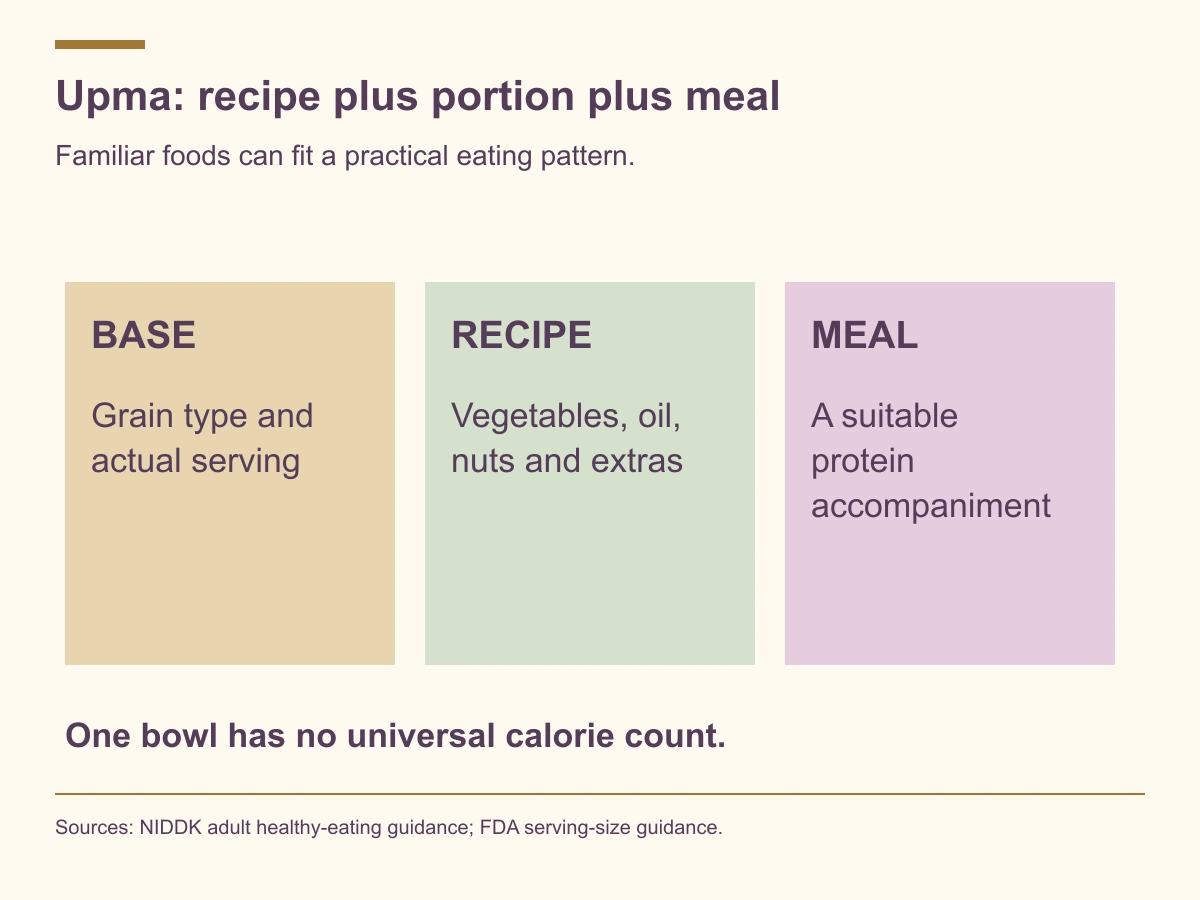
Upma can be part of an evening meal for weight management. Whether it works well for you depends on the recipe, portion, accompanying foods, and overall eating pattern. There is no single calorie count for “one bowl of upma,” and eating it after sunset does not automatically turn it into a weight-gain food.
Start with the upma you actually eat
Upma often uses semolina, also called rava or sooji, cooked with water, seasonings, and a tempering that may include oil, vegetables, nuts, or other ingredients. Families and restaurants prepare it differently. Other versions use oats, broken wheat, millet, or a mixture.
Those differences matter more than a generic nutrition claim attached to the dish’s name. A bowl with many vegetables and a deliberate amount of oil is not nutritionally identical to a large serving with generous ghee and nuts. Neither can be described accurately by an unrelated recipe’s calorie estimate.
The same principle applies to poha at night: assess the actual dish and meal rather than judging a culturally familiar food by a one-word “good” or “bad” label. A sustainable eating plan should leave room for foods you enjoy and can prepare reliably.
Can upma help with weight loss?
Upma is a food, not a treatment that independently produces fat loss. It can fit a useful eating pattern when the portion, ingredients, and overall intake suit your needs. NIDDK’s adult healthy-eating guidance emphasizes nutrient-rich foods, portions, and habits that can be maintained.
A practical advantage may be convenience. If a simple cooked meal replaces an evening routine you find difficult to manage, it may help you eat more consistently. That is different from claiming semolina burns fat or that a particular spice cancels the energy in the meal.
Consider what changes when you choose upma. Are you replacing another meal, adding it after dinner, or using a very small bowl to avoid eating enough? Those situations can have very different effects on hunger and the rest of the day.
Why the portion and recipe both matter
“Small bowl” and “one cup” may not describe the same amount across kitchens. Cooked weight also changes with water: a wetter upma can weigh more without containing more dry grain. If you want a recipe estimate, record the ingredients for the whole pot and the number of portions it actually provides.
Include the dry grain, oil or ghee, nuts, added vegetables, and any substantial accompaniments. Divide the complete recipe across the portions you serve. Do not calculate only the semolina and assume the finished meal has the same total.
For packaged mixes, use the FDA’s label-reading principles: identify the serving amount, understand whether preparation additions are included, and compare the quantity you eat with the quantity described. An “as prepared” label may make assumptions about the recipe that differ from yours.
Semolina, whole grains, and alternative versions
Standard semolina is not automatically a whole-grain product. Check the package rather than assuming a grain is whole because it has a coarse texture. A whole-grain version or a different grain can change fiber content, but the complete meal still matters.
Oats, broken wheat, or millet may offer variety. They do not make portion size, oil, or accompaniments irrelevant. Compare actual ingredients and preparation rather than ranking all versions by a single “weight-loss friendly” label.
Our whole-grain and pasta guide explains why ingredient wording and meal context matter. If you have celiac disease, wheat semolina is unsuitable; selecting another grain also requires checking contamination and gluten-free labeling. A recipe substitution should fit your medical needs as well as your preference.
Build a more complete evening meal
Vegetables can add variety and texture, while a suitable protein food can make the meal more complete. Consider peas and carrots in the upma, with plain yogurt, cooked lentils, beans, tofu, or another protein you enjoy alongside. Choose combinations that suit your digestion and dietary pattern.
This is a flexible approach, not a demand to add every ingredient. If the meal becomes too large or uncomfortable, adjust portions across its components. If it leaves you hungry, review the overall balance rather than assuming hunger must be ignored for weight loss.
| Component | What to notice | One practical option |
|---|---|---|
| Grain base | Type and actual amount used | Check the package and learn your usual cooked serving. |
| Vegetables | Variety and how much reaches your plate | Add vegetables you enjoy and tolerate. |
| Oil or ghee | Quantity in the entire recipe | Measure during cooking to understand the contribution. |
| Nuts or seeds | Flavor and energy contribution | Use an intentional amount. |
| Protein accompaniment | What makes the meal more complete | Pair with yogurt, lentils, beans, tofu, or another suitable option. |
| Extras and drinks | The complete meal, not just the upma | Include chutneys, beverages, and additional servings in your review. |
The balanced-meal guide provides a broader framework. It can be adapted to familiar foods without replacing every meal with a generic salad.

Is oil the problem?
Oil contributes energy, but an oil-free rule is not necessary for everyone. Knowing the amount used can be more useful than judging the dish by whether it contains any fat. A freely poured amount across a pot can be difficult to estimate later.
Try measuring the usual amount first. Then decide whether a change would preserve the flavor and cooking result you want. Reducing oil dramatically while leaving the meal unsatisfying may simply shift eating to later snacks; the whole routine deserves attention.
Nuts and seeds also contribute nutrients and energy. Treat them as ingredients rather than unlimited “healthy” additions. Our macronutrient guide explains why carbohydrate, protein, and fat all have roles in a complete eating plan.
Does eating upma at night change the answer?
There is no universal cutoff time that makes this dish unsuitable. A night-shift worker, someone eating an early dinner, and someone eating just before lying down have different schedules. Review your bedtime and digestion alongside hunger and the rest of the day.
If reflux occurs at night or when lying down, NIDDK suggests finishing meals at least three hours before lying down or bedtime. Individual triggers vary. A large late portion, a rich accompaniment, or a personal food trigger may matter more than the dish’s name. NIDDK reflux guidance.
Our meal-timing article discusses eating windows and practical fit. Skipping an evening meal is not automatically a better choice than eating a balanced one.
What if you have diabetes?
Upma’s grain base contributes carbohydrate. Vegetables and protein additions can improve the overall meal, but they do not erase the carbohydrate. The portion and your individual glucose-management plan still matter.
Ask your diabetes team how this familiar meal fits your usual carbohydrate pattern, monitoring, and medicines. A recipe described as “healthy” online may use a different amount or ingredients. Your own response and care plan are more useful than another person’s glucose screenshot.
Be cautious about suddenly replacing dinner with much less food while continuing a medicine routine built around your previous intake. NIDDK lists missed meals and insufficient carbohydrate among possible contributors to low glucose, especially with insulin or insulin-releasing medicines. Hypoglycemia guidance. Do not change doses on your own to accommodate a new meal plan.
Upma while taking semaglutide or tirzepatide
A smaller appetite can change how much food feels comfortable. The goal remains enough nourishment and fluids, with a meal pattern you tolerate. Start with an amount that feels manageable and discuss persistent difficulty eating with the clinical team.
A very oily or large meal may be harder for some people to tolerate, but there is no universal ban on upma during treatment. Our GLP-1 food guide and tirzepatide nausea and reflux guide explain how to review symptoms without creating a long list of forbidden foods.
If you are considering CoreAge Rx tirzepatide care, discuss eating habits and nutrition during the assessment. The service describes compounded treatment for appropriate patients. A food preference does not determine eligibility, and an ordinary dinner question does not mean medication is needed.

A practical recipe-review exercise
Choose one recipe you actually make. Write down the dry grain and the main additions for the full pot, then note how many satisfying servings you obtain. Include the yogurt, lentils, chutney, or drink you usually have with it.
Next, choose one change that addresses a real problem. If the meal has little variety, add a vegetable. If it lacks a protein food, choose an accompaniment. If the amount of oil is uncertain, measure it once. If you feel reflux after a late meal, review timing and portion with the appropriate guidance.
Keep the change manageable and observe hunger, satisfaction, digestion, and convenience. One evening’s scale reading cannot evaluate a recipe. The busy-schedule meal-prep guide can help make the improved version realistic on ordinary workdays.
Common questions
How many calories are in a bowl of upma?
There is no reliable single answer without the recipe and portion. Water, grain quantity, oil, nuts, and serving size can differ substantially. Use the actual recipe or a matching label.
Is upma better than rice or roti for weight loss?
A dish name alone cannot settle the comparison. Compare complete meals, including portions, vegetables, protein, fats, and what you find satisfying. Our jowar roti guide discusses similar questions for sorghum-based meals.
Can I eat upma every night?
You can include a favorite meal regularly, but consider variety across the week and whether the overall pattern meets your needs. A dietitian can help if a narrow menu makes adequate eating difficult.
Should I avoid dinner and just drink water instead?
That is not a default weight-management recommendation. Hunger, nutrition needs, medicines, and health history matter. If you are repeatedly unsure how much to eat, seek help building a practical meal plan rather than repeatedly removing meals.
Educational information for adults; individual treatment decisions require a qualified clinician. Sources reviewed October 5, 2026. Original AI-generated article images depict fictional people and objects, not patient outcomes. Other editorial images are illustrative. Graphics summarize the cited sources.