
You can include poha in an evening meal while working on weight management. Eating flattened rice at night does not automatically make it unsuitable, and poha does not have a special nighttime fat-burning effect. The portion, preparation, other foods in the meal, overall eating pattern, and your medical needs matter more than a blanket rule about avoiding carbohydrates after sunset.
The useful question is whether the meal helps you eat comfortably and adequately in a routine you can maintain. A bowl with vegetables and a protein-containing food is a different meal from a large serving with generous oil, potatoes, peanuts, and fried toppings—even when both are called poha.
What counts as poha in this question?
Poha usually refers to flattened rice flakes or a dish prepared from them. The name does not identify one standardized recipe, serving, or nutrient panel. Thin and thick flakes, plain and instant products, and red-rice or other grain varieties can differ.
Before using a nutrition number, check what the product or recipe actually contains. Plain dry flakes are different from a ready-to-prepare seasoned packet. Added oil, nuts, potatoes, sweeteners, and toppings change the finished meal. A product’s name alone cannot establish its fiber, protein, sodium, or energy content.
The FDA’s Nutrition Facts guide explains why nutrient amounts need a serving basis. When comparing packages, read the amount in grams and whether the values describe dry food, a prepared serving, or preparation with specified additions. If your package uses a per-100-gram panel, that is not automatically a bowl you should eat.
Does eating rice at night prevent weight loss?
There is no reason to assume every carbohydrate-containing dinner blocks progress. NIDDK’s successful weight-management guidance supports an eating pattern adapted to health, cultural preferences, and daily life. A plan that excludes a familiar meal unnecessarily may be harder to maintain.
Timing can still matter to the person. Work shifts, hunger, sleep, reflux, diabetes medicines, and activity can influence when a meal is most comfortable or practical. Those are reasons to individualize the schedule, rather than make one clock time a universal boundary.
A twelve-month randomized meal-timing trial assigned 139 adults with obesity to calorie restriction with or without an 8 a.m. to 4 p.m. eating window. The time-restricted group did not have a statistically significant additional weight-loss benefit compared with calorie restriction alone in that study.
That finding does not prove that all meal timing is irrelevant. The study was not a trial of poha at night, and its schedule should not become a fasting prescription for every reader. It does show why a simple claim that eating after a particular hour determines the outcome needs more evidence.
Our balanced meal guide focuses on food combinations that can fit breakfast, lunch, or dinner. The meal’s role in the day is more useful than treating the same food as acceptable at breakfast and forbidden at night.
Dry flakes and cooked poha are different measurements
A common mistake is comparing the calories in dry flakes with the same weight or volume of a prepared dish. Rinsing or soaking adds water and changes weight. Cooking and ingredient additions further change the finished amount.
Water does not erase the energy in the original flakes. It changes how much the prepared food weighs and how much space it occupies. Oil, nuts, potatoes, and other additions bring their own nutrients and energy, while vegetables also affect the final volume.
If you want to estimate your recipe, begin with the actual dry ingredients and additions, then divide the finished batch into the portions you serve. Use the relevant package panels or a reliable recipe calculation. Do not apply a dry-flake number to every cooked bowl without accounting for water and ingredients.
| Description you see | What to verify | Common comparison problem |
|---|---|---|
| “Per 100 grams” | Dry or prepared food, and which product | Treating it as a universal bowl |
| “One cup” | Dry flakes or cooked dish, and the cup’s contents | Assuming equal volume means equal weight |
| “One serving” | Serving grams and preparation instructions | Treating a reference serving as a personal prescription |
| “Instant poha” | Seasoning, oil, salt, and any required additions | Using a plain-flake panel for a different recipe |
How can you make poha a more complete dinner?
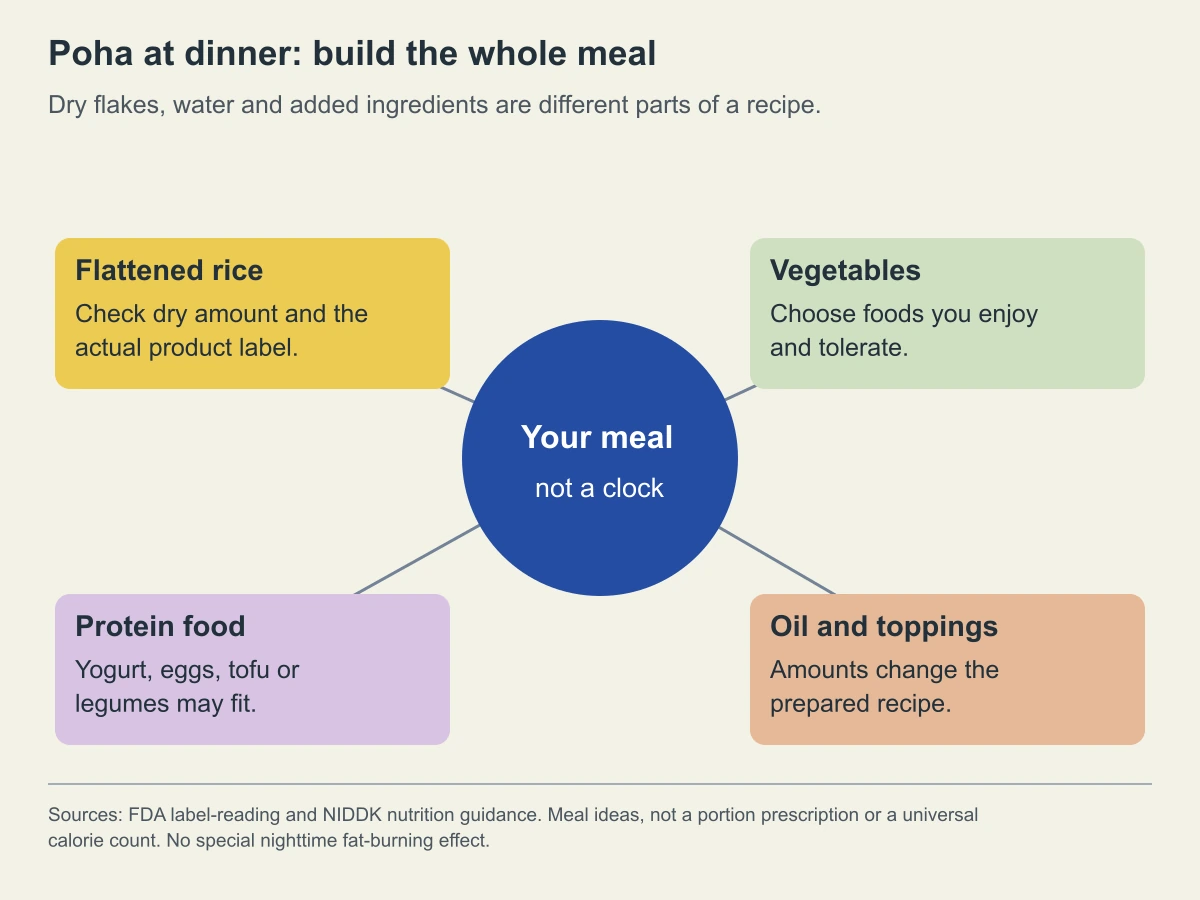
Start with the function of each component. Flattened rice provides a carbohydrate component. Add vegetables you enjoy, and consider a protein-containing food that fits your preferences and any medical restrictions. Use oil and toppings intentionally rather than assuming they do not count because the base is familiar.
Possible combinations include:
- Poha with peas and other vegetables, plus plain yogurt if dairy suits you.
- A vegetable poha bowl with tofu or another suitable soy food.
- Poha alongside eggs and a vegetable side.
- A portion of poha with a lentil or bean dish.
These examples are flexible meal ideas, not nutritional prescriptions or a claim that every combination has the same calories. Protein, fiber, and micronutrients depend on the actual amounts and foods. If one option does not fit your culture, allergies, budget, or medical plan, choose another.
Peanuts can add flavor and nutrients, but a garnish amount does not automatically make a rice dish a high-protein dinner. Fried sev or generous oil can also change the meal substantially. There is no need to ban those ingredients; notice their role and amount in the recipe.
For related planning, see protein breakfast ideas and food fiber versus supplements. The principles can be adapted to evening meals without copying a breakfast calorie target or a fixed supplement routine.
What portion should you have at night?
There is no universal bowl size for weight loss. Appetite, body size, activity, the rest of the day, and medical conditions can change what is appropriate. A bowl that works as a snack may not be enough for dinner, and a restaurant portion may differ from a home serving.
Begin with the whole meal rather than flattening every decision into one number. Are you adding vegetables and a protein food? Have you missed meals earlier? Are you eating beyond comfortable fullness because dinner is the first proper meal of the day? Those details can make a dietitian’s advice more useful.
If you are using a prescribed energy or carbohydrate plan, calculate the actual recipe and portion within that plan. Do not substitute a generic “one bowl” instruction for your clinical advice. A smaller bowl is not automatically better if it leaves you unable to meet nutritional needs.
The food noise and hunger guide explains why hunger and cravings have several influences. If you repeatedly remain hungry after dinner, the response may be to build a more adequate meal rather than add stricter nighttime rules.
Is poha appropriate for someone with diabetes?
Flattened rice is a carbohydrate food. Its effect in a meal depends on the actual portion, preparation, other foods, and the person’s glucose-management plan. It should not be described as automatically glucose-neutral or universally “diabetic friendly.”
NIDDK’s diabetes nutrition guidance explains that food amount, timing, carbohydrate counting, and the plate method can be part of an individualized plan. It also notes that some medicines, including insulin and sulfonylureas, can cause low blood sugar when meals are delayed or skipped.
Bring the specific product and recipe to your diabetes team if you need help estimating carbohydrates. A red-rice label, whole-grain claim, or vegetable garnish does not remove the need to consider the amount eaten. If monitoring is part of your plan, interpret the pattern with the care team rather than declaring the food universally safe or unsafe from one reading.
Do not skip dinner or start an extended fast to compensate for having poha late. Meal timing should fit the medicines and monitoring plan. Type 1 diabetes requires insulin management and particular precautions; our type 1 diabetes and GLP-1 guide addresses a separate treatment question.
What if late meals worsen reflux or fullness?
Pay attention to the pattern. A large meal close to lying down can be uncomfortable for some people, and very oily or spicy preparations may be relevant to individual symptoms. That is a reason to review meal size, preparation, and bedtime routine with the clinician when needed.
A symptoms-based adjustment differs from a weight-loss rule that forbids all food after a set hour. You may be able to use an earlier dinner, a manageable portion, or a different combination while preserving adequate nutrition. Work schedules and other needs also matter.
If you are taking tirzepatide or semaglutide, tell the care team about persistent fullness, nausea, reflux, vomiting, or an inability to eat enough. Our tirzepatide nausea and reflux guide and semaglutide first-month guide explain practical follow-up questions.
Severe or persistent abdominal pain, repeated vomiting, or inability to keep fluids down needs prompt assessment. Do not reduce the explanation to “poha is too heavy at night” when symptoms could have another cause.
Is an instant packet a useful option?
Convenience can make a routine easier, but read the exact packet. A seasoned instant product may contain a different combination from plain flakes. Check the serving amount, number of servings, sodium, other ingredients, and whether preparation calls for additional oil or food.
You can add a suitable vegetable or protein component if the packet alone does not make a balanced meal. Do not assume that a picture showing vegetables means your portion contains the same amount or that an “organic” claim establishes all the nutrients you need.
For another convenient snack comparison, see the SkinnyPop label guide. It uses a named product and serving to show why front-of-pack language and actual nutrition should be considered separately.
Supplements and prescription treatment have separate roles
You do not need a supplement because you include poha in dinner. A varied food pattern remains the starting point. Green Scene is a greens powder, rather than a replacement for the vegetables, protein foods, and other components of an adequate meal. Full House is a fiber-focused supplement whose actual amount, water instructions, and medication timing need their own review.
If you are considering prescription weight management, the semaglutide questions guide and tirzepatide questions guide explain clinical assessment and follow-up. The appropriateness of treatment cannot be determined by one dinner choice.
CoreAge Rx’s semaglutide information is a separate starting point for a clinical assessment. Confirm the actual preparation and ongoing care; a medication should not be presented as a way to cancel out meals or avoid learning a sustainable routine.

A practical dinner review
Choose the food you want to eat and identify the actual recipe. Notice the amount of dry flakes and the additions, then build a meal with vegetables and a suitable protein component. Select a portion that fits your needs and appetite without relying on a generic bowl rule.
Consider timing for comfort, sleep, work, and any medicines. If a pattern is difficult to maintain or symptoms interfere with eating, ask for dietitian or clinical help. You can adapt a familiar food instead of making dinner a test of whether carbohydrates are allowed.
Frequently asked questions
Can I eat poha at night while trying to lose weight?
Yes, it can fit a weight-management eating pattern. The recipe, portion, overall intake, and health needs matter. Eating it at night does not create an automatic barrier or special benefit.
How many calories are in one bowl?
There is no universal answer. Bowl size, dry-flake amount, oil, toppings, vegetables, and other ingredients change the total. Use your actual product label and recipe rather than one generic cooked-bowl number.
Does soaking poha remove its calories?
Adding water changes the weight and volume of the prepared flakes. It does not make the original food’s energy disappear. Recipe estimates need the actual ingredients and finished portions.
Is poha better than rice for weight loss?
A fair comparison needs the actual portions, preparation, and rest of the meal. The name alone does not establish a weight-loss advantage, and neither food guarantees an outcome.
Should I skip dinner if it is already late?
Do not make that decision from a blanket clock rule. Hunger, nutrition, medicines, work, and symptoms can change the appropriate plan. People using insulin or other medicines that can cause hypoglycemia especially need individualized meal-timing advice.
Is adding peanuts enough to make it a complete meal?
It depends on the amount and the rest of the meal. A small garnish is not automatically a substantial protein component. Consider a suitable combination rather than a single ingredient claim.
Educational information for adults; individual treatment decisions require a qualified clinician. Sources reviewed October 1, 2026. Original AI-generated article images depict fictional people and objects, not patient outcomes. Other editorial images are illustrative. Graphics summarize the cited sources.