
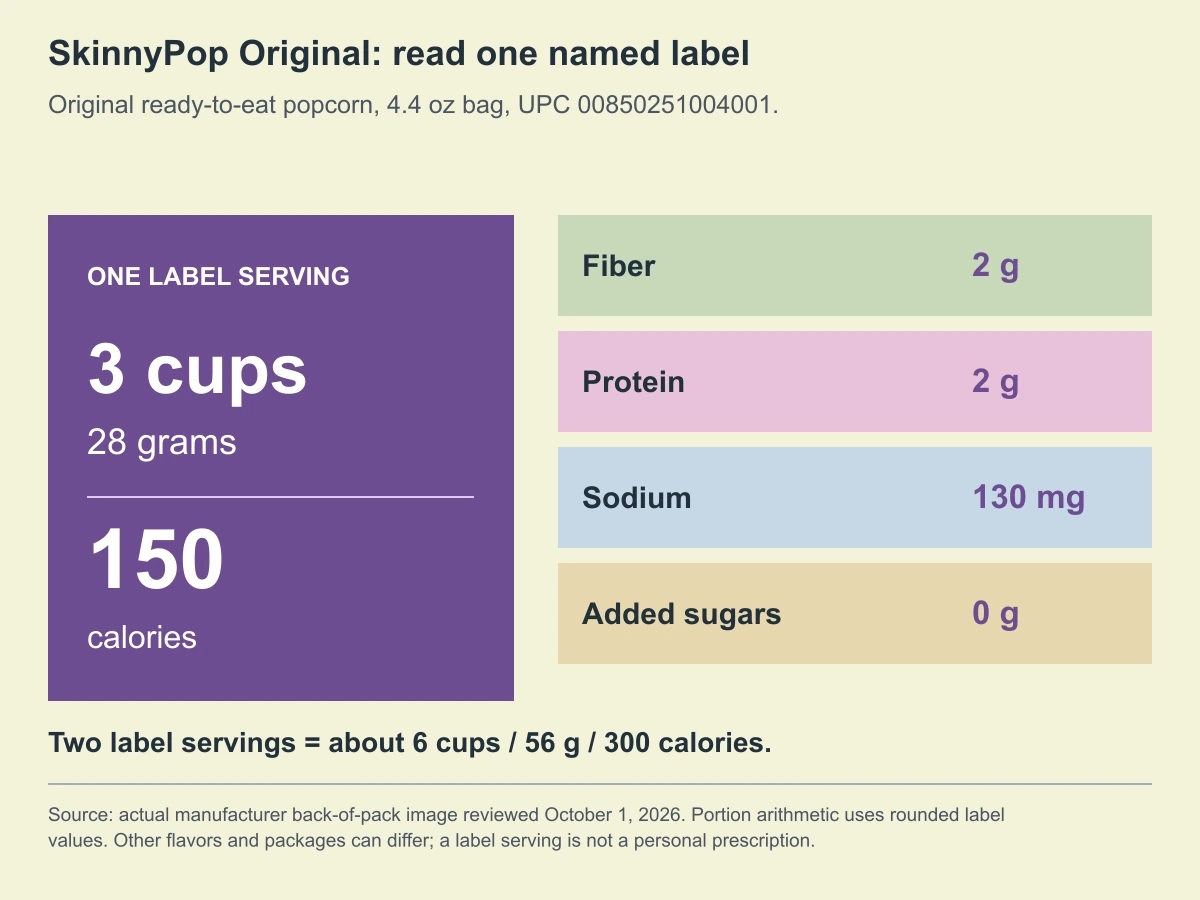
SkinnyPop Original can fit into a balanced eating pattern, but the brand name does not prove that a snack causes weight loss. The useful questions are which product you have, how much you eat, what its label provides, and whether it fits your overall meals and health needs. The Original 4.4-ounce bag reviewed here lists 150 calories per three-cup, 28-gram serving, rather than per entire bag.
A short ingredient list can make a product easier to understand. It does not replace checking serving size, sodium, fiber, protein, or how a snack fits your day. “Healthy” is a broader question than whether the front of the package sounds light.
What the actual Original label says
We reviewed the manufacturer’s SkinnyPop Original 4.4-ounce product page and its actual back-of-pack image. The following values apply to that named package, identified by UPC 00850251004001. Other flavors, single-serving bags, microwave popcorn, and package sizes need their own labels.
| Label item | Amount per three cups, 28 grams |
|---|---|
| Calories | 150 |
| Total fat | 10 grams |
| Saturated fat | 1 gram |
| Sodium | 130 milligrams |
| Total carbohydrate | 15 grams |
| Dietary fiber | 2 grams |
| Total sugars | 0 grams |
| Added sugars | 0 grams |
| Protein | 2 grams |
The listed ingredients are popcorn, sunflower oil, and salt. The package describes high-oleic sunflower oil and carries whole-grain and other product claims. Those statements identify aspects of this product; they are not evidence that eating it produces weight reduction.
The label is a better starting point than a generic calorie number for popcorn. Plain air-popped popcorn, a ready-to-eat product containing oil, and a sweetened or cheese-flavored recipe are not identical foods. Keep the actual preparation in the comparison.
Is three cups the amount you should eat?
A Nutrition Facts serving is a reference amount used to describe the product, not a personal portion prescription. FDA’s label-reading guide explains that serving sizes reflect amounts typically eaten and that the nutrient values refer to that serving.
The reviewed bag contains about 4.5 servings. Two label servings would provide about six cups, 56 grams, and 300 calories. Using the rounded serving count, the whole bag would be approximately 675 calories. That is simple label arithmetic, not an exact laboratory measurement of every bag or a recommendation to eat the bag.
The practical question is how much you actually take from the package. Eating directly from a large bag can make that amount harder to notice. Pouring a portion into a bowl may help you see the quantity, without requiring a rigid food rule or treating the snack as something to feel guilty about.
Use grams when comparing foods whose cups or pieces differ. Three cups of a light, airy snack and three cups of another food do not necessarily weigh the same or supply similar nutrients. A volume comparison alone can make foods seem equivalent when they are not.
Can SkinnyPop help with weight loss?
No named snack guarantees weight loss. A food may fit an eating pattern that supports your goals, but the effect depends on the rest of the diet, activity, health, and longer-term habits. The reviewed label does not establish a clinical weight-loss benefit.
NIDDK’s guide to successful weight-management programs emphasizes a healthy eating plan, appropriate physical activity, support, and maintenance strategies. It also recommends adapting a plan to personal needs and preferences. A daily snack can be part of that plan; it does not replace the plan.
Consider what the popcorn is doing in your routine. Is it a snack you enjoy between meals? Is it replacing a meal because you are too busy or have very little appetite? Are you repeatedly eating more because the rest of the day leaves you hungry? Those are more useful questions than deciding that the word “skinny” makes the amount irrelevant.
Our food noise and hunger guide explains differences between hunger, cravings, and persistent food thoughts. If strict snack rules make you preoccupied with food, discuss a more sustainable approach with a qualified dietitian or clinician.
What does it provide, and what does it not provide?
The named Original serving provides two grams each of fiber and protein. That can contribute to the day, but it does not make the snack a complete meal or a concentrated protein food. Zero added sugar also does not mean the product is calorie-free, carbohydrate-free, or automatically suitable in any quantity.
For a more substantial snack, you might pair a portion with a food that supplies protein or other nutrients you need: plain yogurt, a suitable cheese portion, an egg, or another option that fits your preferences and dietary needs. Fruit can add variety. These are meal-building ideas, not a requirement to add every item or a fixed calorie target.
If you want dinner, build dinner rather than asking one popcorn serving to do the whole job. The balanced meal guide explains how to combine protein foods, vegetables or fruit, and carbohydrate foods. It includes flexible options for people who do not want a complicated meal plan.
The Fairlife protein-shake guide offers a label-based comparison for another convenient food. A protein drink and popcorn have different roles; neither product name establishes a complete meal by itself.
How should you think about sodium and fat?
The reviewed serving lists 130 milligrams of sodium, ten grams of total fat, and one gram of saturated fat. The amount you eat changes the contribution. Two servings double the listed amounts, while another flavor can have a different panel.
FDA’s label guidance recommends using the panel and percent Daily Value to compare nutrients across foods. The 2,000-calorie reference used for general labeling is not a personal energy prescription; individual needs vary.
A low added-sugar number cannot answer a sodium-related question. Likewise, total fat and saturated fat are different lines on the label. If a clinician has recommended a specific dietary restriction, use that advice and the actual product panel rather than treating one favorable number as a complete health score.
For diabetes, carbohydrate content and portion size remain relevant even without added sugar. NIDDK’s diabetes nutrition guidance explains how food amount and timing fit an individualized meal plan. Popcorn is not a glucose-lowering treatment, and the label cannot predict your individual glucose response.
Are all SkinnyPop products nutritionally the same?
No. This article’s numbers refer to Original ready-to-eat popcorn in the specified 4.4-ounce package. Do not transfer them to every flavor, bag, microwave product, or future formula.
Before comparing another package, check:
- Its full product name and preparation type.
- The serving amount in grams as well as cups or pieces.
- The number of servings per container.
- Calories, sodium, saturated fat, fiber, protein, and added sugars.
- Ingredients and allergy statements.
A small bag may contain a different quantity from one serving of the larger package. A cup amount on one product also may not match the weight of the same number of cups from another. Read the package rather than guessing from how similar it looks.
This approach works for other convenient foods. Our protein breakfast guide shows why a useful meal comparison considers the food combination and your day, rather than one isolated ingredient or calorie headline.
Gluten, dairy, nuts, and allergy questions
The reviewed Original package carries gluten-free, vegan, peanut-free, nut-free, and made-without-dairy statements. Those are specific claims on the product we inspected. If you have an allergy or celiac disease, review the actual current package and the manufacturer’s information for the product you plan to eat.
Do not assume that every flavored product or popcorn brand carries the same declarations. A flavoring, production arrangement, or reformulation can change what needs checking. A simplified article cannot replace the package and any guidance your allergy clinician has provided.
Popcorn also has a choking concern for young children. The reviewed manufacturer package warns against giving it to children under four. This adult nutrition article does not establish suitability for a child’s snack or feeding situation.
What if you are taking semaglutide or tirzepatide?
Appetite changes may make it easier to eat less, but meals still need adequate nourishment. If popcorn becomes most of a meal because you are too full for other foods, discuss that pattern with the care team. Low appetite is a reason to plan manageable meals, rather than assume any intake is sufficient.
The semaglutide protein and muscle guide and tirzepatide protein and muscle guide explain why strength, function, and nutrition deserve attention during weight changes. A snack with two grams of protein is not interchangeable with a meal’s protein component.
If you are nauseated, very bloated, or constipated, choose food and portion changes with your symptoms in mind and seek advice when symptoms persist. Our GLP-1 constipation guide and tirzepatide nausea and reflux guide cover those separate problems. A whole-grain label does not establish that popcorn is comfortable for every symptomatic person.
Supplements have different roles from food. Green Scene is a greens powder; it is not proof of a complete meal or a replacement for varied foods. Full House is a fiber-focused supplement, whose actual fiber amount, water instructions, and medication timing require their own review. Neither is needed merely because you enjoy popcorn.

A practical way to decide whether it fits
Start with your goal for the eating occasion. If you want a convenient crunchy snack, the named Original product may be an option you enjoy. If you need a full meal or more protein, use a different combination rather than forcing the snack to meet every need.
Read the actual label and notice your portion. Consider hunger, satisfaction, dietary restrictions, and how you feel afterward. Look at the overall day without turning one food into a test of success or failure.
If weight management remains difficult, a broader clinical assessment may help. CoreAge Rx’s semaglutide information describes one treatment-assessment starting point. A medicine decision requires medical review and follow-up; eating a particular snack does not establish whether treatment is needed or appropriate.
Frequently asked questions
Is SkinnyPop low calorie?
The reviewed Original serving contains 150 calories per three cups, 28 grams. Whether that fits your needs depends on the amount eaten and the rest of your diet. It is not 150 calories for the entire reviewed bag.
Does it have added sugar?
The named Original label lists zero grams of added sugars. Other recipes need their own panels, and zero added sugar does not mean zero carbohydrate or calories.
Is it a good source of protein?
The reviewed serving lists two grams. If you need a substantial protein component, consider other foods or a balanced combination rather than relying on popcorn alone.
Can I eat it every day?
A food can be included regularly when it fits a varied eating pattern, preferences, and health needs. No frequency by itself guarantees weight loss or establishes a personal portion.
Is a whole bag only one serving?
The reviewed 4.4-ounce Original bag lists about 4.5 servings. Check your actual package, since sizes and formats differ.
Is air-popped popcorn the same as this product?
No. The reviewed product contains sunflower oil and salt. A plain air-popped recipe or another prepared popcorn needs its own ingredient and portion comparison.
Educational information for adults; individual treatment decisions require a qualified clinician. Sources reviewed October 1, 2026. Original AI-generated article images depict fictional people and objects, not patient outcomes. Other editorial images are illustrative. Graphics summarize the cited sources.