Cornflakes can fit into an evening eating plan for weight management, but eating them at night does not give them a special weight-loss effect. The useful questions are how much you serve, what you add, whether the bowl meets your needs, and how it fits with the rest of the day.
The clock is only part of the picture
A bowl at 8 p.m. is not automatically a problem, and the same bowl at breakfast is not automatically ideal. Work hours, bedtime, hunger, medicines, and the meals you have already eaten all affect the decision. Look at the pattern rather than declaring one food forbidden after a particular hour.
NIDDK’s adult healthy-eating guidance emphasizes food choices, portions, overall energy intake, and habits that can be maintained. It does not identify an evening cornflake rule that overrides those factors. For someone who missed dinner, a planned meal is a different situation from repeatedly topping up a bowl while watching television after an adequate dinner.
Our meal-timing and skipping-dinner guide explains why a research eating window should not become a universal instruction to ignore hunger. You can review timing without treating hunger as a failure.
Read the label on the cereal you actually buy
If you mean kernels or corn on the cob rather than cereal, see our guide to sweet corn at night for portions, preparation and the whole-meal context.
“Cornflakes” is a category, not a single nutrition label. Different products can vary in serving size, added sugar, sodium, fortification, and ingredients. A plain-looking flake is not proof of zero added sugar or a high-fiber recipe.
Start with the serving amount in grams and the household measure. Then compare calories, dietary fiber, protein, added sugars, and sodium. Check whether the ingredient list identifies a whole grain. Do not assume that “made with corn,” a brown color, or added vitamins makes a product whole grain.
The FDA Nutrition Facts guide explains that a labeled serving reflects a usual amount consumed, rather than a personal recommendation. It also explains that the listed nutrients normally refer to that stated serving. If your bowl contains twice that amount, the cereal contributes twice the listed amounts before milk or toppings.
Measure once to learn what your bowl holds
A familiar bowl can be much larger than a package serving. Try measuring an ordinary pour once, without changing it first, so the comparison reflects what you actually eat. You can use that information to choose a portion deliberately instead of guessing from the size of the bowl.
This is a learning exercise, not a requirement to weigh every meal indefinitely. If detailed tracking becomes stressful or feeds restrictive eating, a dietitian can help use a less numerical approach. The goal is a satisfying pattern, not the smallest possible bowl.
For a hypothetical example, a cereal label might describe 40 grams while your usual pour weighs 60 grams. That is one and a half labeled servings. This example demonstrates label arithmetic; it is not a verified serving or calorie value for every cornflake brand.
Count the whole bowl, including additions
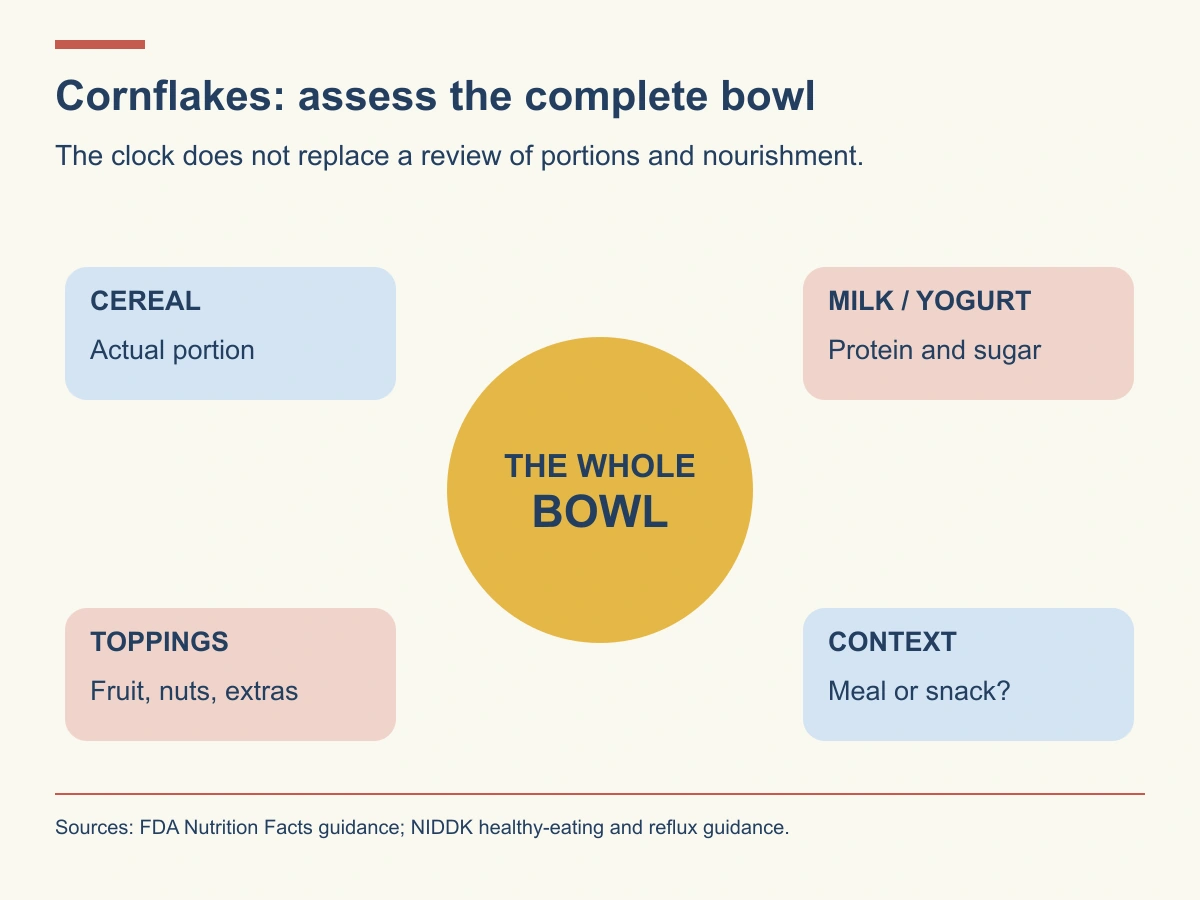
Milk, yogurt, nuts, seeds, fruit, honey, and sugar change the meal. Some additions contribute useful protein, fiber, or other nutrients, but their contribution still belongs in the overall portion. A cereal-only label cannot describe a fully assembled bowl.
Compare milk or plant-based drinks by their actual labels. Protein and fortification vary, and an unsweetened product may differ substantially from a sweetened version. A dairy-free label does not establish that the drink provides the same nutrients as milk.
| Part of the bowl | Useful question | Practical adjustment |
|---|---|---|
| Cornflakes | How many labeled servings did I pour? | Learn your usual amount before changing it. |
| Milk or yogurt | What protein and added sugar does this provide? | Compare products that suit your preferences and needs. |
| Fruit | Is it whole fruit or a sweetened topping? | Add a portion of fruit you enjoy. |
| Nuts or seeds | How much am I adding? | Use a deliberate amount rather than repeated handfuls. |
| Honey, sugar, or syrup | Is this an addition I want and have counted? | Taste the bowl before automatically adding more. |
Our yogurt and weight-management guide gives more detail on protein and label differences. For a simple fruit option, see mandarins and portion questions.
Is cereal replacing dinner or supplementing it?
If cereal is dinner, ask whether it provides enough variety and nourishment across the day. A small bowl of flakes with very little milk may leave you hungry again quickly. A fuller combination with a suitable protein source and fruit can meet a different need.
If you already ate dinner, consider whether you want a snack, are physically hungry, or are eating out of a familiar routine. None of those observations needs a moral judgment. They simply suggest different adjustments: more adequate dinner portions, a planned evening snack, or a pause before another refill.
The balanced-meals guide provides a flexible way to think about protein, plant foods, and a carbohydrate source. Cornflakes can be one component; they do not have to carry the entire meal by themselves.
Three ways to make the choice more useful
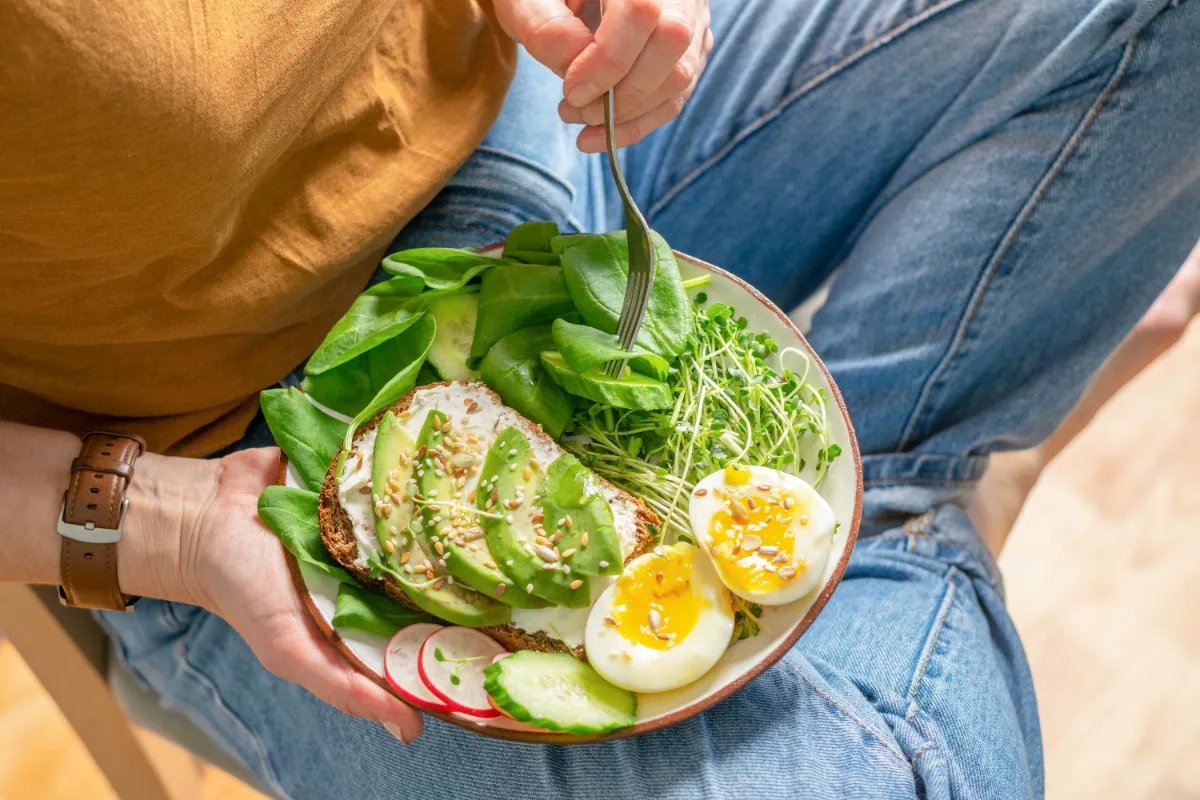
An easy evening meal: Combine a measured cereal portion with plain yogurt or a suitable milk, plus fruit. If that combination still leaves you hungry, review the rest of the meal rather than deciding you should tolerate hunger until morning.
A smaller planned snack: Serve the amount you want in a bowl and put the package away. Sit down to eat it. This makes it easier to notice satisfaction than eating directly from a large box while distracted.
A change for more fiber: Compare a higher-fiber whole-grain cereal with your usual flakes, or mix a portion into the bowl if you enjoy it. Make changes gradually if a sudden fiber increase causes discomfort. The exact choice should fit your digestion, preferences, and available foods.
These are meal ideas rather than prescriptions. Someone with a food allergy, kidney-related dietary restrictions, celiac disease, or another condition may need different ingredients. Check the package and follow individualized advice.
What if you have diabetes?
Cornflakes contribute carbohydrate, and the rest of the bowl can add more. A “plain” cereal is not necessarily carbohydrate-free or automatically suitable in unlimited amounts. Use your established meal and monitoring plan, including any instructions for insulin or other glucose-lowering medicines.
Skipping dinner or replacing it with much less food can matter if your medicine plan assumed a different intake. NIDDK identifies missed meals, inadequate carbohydrate, and fasting as possible contributors to low blood glucose, especially with insulin or medicines that stimulate insulin release. NIDDK hypoglycemia guidance.
Do not change medicine doses to make an online cereal plan fit. Ask the diabetes team how evening meals and snacks should work for your circumstances. If low glucose occurs, follow the treatment plan you were given; preserving a calorie target or fasting window is not the priority.
What if eating near bedtime causes reflux?
Timing becomes more relevant when lying down after eating triggers symptoms. NIDDK says people with nighttime or lying-down reflux symptoms may improve by finishing meals at least three hours before lying down or going to bed. Individual food triggers also differ. NIDDK reflux nutrition guidance.
That does not mean cornflakes cause reflux for everyone. The amount eaten, milk choice, other foods, and how soon you recline may all be useful to discuss. A small snack and a large late dinner are different situations.
If symptoms recur, do not keep narrowing your diet without assessment. Our Ozempic reflux guide addresses the related question for people using that medicine. Chest pain, trouble swallowing, or other concerning symptoms should not be dismissed as ordinary cereal-related heartburn.
Cornflakes while using a GLP-1 medicine
Reduced appetite can make a convenient cereal bowl appealing. The aim is still adequate nutrition and a routine you tolerate. Repeatedly using a very small bowl to replace most meals may leave important needs unmet, even when weight is changing.
Our food guide for GLP-1 treatment and semaglutide protein guide offer broader meal-planning questions. Persistent vomiting, difficulty drinking, or inability to eat enough requires contact with the care team rather than another restrictive meal rule.
If you are exploring CoreAge Rx semaglutide care, discuss eating patterns during the assessment. The service concerns clinician-assessed compounded treatment; choosing cornflakes at night neither establishes medication eligibility nor makes a prescription necessary.

A practical one-week review
Choose one change you can evaluate: measuring your usual portion once, adding a protein source, planning dinner earlier, or reducing distracted refills. Avoid changing every part of the day at once, because you will have less sense of what helped.
Notice whether you feel comfortably satisfied, sleep well, tolerate the meal, and have enough energy the next day. If you track weight, interpret a longer pattern rather than attributing tomorrow’s number to tonight’s bowl. A single weigh-in cannot isolate the effect of one food.
The meal-prep guide can help if cereal has become the default because evenings are rushed. Keeping an easy alternative available expands your choices without making cereal off-limits.
Common questions
Will cornflakes make me gain weight because I eat them at night?
The time alone cannot determine that. Review the total eating pattern, portions, additions, and whether the evening routine supports your needs.
Are cornflakes with milk enough for dinner?
That depends on the amount, the milk, the rest of the day, and your individual needs. Consider protein, fruit or other plant foods, and whether you remain satisfied. There is no universal dinner-sized bowl.
Should I remove the milk to reduce calories?
That also removes whatever protein and nutrients the milk contributed. Compare the whole meal and your needs rather than assuming the lowest-calorie version is always the best choice.
Are all cornflakes gluten-free?
Do not assume so from the word “corn.” Check the exact ingredients and gluten-free labeling, particularly if you have celiac disease. Flavorings and processing arrangements differ among products.
Educational information for adults; individual treatment decisions require a qualified clinician. Sources reviewed October 5, 2026. Original AI-generated article images depict fictional people and objects, not patient outcomes. Other editorial images are illustrative. Graphics summarize the cited sources.