Pasta can be part of a healthy eating pattern, including a plan for weight management. The type, amount, sauce, and other foods in the meal matter more than treating all pasta as either a health food or a food to avoid. A bowl with vegetables and a suitable protein source serves a different purpose from a much larger portion of pasta and rich sauce alone.
You do not need to replace every familiar pasta with a specialty product. Start by understanding the label and building a meal that is enjoyable, adequate, and comfortable. Whole-grain or legume-based options may help meet particular goals, but the package should support the comparison.
What does pasta contribute to a meal?
Many pasta products mainly contribute carbohydrate. Depending on the ingredients, they may also provide protein, fiber, or nutrients added through enrichment. The word “pasta” includes products made from wheat, whole grains, beans, lentils, rice, corn, eggs, and combinations of ingredients.
Those differences matter for nutrition, texture, allergies, and cooking. A product that works for one person may be unsuitable for another. The front of the package can help identify the type, but the ingredient list and Nutrition Facts show what the actual serving provides.
Our balanced-meal guide explains how to combine components. Pasta can be the carbohydrate component while other ingredients help supply protein, vegetables, flavor, and variety.
Is whole-wheat pasta healthier than regular pasta?
Whole-wheat pasta is an option when you want a whole-grain product and potentially more fiber. Compare the ingredient list and fiber amount rather than assuming that a brown color or a phrase such as “made with grains” settles the question.
Regular wheat pasta can also fit into a balanced meal. If you prefer its texture, you can add beans, vegetables, or another suitable component and improve the complete dish. Replacing a familiar food with a product you strongly dislike is not the only available change.
The current U.S. dietary guidance emphasizes an overall pattern that includes nutrient-dense foods and whole grains. That provides context for the choice; it does not create a rule that one meal containing refined-grain pasta is a failure.
If a higher-fiber pasta causes discomfort, try a manageable amount and review other changes in the meal. Increasing fiber sharply while also adding a large portion of beans can make it difficult to identify which change is affecting tolerance.
Are chickpea or lentil pastas better?
They may provide more protein or fiber than some wheat products, but exact values vary. A product made mainly from legumes differs from one with a small amount of legume flour in a blend. Compare equal serving weights before deciding.
| Pasta choice | Possible reason to choose it | What to verify |
|---|---|---|
| Regular wheat pasta | Familiar taste, texture, and availability | Serving amount, enrichment, and the complete meal |
| Whole-wheat pasta | Whole-grain preference or more fiber | Ingredient wording and actual fiber grams |
| Legume-based pasta | A different protein or fiber contribution | Main ingredients, serving grams, tolerance, and allergens |
| Gluten-free pasta | A diagnosed need to avoid gluten or a preference | Gluten-free suitability, cross-contact guidance, fiber, and protein |
| Fresh or filled pasta | Convenience or a particular dish | Filling, sauce, serving amount, and storage instructions |
This comparison describes questions to ask. It does not assign a fixed nutrient value to every product in a category. Nor does a “high-protein” phrase mean that the full meal automatically meets your individual protein needs.
Why do dry and cooked portion sizes cause confusion?
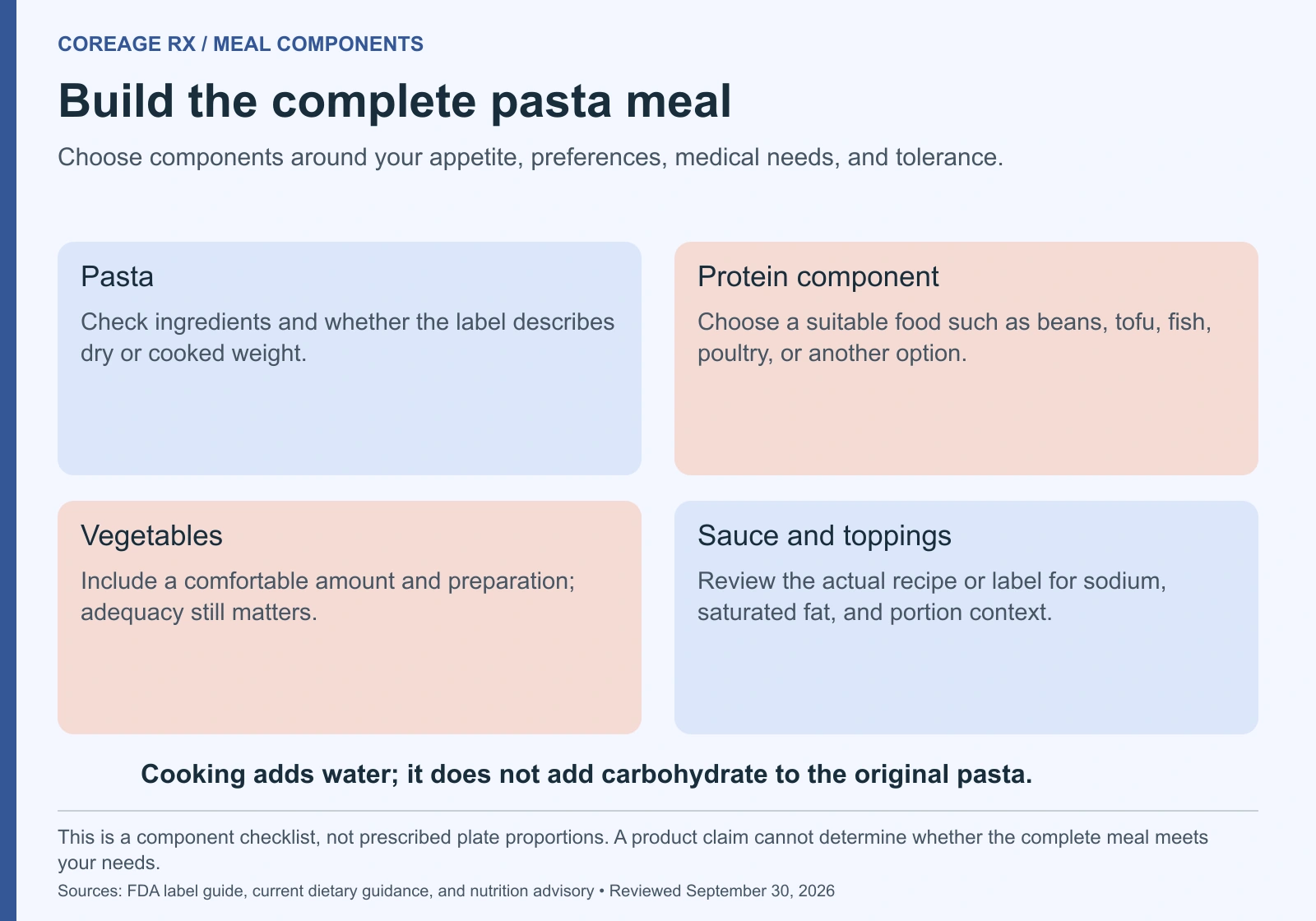
Dry pasta absorbs water during cooking. Its weight and volume increase, but the added water does not create more carbohydrate or calories in the original amount. A dry-weight label cannot be compared directly with an equal weight of cooked pasta.
Check whether the Nutrition Facts describe dry, prepared, or another specific form. A serving measured before cooking can become a larger-looking amount afterward. Different shapes and cooking methods affect volume, so “one cup of pasta” is not a precise universal conversion from a dry label.
The FDA’s label guide explains that nutrient amounts apply to the listed serving. If you use two listed servings of dry pasta in a recipe, the starting pasta contribution is approximately twice the label amounts, before sauce and other additions. Divide a shared recipe according to the amount actually eaten rather than assuming the entire pot is one serving.
You do not need to weigh every meal forever. Checking the label and your usual preparation a few times can make the portion easier to understand and help you choose a practical routine.
Is pasta good or bad for weight loss?
Pasta is not inherently a weight-loss treatment or a reason weight loss cannot happen. The full eating pattern, portions, preparation, and ability to maintain adequate nutrition matter.
A 2023 review of pasta and body-weight evidence found that observational studies generally reported no association or an inverse association between pasta intake and weight-related measures. One clinical trial in the review reported no difference in weight loss between higher- and lower-pasta approaches within a calorie-restricted diet.
That does not prove that pasta itself causes weight loss. People who eat pasta may differ in other ways, and a complete dietary intervention cannot isolate every effect of one food. The review was funded by the National Pasta Association, a relevant consideration when assessing its conclusions. Its findings are useful context for avoiding a blanket food ban, not a promise about your next bowl of pasta.
Our food-noise and cravings article discusses appetite experiences without reducing them to one food. If a plan leaves you continually hungry or preoccupied with food, consider whether the overall approach needs adjustment.

How do sauces and toppings change the meal?
The sauce may contribute protein, vegetables, sodium, fat, or added sugars depending on the recipe. A tomato-based sauce is not automatically low in sodium, and a cream-based sauce is not automatically incompatible with every eating plan. The amount and ingredients determine the comparison.
Use the jar or recipe information when a specific nutrient matters. Also consider cheese, butter, oil, processed meat, and restaurant additions. A small change in the pasta itself may have less impact on the dish than a large change in sauce or toppings.
If you enjoy cheese, choose the role it plays: a flavor topping, a sauce ingredient, or a larger component. Our cheese-craving guide and cream-cheese nutrition article provide context for those choices without requiring you to remove them.
How can you build a more complete pasta meal?
Choose a preparation you can actually make and enjoy. A useful sequence is to identify the pasta, add a suitable protein component, include vegetables if comfortable, and choose a sauce that fits the dish and your needs.
Examples include:
- Wheat pasta with lentils, tomato sauce, and cooked spinach.
- Whole-wheat pasta with chicken or tofu and roasted vegetables.
- A legume-based pasta with vegetables and a sauce you tolerate.
- A pasta salad with beans or another suitable protein, varied produce, and an amount of dressing you enjoy.
These are flexible ideas, not prescribed portions. Kidney conditions, allergies, digestive disorders, and diabetes may require a different approach. If appetite is low, a very large vegetable portion is not always the most useful way to build a meal; adequate intake still matters.
A review of dietary energy density explains how adding water-rich foods can change the energy density of meals. That principle is one tool among several. It should not be used to encourage eating so much low-energy food that protein or other needed nutrients become difficult to obtain.
Can people with diabetes eat pasta?
Many people can include pasta within an individualized diabetes plan. Carbohydrate amount, meal composition, medicines, and personal glucose response matter. A lower glycemic response discussed in research does not mean unlimited portions or that every pasta product affects everyone identically.
Use the total carbohydrate on the correct label and the amount eaten. Follow your team’s advice about monitoring and medication. If you are learning how a meal fits, a consistent portion and preparation can be more informative than changing the pasta, sauce, and serving size at the same time.
Do not reduce or add diabetes medicine on your own to accommodate an online pasta recommendation. The food discussion should support the treatment plan, especially if your medicines can cause low blood sugar.
What about gluten-free pasta?
For someone with celiac disease or another diagnosed reason to avoid gluten, suitability is the first question. A pasta made without wheat is not automatically suitable if preparation or cross-contact makes it unsafe for the person’s condition.
For someone without that need, “gluten-free” is not by itself a claim of greater nutritional quality. Rice- or corn-based products can have different fiber and protein amounts from whole-wheat or legume products. Read the actual panel and choose around your own priorities.

Can you eat pasta on semaglutide or tirzepatide?
There is no universal GLP-1 rule banning pasta. Appetite, fullness, nausea, reflux, and tolerance can change during treatment. A manageable portion with suitable additions may be more comfortable than a large rich meal.
The joint GLP-1 nutrition advisory emphasizes nutritional assessment, adequate intake, and attention to physical function. If smaller meals become the norm, the food that remains should still provide useful nutrition. Persistent vomiting or inability to eat enough needs advice, rather than increasingly restrictive food lists.
Our GLP-1 eating guide, semaglutide protein guide, and tirzepatide protein guide explain related questions. CoreAge Rx’s tirzepatide service page describes its program; confirm the exact product and care plan when discussing treatment.
Frequently asked questions
Is pasta fattening at night?
The time of day alone does not establish that a pasta meal causes weight gain. Consider the amount, the complete day’s intake, how late eating affects your comfort, and whether the schedule fits your routine.
Is cold pasta automatically a better choice?
Preparation can change starch characteristics, but that does not establish a universal calorie discount or a guaranteed weight-loss benefit. Choose a preparation you enjoy and store it safely rather than relying on a social-media conversion rule.
Is protein pasta enough protein for the whole meal?
Check the actual serving and your individual plan. A package claim cannot determine adequacy without the amount eaten and the rest of the meal.
What is the easiest useful change?
Understand whether the label describes dry or cooked pasta, then review the complete dish. A suitable protein component, vegetables you tolerate, and a comfortable portion can make the meal more useful without removing a food you enjoy.
Educational information for adults; individual treatment decisions require a qualified clinician. Sources reviewed September 30, 2026. Original AI-generated article images depict fictional people and objects, not patient outcomes. Other editorial images are illustrative. Graphics summarize the cited sources.