Tirzepatide and metformin can both be part of type 2 diabetes care, but they are different medicines with different treatment roles. Tirzepatide also has an approved weight-management product, Zepbound. Metformin is not FDA-approved as a weight-loss medicine. Some people take both under a clinician’s supervision; they are not interchangeable doses or automatic substitutes.
The useful comparison starts with your goal: improving glucose levels, treating obesity, addressing another health risk, or making an existing plan easier to tolerate and afford. A large weight-loss number from one study cannot answer all of those questions.
What each medicine does
Metformin reduces glucose production by the liver and improves the body’s response to insulin. It is an oral medicine; the exact tablet or other preparation determines the instructions. Its FDA-approved role is improving glucose control in type 2 diabetes alongside diet and exercise. Metformin prescribing information
Tirzepatide activates receptors for two gut-hormone pathways, GIP and GLP-1. Its effects include glucose-dependent insulin release and delayed stomach emptying. The brand and indication matter. Mounjaro is approved for type 2 diabetes; its current U.S. label also includes reducing major cardiovascular events in adults with type 2 diabetes at high risk for those events. Zepbound is approved for long-term weight management in eligible adults and for moderate to severe obstructive sleep apnea in adults with obesity. Both are weekly injections. Mounjaro label, Zepbound label
These distinctions explain why two people with similar weights might receive different recommendations. One may need better glucose control on existing treatment. Another may be considering obesity treatment without diabetes. A third may have a medical history that changes which medicine is suitable.
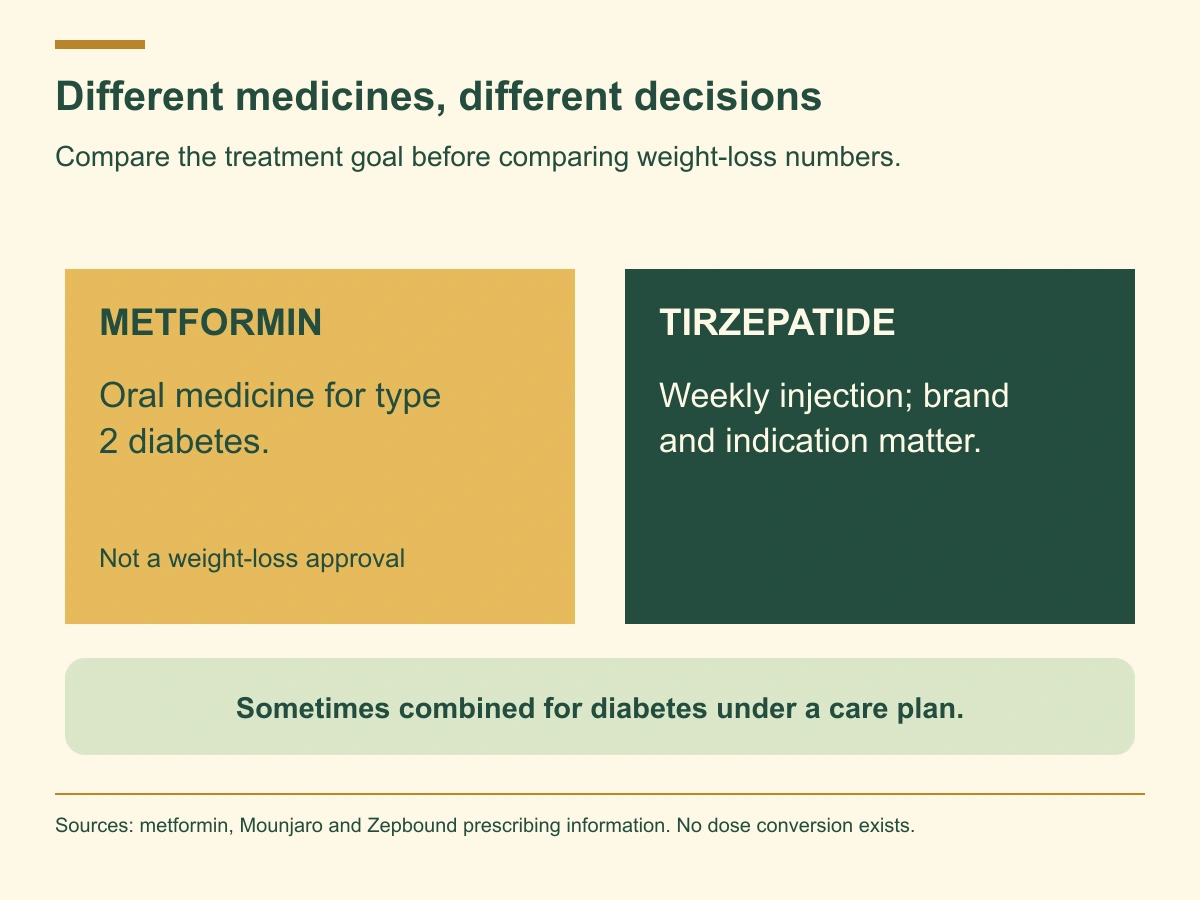
Tirzepatide versus metformin at a glance
| Question | Metformin | Tirzepatide |
|---|---|---|
| How is it taken? | By mouth, following the exact formulation’s directions | A weekly injection using the prescribed presentation |
| Is it approved for weight management? | No; some uses outside type 2 diabetes are off-label | Zepbound has an adult weight-management indication |
| Can it be used in diabetes care? | Yes, for type 2 diabetes | Yes, under the Mounjaro label |
| What often needs discussion? | Digestive tolerance, kidney function, vitamin B12, other medicines | Digestive tolerance, hydration, glucose medicines, device training, contraindications |
| Can the two be combined? | Sometimes, with a coordinated prescription and monitoring plan | Mounjaro has been studied as an addition to metformin |
| Can doses be converted? | There is no metformin-to-tirzepatide dose conversion | Milligrams do not represent equivalent effects across these drugs |
The table describes categories, not an individual recommendation. A medicine can be useful even when the scale changes little, and a medicine associated with more weight loss may still be inappropriate for a particular person.
Which produces more weight loss?
Tirzepatide has a substantial clinical-trial program specifically evaluating weight reduction, whereas metformin’s principal role is diabetes treatment. However, comparing a tirzepatide obesity trial with a metformin diabetes-prevention study does not produce a clean head-to-head result. Starting weight, diabetes status, treatment duration, other medicines, and the support provided can all differ.
For a meaningful discussion, ask which study is being cited and whether its participants resemble you. Was the endpoint weight, A1c, diabetes prevention, or a cardiovascular event? Was the medicine added to an existing treatment? Were results measured while participants continued treatment? Those details matter more than a social-media comparison of two percentages.
The frequently discussed SURPASS-2 trial compared tirzepatide with semaglutide 1 mg in adults whose type 2 diabetes was inadequately controlled on metformin. Participants continued metformin. It therefore supports understanding tirzepatide as an add-on treatment in that setting; it was not a trial of tirzepatide versus metformin alone. Mounjaro clinical studies, section 14.3
Our metformin and weight-loss guide covers the expectations around metformin in more detail. Avoid treating a modest or absent weight change as proof that a diabetes medicine has failed if glucose control or another agreed outcome has improved.
Can you take tirzepatide and metformin together?
Yes, clinicians sometimes prescribe the combination for type 2 diabetes. Using different mechanisms can be appropriate when one treatment does not provide adequate control. The fact that the combination has been studied does not mean everyone benefits from adding a second medicine or should keep both indefinitely.
Before adding tirzepatide, the prescriber should know the metformin formulation, prescribed schedule, actual use, side effects, kidney history, glucose results, and other medicines. Include insulin, sulfonylureas such as glipizide, and supplements. A medication list that says only “diabetes pill” leaves too much uncertainty.
A practical follow-up plan should identify what is being evaluated: glucose readings, A1c, weight trend when relevant, symptoms, hydration, and the ability to eat adequately. Ask when the next review will happen and who will respond if problems appear between visits. Changes made by different clinicians should be shared so the plan stays consistent.
There is no universal rule to separate metformin and a weekly injection by a particular number of hours. Follow the instructions for each actual product and ask the pharmacist to check the complete regimen. Do not add an extra dose of either medicine because appetite or glucose seems different on one day.

Digestive symptoms can complicate the comparison
Both treatments can cause gastrointestinal symptoms. Starting a new medicine while changing meals, supplements, and another prescription can make the cause of nausea or diarrhea difficult to identify. Record when symptoms began, what changed, whether they follow meals, and whether they are improving or interfering with normal intake.
Metformin’s formulation and administration instructions deserve review when digestive symptoms occur. Tirzepatide’s initiation and escalation plan also requires attention to tolerability. Those are clinician-led decisions; persistent symptoms are not a reason to improvise a new dose or convert a weekly injection into an occasional one.
The Mounjaro side-effects guide explains common symptoms and warning signs. Seek prompt medical advice for persistent vomiting, inability to keep fluids down, markedly reduced urination, or severe ongoing abdominal pain. Difficulty breathing, collapse, or a serious allergic reaction requires emergency care. These symptoms should not be dismissed as the expected price of weight loss.
Kidney function, vitamin B12, and low glucose
Metformin requires a kidney-function assessment before treatment and monitoring afterward. Its label includes a warning about lactic acidosis, with risk affected by circumstances such as significant kidney impairment, some illnesses, excessive alcohol intake, certain medicines, and selected procedures. Tell the care team about planned imaging with contrast or surgery so they can give an individualized medication plan. Metformin safety information
Metformin can also reduce vitamin B12 levels. New persistent tingling, numbness, unusual fatigue, or anemia warrants assessment rather than automatically adding an injection or supplement. Ask whether B12 testing is appropriate. The need to correct a deficiency is a separate question from adding vitamins to another prescription.
Tirzepatide-related nausea, vomiting, or diarrhea can lead to dehydration and acute kidney injury. A medicine does not need to be directly toxic to the kidneys for an illness with substantial fluid loss to become important. Get a written sick-day plan for the whole regimen instead of assuming every medicine should be continued or stopped in the same way. Mounjaro warnings
Insulin and sulfonylureas change the low-glucose discussion. Both labels address increased hypoglycemia risk with these combinations. Do not independently stop insulin or reduce a diabetes tablet when starting tirzepatide. Ask which readings need a call, what your low-glucose treatment plan is, and whether your clinician wants more frequent monitoring. The related Ozempic, metformin, and glipizide guide explains why the full combination matters, while keeping semaglutide and tirzepatide distinct.
What if you have prediabetes rather than diabetes?
Prediabetes is not the same diagnosis as type 2 diabetes. NIDDK discusses lifestyle changes and asking a clinician whether metformin could help prevent or delay type 2 diabetes in an appropriate person. That does not create an FDA-approved weight-loss indication for metformin or automatically establish eligibility for Mounjaro. NIDDK diabetes-prevention guidance
Our tirzepatide diabetes-prevention evidence review places SURMOUNT-1 alongside the Diabetes Prevention Program and explains why percentages from separate trials do not establish a head-to-head comparison.
If weight management is the main concern, the assessment should consider obesity-treatment eligibility and the relevant approved product. It should also address sleep, eating patterns, physical activity, other health conditions, and what follow-up is realistic. Treatment should have a stated purpose rather than being chosen only because a friend obtained a particular prescription.
For service information, you can review CoreAge Rx tirzepatide care. Confirm the exact product or preparation, its approval status, the prescribing clinician, and the complete cost. A service page does not establish that someone should switch from metformin or qualifies for a branded medicine.

Cost and convenience: compare the whole plan
An oral generic and a branded injection may have very different benefit rules, but a general comparison cannot determine your out-of-pocket bill. Ask for the actual prescription, quantity, pharmacy, insurance decision, and any eligible savings terms. Include appointments, laboratory work, injection supplies when needed, and renewal requirements.
Convenience also includes what happens when care is interrupted. Can you reach the clinician? Who manages refills? What is the plan if digestive symptoms make eating difficult or a pharmacy cannot fill the prescription? Our Mounjaro cost guide can help organize the financial questions.
Bring a short list of priorities to the appointment: the outcome you want, the side effects you most want to avoid, your budget, and the routines you can sustain. That helps the clinician explain why continuing, combining, or changing treatment may make sense.
Frequently asked questions
Is metformin a GLP-1 medicine?
No. It works differently. Sharing a role in type 2 diabetes care does not make the drugs members of the same class or give them matching instructions.
Should I stop metformin when tirzepatide starts working?
Not without the prescriber’s plan. Improved readings may reflect the combined treatment. Ask which medicine is contributing to which goal and how any change would be monitored.
Does taking both guarantee more weight loss?
No. Evidence from add-on diabetes trials does not guarantee an extra amount of weight loss for every person. Review the intended benefit and the tradeoffs of the combination.
Can metformin replace tirzepatide during a shortage or coverage gap?
There is no automatic substitution or equivalent dose. Contact the prescriber before a gap so they can address glucose control, weight treatment, and restart instructions together.
What should I bring to a medication review?
Bring the actual labels or an accurate medication list, recent glucose results if relevant, symptom notes, kidney or B12 results you have, and pharmacy cost information. A comparison becomes much more useful when it is connected to your treatment history.
Educational information for adults; individual treatment decisions require a qualified clinician. Sources reviewed October 6, 2026. Original AI-generated article images depict fictional people and objects, not patient outcomes. Other editorial images are illustrative. Graphics summarize the cited sources.