Ozempic is not FDA-approved as a treatment to repair peripheral nerves or relieve neuropathic pain. Its current injection indications concern type 2 diabetes and specified cardiovascular and kidney outcomes in eligible adults with type 2 diabetes. New burning, tingling, numbness, or weakness while taking it should be assessed rather than automatically attributed to the medicine or assumed to mean it is healing nerves. Ozempic prescribing information
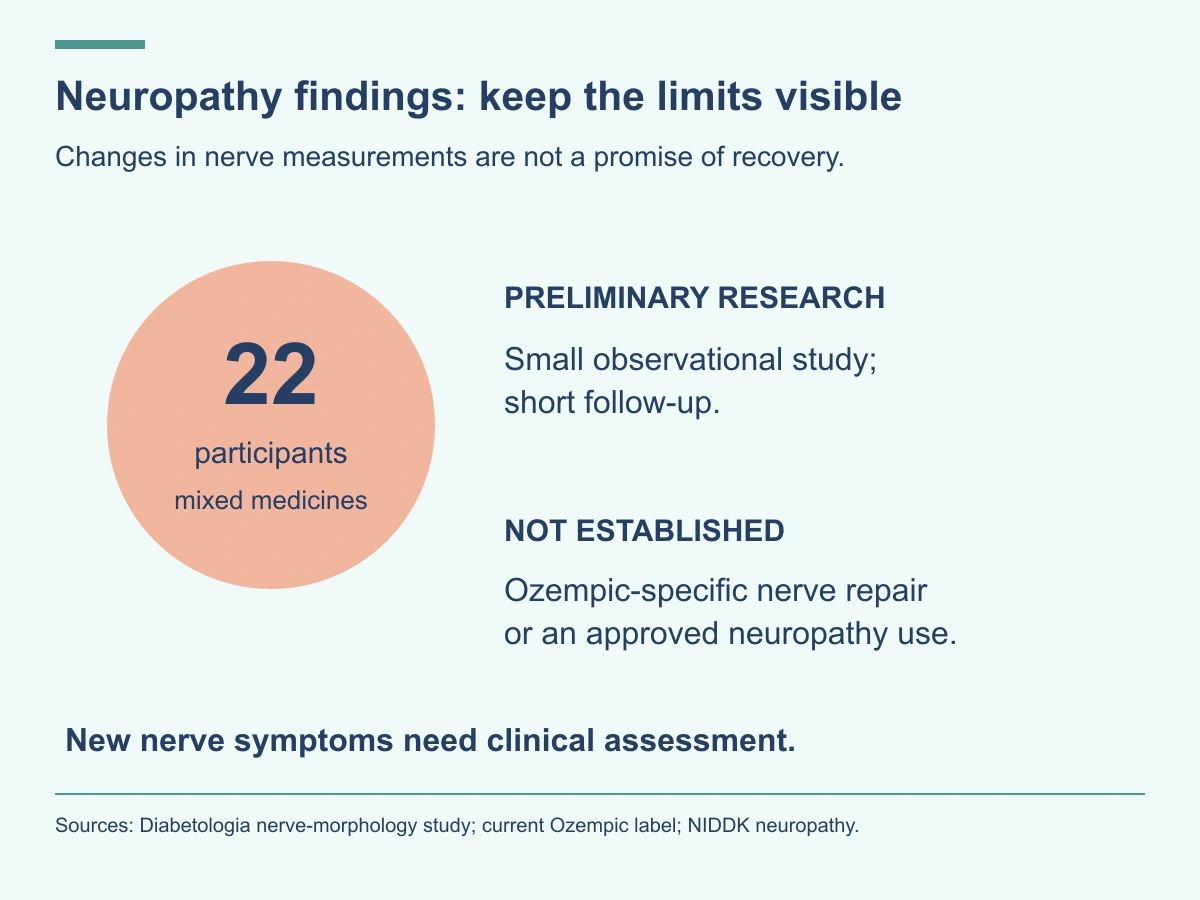
Small studies of GLP-1 receptor agonists have reported changes in nerve measurements, but they do not establish that Ozempic reverses neuropathy. The distinction between glucose management, pain treatment, and nerve recovery is central to interpreting those findings.
What peripheral neuropathy means
Peripheral neuropathy is damage to nerves outside the brain and spinal cord. NINDS peripheral neuropathy overview Diabetes-related peripheral neuropathy commonly affects the feet and legs and can also involve the hands and arms. Symptoms may include burning, tingling, numbness, pain, or weakness. Reduced sensation can also make an injury difficult to notice. NIDDK peripheral neuropathy guidance
The pattern matters. Tell the clinician which areas are affected, whether both sides are involved, when symptoms began, and whether walking, balance, sleep, or hand function has changed. “My feet feel strange” is a starting point, but a more specific description helps guide examination.
Not every sensation change is diabetic neuropathy. NIDDK describes evaluation for other causes, including thyroid problems, kidney disease, and low vitamin B12. Metformin use can be one contributor to low B12, but a person should not stop it or start an extensive supplement regimen based on that possibility alone. Testing and interpretation belong in an individual assessment.
Does Ozempic help diabetic neuropathy?
Managing diabetes is important for reducing complications, and NIDDK recommends working toward individualized glucose, blood pressure, and cholesterol goals to help keep nerve damage from worsening. That broader treatment goal does not make every diabetes medicine a proven nerve-repair treatment. NIDDK neuropathy prevention and management
Ozempic may be part of a clinician’s diabetes plan for an eligible adult. Whether it is appropriate depends on the person’s overall health, treatment goals, other medicines, and the product’s warnings. Do not increase a dose specifically to chase improvement in numbness or pain.
Pain relief is another separate outcome. A treatment can reduce discomfort without reversing nerve damage, and a change in a nerve measurement does not necessarily show meaningful recovery in daily function. Ask what outcome a proposed treatment is intended to achieve and how the team will assess it.
The Ozempic dosage guide explains product-specific dosing context. It does not provide a neuropathy dosing schedule because no such approved Ozempic indication is established in the current label.
What the small GLP-1 nerve studies actually examined
A study published in Diabetologia recruited 22 adults with type 2 diabetes who were starting semaglutide or dulaglutide as part of routine care. Researchers assessed nerve structure and other measures before treatment and after one month; 14 participants also had a three-month assessment. They reported improvements in several measurements. Nerve-morphology study
The study was small, used more than one medicine, and did not provide a randomized Ozempic-versus-placebo test of nerve repair. Follow-up was short, and participants mostly had mild neuropathy. The authors called for larger randomized studies and noted that changes in body composition and other factors needed further assessment.
A separate paper on axonal function described 14 participants prescribed semaglutide or dulaglutide, combined analytically with data from 10 participants previously treated with exenatide. It reported changes in clinical scores, nerve conduction, and measures related to nerve function. That is not a trial of 24 people all receiving Ozempic. Only the published abstract was reviewed for this article. Axonal-function study abstract
These findings justify further research. They do not establish that an individual should start Ozempic for neuropathy, stop established pain care, or expect normal sensation within a particular number of weeks. An improvement in a research measurement should not be marketed as proven nerve regeneration.
| Evidence or observation | What it can support | What it does not establish |
|---|---|---|
| Ozempic’s approved indications | Product-specific diabetes and specified risk-reduction uses | An approved neuropathy or nerve-repair indication |
| Small mixed-drug observational studies | Preliminary signals worth studying further | A definitive Ozempic-specific treatment effect |
| A person’s symptoms improving during care | A useful clinical observation | Proof of which treatment or change caused it |
| A nerve test changing over time | Information for clinical interpretation | Guaranteed pain relief or full functional recovery |
Can nerve symptoms appear after glucose improves quickly?
Treatment-induced neuropathy of diabetes, often shortened to TIND, is a recognized concern associated with rapid improvement in longstanding high blood glucose. It is a different question from whether Ozempic directly damages nerves. The history of glucose change, symptoms, and other treatment changes matters. Gibbons and Freeman TIND study
A retrospective study of people referred to a specialist diabetic neuropathy clinic examined painful or autonomic symptoms occurring after a large, rapid fall in HbA1c. The study was not an Ozempic trial, and the rates within that selected referral population should not be presented as the chance that an average Ozempic user will develop neuropathy.
If new pain or unusual symptoms develop while glucose control is changing substantially, tell the diabetes team promptly. Bring previous and current HbA1c results if available, the dates of medication changes, and the symptom timeline. Do not deliberately raise your glucose, stop treatment, or slow a prescribed plan without medical guidance.
The purpose of recognizing this possibility is to improve evaluation and coordination. It is not a reason to conclude that improving diabetes control is generally harmful or that a high reading should be left untreated.

How a clinician may evaluate new symptoms
Assessment can include a medical and medication history, neurological examination, foot examination, and tests selected for the suspected cause. NIDDK describes checks of sensation, vibration, walking, balance, and blood flow, along with blood tests when other causes need to be considered. NIDDK diagnosis guidance
Bring the exact symptom pattern and your full medicine list. Include when Ozempic began, any dose changes, changes to other diabetes medicines, nutritional difficulties, and whether symptoms existed before treatment. A timeline can prevent the newest medicine from becoming the only explanation considered.
Ask whether a symptom affects pain, sensation, strength, or balance, because those may lead to different management priorities. You may need help with foot protection or fall prevention even if pain is mild. Conversely, substantial pain can require treatment even when an external injury is not visible.
The Ozempic side-effect guide provides broader product-safety context. If sweating, shakiness, or confusion occurs in an episode, the Ozempic sweating guide addresses a different concern: possible low glucose and other causes. Those symptoms should not automatically be labeled neuropathy.
Protect your feet while the cause is being assessed
Reduced sensation can make a blister or cut easy to miss. NIDDK recommends checking the feet every day, including between the toes, and using a mirror or another person’s help if needed. Look for changes such as cuts, blisters, redness, swelling, or a warm area. NIDDK diabetes foot care
Wear properly fitting shoes and socks, and inspect the inside of shoes before putting them on. Avoid walking barefoot when sensation is reduced. Do not use a heating pad or hot-water bottle on feet that may not sense heat normally, and do not cut calluses or use harsh removal products yourself.
These precautions do not diagnose neuropathy or replace care. They reduce the chance that an unnoticed problem becomes worse while you are waiting for an appointment. Ask your clinician how often your feet need examination and whether a podiatrist or other specialist should be involved.
Contact a healthcare professional promptly for a wound that is not beginning to heal, or skin that becomes red, warm, painful, or swollen. Blackened tissue, rapidly worsening infection, or severe systemic illness needs urgent assessment. Do not wait for pain to develop if sensation is impaired.
Pain treatment and diabetes treatment may need separate plans
If gabapentin is prescribed for nerve pain, our guide to Wegovy or Ozempic with gabapentin covers kidney function, sleepiness, oral-medicine questions, and coordination before changing either treatment.
NIDDK describes several prescription options and other approaches for neuropathic pain, including selected antidepressant or anticonvulsant medicines, topical treatments, and physical therapy when appropriate. The right choice depends on the person and potential adverse effects. Pain medicines do not necessarily change the underlying nerve damage. NIDDK neuropathy treatment
Ask the clinician to clarify the role of each treatment: managing diabetes, reducing pain, supporting balance, protecting the feet, or addressing a nutritional or other cause. This can prevent disappointment when a medicine improves one aspect but not another.
Do not add high-dose supplements on the assumption that more vitamins must help nerves. Review the actual product and the reason for taking it. If testing finds a deficiency, the cause and replacement plan should be addressed specifically rather than treating all neuropathy as the same nutritional problem.
If appetite or digestive symptoms are limiting food intake during semaglutide treatment, bring that to the team’s attention. The semaglutide protein and muscle guide offers related nutrition questions, while nerve symptoms still require their own assessment.

When symptoms require emergency care
Sudden one-sided weakness or numbness, facial drooping, difficulty speaking, or sudden trouble walking is not something to monitor as a routine medication symptom. Call emergency services for possible stroke or another acute neurological problem. CDC stroke warning signs
Severe confusion, collapse, a seizure, or inability to swallow safely can signal an emergency, including severe hypoglycemia in an at-risk person. Follow the emergency plan and seek help. NIDDK low blood glucose guidance Do not delay care while trying to decide whether the cause is a medicine, neuropathy, or something else.
Frequently asked questions
Is Ozempic approved to reverse neuropathy?
No. The current injection label does not include that indication. Preliminary GLP-1 studies should not be presented as an approved or proven nerve-repair treatment.
Should I stop Ozempic if my feet tingle?
Contact the prescribing clinician and describe the pattern. A new symptom needs assessment, but it does not establish the cause by itself. Seek urgent help for sudden neurological changes or other emergency symptoms.
Can a normal glucose reading rule out neuropathy?
No. A single current reading does not assess nerve function or explain the history of diabetes. Diagnosis involves the symptom pattern, examination, and any appropriate testing.
Will better glucose control make the pain disappear?
That is not guaranteed. Diabetes management and pain treatment may serve different purposes, and recovery depends on the cause and extent of the problem. Ask for realistic goals and a follow-up plan.
Where can I ask about semaglutide treatment?
CoreAge Rx semaglutide information can support questions about its assessment-based service and follow-up. It should not be interpreted as an offer to diagnose or cure neuropathy through semaglutide. New nerve symptoms need appropriate clinical evaluation.
Educational information for adults; individual treatment decisions require a qualified clinician. Sources reviewed October 5, 2026. Original AI-generated article images depict fictional people and objects, not patient outcomes. Other editorial images are illustrative. Graphics summarize the cited sources.