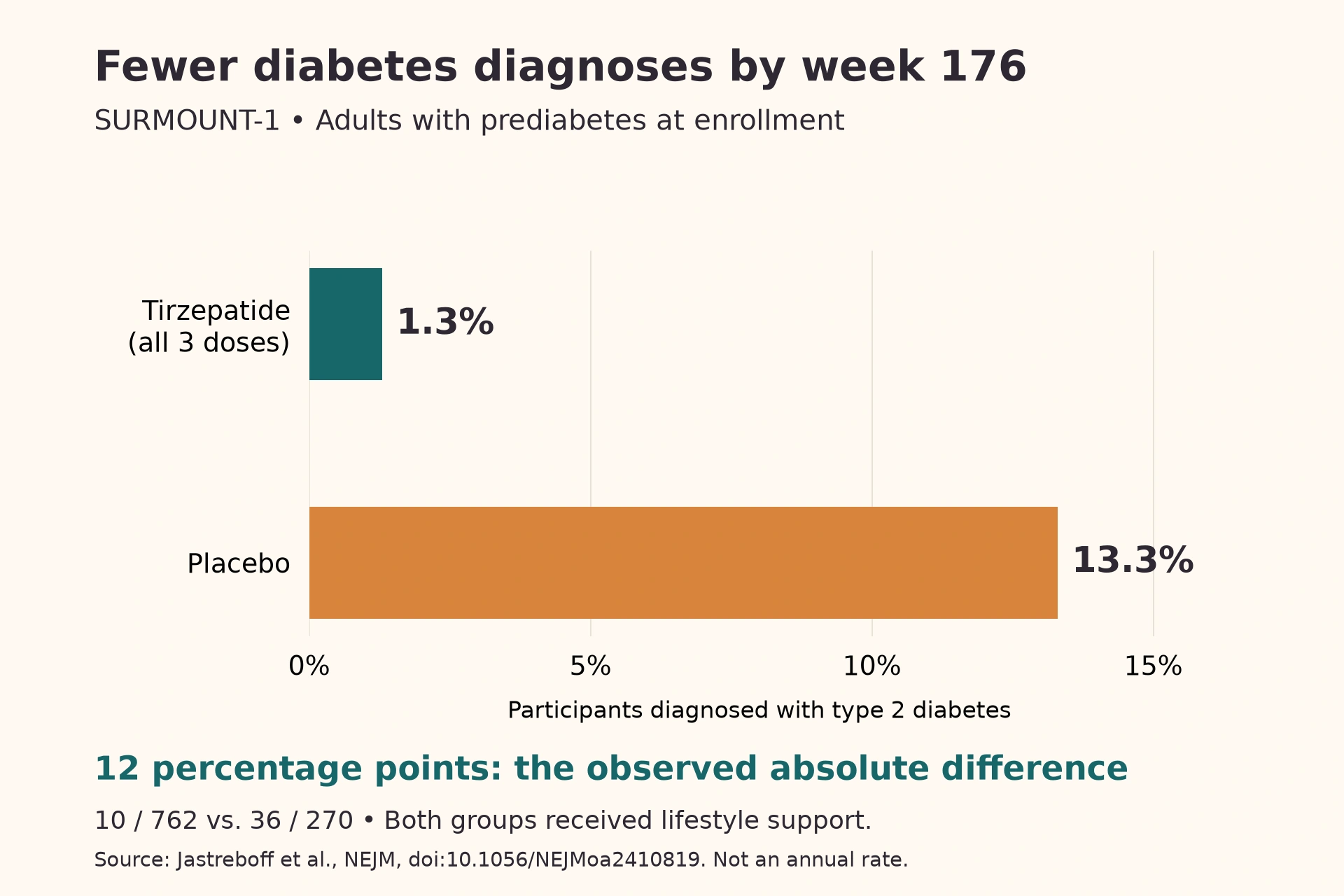
Tirzepatide substantially reduced progression to type 2 diabetes in a three-year study of adults with prediabetes and obesity or qualifying overweight. By week 176, diabetes had been diagnosed in 1.3% of participants assigned to tirzepatide versus 13.3% assigned to placebo. Both groups received lifestyle support. That is a large difference, but it describes a particular population, treatment strategy, and period of observation. SURMOUNT-1 research paper.
For someone who has just been told their A1c is in the prediabetes range, the useful questions go beyond a headline: Does this research apply to me? Is the benefit sustained after medication stops? How does it fit alongside a diabetes-prevention program or metformin? And does a trial result establish an approved use for every tirzepatide product?
This guide connects four scientific papers with the current prescribing information, two research videos, and original graphics so you can explore those questions in context.
- SURMOUNT-1 provides randomized evidence that tirzepatide delayed or prevented diabetes diagnoses during the studied period in adults with prediabetes and obesity or qualifying overweight.
- The observed absolute difference at 176 weeks was about 12 percentage points. The reported 93% reduction describes a relative time-to-event comparison.
- Some benefits weakened after treatment stopped. Seventeen weeks of follow-up cannot establish a permanent cure.
- The current Zepbound label covers weight management and specified sleep-apnea treatment; it does not list a separate diabetes-prevention indication.
What does prediabetes mean?
Prediabetes means blood glucose is above the usual range but below the threshold used to diagnose diabetes. It often produces no symptoms. Insulin resistance is related: muscle, fat, and liver cells respond less effectively to insulin, and the pancreas may eventually struggle to compensate. These terms describe overlapping processes, but they are not interchangeable diagnoses. NIDDK explanation.
NIDDK lists an A1c of 5.7%–6.4%, fasting plasma glucose of 100–125 mg/dL, or a two-hour oral glucose tolerance test result of 140–199 mg/dL as prediabetes ranges. A1c reflects average glucose over roughly three months; a fasting glucose test measures it at that moment. A clinician should interpret the results, including circumstances that can make A1c less reliable. A single home-meter reading does not reproduce the trial’s diagnostic process. Testing and interpretation.
Prediabetes increases future risk, but progression is not inevitable. The practical goal is to reduce that risk while improving overall health. NIDDK recommends testing for type 2 diabetes every year in people with prediabetes; an individual treatment plan may require additional checks. Normal results during medication treatment still need to be interpreted in the context of that treatment.
Who was studied in the three-year SURMOUNT-1 analysis?
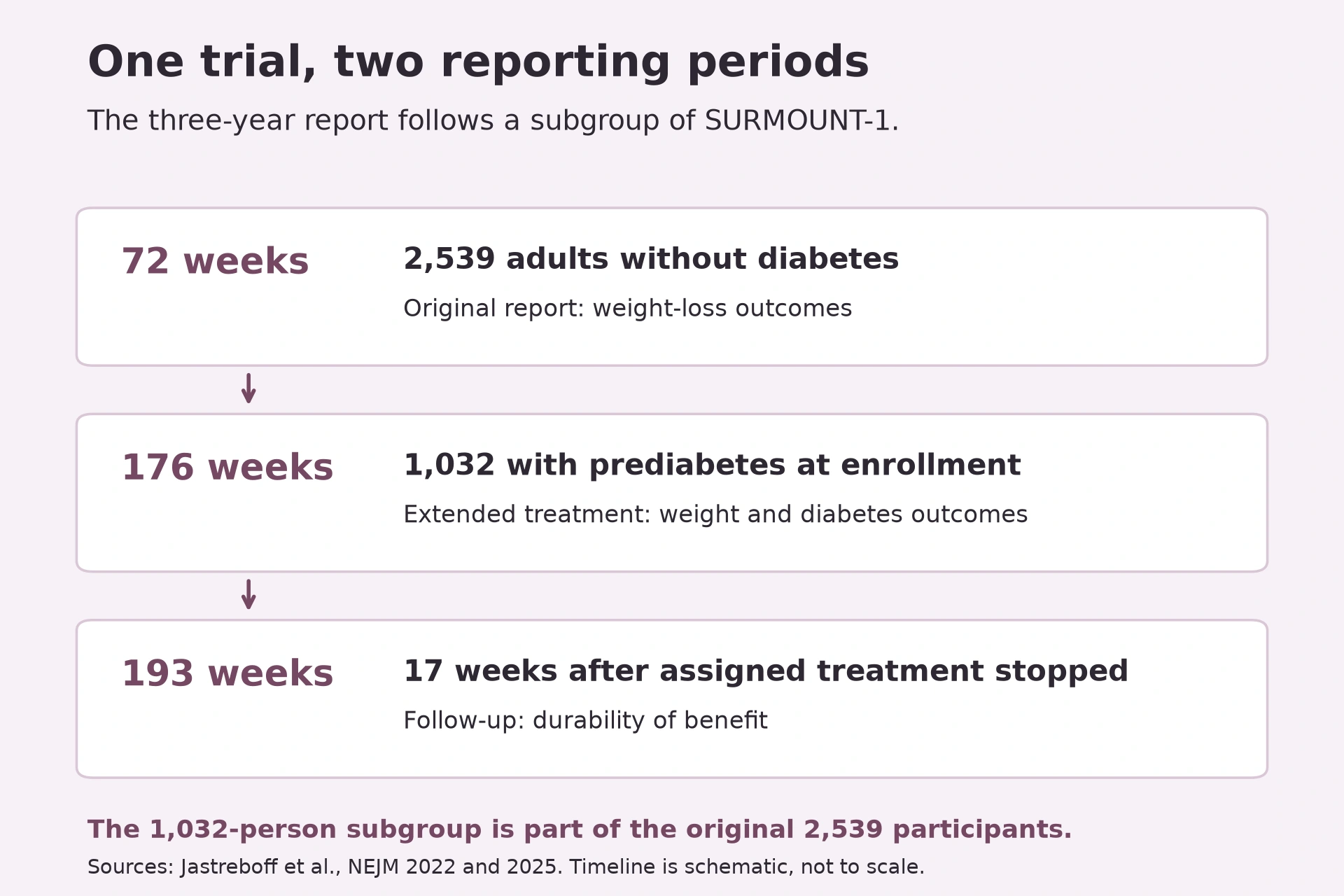
The original SURMOUNT-1 trial randomized 2,539 adults without diabetes to weekly injected tirzepatide or placebo. Eligibility required a body mass index of at least 30, or at least 27 with a weight-related complication. The initial 72-week report focused on weight reduction. Original 2022 paper.
The longer report followed the 1,032 participants who already had prediabetes at enrollment. Their assigned treatment continued for 176 weeks—about 3.4 years—followed by 17 weeks off treatment. This was a planned extension within the same trial, not a second independent trial of another 1,032 people. Longer-term methods.
Participants were assigned to tirzepatide maintenance doses of 5, 10, or 15 mg, or matching placebo, with gradual escalation. These are research regimens, not instructions to start or change a dose. All groups received regular counseling on food and physical activity. The comparison therefore asks what tirzepatide added to that support.
Prediabetes eligibility required at least two abnormal measurements among A1c, fasting glucose, and an oral glucose tolerance test, obtained at one or more visits. Potential diabetes diagnoses were reviewed by an independent committee. This is stronger outcome assessment than counting an isolated abnormal blood test or relying on self-reported diagnoses.
The participants’ average age was about 48, average BMI was 38.8, and approximately 64% were women. The findings are most directly relevant to adults resembling this group. They do not establish the same effect in adolescents, adults at a lower body weight, people with normal glucose, or people who already have type 2 diabetes. Population and diagnostic methods.
What do the diabetes-prevention numbers actually show?
By week 176, 10 of 762 participants assigned to the three tirzepatide groups combined had developed type 2 diabetes, compared with 36 of 270 assigned to placebo. The published percentages were 1.3% and 13.3%. Results.
Subtracting those rounded proportions gives an absolute difference of 12 percentage points. Expressed on a common scale, that is approximately 120 fewer diagnoses per 1,000 people over this study period. This is a way to understand the trial result, not a prediction that exactly 120 of every 1,000 patients in ordinary practice will benefit.
The paper also reported a hazard ratio of 0.07, commonly expressed as a 93% reduction in the hazard of developing diabetes. A hazard ratio compares the timing of diagnoses among people who have not yet developed the outcome. It is not the same calculation as subtracting the two percentages, and it does not mean that 93 out of every 100 people would otherwise have developed diabetes.
The simple ratio of 1.3% to 13.3% also differs from 0.07 because crude proportions and a time-to-event analysis use different information. Both support a substantial benefit here. When reading a headline, keep the statistical measure, follow-up duration, and underlying event rates together.
The main analysis used what the authors call a treatment-regimen estimand: the effect of assignment to tirzepatide regardless of whether participants discontinued the assigned treatment. A second analysis estimated what would happen if treatment were used as intended. Those approaches answer different questions and can yield different numbers; this article uses the main treatment-regimen results unless otherwise specified. Statistical methods.
Watch the trial explained
The journal’s overview of diabetes prevention
NEJM Group: “Tirzepatide for Obesity and Diabetes Prevention” is a 2-minute, 28-second introduction to the longer-term findings. Published in March 2025, it accompanies the research discussed above. As you watch, distinguish a diagnosis of diabetes from weight loss or a change in A1c: they are related outcomes, but not identical ones.
The earlier SURMOUNT-1 weight-loss findings
WebsEdgeMedicine: “ADA 2022 Clinical Trials: SURMOUNT-1” features investigator Ania Jastreboff and is linked from the American Diabetes Association’s official meeting-news coverage. This 2-minute, 23-second video concerns the original 72-week results. It predates the three-year diabetes-prevention report and should be viewed as background on the trial’s earlier phase. ADA meeting coverage.
The distinction matters: a compelling weight-loss result does not by itself prove that fewer people developed diabetes. The later paper supplies that additional outcome, in the subgroup with prediabetes at the start.
What happened after tirzepatide stopped?
The trial included 17 weeks without assigned tirzepatide or placebo after the 176-week treatment period. During that follow-up, eight additional participants previously assigned to tirzepatide developed diabetes, bringing the total to 18. The placebo group’s total increased from 36 to 37. Off-treatment follow-up.
| Assessment | Tirzepatide groups combined | Placebo group |
|---|---|---|
| By week 176, at the end of assigned treatment | 10 diagnoses; 1.3% | 36 diagnoses; 13.3% |
| By week 193, after 17 weeks off treatment | 18 diagnoses; 2.4% | 37 diagnoses; 13.7% |
These are cumulative trial totals, not the risk during the 17-week interval alone. The groups still differed substantially at week 193, but weight regain and deterioration in glucose measures had begun after withdrawal. A persisting difference over four months cannot tell us whether the same protection lasts for years without treatment.
It is therefore reasonable to describe the findings as prevention or delay during the observed period. Calling them a permanent cure would go beyond the evidence. Likewise, a normal A1c while taking a glucose-lowering medicine does not prove that the underlying susceptibility has disappeared.
A separate trial, SURMOUNT-4, helps explain the maintenance question. After 36 weeks of open-label tirzepatide, 670 adults without diabetes who reached a tolerated 10- or 15-mg dose were randomized to continue treatment or switch to placebo for another 52 weeks. The continued-treatment group lost a further 5.5% of its week-36 weight on average; the withdrawal group gained 14.0%. SURMOUNT-4 paper.
That 14% is a change relative to weight at randomization, not “14% of the lost weight came back.” SURMOUNT-4 measured weight maintenance and did not directly test long-term diabetes prevention after stopping. Its participants also had already tolerated the initial treatment period, which limits how broadly its results apply.
Our guide to stopping tirzepatide and maintenance covers practical planning. Neither study establishes that improvised tapering, occasional injections, or stretching intervals prevents regain or preserves diabetes protection.
How much weight did participants lose?
In the prediabetes group at week 176, average weight changes were −12.3% with 5 mg, −18.7% with 10 mg, and −19.7% with 15 mg, versus −1.3% with placebo, using the main analysis. These are group averages; individual results varied. Long-term weight results.
The original 72-week paper reported different figures in the broader 2,539-person trial population. Comparing its averages with those in the prediabetes extension does not cleanly measure how every individual’s weight changed between the two time points. The population, duration, and missing-data handling need to match before making that inference. Original trial report.
Weight reduction may contribute to improved insulin sensitivity, and tirzepatide also affects glucose regulation through GIP and GLP-1 pathways. The prevention paper includes an exploratory mediation analysis suggesting weight reduction explained part of the diabetes effect. Such modeling does not prove the exact share attributable to each biological mechanism; participants were randomized to medication, not to a specified amount of weight loss. Mechanistic analysis and discussion.
Our tirzepatide weight-loss results guide explains the differences among trial populations. The protein and muscle guide addresses nutrition and function, which remain relevant even when weight and glucose measurements improve.
Does this replace lifestyle support or metformin?
No single trial settles every prevention choice. The Diabetes Prevention Program (DPP) randomized 3,234 adults at high risk of diabetes to intensive lifestyle intervention, metformin, or placebo. Over an average 2.8 years, diabetes incidence was reduced by 58% with the lifestyle program and 31% with metformin compared with placebo. The reported incidence rates were 4.8, 7.8, and 11.0 cases per 100 person-years, respectively. DPP primary paper.
The lifestyle intervention was a structured program, including an initial 16-lesson curriculum and ongoing contact. Its goals included at least 7% weight loss and at least 150 minutes of moderate activity weekly. It was more substantial than handing someone a leaflet or telling them to try harder. The study supports access to practical, sustained help with behavior change.
SURMOUNT-1 did not compare tirzepatide directly with metformin or with the DPP’s intensive program. Putting 93%, 58%, and 31% side by side does not create a valid ranking. Starting glucose levels, eligibility, intervention intensity, follow-up, and statistical methods differed. Tirzepatide participants also received lifestyle counseling. SURMOUNT-1; DPP.
| Research report | Main question | Important boundary |
|---|---|---|
| SURMOUNT-1, 2022 | Does tirzepatide reduce weight over 72 weeks? | The original 2,539-person population did not have diabetes; only some had prediabetes. |
| SURMOUNT-1, 2024 online / 2025 journal issue | What happens to weight and diabetes diagnoses with longer treatment? | The 1,032-person prediabetes subgroup comes from the same original trial. |
| SURMOUNT-4, 2024 | Does continuing treatment help maintain weight loss? | A separate withdrawal trial; participants first completed a tirzepatide lead-in. |
| DPP, 2002 | Can intensive lifestyle support or metformin prevent or delay diabetes? | A separate prevention trial; no tirzepatide comparison. |
NIDDK identifies lifestyle changes and, for appropriate people, metformin as prevention options. Whether obesity medication is useful depends on the person’s clinical situation and treatment eligibility. Our tirzepatide versus metformin guide explores their different roles and why an existing prescription should not be changed solely because another trial reports a larger percentage.
Is tirzepatide FDA approved to prevent diabetes?
The August 2026 U.S. Zepbound label, reviewed for this article, lists reduction of excess body weight and long-term weight maintenance in eligible adults, and treatment of moderate to severe obstructive sleep apnea in adults with obesity. It does not list a separate diabetes-prevention indication. Current prescribing information, section 1.
Someone with prediabetes may also meet criteria for an approved obesity treatment, but those are distinct clinical questions. Prediabetes alone does not automatically establish eligibility, insurance coverage, or that a particular product is the right choice. Research evidence can inform a discussion without changing the wording of an FDA-approved indication.
Zepbound and Mounjaro share the ingredient tirzepatide, but their labeling and intended uses differ. The tirzepatide questions guide explains that distinction, while the GLP-1 insurance guide helps separate a clinical decision from a coverage decision.
What about compounded tirzepatide?
A trial of the studied tirzepatide formulation does not establish equivalent outcomes for every compounded preparation. FDA explains that compounded drugs are not FDA approved and do not undergo its premarket assessment of safety, effectiveness, and quality. FDA guidance.
For service details, see CoreAge Rx’s tirzepatide page. Confirm the exact product, dispensing pharmacy, and approval status with the prescribing team. The prevention results in this article are not evidence that a compounded offering produces the same outcomes or is an approved diabetes-prevention treatment. The compounded tirzepatide versus Zepbound guide discusses the product distinction further.
What are the safety and evidence limitations?
Gastrointestinal symptoms were the most common adverse events other than COVID-19 in the longer SURMOUNT-1 report. Most were mild or moderate and occurred during dose escalation. Nonetheless, adverse events led to treatment discontinuation in 7.3%, 9.5%, and 12.3% of the 5-, 10-, and 15-mg groups, compared with 5.9% of the placebo group. Safety table.
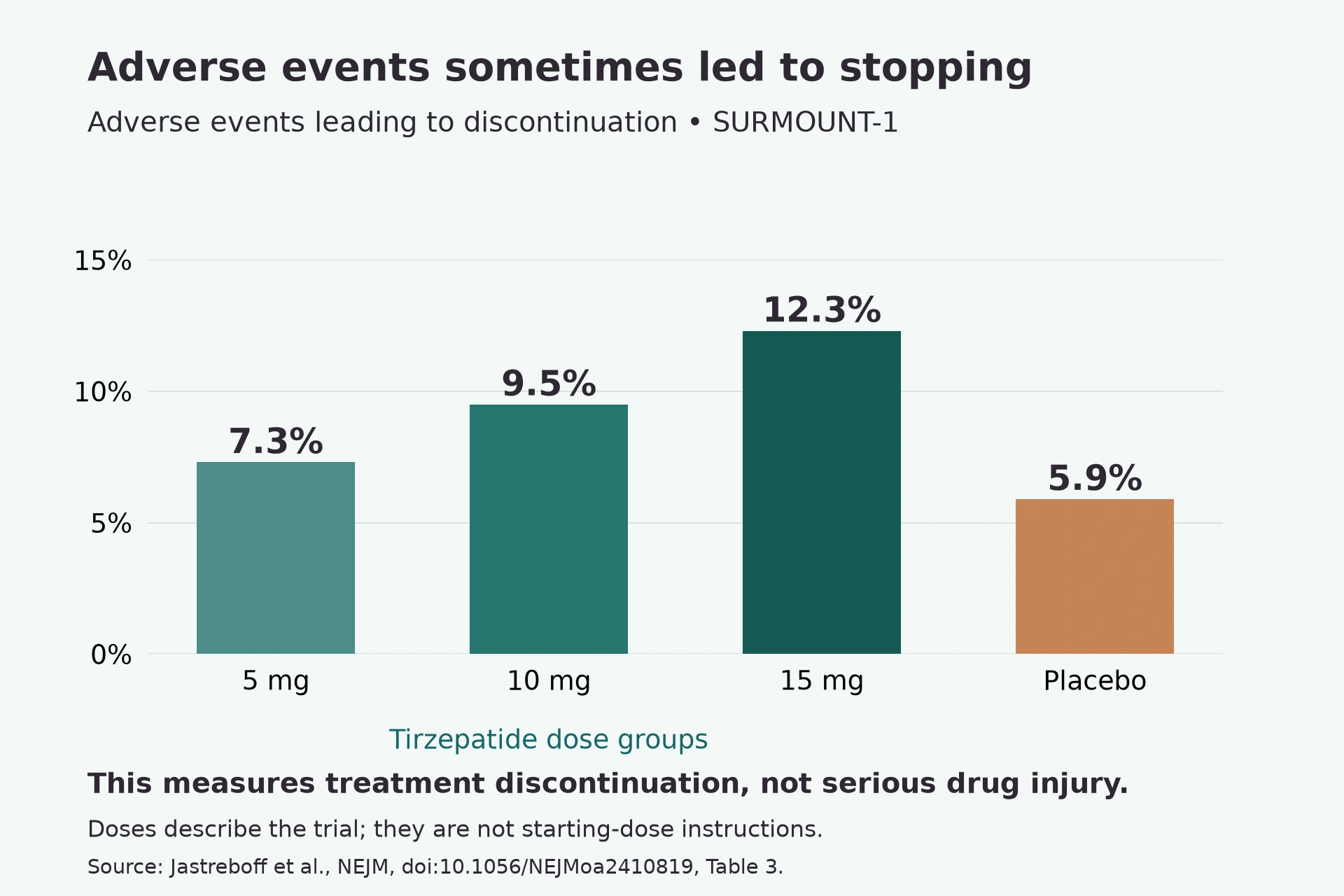
Those percentages describe stopping because of an adverse event, not the frequency of serious injury caused by medication. “No new safety signals identified” also does not mean “no risks.” The current label addresses severe gastrointestinal reactions, dehydration-related kidney injury, gallbladder disease, pancreatitis, serious allergic reactions, and other precautions. It carries a boxed warning about thyroid C-cell tumors in rodents, with uncertain relevance to humans; a personal or family history of medullary thyroid carcinoma or MEN2 is a contraindication. Zepbound safety information.
Pregnancy plans, oral hormonal contraception, insulin or sulfonylurea use, and upcoming anesthesia or deep sedation also belong in the review. Our tirzepatide contraindications guide explains these issues. Persistent severe abdominal pain, repeated vomiting, or inability to maintain fluids needs prompt clinical assessment; breathing difficulty or other signs of a serious allergic reaction require emergency care. Patient counseling information.
Several research limitations matter:
- Incomplete follow-up: 65.6% of the prediabetes subgroup completed the trial through week 193. Treatment discontinuation and withdrawal, particularly in the placebo group, create uncertainty despite the planned analyses and handling of missing data.
- A defined population: most participants were White, and average BMI was high. A precise benefit for every age, racial group, or lower-risk patient cannot be assumed.
- Limited time after stopping: the 17-week observation period cannot establish lifelong protection or an optimal stopping strategy.
- Different outcomes: fewer diabetes diagnoses do not by themselves prove fewer heart attacks, kidney complications, or deaths in this trial.
- Industry involvement: Eli Lilly funded and designed SURMOUNT-1 and performed data analysis; it also sponsored SURMOUNT-4. Randomization and independent outcome adjudication are strengths, while sponsorship and author disclosures remain relevant to a complete reading. SURMOUNT-1 methods and limitations; SURMOUNT-4 disclosures.
The semaglutide heart-health research review illustrates why cardiovascular-event trials answer a different question. Benefits should stay attached to the outcome actually measured.
Questions to bring to your appointment
- Which tests establish my current diagnosis? Ask how A1c, fasting glucose, and any repeat testing fit together.
- How closely do I resemble the study population? Review weight-related conditions, glucose history, age, and current medicines.
- What is the treatment goal? Clarify whether the plan addresses obesity, diabetes risk, an existing diabetes diagnosis, or several concerns.
- What prevention support can I access? Ask about a structured program, nutrition support, physical activity adapted to your abilities, and whether metformin is appropriate.
- Which exact product is proposed, and what evidence applies to it? Include approval status, safety, tolerability, and cost.
- What happens if treatment is interrupted? Agree on glucose follow-up, weight-maintenance support, and whom to contact before changing the regimen.
The main finding is encouraging: substantial risk reduction was possible during sustained treatment in a carefully defined group. A useful care plan connects that evidence to ongoing support, monitoring, and a realistic approach to maintaining the benefit.
Read the scientific papers and supporting sources
- Jastreboff AM and colleagues. Tirzepatide for Obesity Treatment and Diabetes Prevention. New England Journal of Medicine, 2025;392:958–971; published online November 13, 2024. DOI: 10.1056/NEJMoa2410819. Journal page · Publisher-hosted paper PDF.
- Jastreboff AM and colleagues. Tirzepatide Once Weekly for the Treatment of Obesity. New England Journal of Medicine, 2022;387:205–216. DOI: 10.1056/NEJMoa2206038. The original SURMOUNT-1 report. Journal page · Publisher-hosted paper PDF.
- Aronne LJ and colleagues. Continued Treatment With Tirzepatide for Maintenance of Weight Reduction in Adults With Obesity: The SURMOUNT-4 Randomized Clinical Trial. JAMA, 2024;331:38–48. DOI: 10.1001/jama.2023.24945. Full paper.
- Diabetes Prevention Program Research Group. Reduction in the Incidence of Type 2 Diabetes with Lifestyle Intervention or Metformin. New England Journal of Medicine, 2002;346:393–403. DOI: 10.1056/NEJMoa012512. Full paper.
- Zepbound U.S. prescribing information. Revised August 2026; reviewed October 7, 2026. Current label.
- National Institute of Diabetes and Digestive and Kidney Diseases. Insulin Resistance & Prediabetes. Diagnosis and prevention resource.
- U.S. Food and Drug Administration. Concerns with unapproved GLP-1 drugs used for weight loss. Compounded-product guidance.
Research approach: This focused narrative review checks the original papers for populations, outcomes, analysis methods, treatment duration, limitations, and funding; it is not a systematic review or individual treatment advice. Current labeling and supporting guidance were reviewed October 7, 2026. The two SURMOUNT-1 papers describe overlapping participants, not independent replications. Videos provide dated research context. Original graphics summarize published aggregate data; the AI-generated cover depicts fictional people, not patient results.