
Tajín can fit into many eating patterns, including a weight-management plan. The useful question is how much you use, what you put it on, and whether you have a reason to limit sodium. A seasoning can make a meal more enjoyable without being a treatment for weight loss.
The U.S. Tajín Clásico label lists 190 milligrams of sodium in 1/4 teaspoon, with calories rounded to zero for that serving. That combination matters: a zero-calorie label does not mean a product is salt-free, and a generous shake can represent several label servings. Tajín Clásico manufacturer label
Here is how to read the numbers, put common claims in perspective, and use the seasoning in meals you actually enjoy.
What is Tajín?
Tajín is a brand, rather than the name of a single nutrient or medication. Its Clásico seasoning combines mild chili peppers, lime, and sea salt. This article uses the current public U.S. Clásico label as its example; another product, country, or package may have a different formula or panel.
That distinction is especially helpful when searching for “Tajín nutrition.” A seasoning blend, a sauce, and a reduced-sodium version should not inherit one another’s numbers. Look at the exact item in your kitchen before using a comparison from a website.
The chili-lime flavor can work with fruit, vegetables, beans, or other foods. Those foods still provide most of the substance of the snack or meal. A dusting of seasoning does not supply the protein, fiber, or variety that may be missing from an otherwise limited diet.
How much sodium is in Tajín?
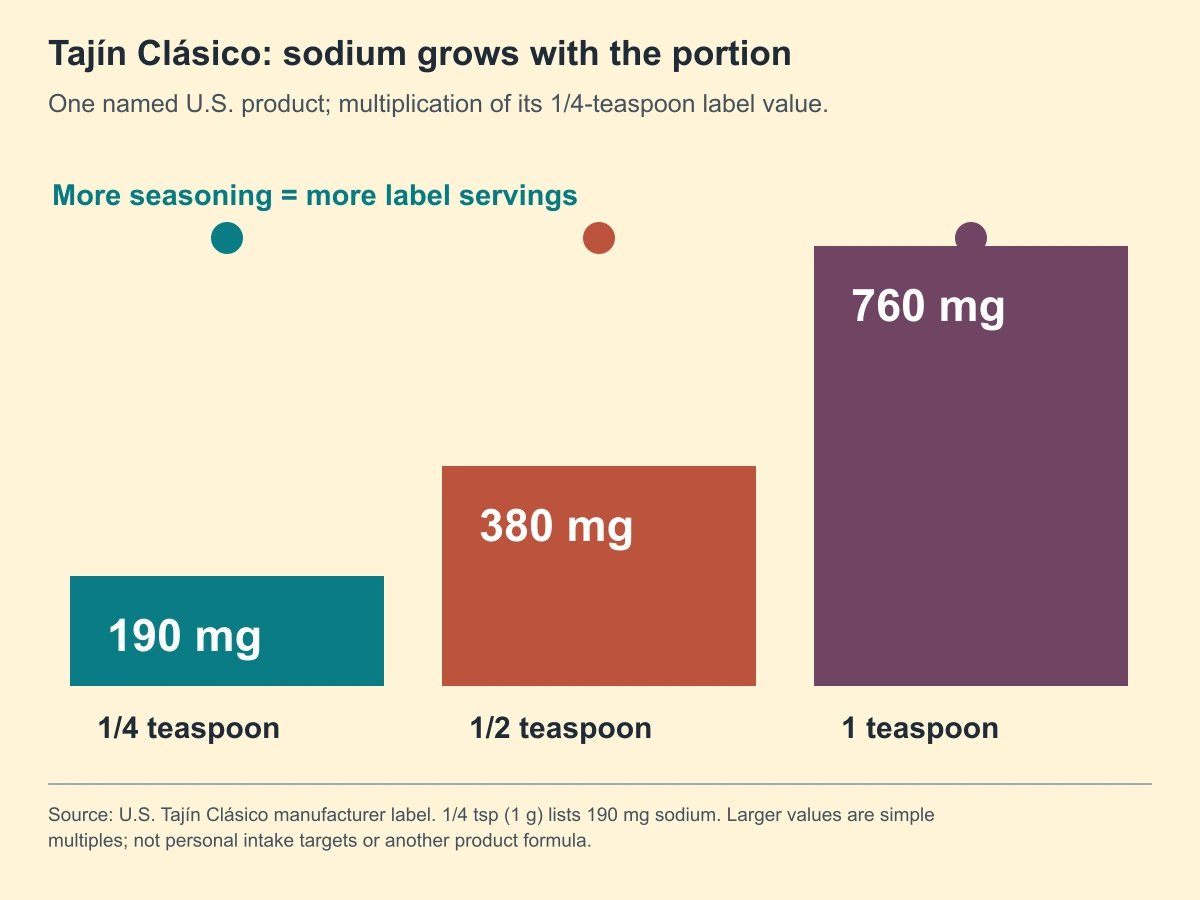
For the named Clásico product, the label reference is 1/4 teaspoon, or 1 gram. Sodium increases as you use more of that product:
| Amount of Clásico seasoning | Sodium based on the label | How to interpret it |
|---|---|---|
| 1/4 teaspoon | 190 mg | One label serving; the panel lists 8% of the sodium Daily Value |
| 1/2 teaspoon | 380 mg | Two label servings |
| 1 teaspoon | 760 mg | Four label servings |
These are simple multiples of the manufacturer value, rather than recommended personal portions. A measuring spoon can help you learn what your usual amount looks like; you do not need to turn every meal into a measurement exercise.
Sodium also comes from the rest of the meal. A lightly seasoned cucumber has a different overall sodium amount from the same seasoning added to salty chips, a prepared sandwich, or a restaurant meal. Include sauces and other condiments when comparing options.
The FDA uses a sodium Daily Value of less than 2,300 mg for general labeling. It describes 5% of the Daily Value or less as low and 20% or more as high per serving. These are label-reading reference points, not a personalized allowance for someone with a medical condition. FDA sodium guidance
Does zero calories mean unlimited seasoning?
No. The Clásico label reports zero calories for its small reference serving. Nutrition labels use reporting and rounding rules; that figure should not be interpreted as a laboratory finding that every possible quantity contains exactly no energy.
More practically, the sodium figure remains relevant even when the calorie figure is zero. Using four label servings gives four times the listed sodium. A product can contribute little reported energy while still making a noticeable contribution to another nutrient.
The same principle applies to the food underneath it. Adding Tajín to mango does not remove the mango’s carbohydrate or calories. Adding it to a snack does not make that snack a free food. For an explanation of serving sizes and how to multiply a panel, see the FDA Nutrition Facts guide.
This does not make fruit or seasoning a problem. It simply makes the whole snack the right unit to consider. Our fruit and weight-management article puts fruit choices into a broader eating pattern.
Is reduced-sodium Tajín sodium-free?
“Reduced sodium” is a comparison claim. The FDA explains that it means at least 25% less sodium than the regular comparison product. It does not mean there is no sodium, or that the amount fits every person’s needs.
If you choose a reduced-sodium version, read its actual panel and serving size. Do not assume a number from a different country’s product is the amount in your U.S. package. We verified the U.S. Clásico panel for the table above; we are not substituting an unverified reduced-sodium number into that table.
Compare the portion you plan to use, rather than just the front of the container. A smaller amount of one product and a larger amount of another may narrow or reverse the difference you expected. The label claim remains useful, but the amount used still matters.
Does Tajín burn fat or boost metabolism?
The ingredient list and Nutrition Facts panel do not establish that Tajín causes meaningful fat loss. A product containing chili is not automatically a clinically tested weight-loss treatment. The amount, formula, study population, and measured outcome would all need to match the claim.
It is more reasonable to think about its culinary role. If a small amount makes a vegetable side or a bean bowl appealing, that may make a meal you enjoy easier to repeat. That is a practical food preference, rather than proof that the seasoning itself increases fat burning.
Similarly, “detox” language does not tell you what outcome was measured. A spicy sensation, a sour taste, or sweating after eating cannot show that body fat is being lost. Avoid judging progress by how intense a condiment feels.
Our balanced-meal guide explains how to combine foods into satisfying meals. Our water weight versus fat-loss guide explains why a short-term scale movement cannot identify its cause on its own.
Ways to use the flavor without building a meal around salt
Start with the food you want to eat. A little seasoning can finish a meal; it does not have to provide every part of the flavor.
For example, try a modest amount with cucumber and a meal that already contains protein and a grain or other carbohydrate. Or season a bean-and-vegetable bowl after tasting the other ingredients. If the beans, salsa, or cheese are already salty, adding the full amount you usually use may not improve the dish.
Other flavor options include fresh herbs, chili without added salt, or a squeeze of lime when it agrees with you. These are choices to compare, rather than requirements to eliminate the branded seasoning. The most workable option is one that suits the meal and your health needs.
For more substantial food ideas, see our pinto-bean nutrition guide and breakfast planning article. They show why a condiment’s calorie count is only a small part of meal planning.
The same distinction matters when comparing vegetables with a greens powder. CoreAge Rx Green Scene is described as a greens supplement; it is a different product from a vegetable side or a complete meal. Check the actual ingredients rather than treating either seasoning or a powder as the whole eating plan.
Can Tajín cause reflux or stomach discomfort?
Spicy and acidic foods bother some people with reflux. Tajín includes chili and lime, but that does not mean everyone will have symptoms or that everyone with reflux needs the same food restrictions.
NIDDK lists spicy foods and citrus among foods that may worsen symptoms for some people. For reflux that occurs at night or when lying down, eating meals at least three hours before bed may help. Use your own symptom pattern and care plan to guide changes. NIDDK reflux and eating guidance
A useful comparison changes one thing at a time: the amount of seasoning, the food it accompanies, or the timing of a meal. Record what actually happened rather than assuming the lime or chili must be responsible. Persistent symptoms deserve assessment, especially when they interfere with eating or sleep.
People taking an appetite medicine may also have nausea, fullness, or reflux questions. Our tirzepatide nausea and reflux article covers medication context. Adding or removing one seasoning is not a substitute for reviewing ongoing medication symptoms.
What if you have a sodium restriction?
Follow the target and instructions given for your condition. A general label Daily Value cannot replace a plan for kidney disease, heart disease, blood pressure, or another reason to manage sodium.
Bring the exact container or a photo of its panel to a dietitian or clinician. Asking “Can this amount fit with the rest of my meals?” is more useful than asking whether the entire brand is good or bad. NIDDK notes that kidney nutrition needs can involve several nutrients and may change with the person’s situation. NIDDK kidney-disease nutrition guidance
If you have been told to limit sodium, avoid treating sweating, exercise, or drinking extra water as permission to ignore the plan. Your care team can explain how to handle changes in activity or illness for your circumstances.

Common questions about Tajín and weight loss
Is Tajín on fruit a good snack?
It can be a snack you enjoy. Consider the fruit portion, whether you want something more substantial, and the sodium amount in the seasoning. If you need a snack to bridge a long gap between meals, you might choose fruit alongside another food rather than expecting seasoning to make it filling.
Is it bad to eat Tajín every day?
Frequency alone does not answer the question. A small amount within an otherwise suitable eating pattern differs from several servings on many salty foods. Look at your total pattern and any medical restrictions.
Can I have it while taking semaglutide or tirzepatide?
A general seasoning article cannot determine personal suitability. Discuss recurring nausea or reflux, dietary restrictions, and difficulty eating with the prescribing team. The semaglutide questions guide and tirzepatide questions guide explain the broader treatment decisions.
Should I choose a medication because changing foods is difficult?
That is a separate clinical decision. A conversation about CoreAge Rx semaglutide care or tirzepatide care should cover eligibility, the actual formulation, benefits, risks, follow-up, and cost. A food preference or a seasoning habit does not establish a need for medication.
A practical way to decide
Identify the exact Tajín product, learn what your usual portion looks like, and consider the whole meal. Check whether sodium or reflux is a particular issue for you. Then choose an amount and food combination that works with your broader plan.
Tajín’s most defensible role is straightforward: it adds flavor. Let the foods in the meal and your overall habits do the rest of the work.
Educational information for adults; individual treatment decisions require a qualified clinician. Sources reviewed October 1, 2026. Original AI-generated article images depict fictional people and objects, not patient outcomes. Other editorial images are illustrative. Graphics summarize the cited sources.