
Shrimp can fit into a weight-management eating pattern. Plain cooked shrimp supplies protein with relatively few calories, but the complete meal matters: breading, oil, sauces, side dishes, and drinks can change what you eat substantially. No individual food guarantees weight loss or needs to be included in every plan.
The practical question is whether a shrimp meal helps you eat adequately, enjoy your food, and follow a pattern that suits your health needs. Allergies, food safety, preparation, and price deserve as much attention as the protein number.
What nutrition does plain cooked shrimp provide?
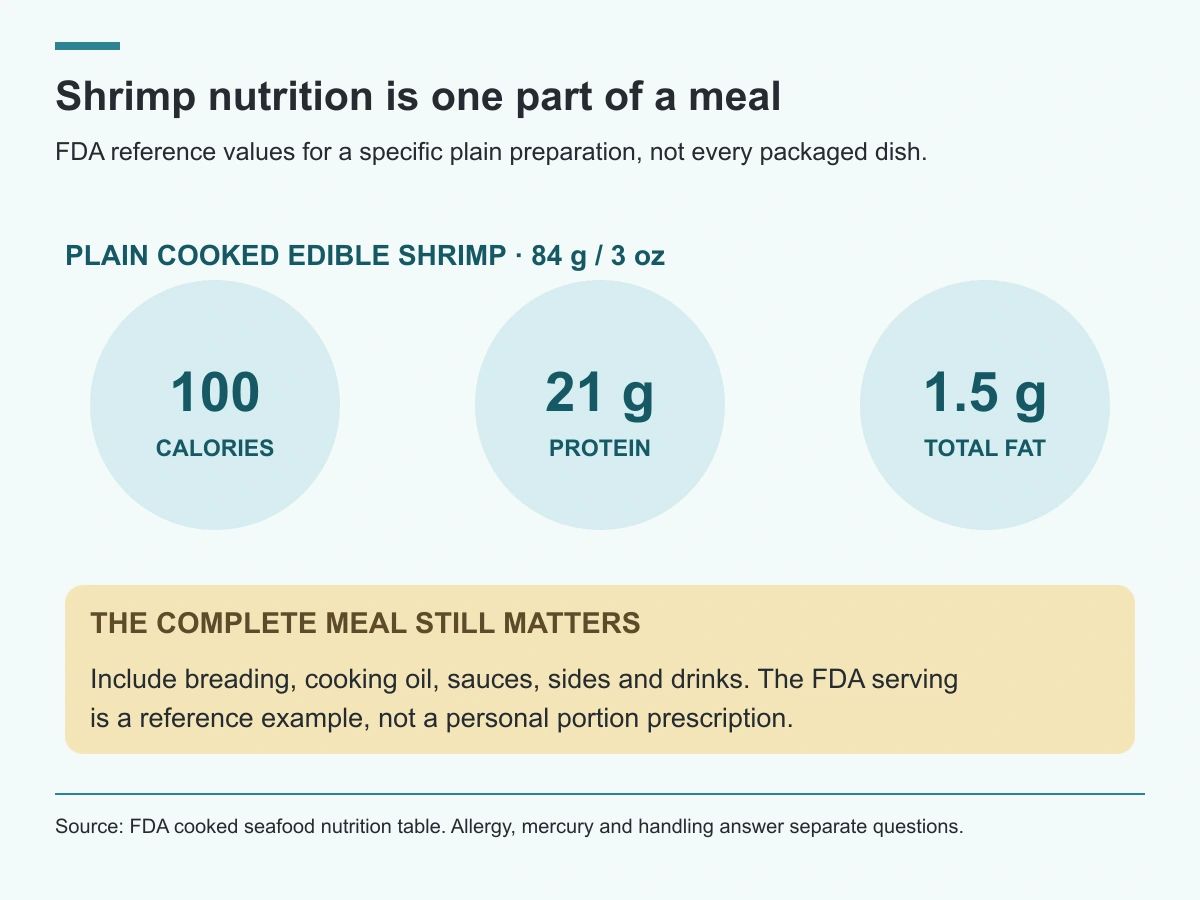
FDA’s seafood table gives a specific example: 3 ounces, or 84 grams, of cooked edible shrimp prepared without added ingredients. That example provides 100 calories, 21 grams of protein, and 1.5 grams of total fat. It also lists 170 milligrams of cholesterol and 240 milligrams of sodium. These are reference values for that preparation, not the label for every bag, restaurant dish, or recipe. FDA cooked seafood nutrition table.
| Nutrient | FDA example: 84 g plain cooked shrimp | How to use the information |
|---|---|---|
| Calories | 100 | Add the rest of the meal separately |
| Protein | 21 g | Count it toward your meal’s protein contribution |
| Total fat | 1.5 g | Cooking fats and sauces can add more |
| Carbohydrate | 0 g | Rice, noodles, breading, and sauces are separate |
| Cholesterol | 170 mg | Discuss individual dietary needs when relevant |
| Sodium | 240 mg | Check packaged products and seasonings |
The example is a comparison serving, rather than a prescription for how much you should eat. Raw weight, cooked weight, shell-on weight, and edible weight are not interchangeable. If you are using a package label or recipe calculation, keep the measurement consistent with the information you are using.
Our protein and muscle guide for semaglutide users and tirzepatide protein guide explain the wider meal-planning context. Protein intake should fit the whole day and your individual needs, especially if you have kidney disease or another condition affecting nutrition.
Why preparation can matter more than the shrimp
A plain shrimp portion and a plate of battered fried shrimp are different meals. Both contain shrimp, but the coating, absorbed oil, dip, and accompanying foods contribute additional ingredients and energy. That does not make one meal morally better; it makes the label “shrimp” too broad to answer the calorie question.
When cooking at home, write down the oil, butter, sauce, and other ingredients used for the whole recipe. Then consider how the finished dish is divided. A recipe prepared for four people does not automatically become four equal portions unless you actually divide it that way.
For a restaurant meal, read any available nutrition information for the specific dish. “Grilled” does not guarantee an unseasoned preparation, and a side salad can arrive with dressing, cheese, and other additions. You do not need perfect precision to make a useful choice; you do need to look beyond the main ingredient.
If calorie estimates help you, our calorie intake guide discusses their role and limits. A meal can also be assessed by whether it is satisfying, practical, and nutritionally varied.
Build a complete shrimp meal
Shrimp supplies protein, but it does not provide the fiber contribution of vegetables, legumes, or whole grains. A plate containing only shrimp may leave other parts of the meal unfinished. Consider what you want the meal to provide and what foods you enjoy alongside it.
Possible combinations include:
- Shrimp with rice, mixed vegetables, and a sauce you can portion separately.
- Shrimp tacos with cabbage, beans, and a familiar salsa.
- A shrimp and vegetable pasta dish with the oil and cheese included in the recipe calculation.
- A salad containing shrimp, a grain or beans, and dressing served in an amount you choose.
- A stir-fry using shrimp with vegetables and noodles or rice.
These are meal ideas, not equal-calorie recipes or universal portions. Adjust the ingredients for your appetite, medical needs, budget, and preferences. The balanced meals guide offers a framework, while our lunch calories article explains why lunch does not have one correct calorie allowance.
If you are hungry soon after a meal, look at the complete pattern before deciding that shrimp failed to work. You may need a different amount of food, a carbohydrate component, more variety, or a more realistic interval before the next meal.
What if you take a GLP-1 medication?
Reduced appetite can make ordinary meal planning feel different. A protein food you used to enjoy may seem less appealing, and large meals may be harder to manage. Smaller manageable meals can be a practical discussion point with your care team, but shrinking food intake indefinitely is not a goal.
Choose a preparation you tolerate and review persistent nausea, vomiting, or difficulty eating. Do not use shrimp’s protein content as reassurance that an otherwise very limited diet is adequate. A clinician or dietitian can help evaluate the total intake and any medical reasons for restrictions.
CoreAge Rx’s semaglutide service and tirzepatide service information describe prescription care options. Eating shrimp does not reproduce the action of those medicines, and a food article cannot determine whether treatment is appropriate. For common appetite questions, see our food noise and hunger guide.

Shrimp allergy comes before nutrition comparisons
Shrimp is a crustacean shellfish and one of the major food allergens identified by FDA. An allergic reaction can become serious, even if a previous reaction seemed mild. A low-calorie food is not suitable for someone who needs to avoid it because of an allergy. FDA food allergy guidance.
Tell restaurants about your allergy and ask about shared cooking surfaces, utensils, fryers, and sauces. Read ingredient labels when buying prepared meals. A dish can contain shrimp paste or shellfish ingredients without having a visible shrimp on the plate.
If you have an established allergy plan, follow it after a suspected exposure. Breathing difficulty, throat swelling, faintness, or other signs of a severe reaction require emergency care; use prescribed epinephrine according to your plan. New symptoms after eating should not automatically be attributed to a medication or to eating too much.
You can build a useful weight-management meal with another protein food. There is no nutritional reason to challenge an allergy at home to include shrimp in your diet.
Is mercury a concern?
FDA places shrimp in its “Best Choices” category in advice about fish and mercury. That classification is useful, but it is not permission to ignore allergies, food handling, or individual dietary advice. It also does not mean all seafood has the same mercury profile. FDA advice about eating fish.
People who are pregnant, may become pregnant, or are breastfeeding should use the specific FDA chart and their care team’s advice when choosing seafood. The chart’s serving guidance is designed for its stated groups, rather than being a mandatory shrimp schedule for every adult.
Variety remains a practical consideration. A favorable mercury classification does not require eating shrimp daily, and it does not make raw shrimp safer. Nutrition, mercury, allergies, and microbial food safety answer different questions.
Store and cook shrimp safely
FDA advises keeping seafood refrigerated at 40°F or below and using it within two days after purchase when refrigerated; otherwise, freeze it. Keep raw seafood separate from ready-to-eat foods and clean hands, utensils, and surfaces after handling it. FDA seafood safety guidance.
The guidance gives 145°F as the cooking temperature for most seafood and describes cooked shrimp as firm, pearly, and opaque. Refrigerate perishable foods promptly: the general limit is two hours outside refrigeration, or one hour when the surrounding temperature is above 90°F. Those limits matter for meal prep, takeout, picnics, and a lunch left in a car.
Follow package instructions for thawing and handling. Do not assume that lemon juice, a spicy sauce, or a brief rinse makes raw seafood safe. A cooler is only useful if it keeps food at an appropriate temperature throughout the trip.
When preparing several lunches, label the containers and plan how they will stay cold. Food safety is part of making a convenient meal work; it is not something to decide after the food has been sitting out.

How to compare shrimp with other protein foods
Compare similar prepared portions and include the other ingredients. It is not useful to compare plain shrimp with chicken covered in sauce, or shell-on raw weight with an edible cooked portion of another food. Use the actual package labels when choosing between convenience products.
Cost and convenience may determine how often a food fits. Frozen shrimp can be practical if the label and handling instructions suit your needs. A ready-made dish may save time, but its sodium, sauce, and portion may differ from plain shrimp. Neither option needs a “fat-burning” claim to be useful.
If you prefer beans, eggs, tofu, poultry, or another food, you can plan around those instead. The best comparison asks which option you will actually enjoy, prepare safely, and include in a varied eating pattern.
Frequently asked questions
Does shrimp burn belly fat?
No particular food directs fat loss to one body area. Shrimp can contribute protein to a meal, but a specific belly-fat promise goes beyond what its nutrient profile establishes. Assess your overall pattern and progress rather than assigning that outcome to one ingredient.
Is fried shrimp automatically off limits?
It does not need a universal ban. Consider the preparation, amount, accompanying foods, and how the meal fits your needs. If you want to compare calories, use information for the fried dish rather than the plain cooked FDA example.
Can I eat shrimp every day?
There is no need to make it a daily requirement. Consider variety, allergies, cost, dietary restrictions, and how it is prepared. Ask your clinician or dietitian about a personal plan if you have specific cholesterol, sodium, kidney, or other nutrition concerns.
Is shrimp better than chicken for weight loss?
Neither food guarantees a better outcome. Compare the actual cooked portions, recipes, and complete meals. Preference and consistency may be more useful than a ranking based on two mismatched nutrition entries.
Why does my package show different calories?
The product may use a different serving weight, preparation, or added ingredients. It may also describe raw rather than cooked shrimp. Use the information for your actual product instead of forcing it to match a reference table.
Educational information for adults; individual treatment decisions require a qualified clinician. Sources reviewed October 2, 2026. Original AI-generated article images depict fictional people and objects, not patient outcomes. Other editorial images are illustrative. Graphics summarize the cited sources.