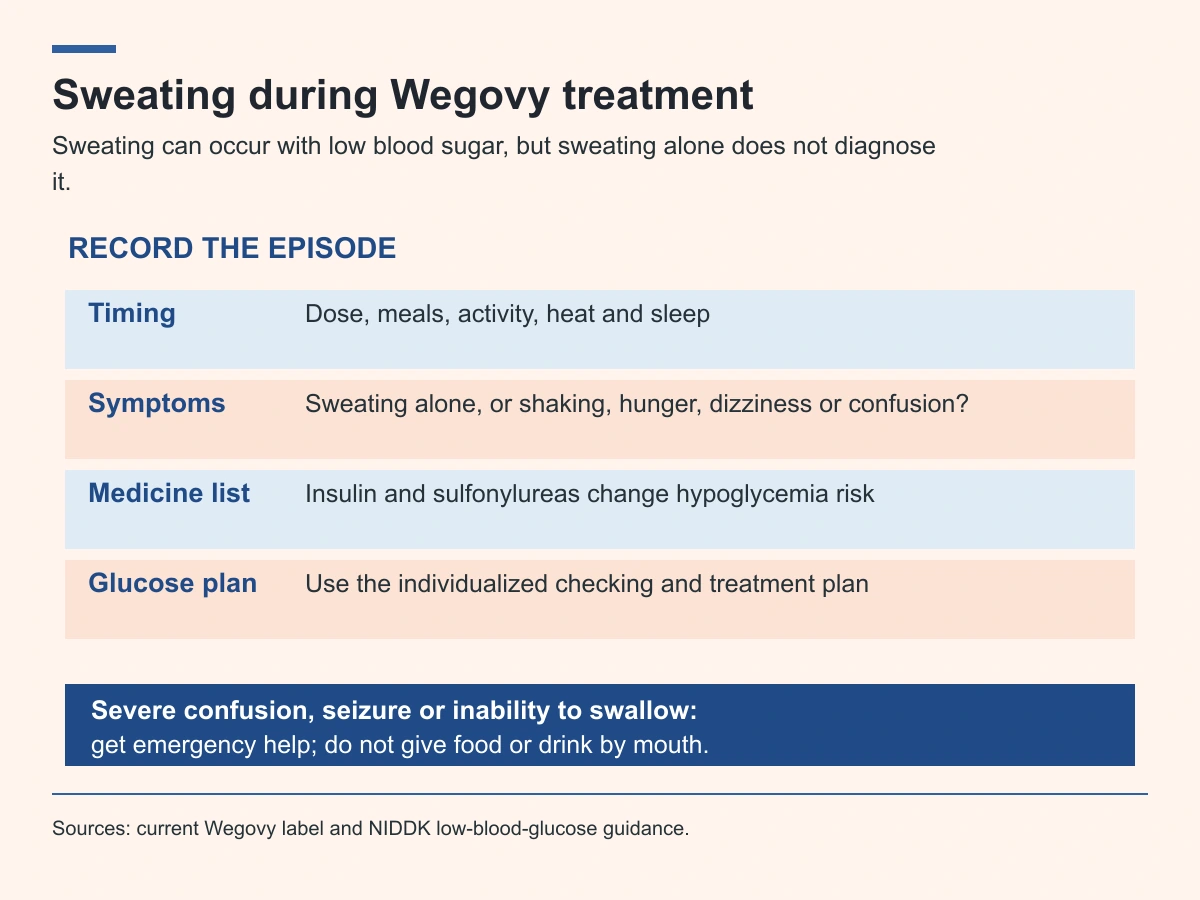
Sweating during Wegovy treatment deserves attention to the circumstances and accompanying symptoms. It does not automatically mean the medicine is causing the episode. Wegovy’s medication guide specifically lists sweating among the possible signs of low blood sugar, an important concern for people with diabetes, especially those also taking insulin or a sulfonylurea.
If sweating comes with severe confusion, a seizure, loss of consciousness, or an inability to manage a suspected low safely, get emergency help. For less severe episodes, the useful questions include your glucose reading if relevant, recent meals, other medicines, illness, and the timing of the symptoms.
This guide focuses on Wegovy and its current product information. For broader treatment questions, see our semaglutide questions guide.
Start with the episode, not an assumed cause
Notice whether you are sweating after physical activity, in a hot room, during a brief wave of heat, or unexpectedly while resting. Also note whether you feel shaky, hungry, dizzy, confused, unusually weak, or aware of a racing heartbeat.
These details help determine what to do next. They do not diagnose the cause. Sweating can occur in several situations, and the fact that an episode happened after starting Wegovy does not establish that every episode is a direct drug effect.
The current medication guide includes sweating, shakiness, dizziness, hunger, weakness, fast heartbeat, and confusion among low-blood-sugar symptoms. It also warns about other problems that require their own assessment, including persistent gastrointestinal symptoms, serious allergic reactions, and increased resting heart rate. Wegovy prescribing and patient information.
An emergency symptom should not be handled by keeping a longer diary. Get help first; the timeline can be reviewed afterward.
Why blood sugar is part of the discussion
Wegovy lowers blood glucose and can cause hypoglycemia, the medical term for low blood sugar. The prescribing information emphasizes increased risk when semaglutide is used with insulin or a medicine that stimulates insulin release, such as a sulfonylurea. Wegovy prescribing information.
Sweating alone cannot tell you your glucose level. A reading, when you have the equipment and can check safely, is more informative than guessing from whether your skin feels clammy. Conversely, severe symptoms need prompt action even if a reading is unavailable.
Meals and illness can change the situation for someone using glucose-lowering medicines. NIDDK explains that skipped or delayed meals, not getting enough carbohydrate, increased physical activity, alcohol without enough food, and difficulty eating during illness can contribute to lows in people with diabetes. NIDDK low blood glucose guidance.
If Wegovy has changed how much you eat, tell the clinician managing your diabetes. They may need to review the whole diabetes plan. Do not independently reduce insulin, stop another diabetes prescription, or deliberately skip meals to test whether sweating disappears.
What to do if you suspect a low
Follow the hypoglycemia plan your diabetes team has given you. NIDDK describes a blood glucose level below 70 mg/dL as low for many people with diabetes, while noting that an individual’s action threshold can differ. NIDDK low blood glucose guidance.
For an awake person who can treat a low safely, NIDDK’s general guidance uses 15 to 20 grams of glucose or carbohydrate, a repeat glucose check after 15 minutes, and further treatment if the level remains low. The correct rescue product and any special instructions should be part of your own plan. This is a response to low glucose, not a recommendation to drink sugary beverages for every sweating episode.
Severe hypoglycemia may make self-treatment impossible. NIDDK advises planning for prescribed emergency glucagon and teaching others how to use it and call 911. If someone is unconscious, having a seizure, or cannot safely manage the episode, get emergency help rather than trying to continue ordinary meal planning. NIDDK low blood glucose guidance.
After a low, tell your diabetes team what happened, even if you felt better after treatment. Repeated episodes need a review of medicines, eating, activity, and monitoring. Resolving the immediate episode does not explain why it occurred.
A practical way to sort the next step
| Situation | Useful information | Response |
|---|---|---|
| Severe confusion, seizure, collapse, or inability to manage a suspected low | Whether emergency glucagon is available; do not delay help to collect data | Get emergency help and follow the established rescue plan |
| Sweating with shakiness or hunger in a person at risk of hypoglycemia | Glucose reading, medicines, last meal, activity | Follow the diabetes team’s low-glucose plan and report the episode |
| Repeated sweating or a racing heart while resting | Duration, glucose if relevant, other symptoms, medicine changes | Contact the clinician for assessment |
| Recurring drenching night sweats | Sleep conditions, fever, cough, unexplained weight loss, other prescriptions | Arrange a medical review rather than assuming Wegovy is the cause |
| Sweating in a hot room or after activity | Whether it settles with ordinary cooling and rest | Observe the context; new, persistent, or concerning symptoms still need review |
This table is not a diagnostic tool. Several situations can overlap, and a reassuring explanation should not override serious symptoms.

Wegovy injections and tablets need the right instructions
The current U.S. Wegovy prescribing information covers both injections and tablets. That makes it especially important to identify the route on your own prescription. Weekly injection directions and daily tablet directions are not interchangeable. Wegovy prescribing information.
Bring the exact product name, route, strength, and schedule to a review of sweating. Also say whether treatment has recently started, the dose has changed, or you have missed doses. That information helps the clinician interpret the timeline.
Do not treat an Ozempic side-effect percentage as a Wegovy sweating rate. Even when medicines contain semaglutide, doses, study populations, formulations, and outcomes can differ. A hypoglycemia percentage is also not the percentage of patients who experienced sweating.
If your question involves a weekly injection device, our Wegovy injection guide covers presentation-specific questions. If it concerns a late or missed dose, use the semaglutide missed-dose and restart guide and your current product instructions. Changing dose timing is not a general solution for unexplained sweating.
Night sweats can have other causes
Waking sweaty because the bedroom is hot is different from repeatedly soaking clothing or bedding despite a cool sleeping environment. NHS guidance distinguishes ordinary overheating from night sweats and lists menopause symptoms, anxiety, some medicines, low blood glucose, and alcohol or drug use among possible explanations. NHS night sweats guidance.
If you have diabetes, nighttime lows belong in the discussion. NIDDK notes that low glucose during sleep may cause damp pajamas or sheets, nightmares, and tiredness or confusion after waking. A clinician can help decide how to assess suspected overnight episodes. NIDDK low blood glucose guidance.
If you also have changing menstrual cycles or hot flashes, share that history. Our perimenopause symptom guide may help you prepare questions, but it does not mean hormone therapy is the answer to every nighttime symptom.
Recurring night sweats that wake or worry you, or that occur with fever, cough, diarrhea, or unexplained weight loss, should be evaluated. Do not wait for the symptom to fit a particular medicine explanation. NHS night sweats guidance.
Poor intake, vomiting, and dehydration change the review
Sweating alongside persistent nausea, vomiting, or diarrhea should prompt a broader assessment of how you are doing. Wegovy’s label warns that gastrointestinal effects can lead to dehydration and kidney problems. It advises patients to report symptoms that do not go away. Wegovy prescribing and patient information.
Tell your clinician if you cannot keep fluids down, are urinating much less than usual, or are struggling to eat. The question is not simply whether sweating appears on a side-effect list. Your ability to maintain fluids, manage diabetes medicines, and function safely matters.
For ongoing symptoms, see semaglutide nausea and vomiting. General suggestions about meals are not a substitute for evaluating severe or persistent symptoms.
If intake has become very limited, ask for help maintaining adequate nutrition. Our protein and muscle guide explains why preserving function matters during weight management. More weight loss is not automatically a reason to ignore weakness or difficulty eating.

What to bring to the appointment
A brief episode record is useful when you are well enough to make one. Include the time, duration, whether you were asleep or active, and the symptoms that occurred together.
Add any glucose result and what you did in response. Record the exact medicines you take, including insulin, sulfonylureas, stimulants, antidepressants, steroids, supplements, and nonprescription products. Note recent changes rather than assuming the newest medicine is the only possible explanation.
Also describe recent eating, vomiting or diarrhea, alcohol, sleep conditions, and caffeine use. FDA notes that caffeine sensitivity varies and that excessive intake can cause effects such as palpitations, anxiety, and sleep problems. That makes total intake useful context when a sweating episode also involves those symptoms; it does not prove caffeine caused the episode. FDA caffeine guidance.
Ask who should review the issue if different clinicians manage Wegovy and your diabetes treatment. A shared medication list and a clear contact plan can prevent important information from being split between appointments.
Common questions about sweating on Wegovy
Is sweating listed in the Wegovy information?
Yes, the medication guide lists sweating among possible low-blood-sugar symptoms. That does not establish that every sweaty episode is hypoglycemia or a direct Wegovy reaction. The other symptoms and your medical context matter. Wegovy patient information.
Can I have a low if I do not use insulin?
Insulin is not the only relevant medicine. Sulfonylureas and some other diabetes treatments can contribute to lows, and Wegovy’s label states that it can cause hypoglycemia. Ask your clinician about your complete prescription list rather than assuming the absence of insulin rules it out.
Should I stop Wegovy because I am sweating?
Sweating alone does not supply a universal stopping rule. Get urgent help for severe symptoms, follow your diabetes rescue plan if relevant, and contact your clinician for product-specific instructions. Serious reactions have their own label directions and need prompt assessment.
Does sweating show that Wegovy is working better?
No. Sweat amount is not a measure of weight-management benefit or an appropriate dose. Treatment response should be assessed through the agreed health goals, tolerability, and follow-up.
Where can I review treatment questions before starting?
Read the semaglutide questions guide and CoreAge Rx’s semaglutide service information. Ask about the exact prescribed product, other diabetes medicines, symptom reporting, and what to do if eating or glucose levels change.
Educational information for adults; individual treatment decisions require a qualified clinician. Sources reviewed October 2, 2026. Original AI-generated article images depict fictional people and objects, not patient outcomes. Other editorial images are illustrative. Graphics summarize the cited sources.