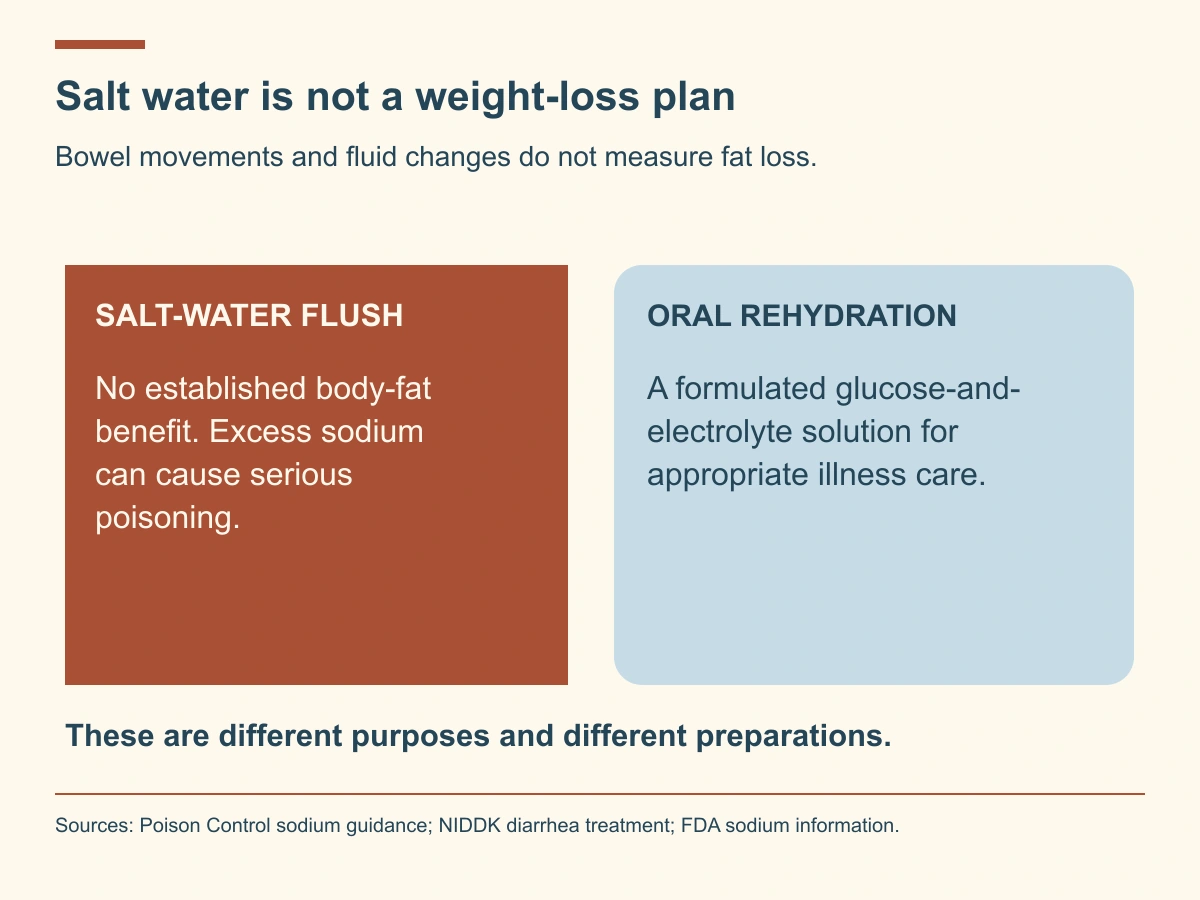
Drinking salt water is not an established way to lose body fat. A “salt-water flush” may change bowel movements or fluid balance, but a lower scale reading afterward does not show that fat was lost. Excessive salt intake can cause dangerous sodium poisoning, so a flush should not be treated as a harmless wellness routine.
If you or someone else has already swallowed a large amount of salt or concentrated salt water, contact Poison Control in the United States at 1-800-222-1222 for advice. Call 911 for a seizure, collapse, trouble breathing, or inability to awaken the person. Do not induce vomiting. Poison Control sodium information; poisoning first aid
What does a salt-water flush actually claim to do?
Online flush advice often links a bowel movement, “cleansing,” a flatter-looking stomach, and weight loss as though they were one outcome. They are different. Passing stool changes the contents of the digestive tract. Losing fluid changes body water. Neither observation establishes a reduction in stored body fat.
A plan can also change several things at once: someone may skip meals, drink an unusual mixture, and weigh under different conditions. The resulting number cannot identify which change caused it or whether it was beneficial. Our water weight versus fat-loss guide explains what short-term measurements can and cannot tell you.
This article does not provide a flush recipe or a target salt dose. The reviewed safety evidence supports avoiding excessive salt ingestion, and there is no demonstrated weight-loss benefit here that would justify turning it into a dosing routine.
Why can the scale change without fat loss?
Body weight includes water, digestive contents, bone, muscle, organs, and fat. The scale adds those components together. A change over a few hours is not a direct measurement of any one compartment.
Sodium also affects fluid balance. FDA explains that sodium attracts water and that higher sodium intake can contribute to increased blood volume and blood pressure. The relationship is more complicated than “salt makes you lose water.” It is not a reliable method for producing a desired cosmetic change. FDA: sodium in your diet
If a flush produces diarrhea, any rapid drop should not be celebrated as a fat-loss result. Fluid and electrolyte losses can make a person unwell. Restoring hydration or eating normally afterward may move the scale again without representing an equivalent gain in fat.
| What someone notices | What it may reflect | What it does not prove |
|---|---|---|
| A bowel movement | A change in digestive contents | Fat being removed from the body |
| A quick scale drop | Fluid, food, stool, or measurement differences | A safe or lasting weight-loss result |
| Less abdominal fullness | A change in symptoms or contents | A measured reduction in abdominal fat |
| A later rebound | Normal intake and fluid changes | That the person needs another flush |
Why too much salt can be dangerous
Sodium is necessary for normal body function, but an excessive amount can overwhelm the body’s ability to maintain a safe balance. Poison Control describes high sodium levels as potentially life-threatening and explains effects on the brain and other organs. Symptoms can include intense thirst, nausea, vomiting, and weakness; severe poisoning can involve seizures, coma, or death. Poison Control: too much sodium
The risk cannot be assessed from the words “sea salt,” “pink salt,” or “natural.” A specialty salt still supplies sodium. The amount swallowed, concentration, the person’s size and health, and symptoms matter. Do not rely on a social-media recipe or the fact that another person reports tolerating it.
Do not try to correct suspected sodium poisoning by forcing large volumes of water or following another internet mixture. Contact Poison Control or emergency care for individualized instructions. Keep the container and information about what was consumed available for the responder.
Is a salt-water flush the same as oral rehydration solution?
No. A formulated oral rehydration solution is designed to replace fluid and electrolytes in an appropriate balance during certain illnesses. NIDDK describes oral rehydration solutions as containing glucose and electrolytes and discusses their use in diarrhea care. That is different from drinking concentrated salt water to provoke a bowel movement or lower the scale. NIDDK diarrhea treatment
A sports drink, plain water, a commercial oral rehydration product, and a homemade salt mixture are not interchangeable in every clinical situation. Older adults and people with diabetes, kidney disease, or other health conditions may need specific advice about the product and amount of fluid.
If you are vomiting or have diarrhea, ask about rehydration and the cause of the illness rather than adding a flush. If you have prescribed fluid or sodium limits, follow your care team’s plan. This distinction is especially relevant for people whose medication side effects already make eating and drinking difficult.

What if you take semaglutide or another GLP-1 medicine?
Adding a salt-water flush is not a solution for constipation, a plateau, or a disappointing weigh-in during prescribed treatment. Wegovy’s label warns about kidney injury associated with dehydration from gastrointestinal reactions. Diarrhea or vomiting from another source can complicate that situation. Wegovy prescribing information
Tell your clinician if constipation is persistent, if you cannot maintain intake, or if symptoms change after a medication adjustment. The GLP-1 constipation guide explains practical questions and warning signs. The semaglutide plateau guide addresses a slower weight trend without treating purging as a way to restart progress.
Severe or persistent abdominal pain, repeated vomiting, marked weakness, or inability to keep fluids down needs prompt medical attention. Do not assume that a flush is “working” because you feel ill or spend a long time in the bathroom.
What does the 2,300 mg sodium number mean?
FDA uses less than 2,300 mg of sodium per day as the Daily Value for adults and children age 14 and older. That is a nutrition-label reference for total daily intake. It is not a safe dose of salt to dissolve in water, a poisoning threshold, or a personalized recommendation for every person. FDA sodium labeling guidance
Nutrition labels report sodium in milligrams, while a kitchen recipe may describe salt by spoonfuls or grams. Those are not the same measurement. The sodium amount also needs to be considered across the foods and drinks actually consumed, not just the salt added at the table.
For food comparisons, FDA describes 5% Daily Value or less per serving as low and 20% or more as high. Look at the labeled serving and the amount you eat. Our saltine-cracker guide and Tajín guide apply that label-reading approach to ordinary foods. Neither suggests eliminating every source of sodium or using a supplement mixture to manipulate weight.
What should you do about bloating or swelling instead?
First distinguish a feeling of abdominal fullness from visible swelling in the feet, legs, face, or another area. Different symptoms can have different causes, and a photograph or a salt intake estimate cannot make the diagnosis.
MedlinePlus explains that swelling can reflect fluid accumulation and may be associated with medicines or conditions involving the heart, kidneys, liver, or other systems. New or unexplained swelling deserves clinical assessment. MedlinePlus swelling information
If swelling accompanies trouble breathing, chest symptoms, fainting, or rapid deterioration, seek urgent help. For a recurring but less urgent pattern, record when it occurs, the location, other symptoms, and any medicine changes. Do not start a flush or stop a prescription to test a theory on your own. The Wegovy water-retention guide covers related medication questions.

A more useful drink and weight-management plan
For ordinary daily drinking, water can be a practical choice, and replacing sugary beverages with water can reduce calorie intake. CDC notes that fluid needs vary with factors such as activity, health, and the environment. There is no need to add a weight-loss ingredient to every glass. CDC water and healthier drinks
Choose a plan that supports regular meals, tolerable activity, sleep, and any clinician-directed treatment. If weighing is useful for you, compare readings under consistent conditions over time. Repeatedly trying to force a lower number over a few hours can distract from both health and the longer-term pattern.
The water and drinks guide compares everyday hydration questions. If you want to discuss prescription treatment, the CoreAge Rx semaglutide and tirzepatide pages describe assessment-based compounded services for eligible adults. Those services do not make salt-water flushing part of a proven treatment plan, and compounded medicines are not FDA approved. FDA compounded GLP-1 information
Frequently asked questions
Does drinking salt water on an empty stomach burn fat?
The reviewed evidence does not establish that benefit. An empty stomach does not turn excessive sodium intake into a safe weight-loss treatment. Nausea, diarrhea, or a temporary scale change is not proof of fat burning.
Is Himalayan pink salt safer for a flush?
The name and color do not remove its sodium content or make a flush an established treatment. Do not use specialty salt branding as a dosing or safety guide.
Is plain water enough if I have severe diarrhea?
The appropriate replacement plan depends on the illness, losses, and your health. NIDDK discusses fluids and electrolytes, including oral rehydration solutions in relevant situations. Seek clinical advice for substantial losses, concerning symptoms, or conditions that affect fluid management.
What if I already tried a flush and feel fine?
Do not repeat it to chase a lower scale reading. If the amount was large, the mixture was concentrated, or you are uncertain about the exposure, contact Poison Control for case-specific advice even before deciding that the absence of symptoms means there is no risk.
Educational information for adults; individual treatment decisions require a qualified clinician. Sources reviewed October 5, 2026. Original AI-generated article images depict fictional people and objects, not patient outcomes. Other editorial images are illustrative. Graphics summarize the cited sources.