Mandarins can be a useful fruit choice for weight management: they are portable, easy to portion, and provide water, carbohydrate, fiber, and vitamin C. They do not burn body fat on their own, and there is no universal number you must eat each day to lose weight. The portion and the wider eating pattern matter.
What counts as a mandarin?
Mandarins are a group of small citrus fruits; the names on store displays can include different varieties. Fruit size, sweetness, seed content, and nutrition can vary. A small clementine and a larger tangerine should not automatically be assigned the same weight or nutrient total.
For a transparent reference, this article uses USDA FoodData Central’s SR Legacy record for “Tangerines, (mandarin oranges), raw,” FDC 169105. That record describes an average reference food rather than a laboratory measurement of the exact fruit in your kitchen. USDA FoodData Central downloadable data.
If a packaged product provides its own label, use that label for the product. Fresh fruit, canned segments in syrup, fruit cups, dried fruit, and juice should not all be counted as the same preparation.
Nutrition in a measured portion
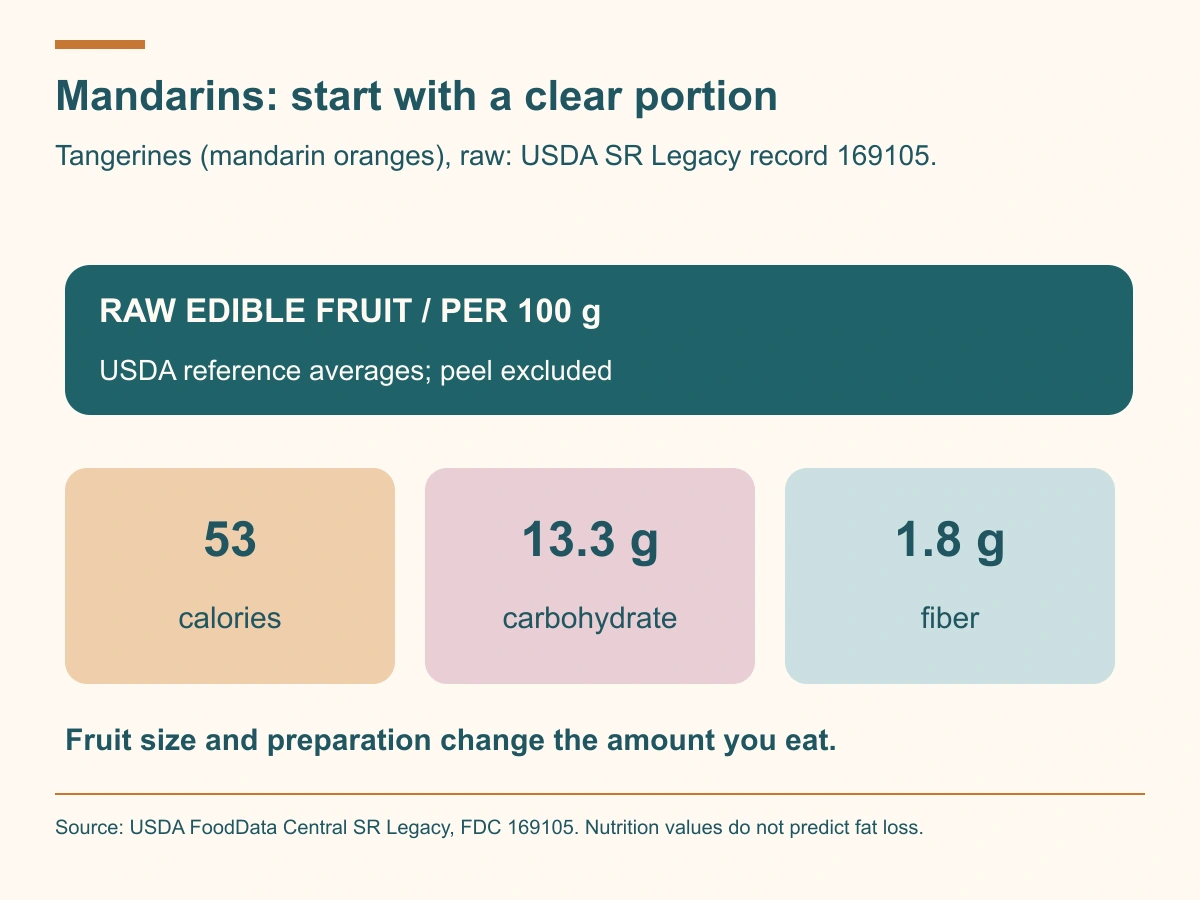
The USDA reference lists 53 calories, 13.3 grams of carbohydrate, 1.8 grams of fiber, and 26.7 milligrams of vitamin C per 100 grams of raw edible fruit. It also lists approximately 0.8 grams of protein and 0.3 grams of fat. These are reference averages, not a weight-loss prescription. USDA record 169105.
The table below scales those values to the reference portions. Peel is not included in the edible-fruit weight. Values are rounded, so they should not be treated as more precise than the underlying food data.
| Reference portion | Edible weight | Calories | Carbohydrate | Fiber |
|---|---|---|---|---|
| Small reference fruit | 76 g | About 40 | About 10.1 g | About 1.4 g |
| Medium reference fruit | 88 g | About 47 | About 11.7 g | About 1.6 g |
| 100 g edible fruit | 100 g | 53 | 13.3 g | 1.8 g |
| One reference cup of sections | 195 g | About 103 | About 25.9 g | About 3.5 g |
A cup contains a different amount of fruit from one small piece. If you track carbohydrate for diabetes, this difference can be more useful than deciding all mandarins are simply “low sugar.” Your own fruit may be a different size.
Why whole fruit can fit a weight-management plan
Whole fruit offers nutrients in a convenient food form. Mandarins can be carried to work, included in a lunch, or kept available when you want a sweet snack. That convenience may make a planned choice easier, but it does not establish a special fat-loss mechanism.
NIDDK’s adult healthy-eating guidance includes fruit among nutrient-rich foods and emphasizes portions and the overall pattern. If mandarins replace a snack that did not suit your goals, the change may be useful. If they are added on top of an already adequate intake, the effect is different.
Our fruit and weight-management guide explains why no single fruit needs to be ranked as the best for everyone. Preference, availability, cost, and the rest of the meal all matter.
Natural sugar is not the same as added sugar
The sugar naturally present in an intact mandarin is included in its total carbohydrate. That does not make the fruit nutritionally identical to a sweetened drink or candy. It also does not mean the carbohydrate can be ignored when you have a specific meal or glucose-management plan.
FDA explains that total sugars include naturally occurring sugars as well as added sugars, while the added-sugars line identifies sugars added during processing or preparation. FDA Nutrition Facts guide. A fruit cup packed in syrup can therefore differ from plain fresh fruit even when both show mandarin segments on the package.
Check the packing liquid and the actual serving. “Fruit flavored” does not mean a product provides the same nutrients or fiber as whole fruit, and a “no added sugar” statement does not mean zero carbohydrate.
Whole mandarins, juice, and canned segments
Whole fruit and juice are different eating experiences. Juice is easy to drink quickly and its portion may represent several pieces of fruit. The fiber content can also differ. Use the label on the actual juice rather than assigning it the whole-fruit values in this article.
Canned or packaged segments can be a convenient alternative. Compare products packed in water, juice, or syrup, and check whether the label’s nutrition values apply to drained fruit or the product as sold. Do not assume that draining always makes two differently prepared products identical.
A smoothie that includes whole fruit can retain more of the fruit’s material than strained juice, but the complete recipe still matters. Include the other fruit, milk, yogurt, sweeteners, and portion size in your review. A drink is not automatically a light snack because it contains citrus.

How many should you eat?
There is no universal mandarin count for weight loss. Your needs depend on the rest of the day, appetite, activity, health conditions, and the size of the fruit. One person may want a piece with lunch; another may prefer a larger portion as part of a snack.
Use the reference table to understand amounts rather than to set a compulsory limit. If you are hungry after fruit alone, consider whether the snack needs another component or whether your previous meal was inadequate. Trying to suppress persistent hunger with repeated tiny fruit portions may not solve the underlying problem.
The balanced-meal guide can help place fruit within a complete pattern. A dietitian can also help if tracking exact portions becomes stressful or if your medical needs require more specific guidance.
Snack and meal ideas
Mandarin with plain yogurt: This combines fruit with a food that can provide protein. Compare yogurt labels because protein and added sugar vary. The yogurt guide offers practical examples.
Mandarin with a deliberate portion of nuts: Nuts add texture and nutrients but also energy. Choose an amount you enjoy instead of repeatedly adding handfuls because both ingredients have a healthy reputation.
Segments in a meal: Add them to a grain bowl or salad with a suitable protein source. The fruit provides flavor and variety; it does not replace the need to consider the rest of the meal.
Fruit alongside breakfast: A mandarin can accompany eggs, yogurt, or another breakfast you enjoy. Our protein breakfast ideas explain how to build a meal around daily needs instead of a single required calorie number.
These are examples, not mandatory combinations. Adapt them for allergies, preferences, budget, and any dietary restrictions you have been given.
Can you eat mandarins at night?
Eating fruit in the evening is not automatically incompatible with weight management. Consider the reason for the snack, the amount, the rest of the day, and how close it is to bedtime. A planned snack and unplanned continuous grazing are different routines.
Citrus can be a reflux trigger for some people. NIDDK explains that triggers vary and that people with nighttime or lying-down symptoms may benefit from finishing meals at least three hours before lying down. NIDDK reflux guidance. If mandarins repeatedly trigger symptoms, discuss a better-tolerated option rather than assuming everyone must avoid them.
Our meal-timing guide discusses the wider question. There is no need to turn a flexible evening routine into a rule that one bite of fruit after a set hour ruins the day.
What if you have diabetes?
Mandarins contain carbohydrate, so portion size belongs in your existing diabetes plan. The reference table can help you understand why one small fruit and a cup of segments are different amounts. It is not an insulin-dosing tool.
Ask your diabetes team how fruit fits your usual meals, activity, monitoring, and medicines. If you use a glucose sensor, interpret patterns with that plan rather than declaring a food forbidden based on one isolated result. Different portions and meal combinations can create different experiences.
Do not replace your prescribed hypoglycemia treatment with an improvised fruit rule. NIDDK emphasizes prompt treatment of low glucose with an appropriate fast-acting carbohydrate and further action according to the care plan. NIDDK low-glucose guidance. A weight-management target should never delay treatment of a low result.
Teeth, digestion, and individual tolerance
Citrus is acidic. The American Dental Association explains that acidic foods and drinks can contribute to enamel erosion and recommends considering them within meals and discussing dental concerns with a dentist. ADA dietary-acid guidance.
This is not a reason to label all citrus unhealthy. It is a reason to consider frequency of exposure, dental symptoms, and the rest of your habits. Repeatedly sipping acidic juice all afternoon is a different routine from eating fruit with a meal.
If you notice consistent digestive discomfort, reduce the uncertainty by recording the portion and context. Seek assessment for persistent or concerning symptoms rather than assuming a fruit allergy or medication interaction from timing alone.

Mandarins during GLP-1 treatment
A small, convenient fruit may be appealing when appetite is lower. It can be part of a meal or snack, but repeatedly replacing most meals with fruit can leave protein and other needs unmet. The goal is adequate nutrition as well as tolerable portions.
Our GLP-1 food guide and semaglutide protein guide explain how to review the overall pattern. Persistent vomiting, dehydration, or inability to eat enough warrants contact with the care team.
If you are exploring CoreAge Rx semaglutide care, discuss nutrition and medical history during the assessment. The service describes compounded treatment for appropriate patients; liking fruit or wanting snack advice does not establish a need for a prescription.
Common questions
Do mandarins burn belly fat?
No specific belly-fat effect is established by their nutrient content. They can be part of an eating pattern that supports your goals, but no fruit selects where body fat changes.
Are two mandarins always the same as one serving?
No. Size and the purpose of the serving definition matter. Use a relevant label or edible weight when you need a more specific estimate.
Are mandarins better than oranges for weight loss?
There is no universal winner based on the name alone. Compare portions, convenience, cost, and enjoyment. Variety can make an eating plan easier to maintain.
Can fruit replace dinner?
Fruit can contribute to dinner, but fruit alone usually leaves out other important components. Review the complete day and meal balance rather than making one low-calorie food responsible for all your nutrition.
Educational information for adults; individual treatment decisions require a qualified clinician. Sources reviewed October 5, 2026. Original AI-generated article images depict fictional people and objects, not patient outcomes. Other editorial images are illustrative. Graphics summarize the cited sources.