
Saltine crackers can fit into a healthy eating pattern, but a typical plain saltine is not a substantial source of fiber or protein. Whether it is a useful snack depends on the amount, what you eat with it, and your own nutrition and medical needs.
It helps to move beyond “healthy or unhealthy” and ask a more practical question: what does this particular serving contribute, and what would make the complete snack satisfying? A small calorie number does not make a cracker a weight-loss treatment, and enjoying saltines does not automatically make an eating plan unsuccessful.
What is in a verified saltine serving?
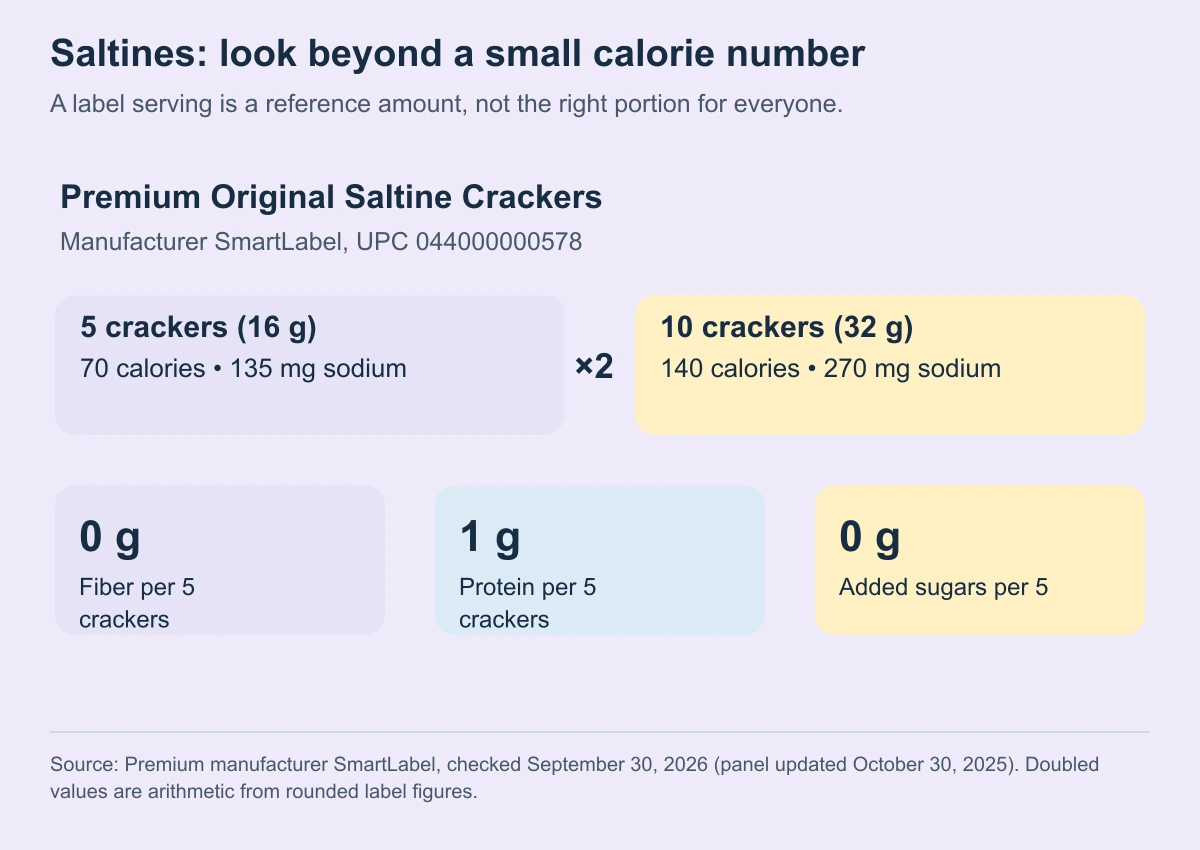
The manufacturer SmartLabel for Premium Original Saltine Crackers, topped with sea salt, identifies five crackers weighing 16 grams as its serving. This example is UPC 044000000578, the one-pound package. It should not be applied to every brand, flavor, unsalted-top version, or package size.
| Nutrition detail | Per 5 crackers, 16 g |
|---|---|
| Calories | 70 |
| Total fat | 1.5 g |
| Saturated fat | 0 g |
| Sodium | 135 mg |
| Total carbohydrate | 12 g |
| Dietary fiber | 0 g |
| Total sugars | 0 g |
| Added sugars | 0 g |
| Protein | 1 g |
Source: Premium manufacturer Nutrition Facts, checked September 30, 2026. The linked panel was updated October 30, 2025. Nutrition labels use rounded values; check the package you buy for current information.
These figures are a starting point for comparing portions and products. They are not a suggested meal, a personalized daily limit, or proof that every nutrient is literally absent at amounts below label-rounding thresholds.
Do saltines have fiber? Are they high in fiber?
The exact Original Premium serving above lists zero grams of dietary fiber. That makes it a limited fiber source in the labeled amount. It would be inaccurate to describe that serving as high in fiber.
Another cracker with a whole-grain ingredient can have a different fiber amount, but check its own panel. A whole-wheat or multigrain name should not be used to invent a number, and different cracker counts can represent different weights.
Our healthy-cracker comparison looks at verified Ritz and Triscuit examples and explains why serving grams matter. It also distinguishes a whole-grain ingredient from a package that merely uses several grain names.
If increasing fiber is a goal, consider the whole snack or meal rather than expecting plain saltines to provide it. Beans, fruits, vegetables, and other suitable foods can contribute different nutrients. Choose an approach that fits your tolerance, particularly if digestive symptoms already limit what you can eat.
Does enriched flour make saltines whole grain?
The reviewed manufacturer product information identifies unbleached enriched flour. The SmartLabel ingredient list names enrichment nutrients such as niacin, iron, thiamine, riboflavin, and folic acid. Those details help explain the product; they do not turn the ingredient wording into a whole-grain claim.
The fiber line provides another useful check. In this example, added enrichment nutrients coexist with zero grams listed dietary fiber. A vitamin or mineral contribution should not be treated as evidence that a cracker supplies substantial fiber or protein.
Read ingredients and nutrients together. “Unbleached,” a pale or brown appearance, and a crunchy texture do not settle whether a product meets the specific need you have in mind. The useful question may be fiber, sodium, convenience, or simply a food you enjoy with another component.
Are saltine crackers high in sodium?
The verified five-cracker serving lists 135 milligrams sodium, or 6% Daily Value on the manufacturer panel. That is the amount in the reference serving, not in a sleeve, bowl, or entire package.
The FDA describes 5% Daily Value or less as low and 20% or more as high for a listed serving. The 6% example sits above that low reference and below that high reference. That does not determine whether the amount fits a person’s individualized sodium restriction. FDA Nutrition Facts guidance.
If the amount doubles to ten crackers of this exact product, the arithmetic is about 270 milligrams sodium and 140 calories. Those are estimates from rounded label values. A salty topping or soup can add more sodium, so assess the complete snack rather than just the crackers.
Unsalted-top products may differ, but the name is not a substitute for checking their own panel. Removing visible salt does not establish a zero-sodium food.
Are saltines fattening or bad for weight loss?
No single ordinary food automatically determines body-fat change. Saltines contribute energy, and the amount matters within the overall eating pattern. The same is true of their toppings and the rest of the day.
A snack chosen solely because five crackers have 70 calories may be too small or limited for its intended purpose. If it leaves you hungry, a more complete snack may be more useful than repeatedly reducing the cracker portion. A higher-calorie combination is not automatically the worse choice if it helps meet your needs and fits your plan.
Our calorie-intake guide explains why calorie estimates need context, adequate nourishment, and an approach a person can maintain. Saltines are neither a fat-burning food nor a required food ban.
How can you make a saltine snack more satisfying?
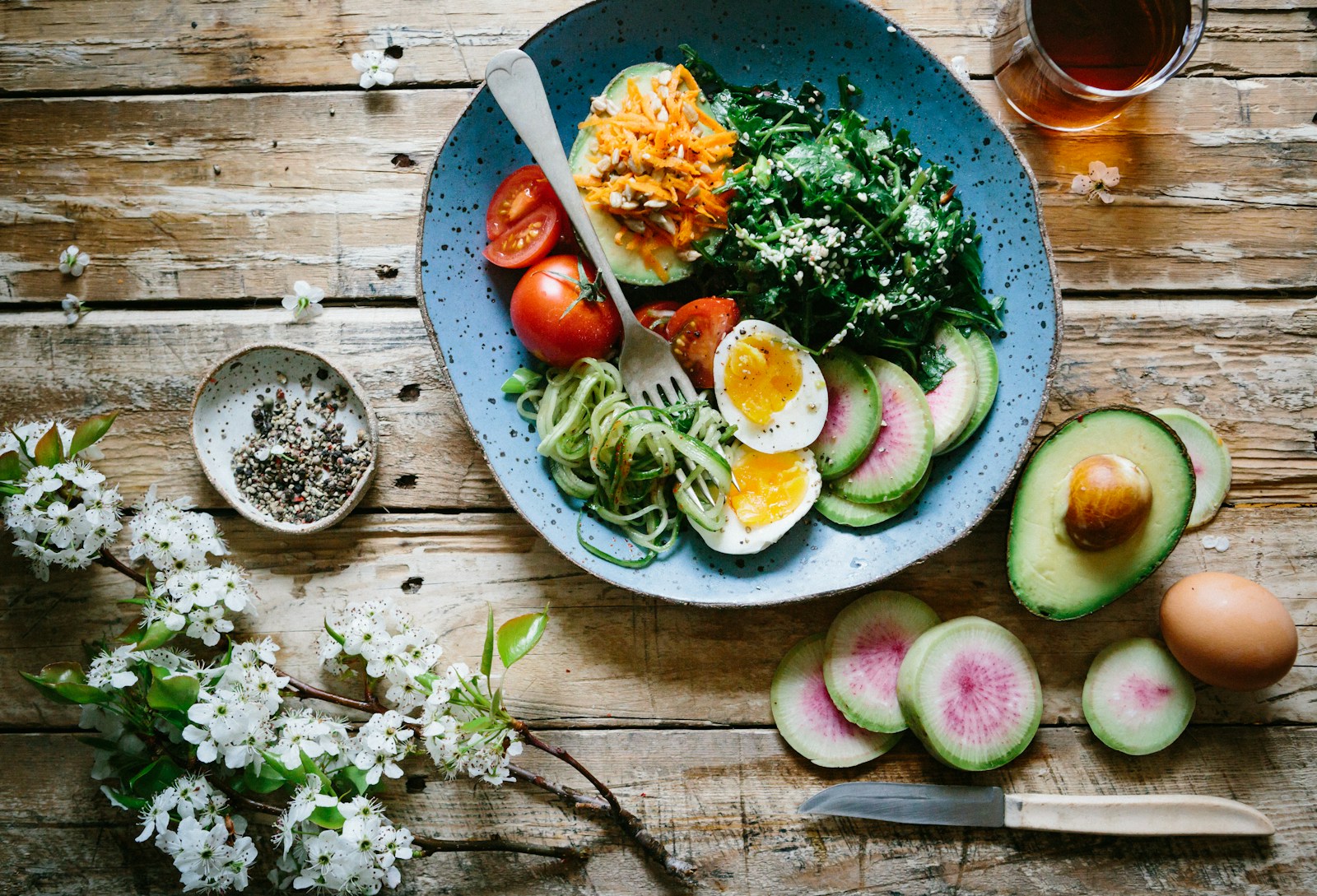
Treat the crackers as one component. Choose additions that supply nutrients or variety you want, while considering allergies, appetite, storage, and any restrictions.
| Snack idea | What the added food can contribute | What to check |
|---|---|---|
| Saltines with hummus or bean spread | A different source of protein and fiber | Sodium and personal tolerance |
| Saltines with egg or tofu salad | A protein-containing component | Preparation, refrigeration, and allergies |
| Saltines with nut or seed butter and fruit | A different mix of nutrients and textures | Ingredient list, allergies, and the complete amount |
| Saltines alongside soup | A convenient carbohydrate accompaniment | The soup’s sodium, protein, and overall meal size |
These examples are not prescribed portions or promises about fullness for every person. If a particular topping does not suit you, choose another that meets your dietary needs. Our balanced-meal guide offers a broader framework for assembling foods that work together.
Does a cheese or cream-cheese topping change the answer?
It changes the complete snack. A topping can contribute calories, fat, sodium, and sometimes protein. The contribution depends on the actual product and amount, rather than the word “cheese” alone.
Cream cheese is not interchangeable with every higher-protein topping. Our cream-cheese nutrition guide uses an exact manufacturer serving to explain that distinction. The question is not whether you are allowed to enjoy a spread; it is whether the combination meets the purpose you have for the snack.
When comparing snacks, include the toppings consistently. Comparing plain saltines with a fully topped alternative can confuse the effect of the crackers with the effect of the added foods.
Can people with diabetes eat saltines?
The verified serving contains 12 grams total carbohydrate despite listing zero grams total sugar. A zero-sugar line does not make the food carbohydrate-free or remove it from a diabetes meal-planning discussion.
NIDDK’s guidance emphasizes an individualized eating and treatment plan. Consider the amount, the rest of the meal, glucose monitoring when recommended, and the medicines being used. Ask the clinician or dietitian how a snack fits that plan rather than taking a universal cracker count from an article. NIDDK diabetes nutrition guidance.
Pairing foods can make a snack more complete, but it does not guarantee a particular glucose response or authorize a change to insulin or other medicines. The actual treatment plan still matters.
Are saltines useful when you feel nauseated?
A plain cracker may be easier for some people to tolerate when appetite is limited. That personal preference is not evidence that saltines treat the cause of nausea or should replace normal meals for an extended period.
If nausea occurs during GLP-1 treatment, assess how much you are able to eat and drink and whether symptoms persist. A diet consisting mostly of a few crackers can become inadequate even if those crackers feel manageable. Our semaglutide nausea guide explains when the symptom pattern needs clinical review.
Repeated vomiting, inability to keep fluids down, severe pain, or dehydration signs needs prompt assessment. Do not use a tolerated snack to delay that care. If diarrhea is also present, follow the appropriate guidance on fluid replacement and evaluation. NIDDK diarrhea treatment.

What if you take semaglutide or tirzepatide?
A smaller appetite can make the nutritional quality of the foods you do eat more relevant. Plain saltines can be part of the pattern, but the verified serving contributes little protein and no listed fiber. Think about the other foods you are managing and any symptoms that limit them.
Our GLP-1 food guide and semaglutide protein and muscle guide discuss planning adequate intake during treatment. Nutrition support should respond to actual needs rather than turn a cracker into a specialized treatment product.
For questions about available prescription care and clinical eligibility, see CoreAge Rx’s semaglutide information or tirzepatide information. Neither medicine requires a universal saltine rule, and food preferences do not determine eligibility on their own.
What is the simplest way to choose?
Check the product and serving weight first. Look at fiber, protein, sodium, and the complete snack you plan to eat. Use the label as a reference, then consider taste, convenience, budget, tolerance, and your own medical needs.
Saltines can be a useful food without supplying everything a snack or meal needs. An informed pairing and a realistic portion are more helpful than expecting five crackers to cause weight loss or treating an ordinary food as automatically harmful.
Educational information for adults; individual treatment decisions require a qualified clinician. Sources reviewed September 30, 2026. Original AI-generated article images depict fictional people and objects, not patient outcomes. Other editorial images are illustrative. Graphics summarize the cited sources.