Papaya can fit a weight-management eating plan as a fruit you enjoy, but it does not burn body fat on contact, target belly fat, or replace a balanced diet. Its practical value depends on the portion, what you eat with it, and whether it helps you maintain a satisfying routine. Fresh papaya, dried papaya, juice, and a sweetened smoothie are different choices.
This guide focuses on ripe papaya flesh as food. Seeds, leaf preparations, enzyme supplements, and “detox” products are separate questions. Evidence about one of those preparations should not be used to promise a weight-loss result from eating the fruit.
What is papaya good for nutritionally?
Papaya contributes vitamin C and other nutrients and can add variety to fruit choices. University of Nevada Extension describes papaya as a source of vitamin C and fiber and offers everyday serving ideas. Those nutritional features are reasons to consider it as food, not evidence of a special fat-loss effect. Extension papaya guide
For a portion-specific example, Hong Kong’s Centre for Health Protection lists half a cup of diced papaya, approximately 70 grams, with 43.3 milligrams of vitamin C. This is a reference value for the specified portion, not a measurement of every fruit or a recommended daily papaya dose. Government nutrient table
Avoid comparing fruit using an unspecified “one papaya.” Fruit size varies considerably. If you need a consistent portion for meal planning, describe cups of pieces or a weighed amount rather than treating every whole fruit as identical. A nutrient number is only useful when the food and amount are clear.
Does papaya help with weight loss?
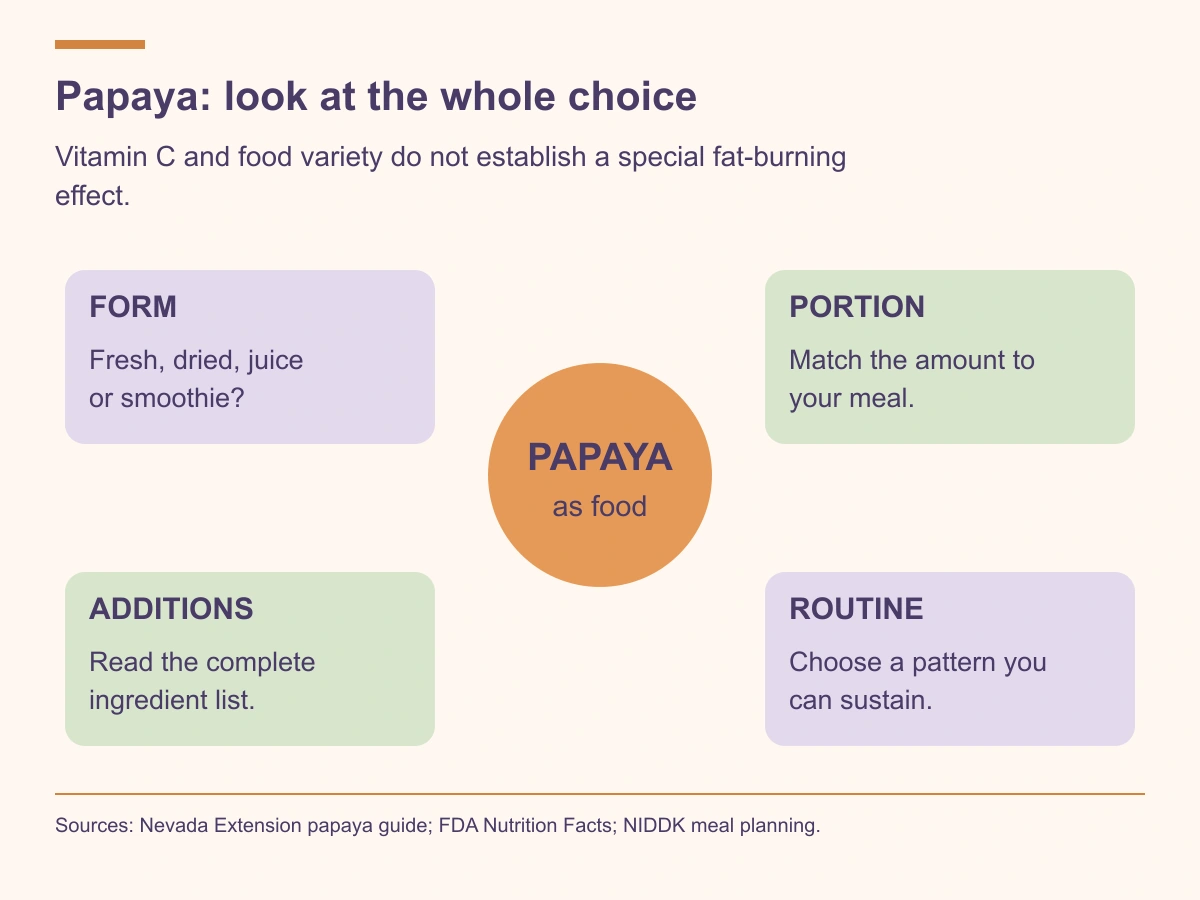
Papaya can be one part of a useful eating pattern, but no individual result follows simply from adding it. Replacing a food or drink with a different option changes the meal differently from adding another serving on top of everything already eaten.
For example, choosing a portion of papaya instead of a large sweetened dessert is a different decision from adding papaya, syrup, ice cream, and sweetened yogurt to an existing dessert. Both may be enjoyable, but calling both “fruit” hides the differences in ingredients and amount.
Our calorie-planning guide explains why total intake and individual needs matter. The balanced-meal guide offers ways to build a practical routine. Neither requires choosing one supposedly superior fruit or eating the same food every day.
Fresh, dried, juice, or smoothie: compare the actual food
| Form | What to check | A practical question |
|---|---|---|
| Fresh papaya pieces | The portion and the rest of the meal | Does this fit the snack or meal I want? |
| Plain frozen pieces | Ingredients and preparation directions | Is anything added, and how will I serve it? |
| Dried papaya | Serving size, ingredients and added sugars | How much am I eating relative to the label? |
| Juice or a fruit drink | Juice content, added sugars and amount poured | Am I treating a large drink as a small fruit portion? |
| A smoothie | Every ingredient and the finished serving size | Is this a snack, a meal component, or an extra drink? |
FDA’s Nutrition Facts guidance explains how serving size, servings per container, calories, total carbohydrate, and added sugars should be read together. The labeled serving is not an individualized portion prescription. If you use twice the stated serving, the listed amounts need to be interpreted accordingly. FDA label guide
Dried fruit occupies less space after water is removed, so a casual handful should not be assumed equivalent to a handful of fresh pieces. Check the actual product. Some dried products are sweetened and some are not; the name “papaya” alone does not settle that question.
Is papaya too sugary for someone with diabetes?
Fruit can be included in a diabetes eating plan, but carbohydrate amount and individual goals still matter. NIDDK includes fruit among carbohydrate foods and explains that meal planning may use approaches such as the plate method or carbohydrate counting. A food being natural does not make its carbohydrate irrelevant. NIDDK diabetes meal planning
Ask your clinician or dietitian how papaya fits your usual meals, medicines, and glucose-monitoring plan. Your response to a meal may depend on more than the fruit: the portion, other foods, activity, and treatment all contribute. One reading after one meal is not a complete test of whether you can ever eat papaya.
Avoid a fixed online glycemic-index number as a guarantee of your personal response. This guide does not assign papaya a universal glucose effect or use a fruit ranking to replace individualized diabetes advice.
Three simple ways to include papaya
For breakfast, try papaya pieces alongside a familiar protein food and the other foods that make the meal adequate for you. For example, plain yogurt or a suitable alternative can be considered with papaya and oats. Adjust the combination to your tolerance and nutrition plan rather than treating the example as a prescribed menu.
For a snack, put the amount you want in a bowl instead of eating from a large shared container without noticing the portion. You might pair it with another food if fruit alone does not keep you satisfied. The useful outcome is a snack that fits your day, not following a rigid rule about never eating fruit alone.
For lunch or dinner, diced papaya can add sweetness and texture to a mixed plate or salad. University of Nevada Extension also suggests using a halved fruit as a serving base for foods such as cottage cheese or a savory salad. Choose a portion and filling that fit your meal. Extension serving ideas
Our protein breakfast ideas provide more combinations. If you are deciding between milk products and alternatives, see dairy with semaglutide for the distinction between lactose tolerance, allergy, and nutrient replacement.

Can you eat papaya at night or on an empty stomach?
There is no special fat-loss timing established by the sources reviewed here. A comfortable serving with breakfast, lunch, or an evening snack can be considered in the context of your whole routine. Eating papaya at a particular clock time is not a substitute for an eating pattern you can maintain.
If late eating causes discomfort, describe the actual meal and symptoms. If an empty-stomach serving leaves you hungry soon afterward, consider whether a more complete breakfast would work better. The question is how the food fits your day, rather than whether a clock unlocks a unique property of papaya.
Our intermittent-fasting hours guide explains how eating windows are counted. Papaya is food and belongs inside an eating window if you are following that kind of schedule. Medical fasting for a test or procedure uses its own instructions and should not be improvised from a diet article.
Does papaya improve digestion or treat constipation?
The fruit can contribute to a varied diet, but the sources reviewed here do not establish a universal papaya treatment for constipation or medication-related digestive symptoms. Claims about an enzyme, concentrated extract, or supplement are not automatically evidence for a normal serving of ripe flesh.
Tell a clinician about persistent constipation, worsening abdominal pain, vomiting, or difficulty maintaining intake. Do not keep increasing fruit or a supplement while a potentially significant problem is unresolved. A food choice and an assessment of ongoing symptoms answer different questions.
For people using a GLP-1 medicine, our semaglutide nausea and vomiting guide provides symptom-review questions. Tolerance is individual. A soft fruit may be convenient, but no food should be presented as a guaranteed way to cancel medication side effects.
What about papaya seeds and detox claims?
Ripe flesh, seeds, leaves, and extracts differ in composition and use. A study involving one preparation cannot be transferred automatically to all the others. Our papaya-seed article examines the separate claims made about seeds and weight loss.
There is no need to add a seed regimen or cleansing product to make a serving of papaya useful. NCCIH’s review of detoxes and cleanses describes limited evidence and potential problems with these approaches. A temporary scale change during severe restriction does not establish lasting fat loss or the removal of unspecified toxins. NCCIH detox review
Be especially skeptical of a claim that a fruit preparation will treat parasites, replace a prescribed medicine, or rapidly change body composition. A symptom that prompts concern about an infection needs appropriate evaluation. A recipe or testimonial cannot diagnose its cause.
How to choose and prepare papaya
University of Nevada Extension suggests choosing firm papayas with some yellow coloration and avoiding blemished fruit. Papayas purchased before full ripeness can ripen at room temperature; follow appropriate storage guidance once ripe or cut. The fruit’s color and texture are food-selection details, not proof of its exact nutrient content. Extension selection guidance
Wash the outside under running water before cutting, even when the skin will not be eaten. FDA advises washing produce without soap or detergent, using clean hands and utensils, and keeping ready-to-eat produce separate from raw meat, poultry, and seafood. Refrigerate purchased pre-cut produce. FDA produce-safety guidance
For an easy serving, cut the fruit, remove the seeds, and portion the flesh. Use a clean container for leftovers and keep cut fruit refrigerated. If buying a prepared cup, check how it has been stored and whether syrup or other ingredients have been added. Convenience can be useful when it helps you eat regularly without creating unnecessary preparation work.

Papaya during semaglutide or tirzepatide treatment
An appetite change does not remove the need for adequate meals. If fruit is one of the few foods you feel able to eat, tell the care team rather than assuming a fruit-only routine supplies everything you need. Our protein and muscle guide explains why nutrition and function matter alongside the scale.
For broader treatment questions, the CoreAge Rx semaglutide page introduces the service discussion. A medicine assessment should address suitability and ongoing care; adding papaya neither proves you need treatment nor guarantees a treatment result. If a compounded preparation is proposed, remember that compounded drugs are not FDA approved. FDA compounding information
Frequently asked questions
How much papaya should I eat each day?
There is no universal daily amount for weight loss. Choose a portion that fits your meals, preferences, medical needs, and other fruit intake. The half-cup reference in the nutrient example is a measurement, not a prescription.
Is a papaya smoothie automatically a weight-loss drink?
No. Its ingredients and finished serving size matter. Review juice, sweeteners, yogurt, powders, and other additions rather than judging the drink by the fruit in its name.
Must I eat the seeds to get the benefits of the fruit?
No. This article’s food discussion concerns ripe flesh. Seed-treatment claims require their own evidence and should not be bundled into a routine fruit recommendation.
Is papaya better than every other fruit?
No single fruit is required for a healthy eating pattern. Papaya can be a useful option if you enjoy it, can obtain it, and tolerate it. Variety and a sustainable routine are more useful goals than finding a perfect fruit.
Educational information for adults; individual treatment decisions require a qualified clinician. Sources reviewed October 6, 2026. Original AI-generated article images depict fictional people and objects, not patient outcomes. Other editorial images are illustrative. Graphics summarize the cited sources.