
Ozempic and Prozac should be reviewed as two prescriptions with different treatment goals. Prozac contains fluoxetine, an antidepressant; Ozempic contains semaglutide. A change in appetite, weight, glucose (blood sugar), sleep, or mood does not by itself tell you which medicine caused it, whether absorption changed, or whether the combination is appropriate for you.
The practical next step is a joint review of the exact products, the reasons they were prescribed, and any new symptoms. This article explains the questions to bring. It does not recommend adding fluoxetine to intensify weight loss or stopping mental-health treatment because the scale changed.
Clarify the product, route and treatment goal
Record the fluoxetine formulation, dose, usual time, start date, and recent changes. For semaglutide, specify the brand, whether it is injected or taken orally, and the strength. The word “Ozempic” can now refer to separately labeled injection and tablet products; this discussion primarily addresses the weekly injection. Our oral-versus-injection guide explains the distinction.
List other mental-health medicines, diabetes treatments, supplements, and occasional products as well. Include medicines prescribed by another clinician. Having separate prescribers is common, but each needs the complete list to understand overlapping symptoms and monitoring needs.
Ask what success means for each prescription. Better psychiatric symptoms, glucose management, appropriate weight treatment, daily functioning, and tolerability are different outcomes. One scale reading cannot summarize all of them. A plan should explain which outcomes will be reviewed and who coordinates decisions when a change affects both areas of care.
Can Ozempic affect an oral fluoxetine prescription?
The Ozempic injection label says semaglutide delays gastric emptying (the movement of food from the stomach into the intestine) and may affect absorption of oral medicines. Oral medicines evaluated in its clinical pharmacology trials were not affected to a clinically relevant degree, but the label still advises caution. That is a reason for appropriate review, rather than proof of a clinically important interaction with every oral prescription. Ozempic injection label, section 7.2.
Do not interpret a difficult day, nausea, or a later perceived effect as an absorption test. Explain the pattern, timing, and other changes to the prescriber. Fluoxetine also has a long elimination half-life, so the effect of a dose change is not fully reflected immediately. Prozac label, section 5.14. A day-by-day impression alone may not capture the treatment course.
If you take a semaglutide tablet, ask about its administration instructions specifically. Do not assume weekly-injection guidance answers the timing question for an oral product. Likewise, taking an extra antidepressant dose to compensate for a presumed absorption delay can create a new problem without resolving the original uncertainty.
Why appetite and weight deserve attention
The Prozac label describes decreased appetite and weight loss in some trial participants and warns that significant loss may be undesirable, particularly in underweight depressed or bulimic patients. It directs monitoring of weight in relevant treatment contexts. These findings do not mean fluoxetine produces a predictable amount of weight loss or has the same effect in every person. Prozac label, section 5.6.
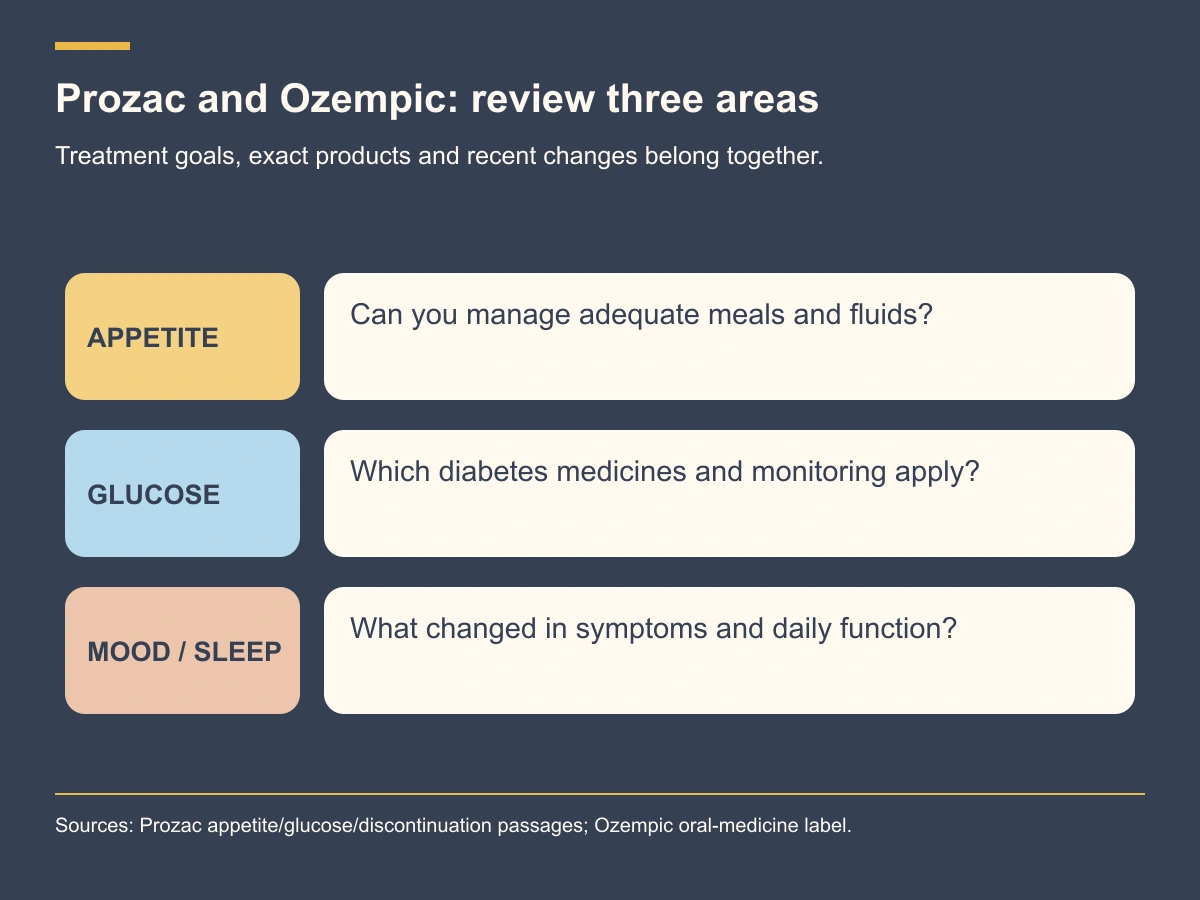
A useful review includes whether you can eat regular meals, whether nausea or early fullness prevents them, and whether a weight change is intended. Someone seeking weight management can still have inadequate intake or an unwanted change. Conversely, unchanged weight does not mean an antidepressant has failed to treat the condition for which it was prescribed.
Our balanced-meal guide and breakfast ideas offer flexible starting points. Bring a few real examples rather than a list of ideal meals. “I manage breakfast but leave lunch untouched” gives the team a concrete problem to address. Discuss weakness, dizziness, fatigue, or distress around eating instead of treating them as necessary signs of progress.
How can glucose control be affected?
Fluoxetine can alter glycemic control in people with diabetes. The Prozac label reports hypoglycemia during treatment and hyperglycemia after discontinuation, and notes that diabetes medicines may need clinical adjustment when fluoxetine starts or stops. Prozac label, section 5.12.
Ozempic’s hypoglycemia warning is especially relevant when it is used with insulin or an insulin secretagogue such as a sulfonylurea. Ozempic label. These are separate reasons to review the full diabetes regimen. Neither establishes that everyone using fluoxetine with Ozempic will have a low glucose episode.
If you already have a diabetes monitoring and rescue plan, follow it and ask when to contact the team. Bring readings associated with symptoms, changes in intake, and any recent treatment change. Do not independently reduce insulin, stop fluoxetine, or change semaglutide to solve a suspected low. If severe confusion, collapse, or inability to safely swallow occurs, emergency help takes priority over organizing a medicine list.

Mood and sleep belong in follow-up
Fluoxetine drug information lists nervousness, sleep difficulties, digestive symptoms, tiredness, sweating, and other possible effects. Its warnings also require attention to serious psychiatric or physical symptoms. Fluoxetine drug information. A medication review should include how you are functioning, not only how much you weigh.
Describe mood, motivation, anxiety, sleep, and the ability to do ordinary activities. Note whether a change began before or after a prescription change, and whether illness, stress, or reduced eating occurred at the same time. Timing helps organize the review but does not prove causation.
If depression worsens or thoughts of self-harm arise, seek immediate support. Do not wait for a routine weight-management visit or assume the experience is a harmless adjustment. The mental-health clinician should know about meaningful changes even if the weight-treatment clinician has already been informed. Ask who to contact outside normal hours when starting or changing treatment.
A practical review checklist
| Area | What to record | Question for the team |
|---|---|---|
| Medicines | Exact products, routes, strengths and changes | Does the whole regimen need coordinated review? |
| Eating | Meals missed, nausea, early fullness and fluids | Am I getting enough nutrition? |
| Diabetes | Other glucose medicines and relevant readings | What monitoring or rescue instructions apply? |
| Mood and sleep | Meaningful changes and daily function | Which changes need earlier contact? |
| Treatment goals | Psychiatric symptoms, glucose and weight goals | How will benefit and tolerability be assessed? |
Keep notes short enough to use. You do not need to measure everything or monitor the scale constantly. If weight tracking worsens anxiety or eating concerns, discuss a different approach. The checklist is a way to make the appointment more specific, not a requirement to manage the two prescriptions alone.
What if nausea makes taking medicines difficult?
Contact the prescriber or pharmacist if repeated vomiting prevents oral medicines or fluids. Explain which doses were taken, which were vomited, and approximately when. There is no universal instruction here to repeat a fluoxetine dose after vomiting; the formulation, timing, and treatment history matter.
Our semaglutide nausea and vomiting article separates meal questions from symptoms needing assessment. Severe or persistent abdominal pain, repeated vomiting, dehydration, or inability to maintain intake warrants prompt care. Do not use an unreviewed supplement or another person’s anti-nausea prescription to make the regimen tolerable.
For milder meal difficulties, identify foods you can manage and discuss practical adjustments. A narrow diet of drinks alone may be easy for a day, but recurring difficulty deserves a nutrition plan and clinical review. The aim is to support the treatment course while addressing the cause of the problem.
Should I stop Prozac if my weight changes?
Do not make that decision on your own. The Prozac label describes discontinuation effects and recommends a gradual reduction when possible under clinical supervision. Its long half-life does not eliminate the need for a planned change. Prozac label, section 5.15.
Bring the concern to the clinician managing the antidepressant and include the semaglutide history. A review can consider psychiatric benefit, appetite, other causes, and possible alternatives without treating the medicine as either entirely responsible or irrelevant. If semaglutide discontinuation is also being considered, our maintenance and stopping guide explains why that decision deserves follow-up too.

Frequently asked questions
Is fluoxetine a weight-loss medicine?
Appetite or weight effects do not turn an antidepressant prescription into a weight-management strategy. It should be used for its appropriate treatment purpose. Do not seek a higher dose or add a stimulant to make weight fall faster. Persistent low intake or unwanted loss needs assessment.
Does Prozac cancel out Ozempic?
The reviewed labels do not establish a simple cancellation rule. Evaluate the actual treatment goals and clinical response with the care team. Hunger, one weigh-in, or a friend’s experience does not identify an interaction or justify increasing either prescription.
Can I separate the medicines to avoid every interaction?
No universal spacing rule can replace review of the complete regimen. Follow the prescribed directions and ask the pharmacist about the exact formulations, especially if you use oral semaglutide. Do not make multiple timing changes at once while trying to identify a symptom.
Related reading and care information
The semaglutide questions guide can help organize broader follow-up. If you also use an ADHD prescription, see Ozempic and ADHD medicines for that separate review. The CoreAge Rx semaglutide service page describes care options; it does not establish that a particular medication combination is appropriate for you.
Educational information for adults; individual treatment decisions require a qualified clinician. Sources reviewed October 3, 2026. Original AI-generated article images depict fictional people and objects, not patient outcomes. Other editorial images are illustrative. Graphics summarize the cited sources.