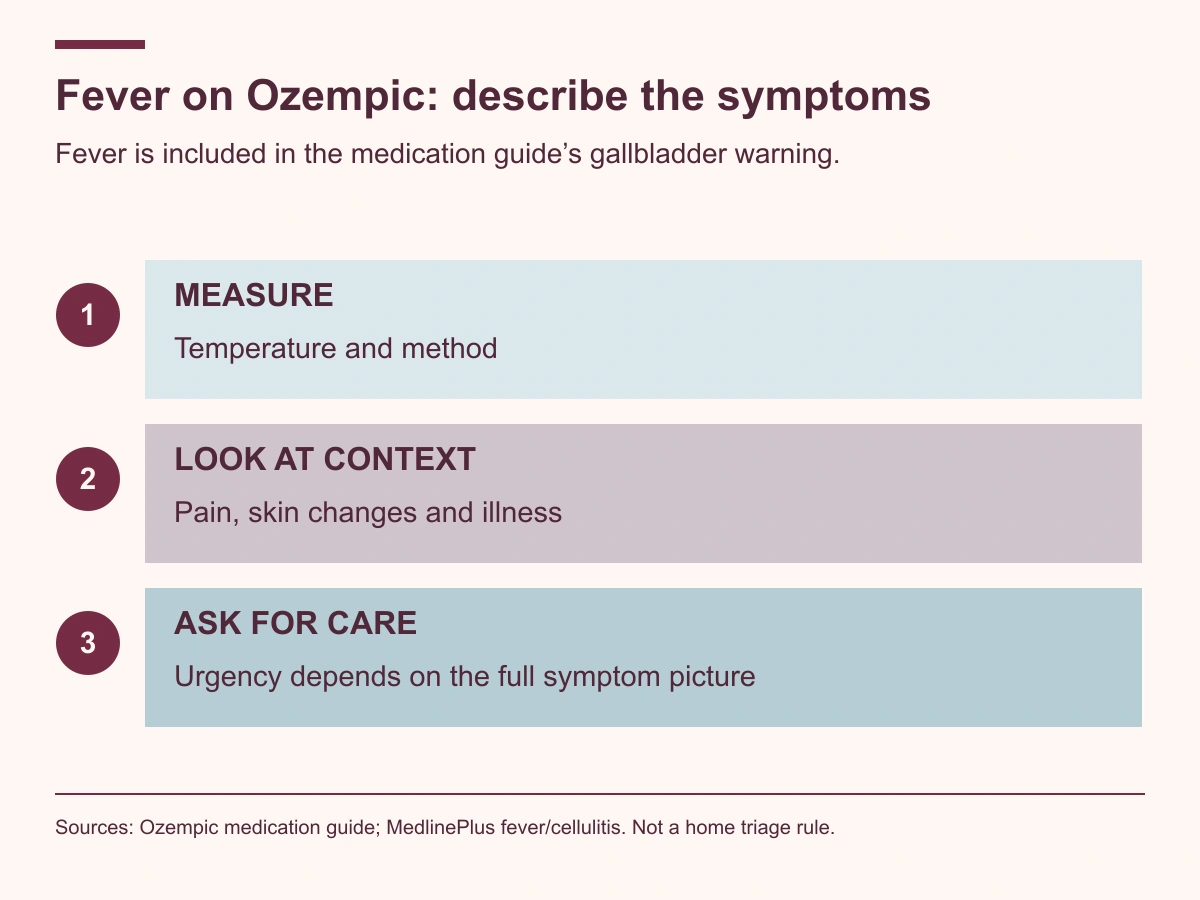
Fever is not listed among the most common adverse reactions in the reviewed Ozempic injection label. It is nevertheless important: the medication guide includes fever among symptoms of possible gallbladder problems that should be reported to the healthcare provider right away.
Do not assume a new temperature is a routine adjustment to semaglutide, and do not assume that it proves a drug reaction. Infection, another illness, a medication-related problem, or a complication can require different care. The temperature, accompanying symptoms, and clinical history determine what needs assessment.
What the Ozempic label actually says
The selected common-reaction table reports nausea, vomiting, diarrhea, abdominal pain, and constipation in specific type 2 diabetes trials. Fever is absent from that table. A common-event summary is not an exhaustive list of every possible adverse event or every reason someone becomes ill while taking the medicine. Ozempic prescribing information, section 6.1.
The patient medication guide separately lists upper abdominal pain, jaundice, fever, and clay-colored stools as possible gallbladder symptoms. It directs patients to notify the healthcare provider right away. Fever alone does not diagnose gallbladder disease, but it should not be ignored when it appears with that symptom pattern.
Our Ozempic side-effects guide provides broader safety information. Keep the current product’s instructions available rather than relying on a statement that a symptom is “not a common side effect.”
A fever is a symptom, not the diagnosis
MedlinePlus explains that fever means body temperature is above normal and is often associated with infection. It can also have other causes, including some medicines, heat illness, and inflammatory conditions. Treatment depends on the cause. MedlinePlus fever overview.
That distinction matters during a new prescription. Two events happening in the same week do not establish that one caused the other. A respiratory illness, a skin infection, or a problem requiring abdominal assessment cannot be separated from a drug effect by looking at the calendar alone.
Tell the clinician when treatment began, when the temperature changed, and which other symptoms appeared. This is useful evidence for the assessment without turning an association into a diagnosis.
Feeling hot and measuring a temperature are different
Record a thermometer reading when one is available, the time, and how it was measured. Feeling flushed, chilled, sweaty, or unusually warm is also worth describing, but those sensations should not be presented as an exact measured temperature.
Use the thermometer according to its instructions and avoid comparing measurements from different methods as if they were identical. If a number seems inconsistent with how ill you feel, ask the care team how to interpret it. Do not wait for a “perfect” measurement when severe symptoms need help.
Our Ozempic hot-flash guide explains why flushing, sweating, glucose questions, and menopause symptoms require their own context. A hot flash should not automatically be labeled fever, and a fever should not automatically be dismissed as a hot flash.
Why abdominal symptoms change the conversation
Tell the clinician promptly about fever with upper abdominal pain, yellowing skin or eyes, or pale/clay-colored stool. The Ozempic medication guide places those findings in its gallbladder warning. Assessment may require a clinical examination and appropriate testing, rather than an online symptom match. Ozempic gallbladder warning.
Describe where pain occurs, whether it is persistent, and whether nausea or vomiting accompanies it. Do not assume that all abdominal discomfort belongs to the ordinary nausea-and-constipation category. Severity and associated symptoms matter.
If pain is severe or you are rapidly becoming more unwell, seek urgent medical assessment. A routine follow-up appointment should not become a reason to wait through a potentially serious change.
What if the injection area is red or painful?
A local skin finding requires a different review from a general fever. Record its location, when it appeared, whether it is spreading, and whether pain, tenderness, swelling, or other changes are developing.
MedlinePlus describes cellulitis as a skin and underlying-tissue infection that can involve painful, red, tender skin with fever or chills. That information does not diagnose every injection-site mark as infection; it supports getting an appropriate assessment when the pattern is concerning. MedlinePlus cellulitis overview.
See our Ozempic injection-bubble and lump guide for distinctions between a skin observation and a device question. A bump does not measure how much medicine was delivered, and a fever is not a reason to repeat an uncertain injection.

Vomiting, diarrhea, and difficulty drinking need attention
Fever with gastrointestinal symptoms can complicate eating and drinking. Ozempic’s label warns about kidney injury related to volume depletion, often in people whose nausea, vomiting, or diarrhea caused fluid loss. It calls for appropriate monitoring when reactions could lead to dehydration. Ozempic volume-depletion warning, section 5.6.
Tell the treating team if you cannot keep fluids down, if symptoms are continuing, or if your functioning has changed substantially. Ask what assessment is needed and which instructions apply to your medicines during the illness.
Do not choose a fixed fluid amount from an internet chart when you have an individualized fluid restriction. Likewise, a sports drink or supplement should not be treated as the complete solution to persistent vomiting or a worsening fever.
Diabetes and other medicines belong in the history
If an infection leads to a new prescription, the semaglutide and antibiotics guide covers the exact antibiotic, injection versus oral semaglutide instructions, and the sick-day questions to resolve with the treating team.
Bring the full medicine list, including insulin, sulfonylureas, metformin, over-the-counter products, and anything started recently. If illness has changed eating, drinking, or glucose readings, tell the diabetes team.
Our Ozempic and metformin combination guide explains why glipizide changes the low-glucose discussion and why kidney and illness questions can matter for metformin. Use an established sick-day plan if you have one, and ask for instructions when the situation is unclear.
A fever should not prompt an improvised decision to stop every medicine, take extra medicine, or change several prescriptions at once. Clinical advice needs to fit the cause of illness and the whole regimen.
What information makes a call more useful?
| Detail | What to report |
|---|---|
| Temperature | Reading, time, measurement method, and changes over time |
| Associated symptoms | Pain location, vomiting, diarrhea, cough, rash, or skin changes |
| Treatment history | Actual product, prescribed dose, last dose, and recent changes |
| Other medicines | Regular prescriptions, newly started products, and anything taken for symptoms |
| Intake and function | Ability to eat and drink, sleep disruption, and how daily activities have changed |
| Diabetes information | Relevant glucose readings and existing illness instructions |
This is a communication aid, not a home diagnosis checklist. You do not need to complete every row before seeking help. Start with the most concerning symptom and follow the clinician’s questions.
Can you take a fever-reducing medicine?
That question needs your own health history, other medicines, and symptom pattern. Ask a pharmacist or clinician which over-the-counter product is suitable, if any, and follow its labeled directions. Avoid combining products without checking their ingredients.
A lower temperature after a symptom medicine does not establish that the underlying problem is resolved. Do not use the response as proof that severe pain, jaundice, breathing difficulty, or persistent vomiting can wait.
MedlinePlus emphasizes cause-dependent treatment. The useful goal is to understand what needs assessment, rather than treating a temperature number as the entire illness.

What about the next Ozempic dose?
There is no universal continue-or-stop answer based only on fever. Contact the prescriber about the actual illness and ask what applies to the next scheduled dose. Keep product-specific emergency instructions separate from a routine dose question.
For serious allergic symptoms, such as trouble breathing or swallowing or swelling of the face or throat, the Ozempic medication guide directs stopping use and getting medical help right away. Do not wait for an ordinary message response in that situation. Ozempic serious-allergy instructions.
The Ozempic dosage guide explains the labeled routine but cannot determine how an illness should change your personal prescription. The CoreAge Rx semaglutide program page describes a separate care offering; changing programs is not a substitute for assessing a current symptom.
Frequently asked questions
Is fever a sign that Ozempic is working?
No such conclusion follows from fever. It does not measure fat loss or treatment effectiveness. A new fever should be considered in its clinical context.
Can a normal injection-site appearance rule out a problem?
No. A local skin observation does not explain every possible cause of fever or abdominal symptoms. Report the full symptom picture.
Is a mild temperature always safe to ignore?
The number alone cannot answer that. Associated symptoms, illness duration, health conditions, and how unwell you feel affect the care decision.
What should I do first?
For concerning symptoms, seek appropriate medical help. Otherwise, record the temperature and accompanying symptoms and contact the treating team for assessment and specific medicine instructions.
Educational information for adults; individual treatment decisions require a qualified clinician. Sources reviewed October 3, 2026. Original AI-generated article images depict fictional people and objects, not patient outcomes. Other editorial images are illustrative. Graphics summarize the cited sources.