Gatorade Zero can be a lower-sugar drink choice, but it is not a weight-loss treatment or a fat-burning product. Whether it fits your routine depends on what it replaces, the exact bottle’s nutrition panel, your activity, and any medical instructions about fluids or electrolytes.
Replacing a sugar-containing beverage with a lower-calorie option changes that drink’s contribution to your intake. Adding a sports drink to an otherwise unchanged routine answers a different question. Neither action guarantees a particular change in body weight.
Start with the actual bottle
Gatorade Zero is a product family. Flavor, package size, and formulation matter, so check the Nutrition Facts panel on the bottle you intend to drink. Do not assume that an online panel for a small multipack bottle describes a larger bottle or another Gatorade product.
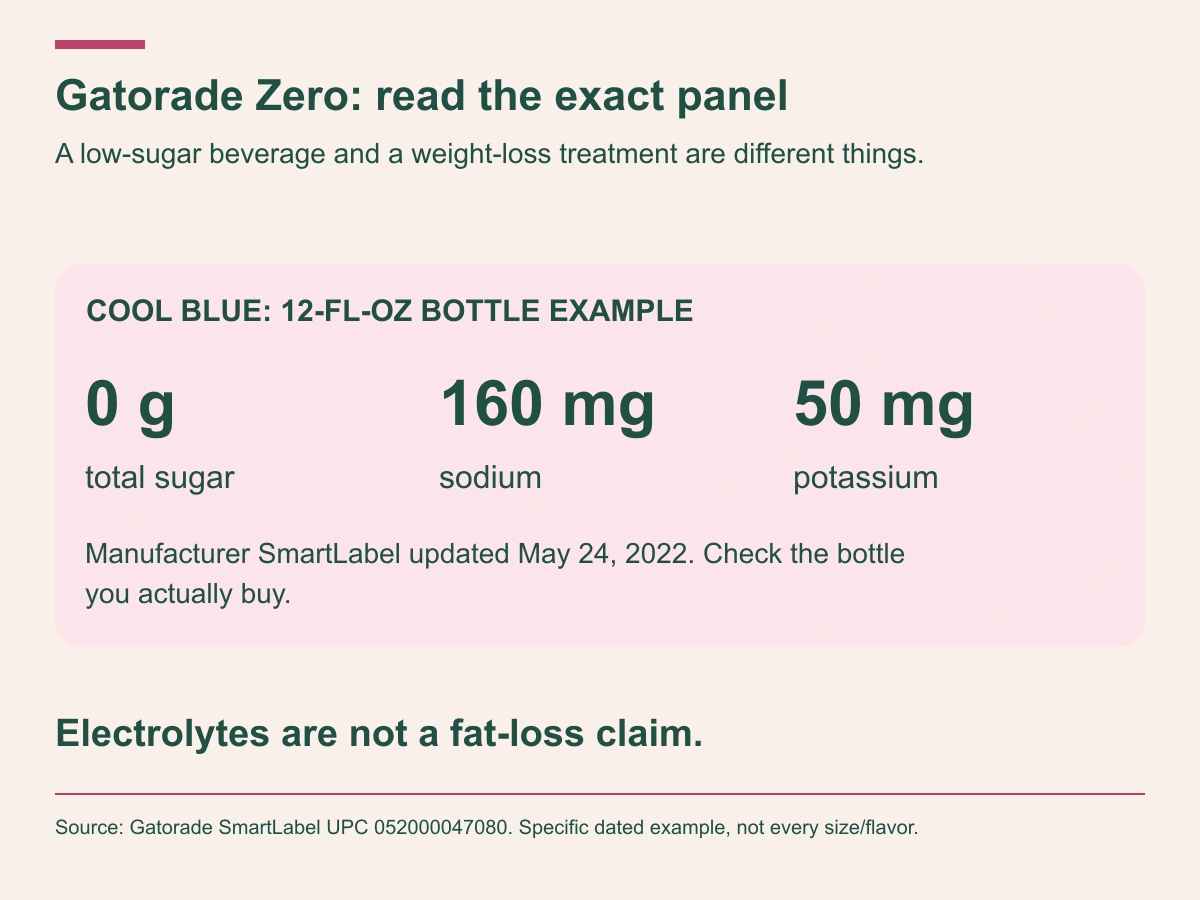
For a specific example, the manufacturer’s SmartLabel page for Cool Blue, UPC 052000047080, describes a six-pack of 12-fl-oz bottles. Its per-bottle panel lists 0 calories, 0 grams of total sugar, 160 milligrams of sodium, and 50 milligrams of potassium. That page says its information was updated May 24, 2022 and directs readers to the current product label. It is a label example, not a claim that every current bottle has identical values. Manufacturer Cool Blue SmartLabel.
The number of bottles in the outer package is also different from the amount in one serving. If you drink more than one bottle, count the total you actually consume rather than treating the multipack as one bottle’s nutrition.
What “zero sugar” tells you
Zero sugar describes a labeled sugar amount. It does not mean a beverage supplies protein, fiber, a complete meal, or every nutrient that supports your eating pattern. The example panel lists no protein and less than one gram of total carbohydrate per bottle.
The reviewed ingredient tab lists sucralose and acesulfame potassium among the ingredients. These are part of that product’s sweetening formulation. Their presence does not make the drink a weight-loss medication or establish how an individual will respond to using it.
If you dislike the flavor, prefer another beverage, or notice symptoms after a particular drink, that preference is useful information. There is no requirement to use a branded zero-sugar sports drink to make progress with nutrition or weight-management care.
Why the drink it replaces matters
CDC explains that replacing sugary drinks with water can reduce calorie intake. It also notes that drinks using sugar alternatives may reduce intake in the short term, while questions remain about their effectiveness for long-term weight management. CDC water and healthier-drink guidance.
Consider two ordinary situations. One person replaces a large sweetened drink with a lower-calorie choice they enjoy. Another adds several zero-sugar sports drinks because they believe electrolytes burn fat. The first is a beverage substitution; the second relies on a benefit the label does not establish.
Look at the overall pattern rather than one product in isolation. Our overnight oats and weight-management guide uses a similar approach for food: the ingredients, portion, and rest of the day matter more than a healthy-sounding name.
Water, sports drinks, and meal beverages have different roles
| Choice | What to consider | What it does not establish |
|---|---|---|
| Plain water | A calorie-free fluid option that can replace a sugary drink | A fixed amount appropriate for every person |
| Gatorade Zero | The exact panel, sweeteners, sodium, potassium, and how much you drink | A fat-loss benefit or need for daily sports drinks |
| Sugar-containing sports drink | Carbohydrate and calories alongside electrolytes | Suitability for every activity or health condition |
| Milk or fortified alternative | Nutrients, formulation, portion, and tolerance | Equivalence to a sports drink or a complete meal |
Choose the beverage for the situation you actually have. A product that supplies electrolytes is not automatically the best everyday choice, and a lower-calorie drink does not replace meals when you need nourishment.

Do electrolytes cause weight loss?
Sodium and potassium are nutrients, not a promise of fat loss. Their presence on a sports-drink label does not show that the product improves weight outcomes, corrects a deficiency, or is needed whenever someone exercises.
If you have been given a specific hydration plan for prolonged activity, heat exposure, or a medical condition, use that plan. Ask whether the beverage’s actual carbohydrate and electrolyte content fits it. A general marketing phrase cannot settle a specialized hydration question.
Avoid comparing drinks only by which one has the longest electrolyte list. More is not automatically more appropriate. Keep the serving amount and your clinician’s instructions in view, especially if you have an individualized sodium, potassium, or fluid limit.
How much should you drink?
There is no universal number of Gatorade Zero bottles that supports weight loss. CDC notes that water needs vary with factors such as activity, pregnancy or breastfeeding, age, and other circumstances; water also comes from foods and other beverages.
Hot weather, physical activity, fever, vomiting, and diarrhea can change fluid needs. Those situations still do not establish that a particular zero-sugar sports drink is a complete response. Persistent illness or difficulty maintaining fluids needs appropriate clinical attention.
A practical starting question is how the drink fits your existing day. Does it replace a beverage you were trying to change? Is it convenient and enjoyable? Are you drinking it because you were given specific advice, or because the word “sports” sounds like a requirement?
Kidney, heart, and other medical instructions matter
If your clinician has restricted fluids, sodium, or potassium, ask how the actual bottle fits those instructions. A low sugar amount does not cancel another nutrient restriction. Bring a picture of the panel or the bottle to make the discussion specific.
Do not increase intake simply because an internet article says hydration is important. The appropriate amount and beverage depend on the person. Likewise, do not replace prescribed oral rehydration or another clinician-directed treatment with a sports drink based only on a similar-sounding name.
Our Ozempic water-retention guide explains why changes in swelling or scale weight need their own assessment. Drinking an electrolyte beverage should not be used as a test for the cause of fluid retention.
What if you take semaglutide or tirzepatide?
A smaller appetite can make it useful to review both food and fluid intake. A zero-sugar drink may supply fluid, but the reviewed example supplies no protein and should not become a meal replacement because it is easy to drink.
See our semaglutide protein and muscle guide and tirzepatide protein and muscle guide for nourishment and function questions. If nausea or other symptoms limit eating or drinking, tell the care team rather than trying to solve the entire problem with one beverage.
If you have diabetes and a low-glucose action plan, remember that a zero-sugar beverage is not a dependable source of the carbohydrate that plan may require. NIDDK’s guidance distinguishes glucose-containing treatment from low-calorie or reduced-sugar substitutes. Follow your own plan and seek emergency help if severe symptoms prevent self-treatment. Low-glucose care guidance.
Evaluate progress beyond a beverage label
You can make a sustainable drink change without turning it into a daily pass-or-fail rule. Review convenience, cost, taste, and how it affects your overall routine. A choice you can maintain may be more useful than buying a product because it promises a shortcut.
Our weight-loss timeline guide explains why a fixed forecast cannot capture every change in body weight. One drink substitution should not be assigned a guaranteed number of pounds or a deadline.
If you are exploring medical care, the CoreAge Rx semaglutide program page describes a separate treatment offering. Clinical eligibility, the actual formulation, safety, and follow-up need assessment; a sports-drink preference does not decide whether a prescription is appropriate.
Frequently asked questions
Is Gatorade Zero better than water for losing weight?
The reviewed sources do not establish that it produces superior weight loss. Water is a calorie-free option, and the useful comparison depends on your current drinks, preferences, and medical instructions.
Does every Gatorade Zero bottle have zero calories?
Use the exact package’s panel. The manufacturer example reviewed here lists zero calories per small bottle, but it is a dated, specific product entry. Do not transfer it to every flavor or size.
Can I drink it every day?
There is no weight-loss requirement to do so. Consider the quantity, nutrients, cost, preferences, and any individualized restrictions. Ask a clinician if a medical condition makes the choice uncertain.
Can it replace breakfast while I am less hungry?
The reviewed bottle is not a complete meal and contains no protein. Reduced appetite and inadequate intake deserve a nutrition and treatment review.
What is the simplest useful comparison?
Identify what you currently drink, read both products’ panels, and compare the amount you actually consume. That helps you assess a substitution without assigning an unsupported fat-burning benefit.
Educational information for adults; individual treatment decisions require a qualified clinician. Sources reviewed October 3, 2026. Original AI-generated article images depict fictional people and objects, not patient outcomes. Other editorial images are illustrative. Graphics summarize the cited sources.