Night sweats during Mounjaro treatment deserve a symptom review, but timing alone does not establish that tirzepatide caused them. Drenching sweating can have several explanations, including low blood sugar in some people taking diabetes medicines, menopause symptoms, other medicines, or an unrelated illness.
The current Mounjaro label’s adult common-adverse-reaction table does not list night sweats. That table is a selected trial summary, not proof that an individual symptom cannot be related to treatment. If sweating repeatedly wakes you, soaks your bedding, or occurs with other concerning changes, contact a clinician rather than assuming it is a normal adjustment.
What counts as a night sweat?
Being warm under heavy bedding is different from waking with soaked clothing or sheets in a cool room. The NHS uses that cool-room, drenching distinction in its night-sweat guidance and advises medical review for recurring or worrying episodes. Night-sweat definitions and care questions.
Describe what actually happened. Did you feel briefly hot, sweat lightly, or need to change bedding? Was the room unusually warm? Were you awake before the episode, or did the sweating wake you? Those observations help make the conversation more specific.
A photograph of damp bedding or an online account cannot diagnose the cause. The accompanying symptoms, medication history, and clinical assessment matter more than whether the experience looks similar to someone else’s.
What the Mounjaro label establishes
The selected adult common-reaction table lists digestive symptoms such as nausea, diarrhea, vomiting, constipation, dyspepsia, and abdominal pain, along with decreased appetite. It comes from particular type 2 diabetes trials and does not provide a night-sweat incidence or a recovery timetable. Mounjaro prescribing information, section 6.1.
Do not interpret an absent table entry as a complete explanation. Trial tables use reporting thresholds and populations; the reason one person wakes sweating still needs assessment. Equally, a symptom that begins after a new prescription is not automatically caused by that prescription.
Our Mounjaro side-effects guide provides broader safety context. Keep that general information alongside the current product label and your own clinician’s instructions.
Why low blood sugar matters
Mounjaro’s label warns that using it with insulin or an insulin-releasing medicine, such as a sulfonylurea, can increase the risk of hypoglycemia, including severe episodes. This is especially relevant if your treatment includes medicines such as glipizide or prescribed insulin. Mounjaro hypoglycemia warning, section 5.3.
NIDDK explains that low glucose during sleep can cause damp pajamas or sheets, nightmares, and tiredness, irritability, or confusion after waking. Those findings are possible clues, not a diagnosis from sweating alone. NIDDK low-glucose guidance.
If you have diabetes and a glucose-monitoring and low-glucose action plan, follow it. Ask the treating team how nighttime symptoms should be assessed and when to check a reading. Severe low-glucose symptoms that prevent you from treating yourself require emergency help, rather than a routine portal message.
A normal later reading does not explain the entire night
Tell the clinician when a reading was obtained in relation to the episode. A morning measurement, a sensor alert, and a measurement during symptoms represent different moments. Do not treat one isolated later number as a complete account of what happened overnight.
If you use a continuous monitor, ask the diabetes team how to interpret the recorded pattern and any uncertain alert. Keep the actual readings and timing available. The care team can decide whether further confirmation or a medication review is needed.
Avoid changing insulin, glipizide, or Mounjaro on your own to test a theory about the sweating. Any adjustment should fit the full diabetes regimen and treatment goals, rather than a single symptom guessed from an internet description.
Review meals, illness, activity, and alcohol
NIDDK identifies missed or delayed food, increased activity, alcohol without enough food, and illness that limits intake as factors that can contribute to low glucose in people using glucose-lowering treatment. The relevant question is what changed around your episodes. Causes of low glucose.
For example, tell the clinician if nausea led you to skip dinner, if vomiting limited your intake, or if your normal activity changed substantially. A meal and medicine record can help explain the context without proving a single cause.
Our first-month tirzepatide guide covers early tracking, while the tirzepatide protein and muscle guide considers nourishment and function. Neither a smaller appetite nor a sweaty night should become a reason to pursue a more restrictive eating pattern.
Other explanations need room in the assessment
The NHS lists menopause symptoms, anxiety, certain other medicines, low glucose, alcohol or drug use, and excessive-sweating conditions among common explanations. Sometimes the cause remains unclear. Its list supports a broad assessment rather than a Mounjaro-specific mechanism. Other night-sweat causes.
Bring the complete medicine list, including recent additions and over-the-counter products. If a new antidepressant, steroid, pain medicine, or another treatment began around the same time, tell the clinician. Do not stop another prescription merely because it appears on a possible-cause list.
If you also have daytime hot flashes or changing menstrual patterns, our HRT, hot-flash, and sleep guide helps organize a separate menopause conversation. Hormone treatment should follow an appropriate assessment; night sweats alone do not establish that HRT is suitable.
What to record before the appointment
| Observation | A useful detail to bring |
|---|---|
| Episode pattern | Start date, frequency, and whether clothing or bedding became soaked |
| Treatment timing | Actual Mounjaro presentation, prescribed dose, last dose, and recent changes |
| Glucose information | Readings or sensor records and when they were obtained |
| Eating and illness | Missed meals, vomiting, diarrhea, fever, or reduced intake |
| Other symptoms | Cough, pain, daytime sweats, dizziness, or a change in function |
| Other medicines | Insulin, sulfonylureas, recent prescriptions, and supplements |
You do not need a perfect diary before asking for help. A short, accurate account is enough to start. If symptoms are severe, do not postpone care while gathering several nights of data.
It can help to separate observations from interpretations in that record. Write “woke at 2 a.m. with a wet shirt after eating less dinner than usual” rather than “the medicine caused a blood-sugar crash” if no reading or assessment established that. Include the date of each medication change and whether similar episodes occurred before treatment. Ask who to contact if the pattern repeats overnight and how quickly the team wants an update. Clear instructions for routine follow-up and urgent symptoms make the next episode easier to respond to without guessing.

When a review should happen promptly
Recurring drenching sweats, symptoms that disrupt sleep, or episodes accompanied by fever, cough, diarrhea, or unexplained weight loss warrant clinical review. Losing weight intentionally during treatment does not explain every new symptom or make a marked change in function unimportant.
Persistent vomiting, difficulty maintaining fluids, or severe digestive symptoms also need attention. Mounjaro carries a warning about kidney injury related to volume depletion, often in the setting of gastrointestinal fluid loss. Mounjaro volume-depletion warning, section 5.5.
Get emergency help for severe low-glucose symptoms or serious allergic signs such as trouble breathing or throat swelling. The product’s allergy guidance calls for prompt medical attention and discontinuation when serious hypersensitivity occurs; do not wait for a routine follow-up in that situation.
Should the next dose be changed?
There is no universal dose decision based on the phrase “night sweats.” Contact the prescriber about the actual episode, glucose information, other medicines, and any illness. Ask for specific instructions about the next scheduled dose and any needed monitoring.
The Mounjaro dosage guide explains the labeled schedule. It is not a reason to increase despite unresolved symptoms or to create a different schedule yourself. Repeating, splitting, or skipping doses to experiment can make the history harder to interpret.
If you are comparing care arrangements, the CoreAge Rx tirzepatide program page describes a separate offering. Confirm the actual preparation, clinical eligibility, and follow-up access. Symptoms involving an existing prescription should be reviewed with the treating team rather than addressed by automatically switching products.
What if the sweating happens during the day?
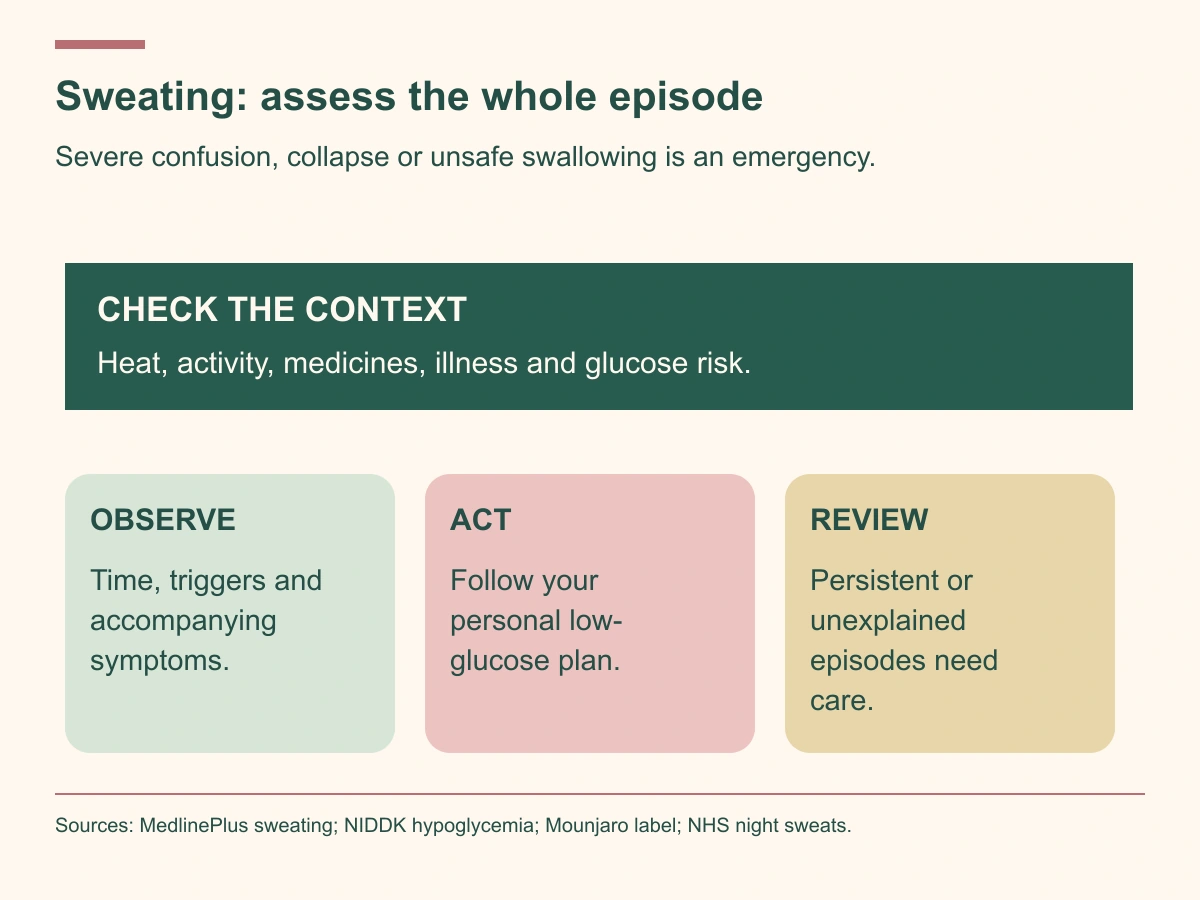
Daytime sweating deserves the same attention to context as night sweats. Sweating helps regulate body temperature and can occur with hot weather, exercise, stress, fever, and a range of medicines or medical conditions. A symptom that begins during Mounjaro treatment is worth reporting, but the timing alone does not identify the cause. MedlinePlus sweating guidance
Separate sweating during a warm walk from an unexpected cold, clammy episode while sitting still. Record whether you also felt shaky, hungry, weak, dizzy, confused, or had a racing heartbeat. Those details can change the urgency of the response and whether a glucose check is particularly important.
If you take insulin or a sulfonylurea, ask the diabetes team how reduced appetite, missed meals, illness, or increased activity affect your plan. Mounjaro’s label warns that combining it with these medicines can increase hypoglycemia risk. It does not mean every sweaty episode is caused by low glucose. Mounjaro prescribing information
Make the low-glucose plan usable away from home
Ask what glucose level is low for you, when to check, what treatment to carry, and when to call for help. For many people with diabetes, below 70 mg/dL is low. NIDDK describes taking 15 to 20 grams of glucose or fast-acting carbohydrate, checking again after 15 minutes, and repeating treatment if the reading remains low. Follow the individualized plan from your team. NIDDK hypoglycemia treatment
Those oral steps apply when the person is awake and can swallow safely. Severe confusion, a seizure, unconsciousness, or inability to swallow requires emergency help. A trained person should give prescribed rescue glucagon when available and call emergency services. Do not give food or drink to someone who cannot swallow safely.
Think through where you spend the day. A treatment kept at home is less useful during a commute or a long work shift. Ask the team how to carry supplies, who should know your emergency plan, and what to do if symptoms develop when you cannot immediately obtain a reading. Do not drive while symptomatic or while a low is unresolved.
| Situation | What to notice | Useful next step |
|---|---|---|
| Sweating in heat or after activity | Temperature, exertion, fluid intake, and whether you feel otherwise well | Cool down and review your individual hydration and activity plan |
| Sweating with shakiness or confusion | Glucose reading if available and medicines that can cause lows | Follow the low-glucose plan; severe symptoms need emergency help |
| Sweating with fever or illness | Temperature and associated symptoms | Contact a clinician about the illness rather than assuming a drug effect |
| Recurrent unexplained daytime sweating | Timing, triggers, medicines, and effect on daily life | Arrange a medical review |
| Chest pressure or serious breathing difficulty | New or severe associated symptoms | Seek emergency assessment |
Review the whole medication list
Other medicines can contribute to sweating. MedlinePlus lists several categories, and the NHS includes some antidepressants, steroids, and painkillers among possible night-sweat contributors. Bring recent starts, dose changes, and discontinued medicines to the discussion rather than focusing only on the newest injection. MedlinePlus sweating causes. NHS night-sweat guidance.
If prednisone was recently added, the prednisone, hunger, and weight-gain guide explains why steroid-related appetite and glucose changes need coordinated review. Do not stop a steroid, antidepressant, or other prescription to test whether sweating improves without appropriate instructions.
Keep product labels for supplements, energy products, and weight-loss blends as well. Caffeine and other ingredients may be relevant to symptoms. The tea timing guide discusses evaluating the full caffeine routine instead of assuming every tea is stimulant-free.
What a useful follow-up message looks like
A clear message might say that episodes occur at a particular time, last a certain amount of time, and include specific symptoms. Add your latest Mounjaro dose change, food intake around the episode, other medicines, glucose readings, and whether cooling down or treating a low changed the symptoms.
Distinguish what you observed from your interpretation. “I became sweaty and shaky before lunch, and my meter read this value” is more useful than “Mounjaro made me hypoglycemic” without a reading or context. If you did not check at the time, say so. A normal reading later does not reconstruct the entire earlier episode.
Ask the clinician what needs to happen before the next scheduled dose, whether any monitoring should change, and when to seek further help. If sweating is persistent, unexplained, or accompanied by concerning symptoms, follow through with assessment even when the medication schedule has been stable for months.

Frequently asked questions
Do night sweats mean Mounjaro is burning fat?
No such conclusion follows from sweating. It does not measure fat loss, drug effectiveness, or the amount absorbed. Record the symptom and review its possible causes.
Can menopause and diabetes treatment both be relevant?
Yes. A person can have more than one relevant health issue. The assessment should consider glucose risk, symptom pattern, other medicines, and menopause history without assuming one explanation excludes the others.
How long will the sweating last?
The reviewed label table does not establish a night-sweat duration. A timetable depends on the cause; recurring or concerning episodes need assessment.
What should I ask the clinician first?
Ask whether the episode needs prompt assessment, how to review nighttime glucose if applicable, and what instructions apply to your next dose and full medication regimen.
Sources checked for this update
Mounjaro source; Hypoglycemia source; Night Sweats source; Sweating source.
Educational information for adults; individual treatment decisions require a qualified clinician. Sources reviewed October 5, 2026. Original AI-generated article images depict fictional people and objects, not patient outcomes. Other editorial images are illustrative. Graphics summarize the cited sources.