
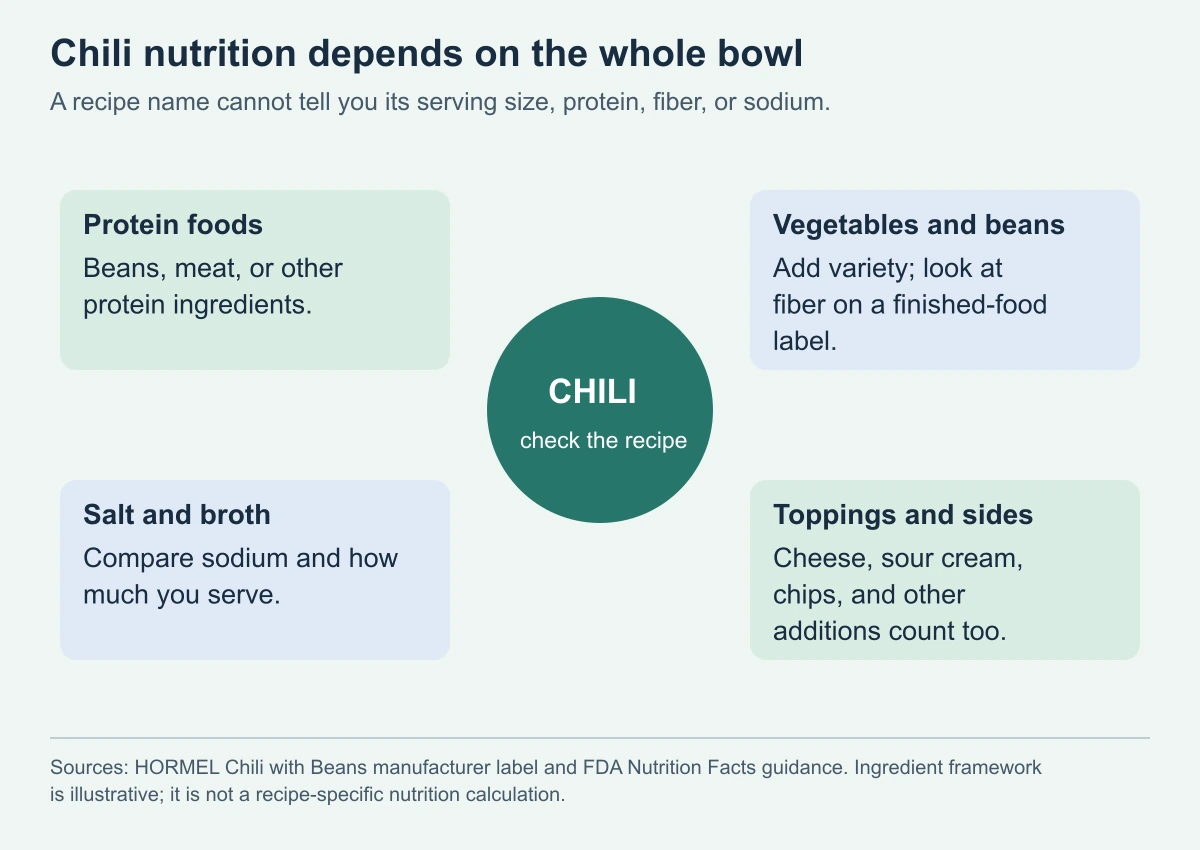
Chili can be a useful meal because some recipes combine protein foods, beans, and vegetables. Its nutrition still depends on the ingredients, serving, and toppings. A homemade bean chili, a meat-heavy restaurant bowl, and a particular canned product cannot be assigned the same calories, fiber, or sodium.
For weight management, look at the whole bowl and the wider eating pattern. Chili is not a food that automatically burns fat, and one “healthy” ingredient does not describe the complete meal. This guide explains how to read a real label, compare recipes, and answer common questions about beans, protein, salt, canned chili, and treatment-related appetite changes.
What can a real chili label tell you?
As a specific example, the manufacturer page for HORMEL Chili with Beans, with its 15-ounce size selected, gives the following figures for the stated 247-gram reference serving. These are manufacturer-reported product values, not a calculation for homemade chili. Manufacturer Nutrition Facts
| Nutrition item | Stated 247-gram serving |
|---|---|
| Calories | 270 |
| Protein | 15 grams |
| Fiber | 7 grams |
| Sodium | 990 milligrams |
| Saturated fat | 4 grams |
| Added sugars | 2 grams |
That example demonstrates a combination worth noticing: protein and fiber are present, and sodium deserves attention too. A single nutrient does not determine whether the product fits your needs.
Check the current can’s printed label before deciding how many servings you will eat. The manufacturer web page’s servings-per-container wording is inconsistent with its package size and reference weight, so these figures should not be treated as a verified whole-can total. Other product sizes and varieties can also have different panels.
FDA guidance explains that the serving size is a reference for reading the label, not a prescribed portion. Use the serving and amount actually eaten when comparing foods. FDA label guidance
Why do beans change the meal?
Beans can contribute to both the protein and fiber information on a finished-food label. In a recipe, however, the amount of beans relative to meat, vegetables, broth, and other ingredients matters. A garnish of beans does not create the same dish as a bean-centered recipe.
Look at the completed recipe or label rather than assuming the word “beans” establishes a fixed amount of either nutrient. The manufacturer example above contains beans alongside beef, pork, and other ingredients. It should not be used as the nutrition profile for a vegetarian bowl.
Fiber is one of the nutrients FDA identifies as useful to get more of in the general eating pattern. That does not mean every person should choose the same portion or that a bowl containing fiber fits every medical diet. FDA nutrition guidance
Our balanced-meal guide explains how different foods contribute to a meal. The goal is to understand the combination, rather than choosing a single ingredient and ignoring the rest.
Is meat chili or vegetarian chili healthier?
The recipe and your needs determine the useful comparison. A vegetarian recipe may include beans, vegetables, oil, cheese, or other ingredients. A meat recipe can vary by the type and amount of meat, beans, added fat, and toppings.
For a packaged food, compare the same serving basis and examine protein, fiber, sodium, saturated fat, and the ingredient list. For a homemade dish, list the ingredients and the actual number of servings before estimating nutrition. You cannot infer the finished numbers simply from “beef,” “turkey,” or “vegetarian” in the name.
If you prefer a meat-free pattern, select ingredients that make the meal satisfying and workable for you. If you eat meat, the same whole-meal review still applies. Food preferences are part of building a repeatable plan, not a reason to treat every bowl in one category as identical.
Is canned chili a reasonable option?
Canned chili can be practical when time, cooking access, or budget makes a prepared meal useful. The important step is reading the actual product instead of assuming all canned food has the same nutrition.
Compare products side by side using equivalent serving amounts. Different recipes may offer different protein, fiber, sodium, or saturated-fat figures. A smaller stated serving can make one label look lighter even when a person would eat more of it.
The manufacturer example in this article has 990 milligrams of sodium per stated 247 grams. If you have a clinician-directed sodium limit, review that amount within your plan. FDA describes sodium as a nutrient to limit in the general diet, but a label does not decide your personal medical allowance. FDA Nutrition Facts information
Convenience and label awareness can coexist. The question is how the product fits your meals, health instructions, and preferences, rather than whether using a can is inherently a good or bad choice.

Is homemade chili always better?
Making chili yourself lets you choose the ingredients, but it does not automatically create a lower-calorie or lower-sodium dish. Broth, seasoning blends, added salt, meat, cooking fat, and toppings can all affect the recipe.
If you are comparing homemade versions, record those ingredients and how many portions the finished pot provides. A rough recipe estimate may help with planning, but it should be identified as an estimate rather than presented as a laboratory-tested label.
For a packaged ingredient such as canned beans or broth, check its own panel. Do not borrow the HORMEL numbers above for a pot you made differently. Likewise, a recipe calculator is only as useful as the entries and serving assumptions supplied to it.
Our calorie-intake guide explains why a precise-looking estimate still needs context. A practical meal review includes nutrition and feasibility, not only a single energy total.
How do toppings and side dishes affect the answer?
Cheese, sour cream, chips, cornbread, crackers, avocado, and other additions become part of the meal. Their contribution depends on the amount and actual product. The plain chili label does not include everything added at the table.
You do not need to label toppings as forbidden. Include them honestly when comparing meals. If a topping is a feature you enjoy, consider it alongside the rest of the bowl rather than treating it as nutritionally invisible.
For related examples, our saltine-cracker guide and cream-cheese guide discuss the difference between a label reference and an entire eating occasion. The same principle applies when several small additions become a substantial part of the meal.
Can chili fit into weight management?
It can be one meal option within an individualized plan, but the recipe name does not establish a calorie deficit or predict weight change. The amount you eat, other meals and drinks, activity, health, and practical circumstances all remain relevant.
NIDDK describes weight management as a broader health process with multiple contributing factors. Choosing chili does not isolate those factors or make a guaranteed result possible. Weight-management overview
A useful approach is to ask whether the meal is workable, provides foods you want to include, and fits any clinical instructions. If you regularly feel dissatisfied after a meal or are struggling to eat enough, describe that pattern to a dietitian or clinician instead of responding only with a smaller portion rule.
Our protein and muscle guide discusses protecting function during weight loss. The question of protein is broader than whether one bowl contains the word “high” on its packaging.

What if you are taking a GLP-1 medicine?
Use the same whole-meal review, with attention to your symptoms and ability to eat. A chili meal that works for one person may not be comfortable or practical for another. If you notice a relationship between a particular recipe, amount, or topping and symptoms, describe it to the prescribing team.
The current Zepbound label includes gastrointestinal adverse reactions and warns about volume depletion from problems such as vomiting or diarrhea. Persistent difficulty eating or keeping fluids down should not be handled solely by switching recipes. Zepbound prescribing information
Our semaglutide questions guide, tirzepatide questions guide, and nausea guide cover related treatment questions. NIDDK explains that prescription obesity medicines are used alongside healthy eating and physical activity, rather than replacing an eating plan. Medication overview
For CoreAge Rx service information, see the semaglutide and tirzepatide pages. Treatment suitability and symptom management require a clinical assessment; a food preference does not establish eligibility.
Questions people commonly ask
Does spicy chili burn belly fat?
The sources reviewed here do not establish that a spicy chili meal selectively reduces abdominal fat. Spice level, food-label nutrition, and a personal weight outcome are different questions. Choose seasoning for preference and tolerance rather than a promised body-fat effect.
Is chili high in protein?
Read the actual label or recipe estimate. The identified HORMEL serving lists 15 grams, but that does not describe every bowl or meet a personal target automatically. A bean-centered recipe and a different meat recipe may have different figures.
Is chili appropriate when managing diabetes?
Discuss the meal in your individual eating and medication plan. Beans, added ingredients, toppings, and portions affect the complete dish. NIDDK emphasizes individualized healthy living with diabetes; “healthy” in a recipe title does not replace that plan. Diabetes nutrition information
Can you eat chili every day?
Frequency alone does not tell us whether your overall pattern has enough variety or fits medical restrictions. Consider what the repeated meal supplies, what other foods you eat, and whether the sodium or other nutrients need review.
What is the most useful next step?
Choose the actual product or recipe, check the serving, and include toppings and sides in the comparison. Use those details to build a meal you enjoy and can repeat within your care plan. A clearer picture of the whole bowl is more useful than assigning all chili a single “healthy” score.
Educational information for adults; individual treatment decisions require a qualified clinician. Sources reviewed September 30, 2026. Original AI-generated article images depict fictional people and objects, not patient outcomes. Other editorial images are illustrative. Graphics summarize the cited sources.