
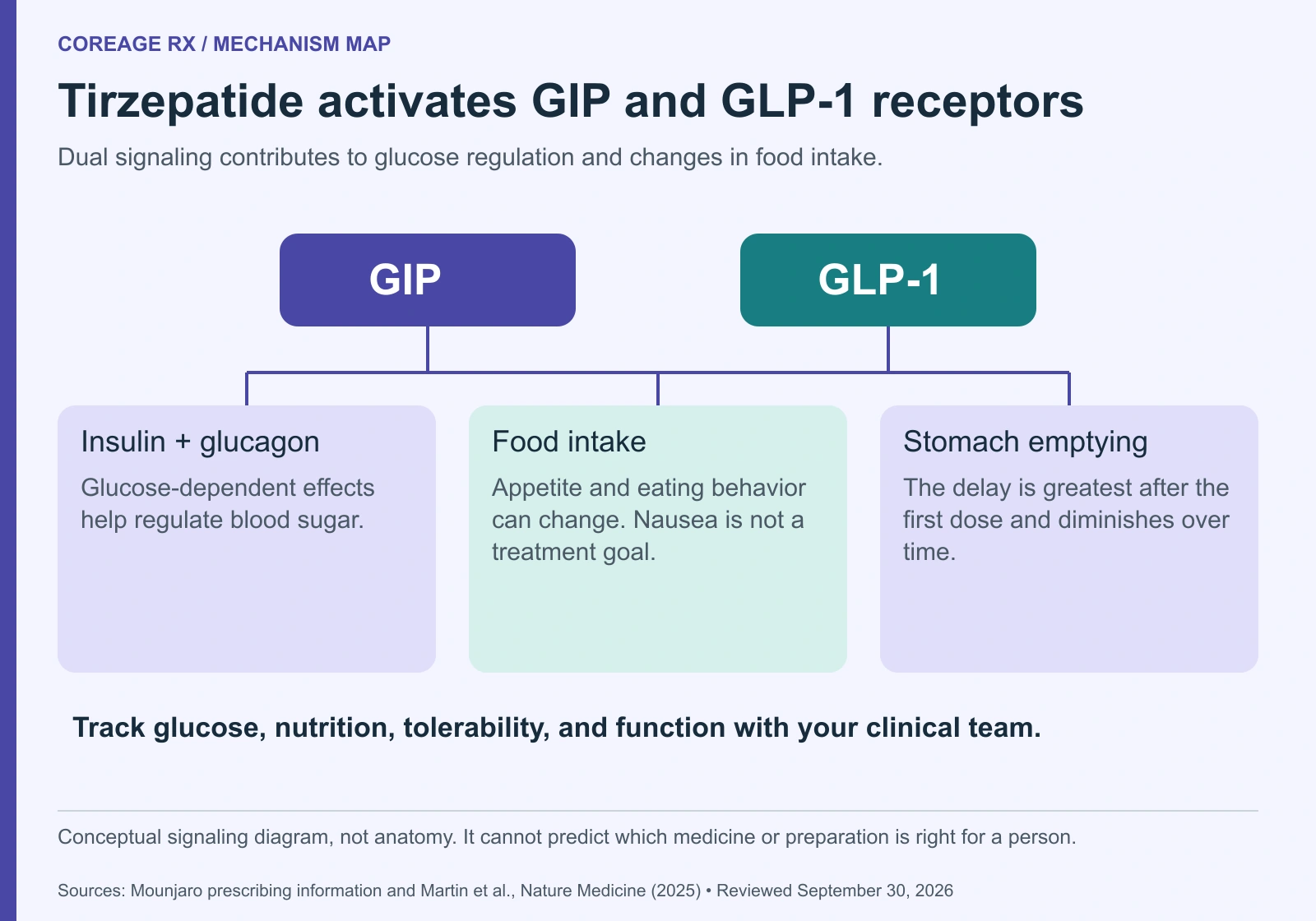
Mounjaro contains tirzepatide, which activates two hormone receptors: GIP and GLP-1. These pathways help regulate insulin, glucagon, food intake, and digestion. Together, the medicine’s effects can improve blood sugar and reduce body weight in people with type 2 diabetes.
The explanation is more detailed than “it makes your stomach empty slowly.” Mounjaro also changes glucose-dependent hormone responses and can influence appetite. Understanding those effects helps explain why treatment does not need to cause constant fullness or nausea to be useful. Mounjaro prescribing information
What are GIP and GLP-1?
GIP stands for glucose-dependent insulinotropic polypeptide, and GLP-1 stands for glucagon-like peptide-1. They are naturally occurring signaling hormones. Tirzepatide is designed to activate the receptors those hormones act on.
A receptor can be pictured as a receiving point for a signal. Activating it affects cell behavior; it does not mean the medicine is supplying insulin itself. Tirzepatide is a single medicine that acts at two receptor types, rather than two drugs mixed together. Mechanism of action
The two pathways interact with several aspects of metabolism. It is too simple to assign all appetite effects to one receptor and all fat loss to the other. The overall clinical response reflects the medicine, the patient, the treatment plan, and time.
What happens to insulin and glucagon?
Insulin helps the body manage glucose, including after meals. Glucagon is another hormone involved in glucose regulation. Mounjaro enhances insulin secretion and reduces glucagon in a glucose-dependent manner: the effects depend on the glucose environment rather than acting as a fixed injection of insulin. Mounjaro pharmacology
The label also describes improved insulin sensitivity in a study using a specialized metabolic measurement after 28 weeks. Insulin sensitivity concerns how the body responds to insulin; it is a different concept from simply producing more of it.
These effects help explain improvements in fasting and after-meal glucose. They do not mean glucose monitoring can be abandoned, or that Mounjaro can automatically replace insulin or another prescribed treatment.
Why can low blood sugar still happen?
Glucose-dependent action does not eliminate every risk. When Mounjaro is used with insulin or an insulin secretagogue such as a sulfonylurea, the risk of low blood sugar increases, including severe episodes. The prescriber may need to adjust those medicines and provide monitoring instructions. Mounjaro hypoglycemia warning
Reduced food intake, illness, activity, and other changes can also complicate an individual’s diabetes plan. Follow the glucose-monitoring and low-glucose treatment instructions supplied by your care team.
Do not independently cut back insulin because you feel less hungry or because a new glucose reading looks better. A useful follow-up reviews the full regimen and the pattern of readings rather than one result.
How does Mounjaro affect appetite?
The current label describes decreased food intake and reduced body weight in people with type 2 diabetes. Some people notice changes in hunger, fullness, cravings, or the amount they comfortably eat. Those experiences can vary, and ordinary hunger does not automatically mean treatment has failed. Mounjaro label
A 2025 randomized six-week study explored early ingestive behavior in 114 adults with overweight or obesity who did not have diabetes. Participants received tirzepatide, placebo, or an open-label liraglutide comparison. At week three, the tirzepatide group ate about 525 fewer calories than placebo at a freely eaten study lunch, expressed as an estimated treatment difference. Original appetite study
That finding concerns one controlled meal assessment. It is not a daily calorie target or a prediction that every patient will eat that much less at every lunch. The short study also found changes in several self-reported appetite and craving measures, but it does not by itself establish long-term outcomes or every proposed brain mechanism.
Does it work mainly by keeping food in the stomach?
Mounjaro delays gastric emptying, which can slow the absorption of glucose after a meal. The label states that the delay is largest after the first dose and diminishes over time. Gastric-emptying information
This effect is one part of treatment, alongside glucose-dependent insulin and glucagon effects and changes in food intake. It does not justify a simple claim that all weight change results from food remaining in the stomach.
It also does not mean persistent vomiting, severe pain, or an inability to eat normally is a desirable sign. The label warns about severe gastrointestinal adverse reactions and does not recommend Mounjaro for severe gastroparesis. Report significant symptoms rather than treating them as evidence of stronger benefit.
Our tirzepatide nausea and reflux guide explains practical questions and warning signs.

Does Mounjaro burn fat directly?
It is better to describe the established effects than to imagine a medicine selectively melting fat from a particular body area. Tirzepatide changes metabolic signaling and food intake, and clinical studies measure resulting outcomes such as glucose, body weight, and body composition.
A lower scale weight also does not tell you exactly how much fat, lean tissue, or fluid changed. Nutrition and physical function remain important during treatment. A rapid change caused partly by dehydration is not the same as a desirable treatment response.
Our tirzepatide protein and muscle guide discusses maintaining nourishment and activity when appetite decreases. The goal is an appropriate health outcome with tolerable treatment, not the smallest possible food intake.
How quickly should you notice a response?
Different outcomes have different timelines. Appetite sensations, day-to-day glucose readings, longer-term glucose measures, and body-weight trends should not be judged as though they all change together.
The label describes a tirzepatide half-life of approximately five days and steady-state exposure after about four weeks of weekly dosing. Those pharmacokinetic facts help explain the weekly schedule, but they do not promise a particular symptom or weight result by a certain day. Mounjaro pharmacokinetics
Your prescriber should set the dose plan and review response and tolerability. Do not use another person’s experience to decide that you need an earlier increase. The tirzepatide first-month guide explains useful observations, while the plateau guide covers a limited or slowing response.
Is Mounjaro the same as Zepbound?
Both contain tirzepatide, but their approved indications and prescribing details are not identical. Current U.S. Mounjaro labeling includes glycemic control in adults and children aged ten and older with type 2 diabetes, plus reduction of specified major cardiovascular events in adults with type 2 diabetes at high risk. Mounjaro indications
Zepbound has its own weight-management and obstructive-sleep-apnea indications in adults. A mechanism shared by the ingredient does not mean each brand has every indication or the same insurance pathway. Zepbound indications
Our Zepbound versus Mounjaro comparison explains those differences. The clinician should identify the exact product and reason for treatment instead of using the names interchangeably.
Is it different from semaglutide?
Semaglutide, the ingredient in products such as Wegovy, activates GLP-1 receptors. Tirzepatide activates both GIP and GLP-1 receptors. That is a meaningful pharmacologic distinction, but it does not prove that one medicine is the right choice for everyone. Mounjaro pharmacology, Wegovy pharmacology
The approved use, formulation, medical history, response, adverse effects, and access all matter. A drug comparison also needs comparable trial populations and outcomes rather than a receptor count alone.
See tirzepatide versus semaglutide results and how Wegovy works for more detail. Do not combine or switch these medicines without a prescribing plan.
Why do other medicines and procedures matter?
Slower stomach emptying can affect the absorption of oral medicines. The Mounjaro label specifically advises people using oral hormonal contraceptives to switch to a non-oral method or add a barrier method for four weeks after starting treatment and four weeks after each dose increase. Mounjaro interaction guidance
Tell the prescriber and pharmacist about all medicines, including those where consistent absorption is particularly important. Our tirzepatide and birth-control guide discusses those questions.
Also tell the anesthesia or procedure team that you use tirzepatide. The label warns about pulmonary aspiration during general anesthesia or deep sedation. The GLP-1 anesthesia guide explains why instructions should be individualized rather than copied from a generic stop-date rule.

Which safety questions belong in the decision?
Mounjaro has a boxed warning about thyroid C-cell tumors seen in rats; whether that finding applies to humans is unknown. It is contraindicated with a personal or family history of medullary thyroid carcinoma, MEN 2, or serious hypersensitivity to the product. Mounjaro safety information
Other important concerns include pancreatitis, gallbladder disease, severe gastrointestinal symptoms, dehydration-related kidney injury, and monitoring considerations for diabetic retinopathy. Severe persistent abdominal pain, repeated vomiting, significant dehydration, or a serious allergic reaction requires prompt medical attention.
The Mounjaro side-effects guide provides more context. Understanding the mechanism should improve the conversation about treatment, not replace an assessment of suitability.
Turn the mechanism into a useful treatment plan
Ask which outcomes matter for your diagnosis, what you should track, when follow-up will occur, and who handles problems between visits. Keep glucose goals, nutrition, tolerability, function, and medication access in the same discussion.
If reviewing CoreAge Rx tirzepatide care, confirm the exact preparation and dispensing pharmacy. A compounded product is not FDA-approved Mounjaro or Zepbound, and a shared ingredient does not establish identical quality or performance. FDA compounding overview
Mounjaro’s dual-receptor action explains several useful effects. A good clinical plan connects those effects to your actual health needs and keeps expectations grounded in the evidence.
Educational information for adults; individual treatment decisions require a qualified clinician. Sources reviewed September 30, 2026. Original AI-generated article images depict fictional people and objects, not patient outcomes. Other editorial images are illustrative. Graphics summarize the cited sources.