
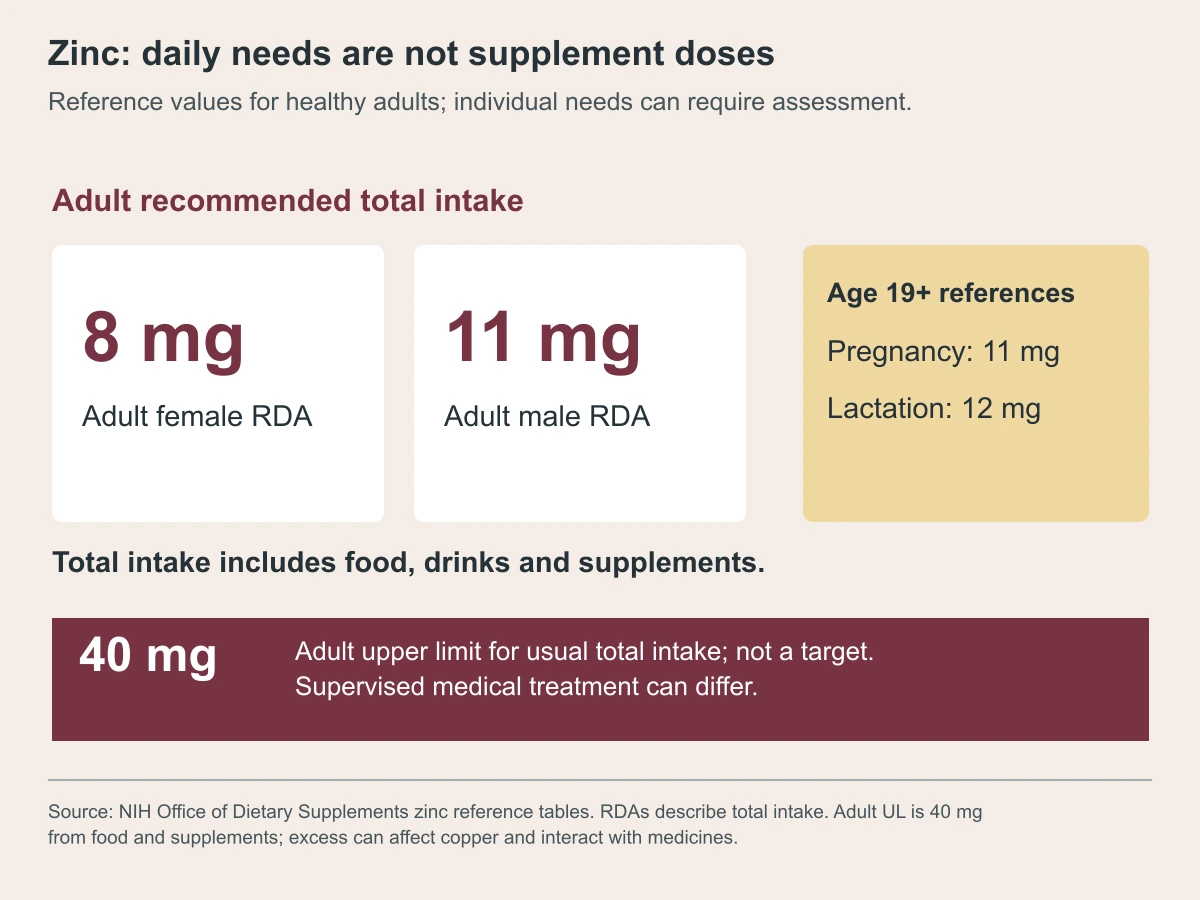
Most adults need a modest amount of zinc each day, but that does not mean everyone needs a zinc tablet. The recommended intake includes food and supplements together. For adults age 19 and older, NIH lists 11 mg daily for men and 8 mg for women; needs differ during pregnancy and lactation. NIH zinc fact sheet.
If you take semaglutide or tirzepatide and your appetite has changed, the useful question is whether your overall nutrition is adequate. That does not establish a routine zinc supplement dose or show that extra zinc improves a GLP-1 medicine’s effect.
Daily zinc intake: the adult reference amounts
The Recommended Dietary Allowance, or RDA, is a reference for total daily intake designed to meet the needs of nearly all healthy people in the stated group. It is not an automatic prescription for a supplement containing that amount.
| Adult group, age 19 and older | Daily zinc RDA | How to use the number |
|---|---|---|
| Men | 11 mg | Include zinc from food and supplements |
| Women | 8 mg | Include zinc from food and supplements |
| Pregnancy | 11 mg | Use prenatal guidance for the individual situation |
| Lactation | 12 mg | Discuss the broader nutrition plan when needed |
These values come from the NIH zinc reference table. Children and adolescents have different amounts; do not apply this adult table to them. A clinician may recommend a different approach for a diagnosed condition or deficiency.
The reference amount also differs from the percentage Daily Value printed on a label. A percentage helps compare products within the labeling system, but your individual needs and the amount you actually eat still matter. Our balanced-meal guide can help put one nutrient into the context of the entire diet.
What does the 40 mg upper limit mean?
For adults, the tolerable upper intake level is 40 mg daily from foods and supplements. It is a limit used in assessing risk from usual intake, not a goal to work toward. Clinician-supervised medical treatment can involve circumstances that the general limit is not intended to manage. NIH zinc safety guidance.
A product containing 40 mg is not automatically an appropriate everyday choice simply because that figure appears in a reference table. Add the zinc from other supplements and foods, and consider how long you have been using it.
There is no need to calculate every bite indefinitely to benefit from this distinction. The first practical step is often checking whether several products contain zinc. A multivitamin, a mineral tablet, and a “wellness” product can overlap even if their front labels emphasize different purposes.
Which foods provide zinc?
NIH identifies a range of food sources, including meat, seafood, dairy foods, beans, nuts, and fortified foods. Some foods have more zinc per serving than others, and zinc absorption varies with the food context. NIH food-source overview.
For a useful diet review, write down the foods you routinely eat and the approximate amounts. A dietitian can assess the pattern without requiring you to adopt a single “superfood.” Someone who eats a varied diet may have a different starting point from someone avoiding several food groups or struggling to eat enough.
Read fortified cereal and other packaged-food labels when relevant. Do not assume every cereal is fortified or that every plant-based alternative matches the food it replaces. Brand, formulation, serving size, and actual portion all affect the contribution.
Our pinto-bean nutrition guide illustrates how named products can differ even within one food category. The breakfast planning guide offers practical combinations rather than treating a supplement as a substitute for a meal.
How to read a zinc supplement label
The Supplement Facts panel lists the amount of elemental zinc, not the entire weight of the zinc-containing compound. That is the amount to compare when reviewing zinc intake. Product names such as zinc gluconate or zinc sulfate identify a form; they do not make the compound’s total mass your daily zinc amount. NIH supplement information.
Check the serving size as well. If the listed amount applies to two capsules, one capsule contributes a different amount. A front label that prominently displays a nutrient number may be less informative than the complete panel and directions.
For a pharmacist review, collect the actual labels or clear photographs of them. Include multivitamins, combination products, lozenges, fortified drinks, and any product you use only occasionally. Record the number of servings taken rather than listing only the brand names.
A simple way to spot duplicate zinc
Imagine that one daily product supplies 15 mg and another supplies 25 mg. Those two products alone add up to 40 mg before food is counted. This is arithmetic, not a recommended combination or a toxicity diagnosis.
The useful lesson is to total the zinc across the products rather than assess each one in isolation. A person may buy one product for general nutrition and another for a different marketing claim without noticing the overlap.
If you discover an unexpectedly high combined intake, ask a clinician or pharmacist to review the amounts and duration. Do not try to correct the situation by adding another mineral based on an online ratio. That can create a second supplementation problem without establishing the first one’s cause.

What can happen with too much zinc?
NIH describes gastrointestinal symptoms from excess zinc and notes that taking 50 mg or more over weeks can interfere with copper absorption and affect immune function and HDL cholesterol. These observations support caution with sustained high intake; they are not a personal threshold that guarantees safety just below it. NIH zinc adverse effects.
Tell the care team about the actual products, amounts, and duration if you develop symptoms while using supplements. Nausea during GLP-1 treatment, for example, does not automatically identify the prescription as the only possible contributor.
Do not infer that you need copper simply because you take zinc. A professional can review the reason for supplementation, the diet, symptoms, and whether testing or a treatment change is appropriate. A “more complete” supplement stack is not necessarily a clearer plan.
Can zinc interact with medicines?
Yes. NIH identifies interactions involving certain antibiotics, penicillamine, and thiazide diuretics. The details differ by medicine and include questions about absorption or zinc status. A single spacing rule should not be copied across the entire medication list. NIH medication interaction section.
Ask the pharmacist to review both prescription and nonprescription products. If you are starting an antibiotic or another new medicine, mention your supplements even if the clinic did not specifically ask about zinc.
Keep the confirmed instructions with the actual products. Timing advice from an older prescription may not apply to a new one. An organizer can make a routine easier, but it does not establish that everything placed in it should be taken together.
Do semaglutide or tirzepatide users need extra zinc?
A GLP-1 prescription does not, by itself, establish a need for zinc supplementation. Reduced appetite can be a reason to review eating patterns, especially if meals have become small, repetitive, or difficult to tolerate. The assessment should consider the whole diet and symptoms rather than assume one nutrient is missing.
Bring a short food record and the supplement labels to the appointment. Explain whether you are skipping meals, avoiding particular foods, vomiting, or finding it difficult to eat enough. Persistent difficulty maintaining intake needs clinical attention, not just a larger supplement serving.
Our semaglutide nutrition and muscle guide and tirzepatide nutrition guide discuss broader questions about adequate eating and function. CoreAge Rx’s semaglutide and tirzepatide information can help you prepare for a care discussion; these services do not establish an automatic zinc requirement.
Does zinc improve weight loss or “boost metabolism”?
Zinc has important biological functions. That does not mean taking more than you need produces additional fat loss. The NIH references reviewed for this guide do not establish a routine zinc regimen that enhances semaglutide or tirzepatide weight-management treatment.
A claim about supporting normal function is different from evidence of a particular treatment benefit. Ask what population was studied, whether participants had a deficiency, what product and amount were used, and what outcome changed. Ingredient marketing often omits those details.
For weight planning, use the calorie-intake guide and your clinician’s advice about the broader pattern. Supplements should have an identified purpose, not serve as a substitute for reviewing intake, symptoms, and other influences on health.
Can symptoms or a blood test prove you need zinc?
Possible signs of poor nutrition are not specific to one nutrient. A symptom list on a supplement page cannot diagnose zinc deficiency. NIH also discusses limitations in interpreting zinc measurements, so the clinical history and context matter. NIH zinc-status discussion.
Tell the team about dietary restrictions, medical conditions, recent illness, medicines, and supplement use. Ask what the proposed test would answer and how the result would change the plan. That is more useful than ordering a test simply to justify a product already chosen.
If you have a diagnosed deficiency, follow the individualized treatment and review schedule. Do not replace it with the general adult RDA table or extend treatment indefinitely because symptoms seemed to improve.

Pregnancy, kidney disease, and other individual considerations
Pregnancy and lactation have different adult reference amounts, but a supplement decision should also account for a prenatal product and the full care plan. Avoid stacking additional mineral products without reviewing their contents.
People with chronic kidney disease may have individualized nutrition advice. NIDDK explains that dietary needs and limits can depend on the condition and treatment. A general nutrient article cannot override that plan. NIDDK kidney-disease nutrition.
Allergies, restricted diets, and difficulty accessing food can also change the practical approach. A useful recommendation should fit what you can eat consistently and what the clinician is trying to treat. The aim is adequate nutrition with clear follow-up, not the largest possible supplement collection.
Common daily-zinc questions
Is 8 or 11 mg the amount of supplement I should take?
No. Those adult RDAs describe total intake from foods and supplements. Whether a supplement is needed depends on the individual situation.
Is 40 mg a good daily target?
No. It is the adult upper intake level used in general risk assessment, not a recommended goal. Food and other supplements count toward intake.
Does my multivitamin count?
Yes. Check its Supplement Facts panel and the serving you actually take, then include any other zinc-containing products.
Can zinc help the immune system?
Zinc contributes to normal immune function, but that fact does not justify unlimited supplementation or guarantee prevention of illness. Adequacy and excess are different questions.
Can I use the oral intake table for a zinc skin product?
No. This guide concerns dietary intake and oral supplements. A topical product has its own use instructions and is not dosed from a daily dietary requirement.
What if my appetite is very low on a GLP-1 medicine?
Tell the care team and review the entire eating pattern and symptoms. Do not assume zinc alone will resolve inadequate intake or medication intolerance.
What is the easiest first step?
Gather the labels of products you already use. Check for duplicate zinc and discuss the total, purpose, and duration with a pharmacist or clinician before adding another product.
Educational information for adults; individual treatment decisions require a qualified clinician. Sources reviewed September 30, 2026. Original AI-generated article images depict fictional people and objects, not patient outcomes. Other editorial images are illustrative. Graphics summarize the cited sources.