
Sausage can be part of a weight-management eating pattern, but the useful answer depends on the product, portion, and complete meal. “Turkey,” “chicken,” “pork,” and “plant-based” do not tell you everything about calories, protein, sodium, or saturated fat. Read the panel on the food you actually buy rather than assigning one nutrition profile to all sausage.
The breakfast around it matters too. A sausage patty with eggs, vegetables, and toast is a different meal from several patties in a large biscuit sandwich with sweetened coffee. You do not need to label either meal morally; you need enough information to make a choice that fits your needs.
This guide shows how to compare posted manufacturer panels, scale a serving honestly, build meals, and answer common questions about sausage and weight loss.
Start with the serving size and gram weight
The Nutrition Facts panel describes a specified serving. It does not automatically describe the amount on your plate, and the serving listed is not a personal recommendation.
FDA explains that eating more than one labeled serving changes the calories and nutrients accordingly. This is especially useful with foods counted by pieces: one link, three links, and one patty can have very different weights. FDA Nutrition Facts guide
Before comparing two packages, check both the number of pieces and the grams. A product may look lower in calories per serving because its posted serving is smaller. That observation does not make the panel misleading; it means the comparison needs context.
Ask yourself whether you want to compare what you usually eat, a common gram weight, or the protein delivered by a serving. Those are different questions and can lead to different choices.
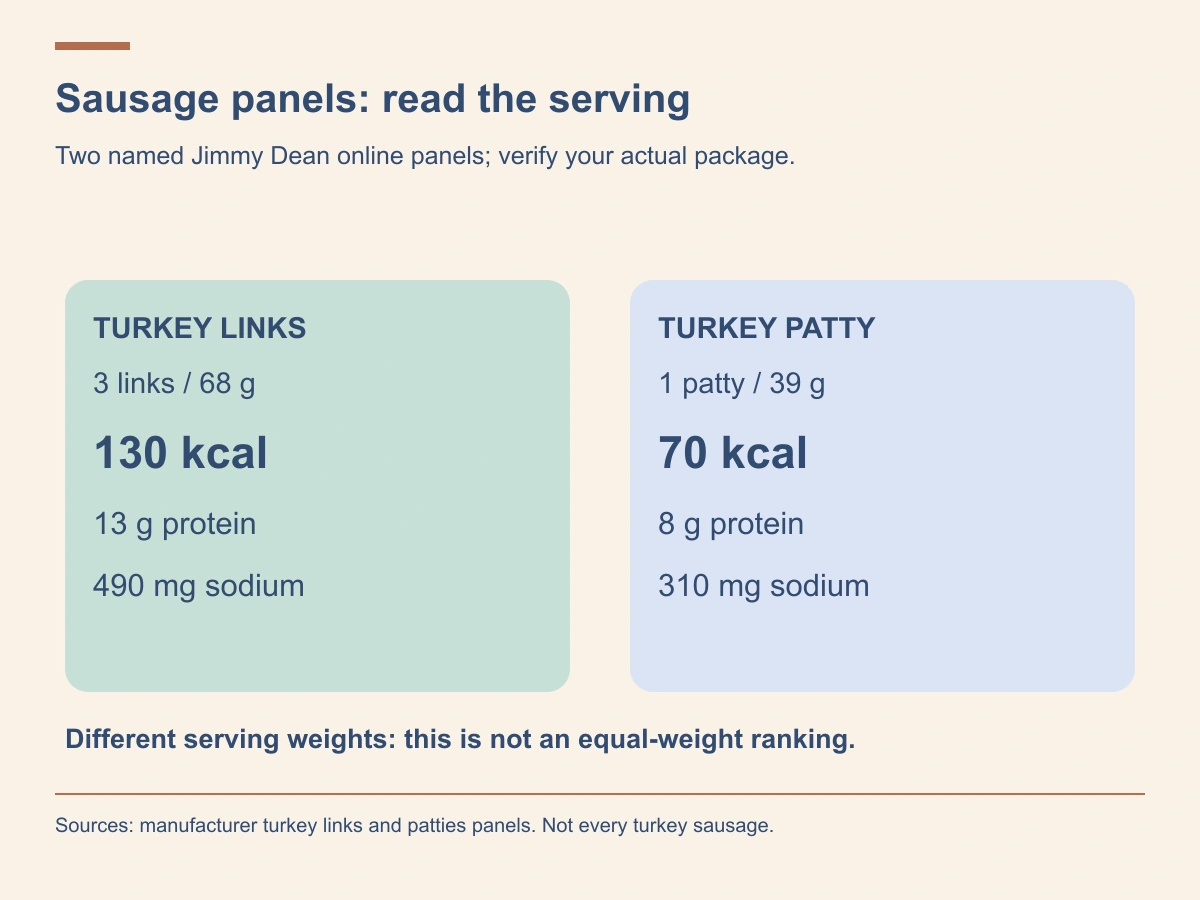
Two turkey-sausage panels illustrate the problem
The following examples use the manufacturer’s online panels for two named Jimmy Dean fully cooked turkey products. They are examples of label reading, not endorsements or a claim that your current package matches the website.
| Posted panel | Turkey sausage links | Turkey sausage patties |
|---|---|---|
| Serving | 3 links, 68 g | 1 patty, 39 g |
| Calories | 130 | 70 |
| Protein | 13 g | 8 g |
| Total fat | 8 g | 5 g |
| Saturated fat | 3 g | 2 g |
| Sodium | 490 mg | 310 mg |
| Dietary fiber | 0 g | 0 g |
Sources: the posted turkey-link panel and turkey-patty panel. These are different serving weights. Do not read the columns as an equal-weight comparison or assume they describe every turkey sausage. Verify the package when you shop.
Both products provide protein in the displayed serving. Neither displayed serving provides fiber. The right next question is therefore how the food fits into the meal, including other sources of fiber and the total amount you eat.
Is turkey sausage automatically better for weight loss?
No meat name guarantees a particular calorie or fat content. Ingredients, formulation, and serving size matter. A turkey label may be helpful to your preferences, but it is not a substitute for reading the panel.
Compare the products you are actually considering, using their gram weights and the portion you plan to serve. Check protein alongside calories rather than stopping at a front-of-package “lean” claim. Also consider sodium and saturated fat if those are priorities in your care plan.
Taste, price, allergies, and convenience are valid factors. A product that fits a budget and is easy to prepare may be more practical than one chosen solely because its serving is a few calories lower.
The same questions apply to chicken sausage and plant-based sausage. Do not assume the protein, sodium, or saturated fat profile from the category name alone.
Protein is useful information, but it is not the whole meal
Protein content can help you decide what else to include. It does not make a sausage product a complete meal or establish how much protein you personally need.
For example, you might combine sausage with a vegetable omelet and a whole-grain food, or add a smaller amount to a bean-and-vegetable dish. These are meal ideas, not calculated menus or prescribed serving amounts.
Consider what the sausage is doing in the meal: the main protein food, an ingredient adding flavor, or one of several protein sources. Adding a second protein food is different from replacing an existing one, and both change the full meal.
Our protein breakfast ideas and balanced meals guide provide broader planning questions. You can adapt those examples to your appetite, food preferences, and individualized needs.

Sodium and saturated fat deserve a separate look
Foods can provide protein while also contributing sodium and saturated fat. That is why evaluating sausage only through the protein number can miss information relevant to blood pressure or cardiovascular care.
FDA’s label guide identifies sodium and saturated fat as nutrients to consider limiting in a dietary pattern. It also emphasizes individual needs and the amount actually consumed. FDA label guidance
Look at the foods served alongside the sausage. Cheese, sauces, packaged breads, and other processed ingredients may add sodium or saturated fat. You do not need to calculate every meal perfectly to notice that several concentrated sources can accumulate.
If a clinician has given you a sodium or other nutrient target, compare the actual meal with that plan. A general article should not replace a prescribed target with an arbitrary sausage limit.
How to scale the amount you actually eat
Suppose a package lists one serving and you serve twice that amount. The label’s calories, protein, fat, and sodium also scale with the amount. Use the label as a reference for your own plate rather than assuming that one occasion equals one serving.
Piece counts are convenient only when the pieces match the product’s stated size. Homemade sausage, a restaurant patty, and a different brand’s link may not weigh the same.
You can use a food scale when a more precise estimate matters. If weighing every meal is not practical or appropriate for you, checking the package and learning the approximate amount you typically serve can still improve consistency.
Do not pretend an illustrative food photograph is a weighed portion. The article’s breakfast image shows a meal idea; the manufacturer values above come from the named panels.
Breakfast, lunch, and dinner ideas
Sausage does not have to be the largest component of the plate. Treating it as one ingredient can make room for foods that contribute different nutrients and textures.
| Meal idea | What the sausage adds | What to check in the full meal |
|---|---|---|
| Eggs, vegetables, toast, and sausage | Flavor and another protein source | Portion, added cooking fat, bread, and appetite |
| Sausage with beans and chopped vegetables | A savory ingredient | Sodium from each packaged ingredient and the amount served |
| Sausage and vegetable pasta | Protein and flavor | Pasta amount, sauce, cheese, and vegetable variety |
| Grain bowl with vegetables and sliced sausage | A convenient topping | Grain, dressing, portion, and other protein foods |
These examples are deliberately flexible. They do not assign a universal breakfast calorie budget or suggest that every adult should eat the same plate.
If you want another breakfast staple to compare, see are grits healthy?. Preparation and toppings influence that question just as they influence sausage meals.
What changes when appetite is low on treatment?
If medication makes it difficult to eat regular meals, the goal is not to find the most filling food at any cost. Tell the care team about the amount you can comfortably eat, symptoms, and any unintended weight change or difficulty meeting needs.
A sausage product may suit your preferences, or it may feel unappealing. You can consider other protein foods and meal formats rather than forcing one food because it is marketed for weight loss.
Semaglutide, protein, and muscle discusses function and nutrition during treatment. Tirzepatide and protein addresses the same broad concern in a different treatment context. Neither establishes a sausage quota.
Persistent vomiting, severe digestive symptoms, or difficulty maintaining food and fluid intake warrants clinical advice. A meal swap is not a substitute for evaluating a treatment problem.

A practical shopping checklist
Choose a few comparable products rather than trying to rank an entire aisle. Read the panels in a consistent order:
- Check serving grams and piece count.
- Compare the portion you would actually eat.
- Look at protein, calories, sodium, and saturated fat.
- Read ingredients for allergies and dietary preferences.
- Consider price, preparation, and how you will use it in meals.
If a panel is missing online, do not fill in the numbers from another product. Use the actual package or ask the manufacturer. Formulas and package sizes can change.
Frequently asked questions
Is sausage bad for weight loss?
A single food does not decide the outcome of the whole eating pattern. Evaluate the product and portion alongside the meal and your needs, rather than applying a blanket label.
Can I eat sausage every day?
This article does not establish a universal frequency. Consider dietary variety, nutrient targets, preferences, and any clinician recommendations rather than building a plan around one convenient food.
Are links or patties better?
The shape alone does not answer the question. The posted examples above use different gram weights, so compare the actual products and portions rather than their piece counts.
Does cooking remove enough fat to change the label?
Do not assign an unmeasured nutrient reduction to a cooking method. Use the product’s instructions and panel, and keep added oil or other ingredients in mind.
Does zero fiber mean I should avoid sausage?
It means other foods need to supply fiber in the eating pattern. The two displayed servings have no fiber; vegetables, fruit, beans, and grain choices can contribute different nutrients to the meal.
Where can I discuss prescription weight management?
CoreAge Rx’s semaglutide information page explains a treatment topic to review with a qualified clinician. Food choices remain individualized whether or not medication is part of your plan.
Educational information for adults; individual treatment decisions require a qualified clinician. Sources reviewed October 3, 2026. Original AI-generated article images depict fictional people and objects, not patient outcomes. Other editorial images are illustrative. Graphics summarize the cited sources.